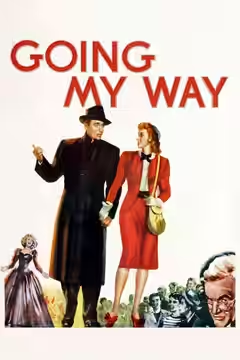
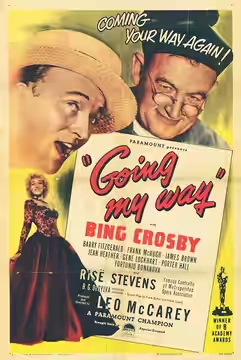
Leo McCarey’s parish comedy is gentle, unhurried and about twenty minutes too long. Bing Crosby coasts agreeably, but the film belongs to Barry Fitzgerald, whose stubborn, mended-cassock Father Fitzgibbon is the best reason to give it an evening.
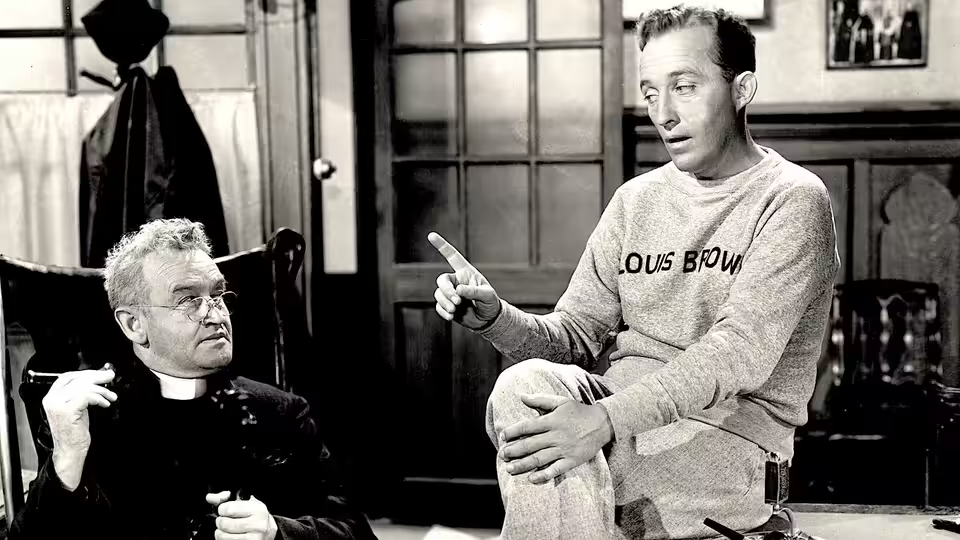
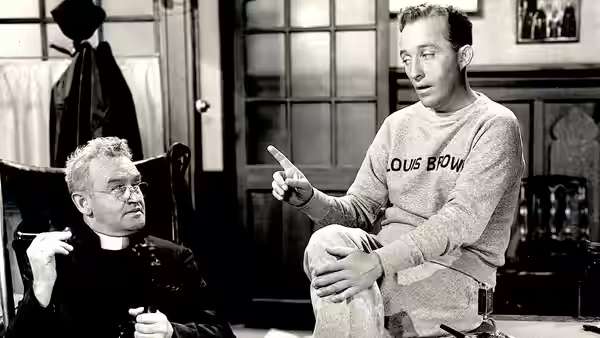
Father Chuck O’Malley (Bing Crosby) arrives at St. Dominic’s in a straw hat and a St. Louis Browns sweatshirt, carrying a golf bag, and is taken for a tramp. Leo McCarey, who wrote the story, produced and directed, wants us to laugh at the priest who does not look like one and then be won round by him, and for two hours that is more or less the whole plan. It works, in a soft, unhurried way, and it would work better at a hundred minutes than at 126. This is a good film with a fine performance in it, and the performance is Barry Fitzgerald’s.
Crosby does not act so much as turn up. He leans in doorways, calls everyone by their first name and never raises his voice, and the script, by Frank Butler and Frank Cavett, arranges for every problem to soften on contact with him. The mortgage-holder, Ted Haines Snr. (Gene Lockhart), softens. The gang led by Tony Scaponi (Stanley Clements) softens the moment O’Malley sings them Swinging on a Star, which is the best scene Crosby has and the only one in which the persuading happens in front of us rather than between scenes. He is likeable, and he is meant to be. But he is given nothing to lose, and a man with nothing to lose is restful to watch rather than interesting.
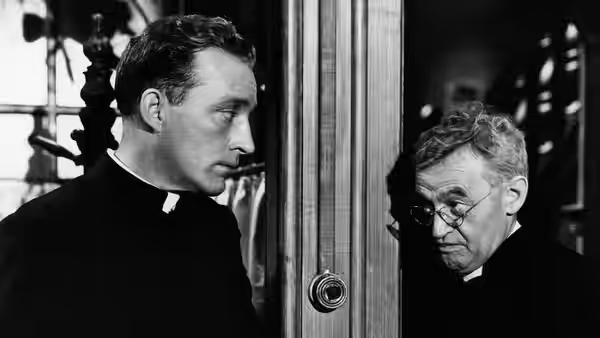
Fitzgerald has everything to lose and knows it. His Father Fitzgibbon built this church, has said Mass in it for most of his life, and cannot understand why a young man with a golf bag has been sent to help him. Fitzgerald plays him small and exact: the way he shuts a tobacco tin, the way he says “curate” as if it were a diagnosis, the nightly glass of whisky that has to be discovered afresh each evening. The scene that got us comes when he walks out into the rain, comes back soaked and ashamed, and O’Malley tucks him into bed and sings him an Irish lullaby. We had braced for treacle and were moved anyway, because McCarey holds on Fitzgerald’s face under the blanket and lets him listen. Nothing is said. The old man simply stops fighting for a minute.
Lionel Lindon lights the rectory with lamps and keeps every face out of shadow, which is right for a film with no villains in it. Edith Head dresses O’Malley’s civilian clothes a size too young for him, so he looks like a college boy at a fancy-dress party, and puts Fitzgibbon in a cassock that has plainly been mended more than once. Troy Sanders’s underscore stays low and gets out of the way for the songs, of which there are more than the story needs. LeRoy Stone cuts patiently, letting the two priests talk across a dinner table for as long as they like; we would not have minded him being less patient after the interval.
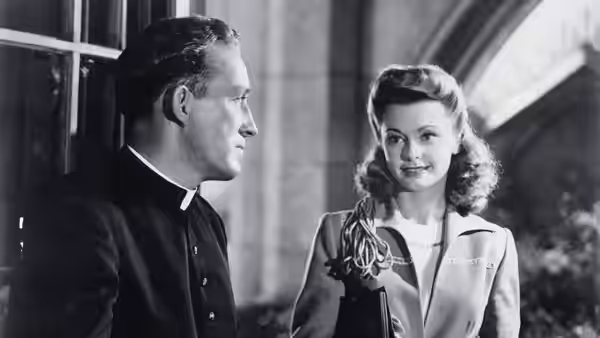
The second half is where the padding shows. Carol James (Jean Heather), a runaway with a voice, and Ted Haines Jr. (James Brown), the landlord’s son, are handed a romance that exists to tidy up the mortgage, and Heather is given a wardrobe and a problem and not much else. Genevieve Linden (Risë Stevens), an opera singer O’Malley knew before he took orders, arrives and stops the film dead for an aria that is beautifully sung and attached to nothing. Frank McHugh, as Father O’Dowd, gets to be Crosby’s audience. And there is a calamity in the last half hour that we will not describe, except to say that it arrives because the film needs one, and we could feel the mechanism turning.
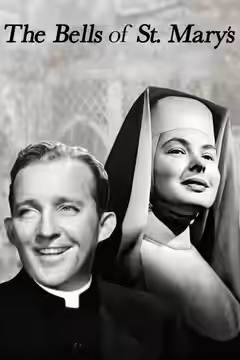
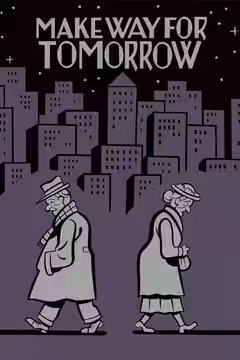
McCarey had already made The Awful Truth, a sharp screwball comedy, and Make Way for Tomorrow, a sad film about old age, and this is softer than either. It is a wartime picture that says everything will come right if people are decent to one another, and it says it so mildly that arguing feels rude. Crosby played O’Malley again the following year in The Bells of St. Mary’s, opposite Ingrid Bergman, and we prefer that one a little, because Bergman’s nun argues back.
Watch this on a wet afternoon with someone older than you. They will know the songs, and you will find you know more of them than you expected.