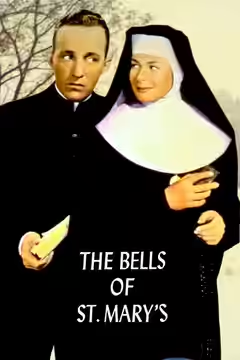
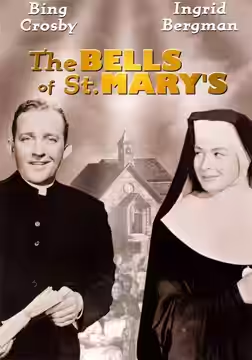
Leo McCarey’s follow-up to Going My Way is soft, slow and twenty minutes too long, and Ingrid Bergman carries most of it alone. Worth an evening for her, a kitten and a nativity play; less so for Bing Crosby, who is never once wrong.
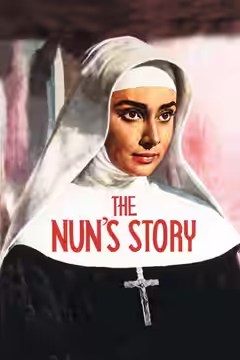
Leo McCarey brings Father O’Malley back a year after Going My Way and posts him to St. Mary’s, a Catholic school with a condemned building, a shortage of money and a convent full of nuns who have already decided how things will turn out. Dudley Nichols’s script is a set of small troubles laid end to end: a rich man next door who wants the land, a girl whose mother cannot cope, a boy who gets hit and will not hit back. The film runs 126 minutes and would lose nothing but weight at 105. It is decent, and it is decent almost entirely because of Ingrid Bergman.
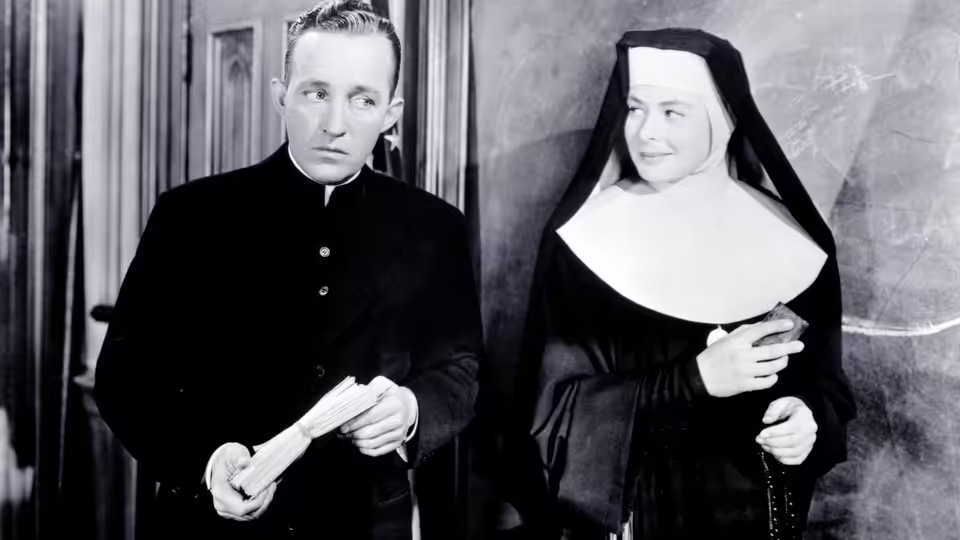
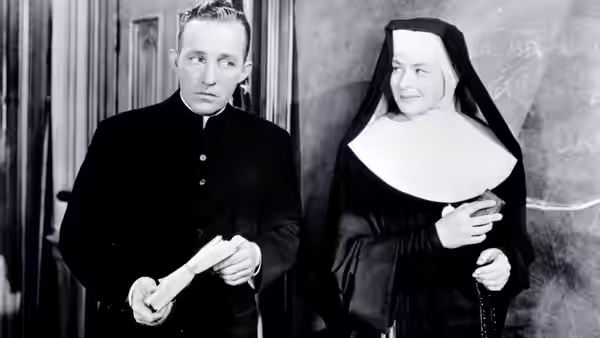
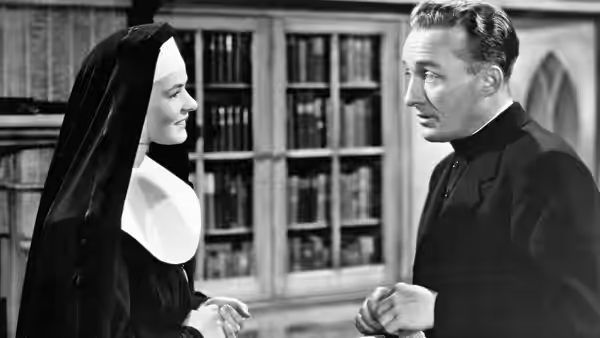
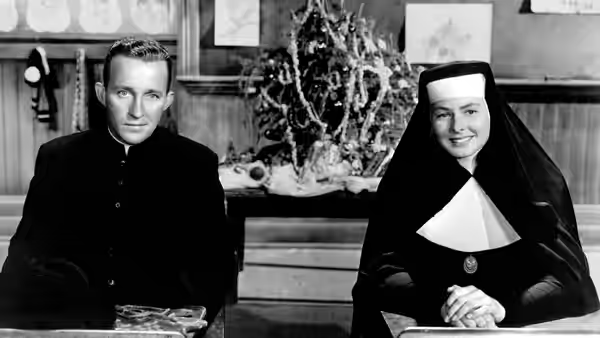
She plays Sister Mary Benedict without a trace of the simper the part invites. Her nun is stubborn, competitive and quietly certain she is right, and Bergman lets us see her enjoying it. In O’Malley’s first address to the sisters, a kitten climbs into his straw hat while he talks, and Bergman and Ruth Donnelly, as Sister Michael, sit with their faces held still and their shoulders going. We laughed, properly, because nobody on screen is trying to be funny. Later she takes a boxing manual to the gym and teaches Eddie Breen to jab. Critics in 1945 found the scene in poor taste; we found it the best comedy in the film, because Bergman plays it dead straight, correcting the boy’s footwork like a woman who has read the book twice.
Bing Crosby is the trouble. He is easy, he is amiable, he sings when the film needs a lift, and he is never for a moment in the wrong. Every disagreement with Sister Benedict is settled his way with a shrug, and the film agrees with him before he has finished speaking. A man who is always right is not a character, and Crosby drifts through the picture like a mild afternoon.
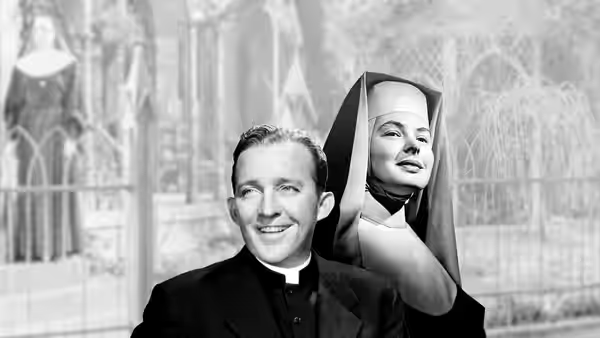
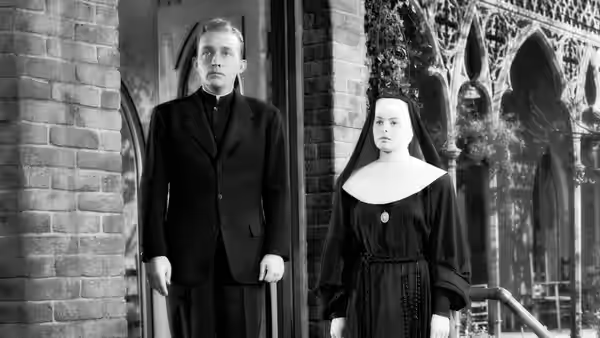
George Barnes photographs her with the white of the wimple lifting light into her face. It is lovely and it is a cheat: the school is supposed to be falling down, and Barnes gives us clean bright classrooms with the sun coming through. Robert E. Dolan’s music leans on organ and children’s voices and knows when to stop. Harry Marker cuts as McCarey shoots, letting a scene run to its natural end and then a little past it. Edith Head is credited for costumes, and with both leads in a habit and a cassock her real work goes on Martha Sleeper’s Mary Gallagher, whose clothes tell you her situation before she speaks.
The scene we did not expect to be moved by is the nativity play. McCarey puts the smallest children in front of a fixed camera and lets them tell the story in their own words, wandering off the point, correcting each other, forgetting they are being watched. We were moved, more than we thought a school Christmas show could manage, because McCarey refuses to cut away. Nothing in the film is directed harder than that stretch, and it consists of doing almost nothing.
What surrounds it is thinner. Henry Travers’s Bogardus is a rich man with a bad heart and no interior. Joan Carroll does careful work as Patsy but her story is a sermon on patience with a girl attached. The Church here is a place where problems are solved by waiting kindly and singing a hymn, and by the second hour we found the kindness a little smothering. There is a turn late on that we will not describe; it changes the tone and does not earn the change.
McCarey made Make Way for Tomorrow and The Awful Truth, films that know what cruelty and comedy cost. This one knows only what comfort costs, which is about two hours. The reviews are split down the middle, and we can see both halves: the people who cannot stand Crosby’s priest are right about him, and the people who cannot resist Bergman are right about her.
See it for her. If you are not the sort to be got at by a kitten in a hat, you may find yourself checking the clock, and we would not blame you.