Fred Zinnemann’s account of a Belgian woman’s years in a nursing order is slow, severe and nearly unadorned, and Audrey Hepburn is better in it than anywhere else we have seen her. Franz Waxman’s score keeps telling us what she has already shown; ignore it.
Fred Zinnemann’s film about a Belgian woman who spends years trying to be a good nun runs 151 minutes. It has no villain, no love affair in the usual sense and hardly a raised voice, and it held us from the first shot to the last. Robert Anderson’s screenplay, from Kathryn C. Hulme’s novel, is about one thing, obedience, and whether a clever, proud woman can want it enough. Zinnemann, who produced with Henry Blanke, gives that question two and a half hours and never tells us the answer.
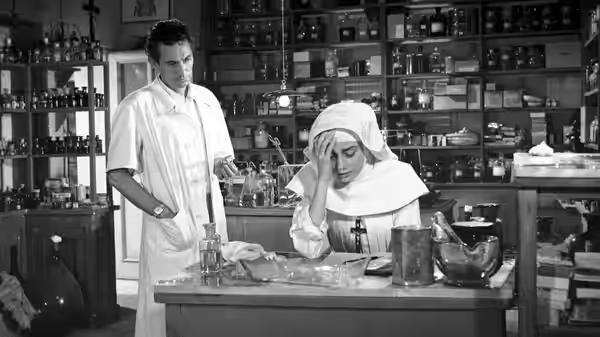
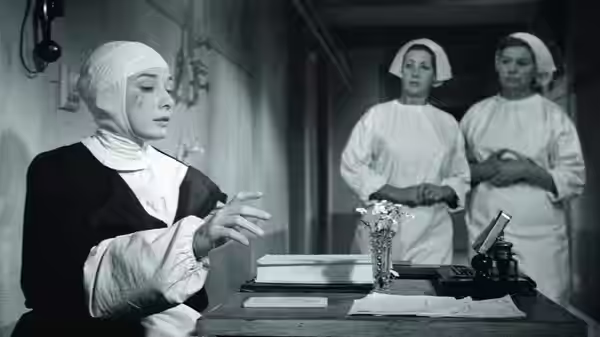
The first hour is spent in the mother house in Bruges. Franz Planer shoots it in white walls, grey habits and black floors, so that when Sister Luke’s hair comes off the picture has almost no colour left. The postulants learn to walk without sound, to eat without looking up and to kneel before the community and confess their faults aloud. Hepburn plays all of it still. The face that was so mobile in Roman Holiday is held nearly flat here, and the effort of holding it is the performance. When something gets through, a flicker of impatience at a slow sister, a glance she was told not to take, it lands like a shout.
The Belgian chapters test her, and the tests are never cruel in the obvious way. Her superiors ask things of her in a level voice, give their reasons straight, and wait. Sister Luke stands there and says nothing, and Hepburn lets us see exactly how much the nothing costs. We were angry, properly angry, more than once, and the film did not tell us whether we were right to be. A stretch in a mental hospital under Beatrice Straight’s Mother Christophe frightened us more than we expected, and Zinnemann gets the fear from what is behind the doors rather than from anything he shows.
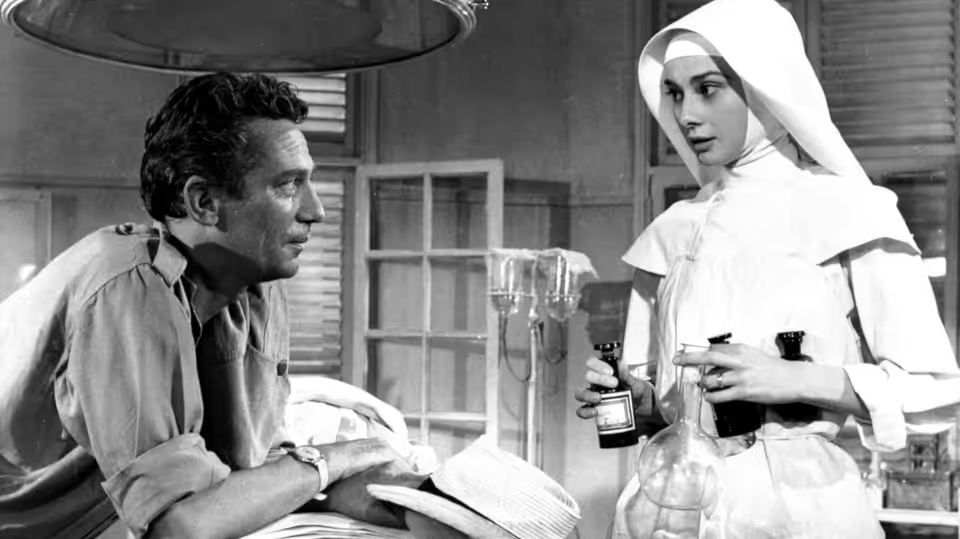
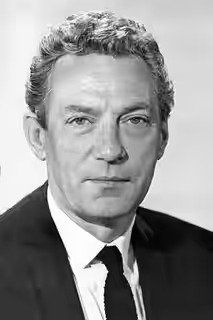
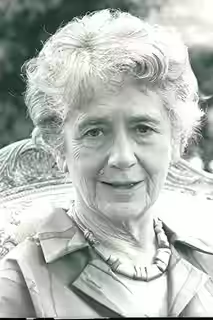
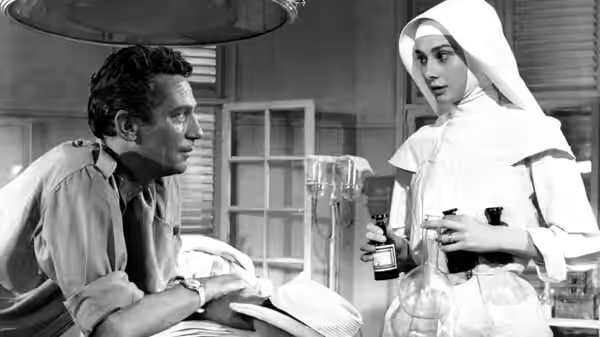
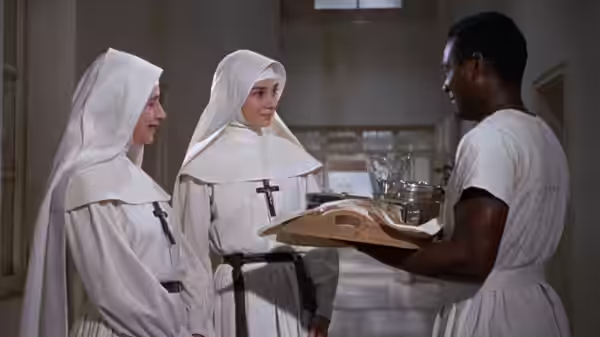
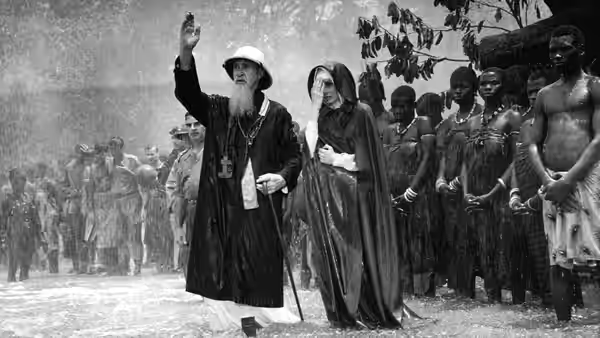
The Congo is a second film inside this one, and Planer changes everything for it. The whites go cream, the shadows go brown, the light comes in low through slatted shutters, and for the first time the picture looks warm. Peter Finch’s Fortunati, the surgeon Sister Luke assists, is an unbeliever who watches her more closely than any of her superiors have, and their scenes are the best two-handers in the film. He tells her, without cruelty, what he thinks she is, and Hepburn takes it in silence and lets us watch her decide whether he is right. Peggy Ashcroft’s Mother Mathilde, running the mission, gets less to do than she deserves and does it perfectly.
Not everything holds. Franz Waxman’s score is the loudest problem: organ and choir over Bruges, drums under the Congo, forever announcing feelings the actors have already shown us. Zinnemann knew it; he keeps Waxman out of the last scene altogether, and the silence is the best decision in the picture. Walter Thompson’s cutting is patient to a fault, and there are stretches in the Belgian hospital chapters where a scene ends, the next begins and we could not have said what had moved. Marjorie Best’s habits are exact and unlovely, which is right.
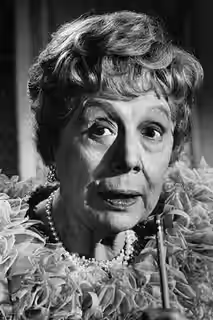
Zinnemann’s better-known films, High Noon, From Here to Eternity, A Man for All Seasons, are about people who will not bend. This one asks whether bending is the whole point, and it puts at its centre a woman who is good at her job and is told that being good at it is the trouble. Edith Evans, as Mother Emmanuel, has perhaps four scenes, and in each of them lays out the terms of the life as facts, not warnings.
The complaint from the reviews that dislike it is that it is slow. It is slow; that is what it is about. Watch it on a quiet evening with nobody talking over it, and give it the first hour. If the confession of faults does nothing for you, the rest will not either. If it does, you will not look at your watch.