Erich von Stroheim’s drama makes money and jealousy painfully absorbing. The surviving film has awkward joins and presses its point too hard, but Gibson Gowland and Zasu Pitts keep its cruelty disturbingly human.
Greed is a harsh, engrossing drama, worth the discomfort even in its uneven surviving form. Erich von Stroheim’s adaptation of a novel by Frank Norris takes money and jealousy seriously enough to make both unpleasant to watch. He gives wanting, resenting and keeping things the attention that a crime film might reserve for the crime itself. At 140 minutes, it demands patience with people whose company becomes increasingly difficult, and sometimes asks for more patience than it has earned.
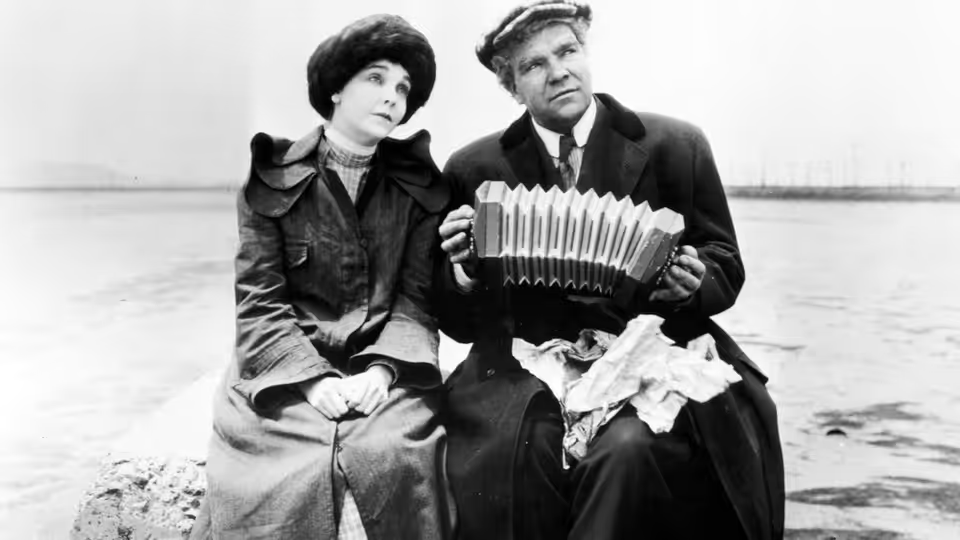
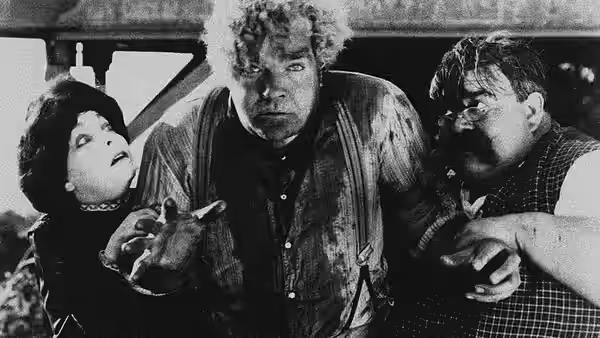
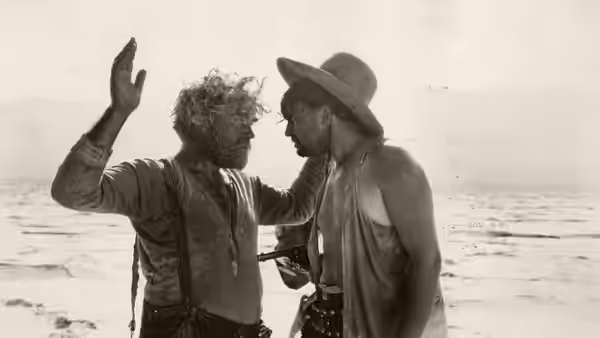
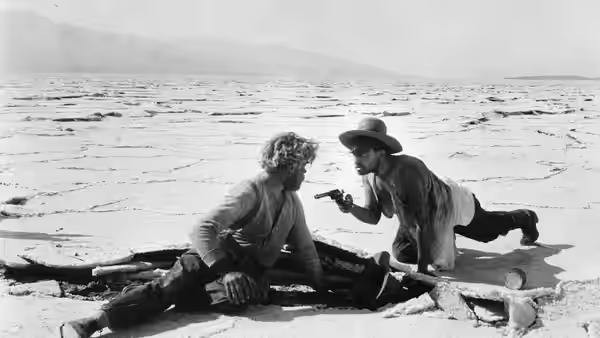
Gibson Gowland gives John McTeague enough human weight that we do not simply sit there waiting for him to behave badly. Zasu Pitts’s Trina and Jean Hersholt’s Marcus are equally important: their resentment feels personal, however firmly the film invites us to condemn it. The performances make these people worth watching after they have become difficult to like. There is a risk of reducing them to examples of bad behaviour, and the actors resist it.
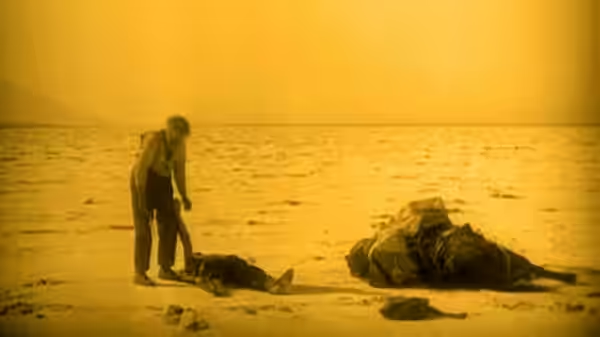
Cinematographers Ben F. Reynolds and William H. Daniels give the compositions a deliberateness that rewards sustained attention. The location shooting helps keep the characters’ ugliness from making the whole film feel artificially arranged to prove a point. These people seem to belong to somewhere that would exist without their quarrels. Stroheim’s production design contributes to that impression, giving material surroundings enough importance that the actors cannot simply overwhelm them.
We found the jealousy oppressive, and more recognisable than we wanted to admit. Gowland, Pitts and Hersholt make resentment seem close enough to ordinary dissatisfaction that we cannot comfortably dismiss their characters as monsters. Their performances account for much of the discomfort: we understand the feelings even when we recoil from the people having them. Stroheim’s vicious irony can become overbearing, particularly when we have already understood what is making someone behave so badly.
The surviving film was drastically shortened, and its storytelling does not always recover from that treatment. Frank E. Hull and Joseph Farnham are credited as editors, though an editing credit is no reason to assign them every fault in a film subjected to such extensive cuts. Some stretches feel hurried beside the detailed attention given elsewhere. The interruptions to the rhythm matter, and knowing about the missing material cannot supply the experience of watching it.
The screenplay credits belong to Stroheim and June Mathis, and the insistence on money’s destructive effects occasionally leaves too little for us to discover. We have understood the danger before the film has finished pressing it. The music credited to William Axt and Leo Kempinski supports the severity without making the experience much gentler. A little relief would have helped, especially when the patient attention to character gives way to another forceful reminder of the damage that acquisitiveness can do.
As a crime drama, this offers little of the comfortable pleasure of waiting for bad behaviour to be punished. Its interest in resentment makes the watching more awkward than that, and its age offers no reassuring distance from the behaviour on screen. We would make time for it despite the awkward joins, though anyone looking for a brisk plot should choose something else. Keep it for an evening when you can bear to have your own small grudges examined.