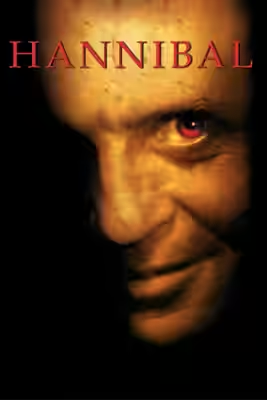
Ridley Scott gives Hannibal considerable polish, and Anthony Hopkins supplies some malicious fun. But slack suspense and the thin use of Julianne Moore leave too much resting on our appetite for grotesquerie.
Ridley Scott’s Hannibal is a polished, sporadically entertaining thriller with too little suspense to justify its 131 minutes. It invites us to enjoy the company of Dr. Hannibal Lecter, then leans heavily on that enjoyment when the story needs to move. The taste for grotesque spectacle is understandable; the lack of urgency is harder to excuse. We can enjoy an extravagantly unpleasant film, but this one spends too long assuring us how much trouble it has taken over the unpleasantness.
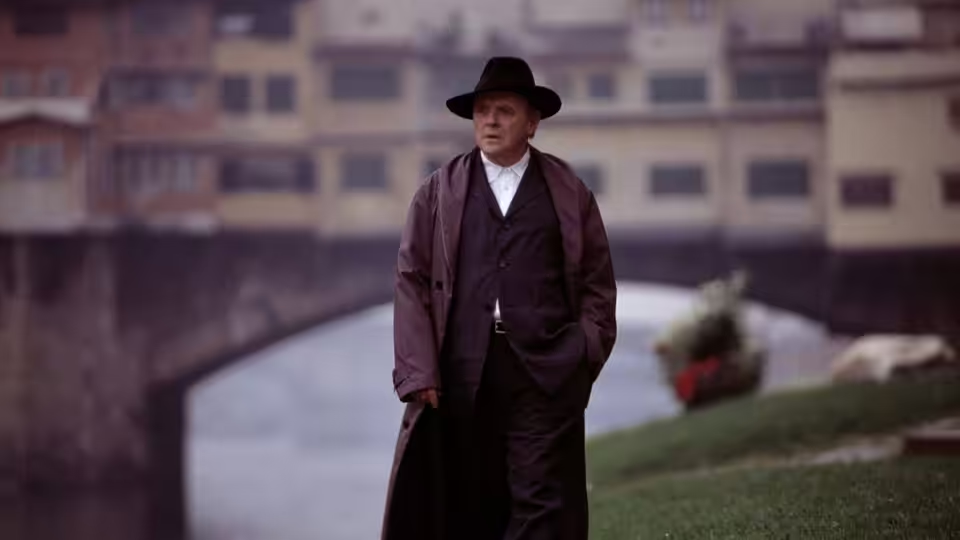
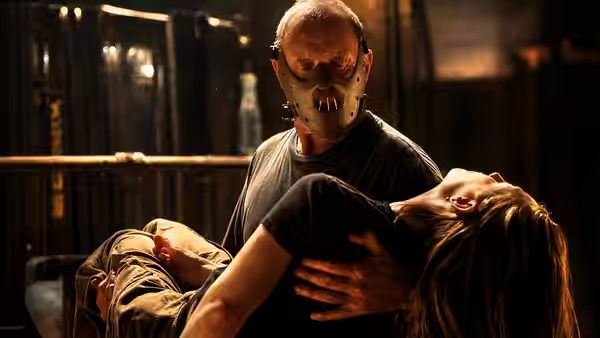
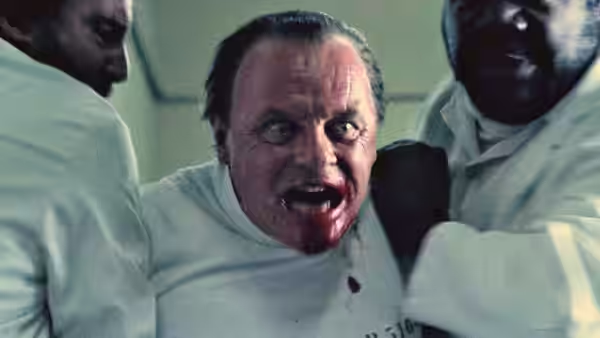
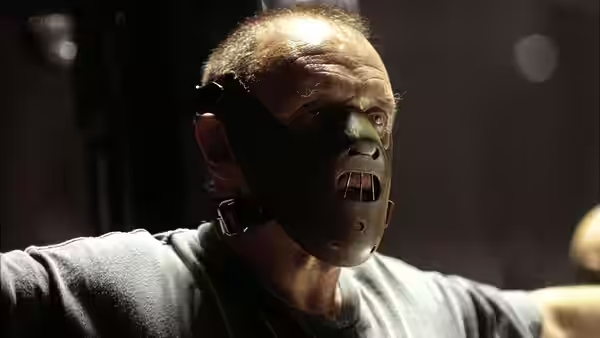
Anthony Hopkins supplies most of the amusement. We laughed at the pleasure he takes in Lecter’s superiority, particularly the playful manner that makes other people seem like interruptions to his day. There is precision in the performance, and enough mischief to keep the character watchable. The problem comes when that pleasure becomes the point of a scene: we begin waiting for another display of cleverness instead of worrying about what he might do.
John Mathieson’s cinematography keeps the grotesque material insistently handsome, a choice that makes revulsion oddly comfortable. Norris Spencer’s production design contributes to that well-appointed atmosphere; Florence is the stretch where looking at the surroundings is a pleasure in itself. Hans Zimmer’s music lends the material a seriousness that the plotting seldom earns. The care is evident, but the film gives us too much time to notice it when we ought to be concerned about the characters.
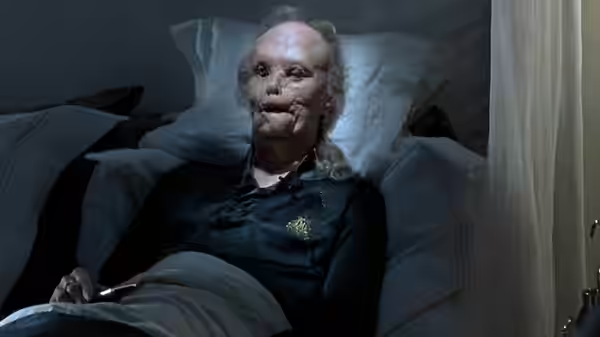
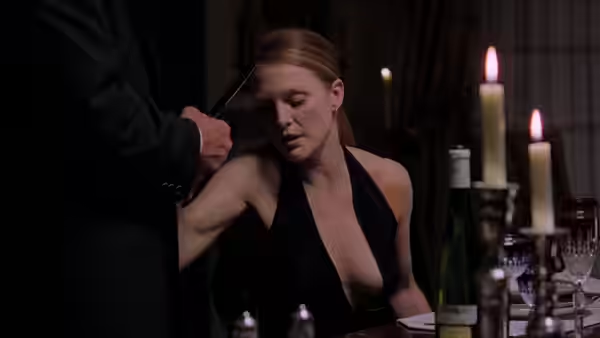
Julianne Moore offers the steadiness the film badly needs as Clarice M. Starling. Her seriousness gives us someone to care about without asking us to share the film’s fascination with Lecter. Yet the screenplay by David Mamet and Steven Zaillian leaves her too little scope, and we keep waiting for her to be given something substantial to do. Gary Oldman as Mason Verger and Ray Liotta as Paul Krendler have more opportunity to enjoy the excess, but their energy cannot compensate for her underuse.
Pietro Scalia’s editing has the thankless job of giving this story momentum. Individual performances hold our attention, but the stretches between them do not accumulate enough pressure, and the increasingly mechanical plotting makes the lack of suspense harder to overlook. At 131 minutes, it is not length alone that causes the trouble. It is the repeated feeling that another grotesque flourish will be offered before the film has made us care sufficiently about anyone involved.
Within the serial-killer thriller, there is nothing wrong with giving the killer charm or letting horror become funny. The risk is that everyone else begins to look like supporting entertainment for him, and Hannibal too often accepts that arrangement. Its cruelties should trouble us more than they do. The relish for Lecter keeps making him comfortable company, which is a peculiar difficulty for a film that also wants us to be frightened of him.
There is an audience for horror this pleased with its own bad taste, and parts of Hannibal reward that appetite. We would still hesitate to recommend a whole evening of it. Choose it for Anthony Hopkins enjoying himself, provided suspense is not the main requirement.