Kenneth Branagh makes a forceful war drama out of royal rhetoric and ugly fighting. The performances make the language approachable, though the music sometimes presses too hard and the familiar faces can briefly distract from the characters.
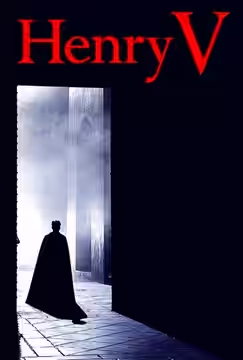
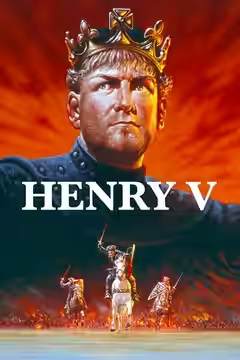
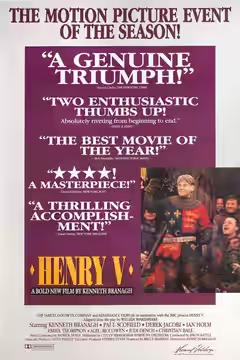
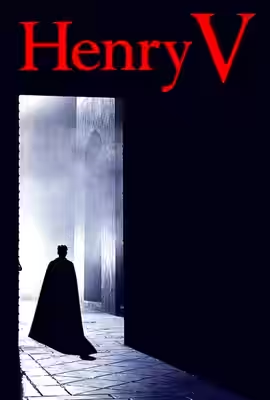
Kenneth Branagh’s Henry V is a forceful, approachable war film, and we recommend it with a reservation about how insistently it sometimes asks us to be stirred. He directs, writes and plays the king, taking responsibility for both Henry’s appeal and the reasons to question him. The language has force enough to make military glory sound attractive. The fighting makes that attraction uncomfortable, and the film is at its most persuasive when it allows the discomfort to remain.
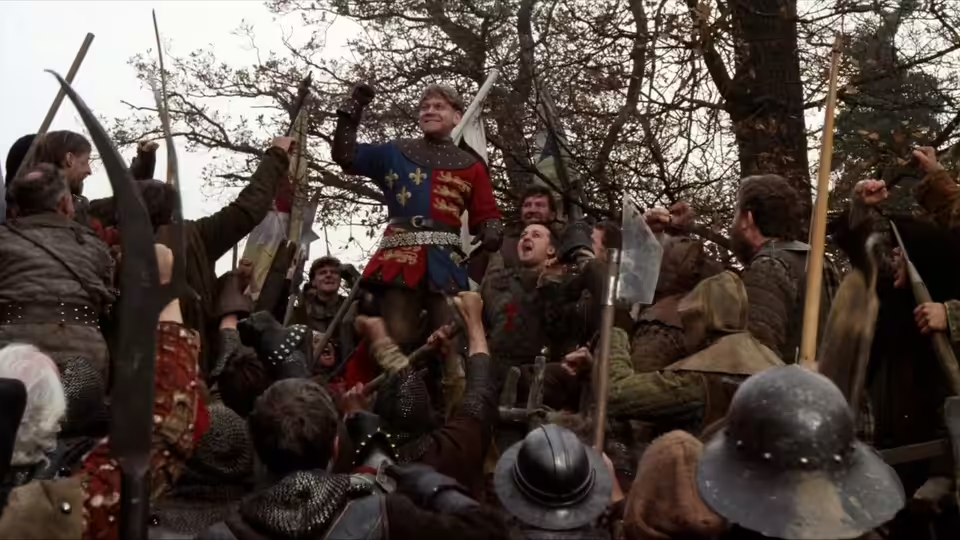
The central performance gives the words a purpose beyond being spoken well. We can hear a ruler trying to make other people believe in him, with the effort of persuasion still audible beneath the authority. That makes the verse accessible without requiring it to sound like everyday conversation. We were stirred by his eloquence, and the muddy battle imagery made us uneasy about our enthusiasm. The film earns that reaction by showing enough savagery to make us question what the speeches encourage.
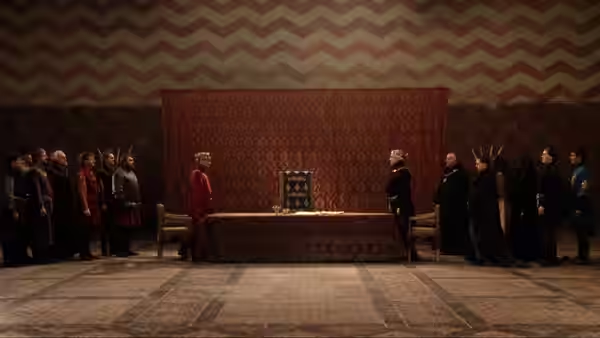
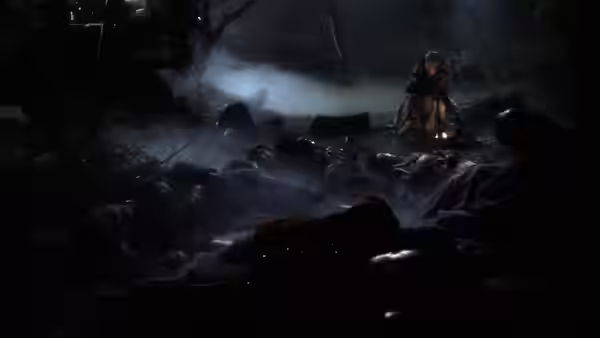
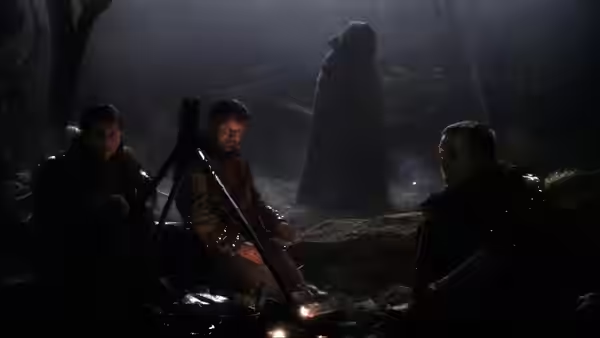
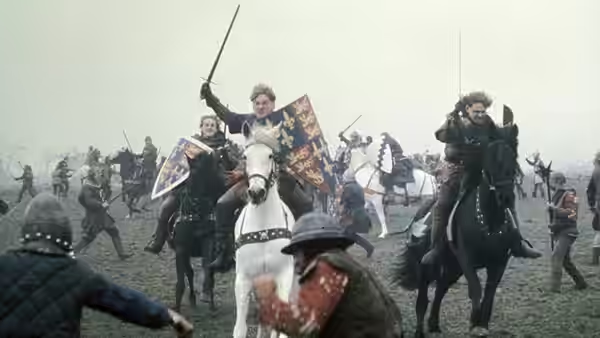
The battle imagery is muddy and unpleasant, and Kenneth MacMillan’s cinematography makes that dirt difficult to ignore. Tim Harvey’s production design helps make warfare feel physically punishing, with little comfort to be taken from the historical setting. The images have considerable force, but the fighting itself seldom looks handsome. That restraint matters in a war film whose leading man can make the prospect of battle sound so attractive. The mud keeps drawing our attention back to the people who have to fight.
Michael Bradsell’s editing lets Shakespeare’s language register and keeps the dramatic pressure from draining away between speeches. At 137 minutes, the film has room for its actors without feeling like an exercise in preserving a text. Patrick Doyle’s music is more insistent, giving the heroism a strength that can become too reassuring. We wanted it to ease off when the battle imagery had already made admiration complicated. The performances have earned enough attention to manage without quite so much musical encouragement.
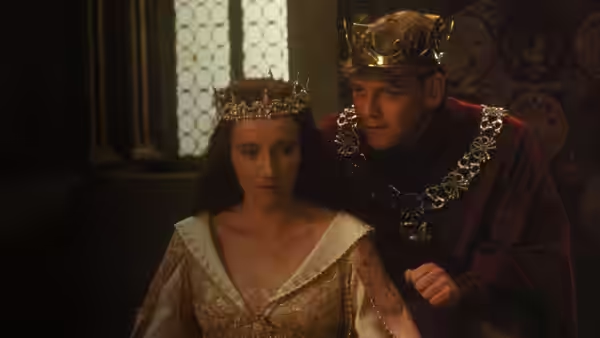
Paul Scofield as the French King, Brian Blessed as Exeter and Judi Dench as Mistress Quickly give the supporting cast considerable weight. There is pleasure in hearing actors make the language sound necessary to the people speaking it. Derek Jacobi’s Chorus contributes to that sense of being addressed directly, making the invitation to listen feel immediate. The disadvantage is familiar-face recognition: occasionally we notice the distinguished actor before the person being played, and the film briefly feels like a gathering of illustrious colleagues.
Among historical war dramas, this earns its force by allowing courage to remain attractive while showing the unpleasant work that courage entails. It trusts the acting and the language to hold our attention through difficulties that a simpler account of heroism would avoid. The music occasionally makes our response too easy, but the images keep giving us something to question. See it for the speaking and the fighting, and allow yourself to remain unconvinced when the score seems certain.