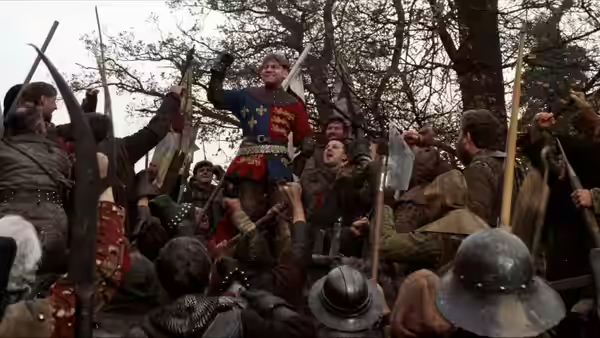
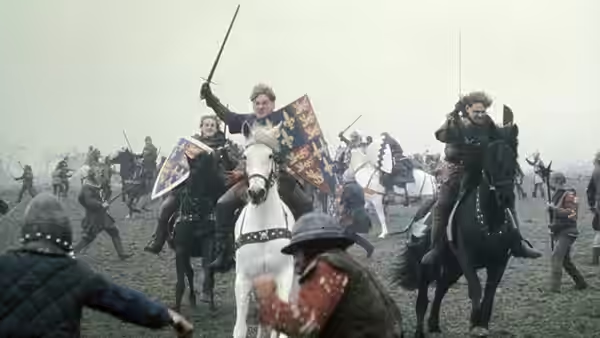
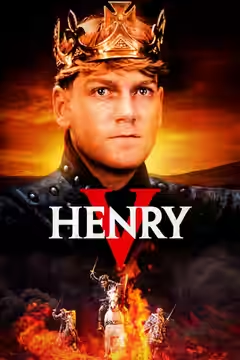
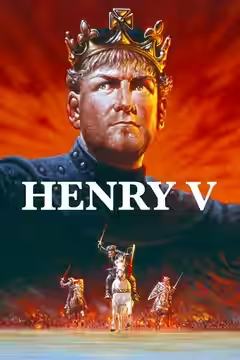
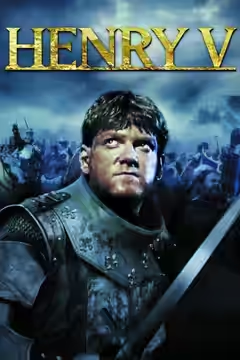
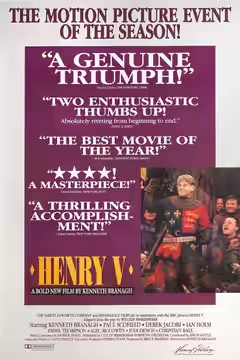
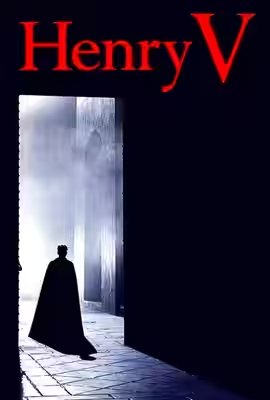
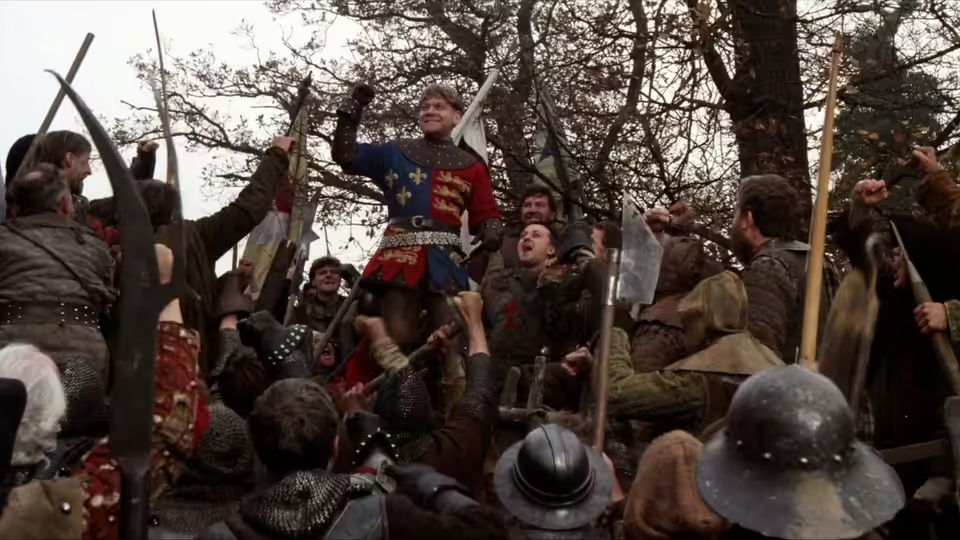
Henry V (Kenneth Branagh) raises his sword above cheering soldiers on the battlefield
Film review

Henry V

1989 · Directed by Kenneth Branagh · 2h 17m

In a sentenceA king talks beautifully, and we keep looking at the mud

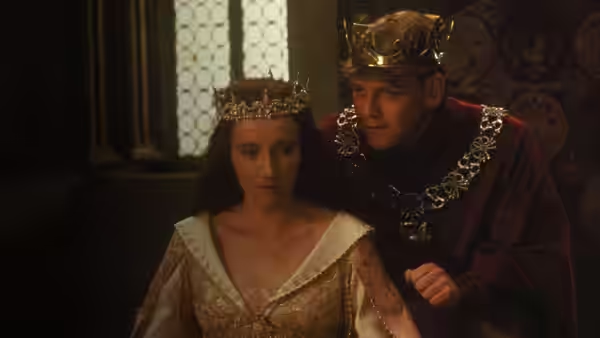
Henry V (Kenneth Branagh) is a king trying to prove himself against the odds. His story draws together royal, military and religious figures: Exeter (Brian Blessed), Bedford (James Larkin), the Archbishop of Canterbury (Charles Kay) and the Bishop of Ely (Alec McCowen). The French King (Paul Scofield) supplies another royal perspective on kingship and war. Chorus (Derek Jacobi), Katherine (Emma Thompson) and Mistress Quickly (Judi Dench) also feature in a historical drama that brings the king’s ambitions up against the brutality of fighting.

Fi1m review

Kenneth Branagh makes a forceful war drama out of royal rhetoric and ugly fighting. The performances make the language approachable, though the music sometimes presses too hard and the familiar faces can briefly distract from the characters.

Kenneth Branagh’s Henry V is a forceful, approachable war film, and we recommend it with a reservation about how insistently it sometimes asks us to be stirred. He directs, writes and plays the king, taking responsibility for both Henry’s appeal and the reasons to question him. The language has force enough to make military glory sound attractive. The fighting makes that attraction uncomfortable, and the film is at its most persuasive when it allows the discomfort to remain.

The central performance gives the words a purpose beyond being spoken well. We can hear a ruler trying to make other people believe in him, with the effort of persuasion still audible beneath the authority. That makes the verse accessible without requiring it to sound like everyday conversation. We were stirred by his eloquence, and the muddy battle imagery made us uneasy about our enthusiasm. The film earns that reaction by showing enough savagery to make us question what the speeches encourage.

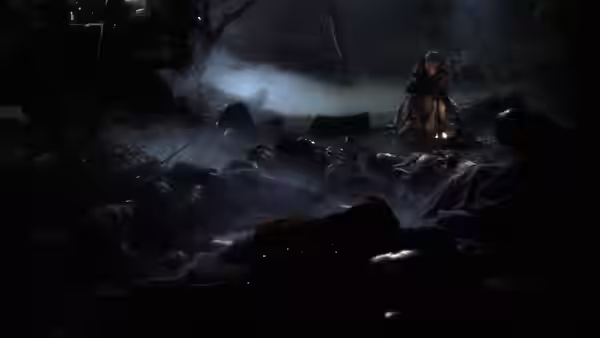
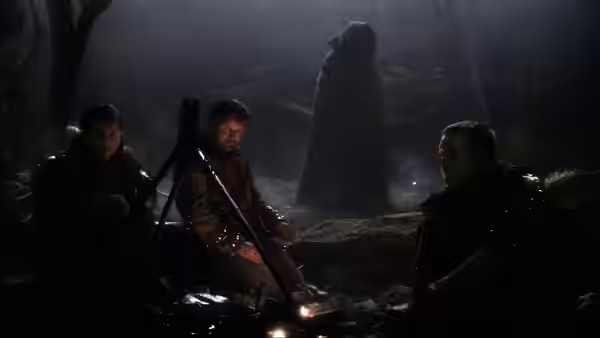
The battle imagery is muddy and unpleasant, and Kenneth MacMillan’s cinematography makes that dirt difficult to ignore. Tim Harvey’s production design helps make warfare feel physically punishing, with little comfort to be taken from the historical setting. The images have considerable force, but the fighting itself seldom looks handsome. That restraint matters in a war film whose leading man can make the prospect of battle sound so attractive. The mud keeps drawing our attention back to the people who have to fight.

Michael Bradsell’s editing lets Shakespeare’s language register and keeps the dramatic pressure from draining away between speeches. At 137 minutes, the film has room for its actors without feeling like an exercise in preserving a text. Patrick Doyle’s music is more insistent, giving the heroism a strength that can become too reassuring. We wanted it to ease off when the battle imagery had already made admiration complicated. The performances have earned enough attention to manage without quite so much musical encouragement.

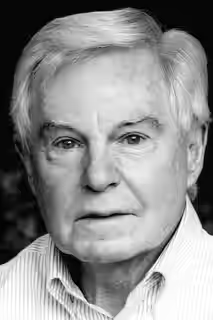
Paul Scofield as the French King, Brian Blessed as Exeter and Judi Dench as Mistress Quickly give the supporting cast considerable weight. There is pleasure in hearing actors make the language sound necessary to the people speaking it. Derek Jacobi’s Chorus contributes to that sense of being addressed directly, making the invitation to listen feel immediate. The disadvantage is familiar-face recognition: occasionally we notice the distinguished actor before the person being played, and the film briefly feels like a gathering of illustrious colleagues.

Among historical war dramas, this earns its force by allowing courage to remain attractive while showing the unpleasant work that courage entails. It trusts the acting and the language to hold our attention through difficulties that a simpler account of heroism would avoid. The music occasionally makes our response too easy, but the images keep giving us something to question. See it for the speaking and the fighting, and allow yourself to remain unconvinced when the score seems certain.

Critical consensus AI synthesised

79
Positive
4
Mixed
1
Negative
0
Los Angeles Times
15 December 1989 · MICHAEL WILMINGTON
90*

Wilmington praises Branagh’s adaptation as a thrilling, daring counterpart to Olivier’s version. He singles out its muddy, unsentimental battle imagery and the poetry and eloquence that make its heroism compelling.

Read the full review →
Radio Times
★★★★ · David Parkinson
80

Parkinson views Branagh’s adaptation as a successful film of its time. He singles out its focus on the savagery and futility of war, rather than Olivier’s booming patriotism.

Read the full review →
Variety
31 December 1988 · Variety Staff
80*

The review finds Branagh’s adaptation stirring, gritty, and enjoyable. It particularly praises the fine performances from its British cast.

Read the full review →
Empire
1 January 2000 · Anthony Quinn
78*

Quinn judges Branagh’s film a success and an accessible, cinematic interpretation of Shakespeare. He praises the Agincourt sequence, though the abundance of famous character actors can be distracting.

Read the full review →
The New York Times
8 November 1989 · Vincent Canby
65*

The headline frames Branagh’s film as deliberately grounded rather than grandly spectacular. The accessible page provides no further critical verdict or singled-out element.

Read the full review →

Straight answers AI written, from our review

Is Henry V worth watching?
Henry V is worth watching for its forceful performances and physically punishing view of war; we score it 84 out of 100. We recommend it to anyone drawn to historical drama or curious about Shakespeare, though the music sometimes pushes for an uncomplicated heroic response that the muddy fighting makes difficult to share.
How long is Henry V, and what is it rated?
Henry V runs 2h 17m. It is a war and drama film.
Where can I watch Henry V in Hungary?
Henry V is not on any streaming or rental service in Hungary at the moment. It is available in 3 other countries; change your country at the top of the page to see where. Availability is checked daily.
How violent or frightening is Henry V, and is it suitable for children?
Henry V carries a UK 12A certificate and contains muddy, unpleasant fighting whose savagery challenges the appeal of its rousing speeches. We would steer younger children and viewers sensitive to battlefield violence away from it; it is better suited to teenagers comfortable with war drama, with the brutality worth discussing alongside the king’s persuasive language.
How does Henry V compare to Chimes at Midnight?
Henry V is the better choice for approachable royal rhetoric and a forceful war drama, while we recommend Chimes at Midnight for its greater attention to friendship and betrayal. Both make battle muddy and punishing, but Branagh centres the king’s powers of persuasion; Welles draws five plays into a prince’s relationship with two father figures, with rough sound a reservation.
What should I watch after Henry V?
After Henry V, try Chimes at Midnight (1965, Fi1m 88): Shakespeare’s soldiers and kings, with more room for friendship and betrayal. Then Ran (1985, Fi1m 92): Royal authority brings terrible suffering, rendered with severe attention to battle; and The Ascent (1977, Fi1m 88): A war film that tests courage without making suffering look glorious.

Cast

Awards

Academy Awards, 1990

Nominated
Best Actor
Won
Best Costume Design

BAFTA Film Awards, 1990

Nominated
Best Actor in a Leading Role
Nominated
Best Sound
Won
Best Direction

European Film Award for Best Actor, 1990

Won
European Film Award for Best Actor

Young European Film of the Year, 1990

Won
Young European Film of the Year

National Board of Review Award for Best Director, 1989

Won
National Board of Review Award for Best Director

If you liked this, try…

  1. Chimes at Midnight (1965, Fi1m 88)Shakespeare’s soldiers and kings, with more room for friendship and betrayal.

  2. Ran (1985, Fi1m 92)Royal authority brings terrible suffering, rendered with severe attention to battle.

  3. The Ascent (1977, Fi1m 88)A war film that tests courage without making suffering look glorious.

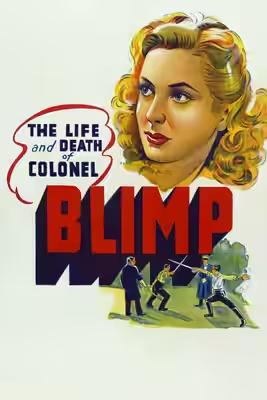
  4. The Life and Death of Colonel Blimp (1943, Fi1m 91)Military honour examined with warmth, patience and an eye for self-deception.

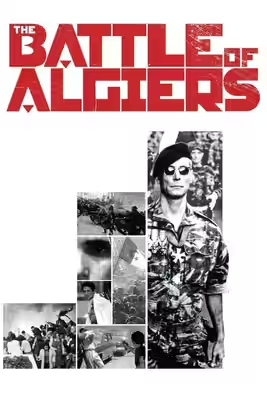
  5. The Battle of Algiers (1966, Fi1m 93)For another account of warfare that makes identification with violence uncomfortable.

Free account

Know what to watch tonight

Two lists that know where things are streaming, collections you can share, your own score beside ours, and Discover that remembers what you have seen.

  • Want to see, sorted by what is streaming now
  • Seen, with your score out of ten
  • No adverts, ever