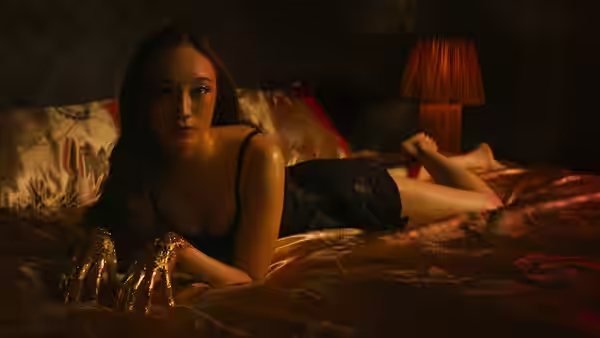
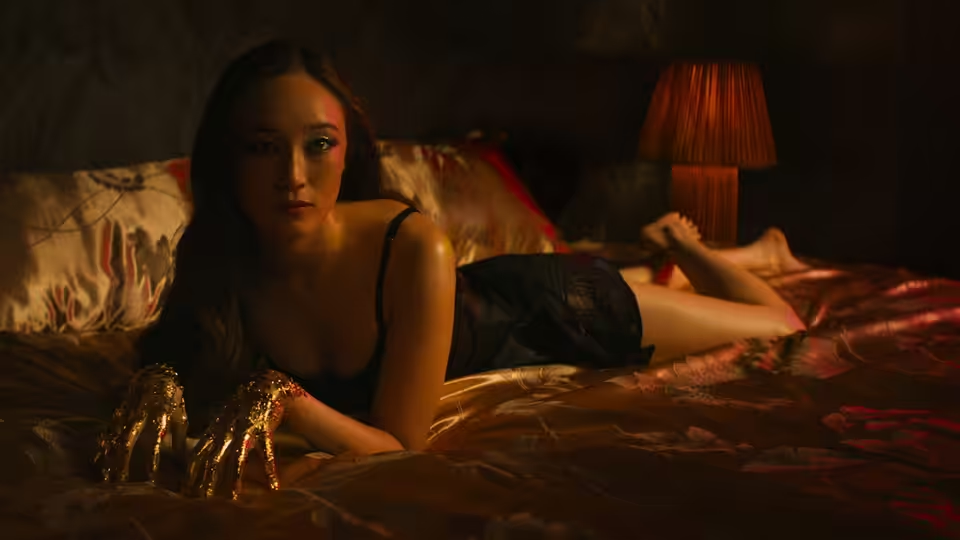
Woman with golden hands lying on a bed in dim light
Film review

Her Private Hell

2026 · Directed by Nicolas Winding Refn · 1h 50m

In a sentenceRevenge wears leather, the poster says; it also sits very still under coloured lights for a hundred and ten minutes

Somewhere in a future metropolis lit almost entirely by neon, Elle (Sophie Thatcher) has a revenge to carry out. The film gives her a city of corridors, clubs and private rooms, and a cast who move through it in leather: Private K (Charles Melton), Dominique (Havana Rose Liu), Hunter (Kristine Froseth), and two women known only as Ms. T (Shiori Kutsuna) and Ms. S (Aoi Yamada). Older men with names like Johnny Thunders (Dougray Scott) and Hayashi (Hidetoshi Nishijima) sit over the whole arrangement, and Nico (Diego Calva) drifts through it. The story slips between the city and something closer to a dream, and its subject, so far as it names one, is what daughters owe to fathers and what they take back. Three girls credited only as Candyfloss Girl appear at the edges.

Plays from YouTube when you press play; nothing loads from them until then.

Fi1m review

Nicolas Winding Refn’s return to features has a superb score, a fine set of rooms and Kristine Froseth being funny in them, and then it asks us to watch beautiful people say very little, very slowly, for a hundred and ten minutes. We could not.

Nicolas Winding Refn has been away from feature films for a decade, and Her Private Hell is the film he has come back with. He directs, produces, takes the story credit and shares the screenplay with Esti Giordani. It runs 110 minutes, carries an 18 certificate, and is sold on the line “Revenge wears leather”, which is honest about the leather and optimistic about the revenge. The plan is a science-fiction fable of daughters and fathers in a neon city, told half in the waking world and half in something like a dream. The verdict is that it looks and sounds far better than it plays.

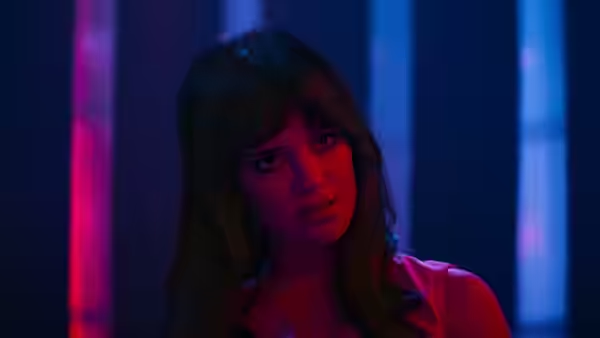
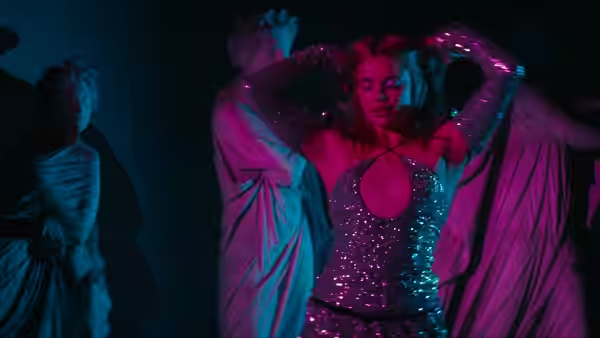
Start with what works, because it is real. Pino Donaggio, who scored Carrie for Brian De Palma fifty years ago, has written a full, sweeping, unashamedly romantic orchestra for this, and it carries most of the feeling in the film on its own. Whenever a scene threatens to have nothing in it, the strings arrive and tell us what we ought to be feeling, and for stretches that nearly does the job. Magnus Nordenhof Jønck lights Gitte Malling’s interiors in blocks of pink, red and cold blue, with the actors placed in them like objects on a shelf, and Jane Marshall Whittaker’s costumes are the film’s clearest statement of intent: everyone is dressed to be photographed. As a set of still images it would be hard to fault.

Kristine Froseth is the other reason to be glad we went. Her Hunter is the one performer who has noticed that the film is funny, and she plays every line as if she knows something the camera does not; she got the only laughs in our screening that Refn seems to have wanted. Charles Melton, as Private K, does something quieter and more difficult, holding a face still for minutes at a time and letting us read into it, and he is the only actor who makes the slowness look like a choice rather than an instruction. Sophie Thatcher, who was sharp and alert in Heretic and Companion, is asked here to pose and glare, and she does it well, but posing is not a part.

The trouble is the pace, and it is trouble from the first ten minutes. Refn has the cast deliver dialogue at a speed that would not pass in a stage rehearsal, with long pauses between each line, and Matthew Newman cuts to match, holding shots past the point where anything is happening in them. Somewhere around the hour mark we caught ourselves counting the light sources in a room, which is not what a thriller should have us doing. We were bored, and then we were irritated, and then we were irritated with ourselves, because the images are plainly the work of people who care and we could not make ourselves care back.

The violence, when it comes, is sudden and nasty and has the 18 certificate to itself. It does not build tension so much as interrupt the absence of it. The dialogue is stilted in the way Refn’s dialogue has been stilted since Only God Forgives, but there it sat inside a story; here the story is a set of poses arranged around a grudge, and the lines have nowhere to go. The final stretch takes a turn we will not describe, except to say that it is louder than what precedes it and not much clearer.

Against Refn’s own standard this is the concern. Drive had a man, a car and a job, and the style served them. The Neon Demon had less, but it had a joke about Los Angeles and a real cruelty underneath. Her Private Hell has the lights, the leather, the wide slow shots and the pulsing colour, and it has them because those are the things Refn makes. A style that used to be a decision has become a routine.

The reviews have split badly, with a few critics calling it hypnotic and rather more calling it an ordeal, and we can see both films from where we sat; the hypnotic one lasts about twenty minutes. If you already love this director, see it in a cinema, where Donaggio and the colour can work on you at full size. If you do not, this is not the one to start with, and a hundred and ten minutes will feel like a good deal more.

Critical consensus AI synthesised

39
Positive
4
Mixed
1
Negative
10

Most critics do not like it, and those who do like it for the reasons the rest do not. Ten of fifteen reviews are negative, and the complaint that recurs is style over substance. Where there is agreement it is on Pino Donaggio’s score, which several reviews call the one thing holding the film together, and on the neon-lit sets, which nearly everyone concedes are handsome even with nothing behind them. Kristine Froseth and Charles Melton are each picked out once as bright spots in otherwise mannered acting.

The reservations cluster on plot, or the lack of one, and on stilted dialogue delivered at a glacial pace. Several critics accuse Refn of recycling his own motifs; Collider goes further and finds the treatment of the women openly misogynistic. The spread is wide, from ten to seventy-five, and the dissenters, Deadline and The Ringer among them, argue that the incoherence is the point and the film should be taken as spectacle or not at all.

The Guardian
19 May 2026 · festival review
75*

The critic describes Refn’s film as a bizarre, shapeshifting fantasia and midnight movie of dreamy disquiet that eludes definition as it moves between doomy reality and strange dream worlds. They single out its hypnotic strangeness and slow, sepulchral pace executed with quasi-Lynchian characters in neon-lit settings.

Read the full review →
Los Angeles Times
23 July 2026 · Amy Nicholson
70*

The critic describes it as an expressionistic sci-fi fantasy with cryptic babes, stagy fables of lust and rivalry, and hazy plotting that defies logic. Refn's commitment to his style is admired, with Kristine Froseth singled out as the scene-stealing comic sexpot.

Read the full review →
The AV Club
20 May 2026 · C · Jason Gorber
57

The critic calls the film a moody, messy dud that favors style over substance and fails to be either exceptional or truly egregious. The score stands out as the one element providing some romantic and chromatic relief amid the artificiality and meandering plot.

Read the full review →
Radio Times
20 May 2026 · ★★ · James Mottram
40

The critic calls it an endurance test and Marmite movie that is sexy and stylish in its hellscape textures and violent set pieces but ultimately pretentious, laborious and lacking plot or tension.

Read the full review →
Screen Daily
19 May 2026 · festival review
30*

The critic finds the film intermittently enrapturing in its sensual visuals, sex and violence but largely frustrating, with stilted dialogue and a vacuousness that becomes its principal feature.

Read the full review →
Sight and Sound
21 May 2026 · festival review
30*

The critic describes Refn returning with a fantastical metropolis story heavy on violent eye-gouging, neon visuals and orchestral score, but hampered by wafer-thin characterisation and an emphasis on style over substance.

Read the full review →

Straight answers AI written, from our review

Is Her Private Hell worth watching?
Her Private Hell is worth watching only if you already love Nicolas Winding Refn, and we scored it 41. Pino Donaggio's sweeping score, the pink and blue rooms and Kristine Froseth's dry comic turn are real pleasures, but the dialogue crawls and the shots hold long past the point where anything happens in them. Newcomers to the director should not start here.
How long is Her Private Hell, and what is it rated?
Her Private Hell runs 1h 50m. It is a science fiction and horror film.
Where can I watch Her Private Hell in the UAE?
Her Private Hell is not on any streaming or rental service in the UAE at the moment. It is available in 2 other countries; change your country at the top of the page to see where. Availability is checked daily.
How violent or frightening is Her Private Hell, and is it suitable for children?
Her Private Hell carries an 18 certificate and is not suitable for children. The violence is infrequent but sudden and nasty when it arrives, and it is the reason for the rating; the rest of the film is slow, posed and lit in neon rather than frightening. The squeamish will flinch a few times; everyone else is more likely to be restless.
What should I watch after Her Private Hell?
After Her Private Hell, try The Neon Demon (2016, Fi1m 61): Refn’s earlier neon nightmare, with a story and a joke about Los Angeles underneath the surfaces. Then Under the Skin (2013, Fi1m 81): Glazer’s Glasgow alien picture: as slow and as beautiful, and it earns every minute of the silence.

Cast

If you liked this, try…

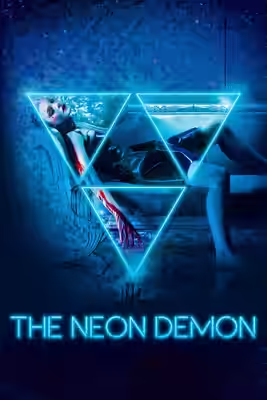
  1. The Neon Demon (2016, Fi1m 61)Refn’s earlier neon nightmare, with a story and a joke about Los Angeles underneath the surfaces.

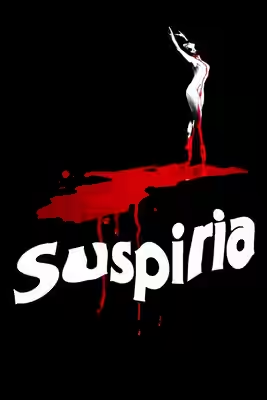
  2. Suspiria (1977) · not reviewed yetArgento’s coloured-light horror, where the slowness feels like a spell rather than a wait.

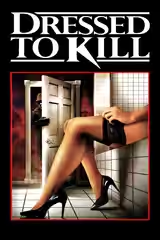
  3. Dressed to Kill (1980) · not reviewed yetDe Palma and Donaggio at full stretch; the score does what it does here, but with a plot attached.

  4. Beyond the Black Rainbow (2010) · not reviewed yetPanos Cosmatos’s glacial Canadian science fiction, humming with synths and genuinely strange rooms.

  5. Under the Skin (2013, Fi1m 81)Glazer’s Glasgow alien picture: as slow and as beautiful, and it earns every minute of the silence.

Free account

Know what to watch tonight

Two lists that know where things are streaming, collections you can share, your own score beside ours, and Discover that remembers what you have seen.

  • Want to see, sorted by what is streaming now
  • Seen, with your score out of ten
  • No adverts, ever