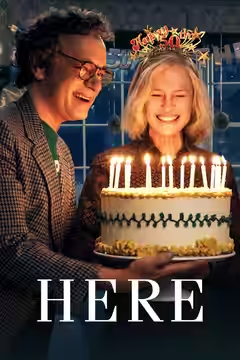
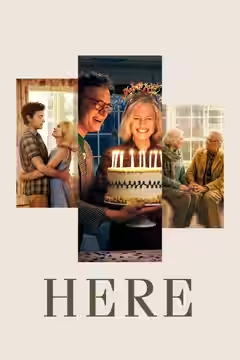
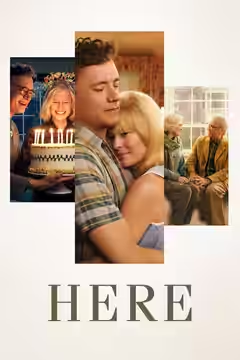
Robert Zemeckis parks a camera in one living room for a century and finds a good idea with almost no story to go with it. Robin Wright and one late scene are worth something; the de-aged faces and the announcing dialogue are not.
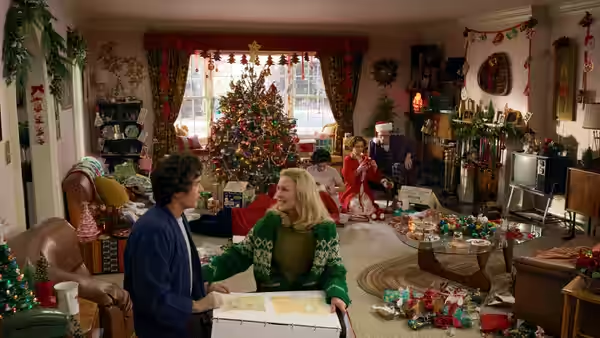
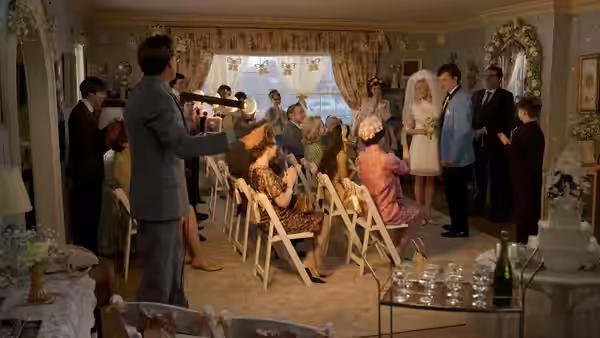
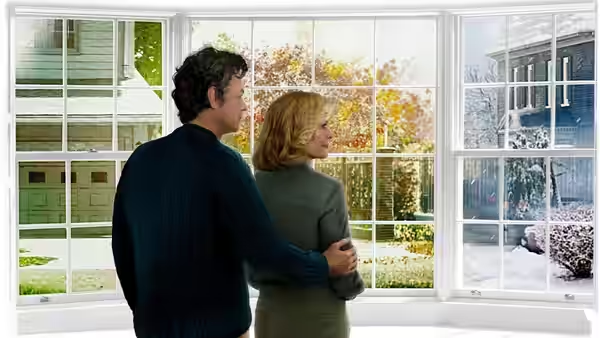
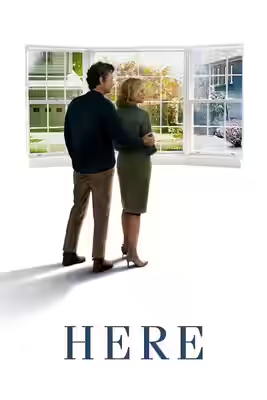
Robert Zemeckis has built a film on a single rule: the camera does not move. It looks at one patch of ground for 104 minutes, from before there are people on it, through the building of a house, to the present day, and the years arrive as rectangles that slide in over the frame like windows opening on other decades. The idea comes from Richard McGuire’s graphic novel, which does the same thing on paper. It is a good idea, and we sat down wanting it to work. What Zemeckis and Eric Roth have hung on it is a family drama so thin that the house is more interesting than anyone who lives in it.
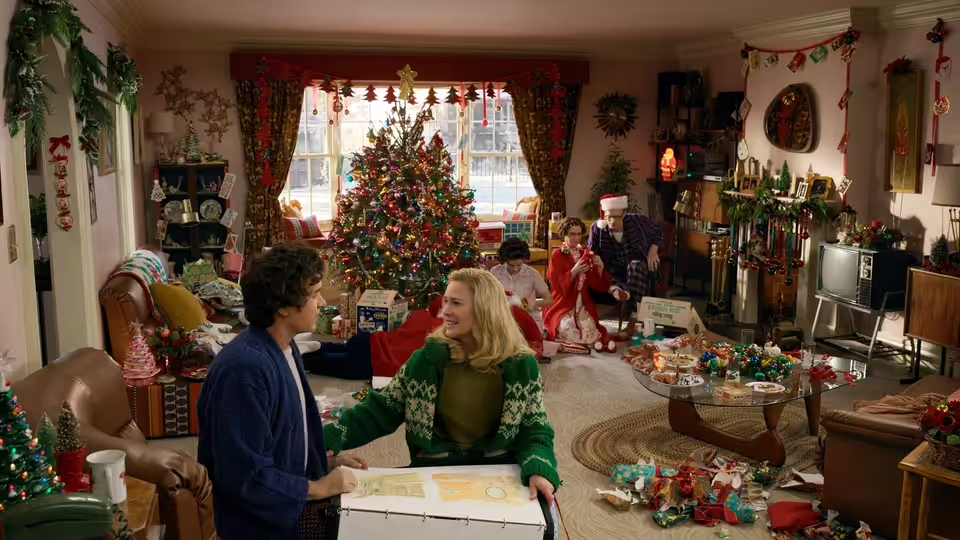
For a while the trick holds. Don Burgess lights the living room the same way in every era, so that when the edit opens a panel in one corner, a Christmas in one decade over a summer afternoon in another, the two pictures meet without an edge you can spot. Ashley Lamont redresses the same few square feet a dozen times, wallpaper, furniture, television, bigger television, and Joanna Johnston’s costumes do most of the work of telling us the year. We were interested for twenty minutes, the way you are interested in a well-made toy. Then we started waiting for a story.
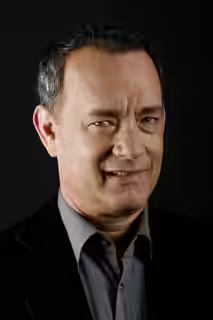
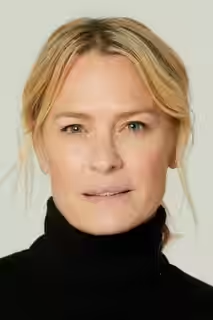
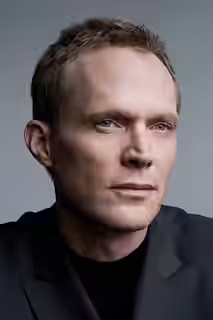
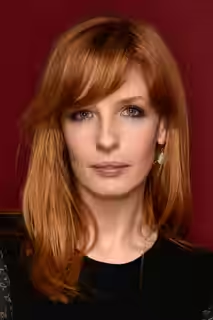
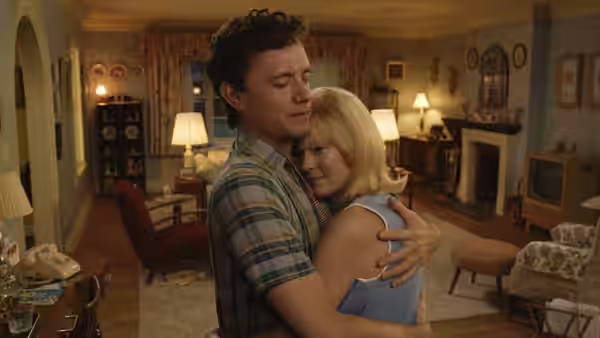
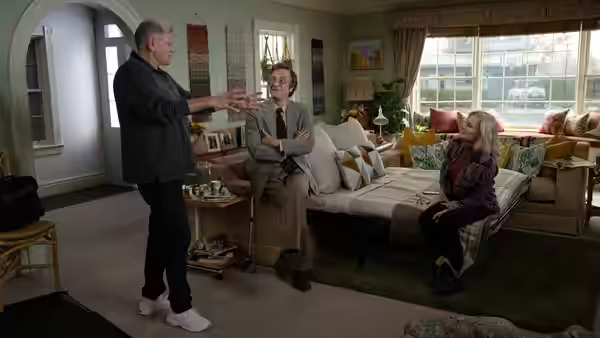
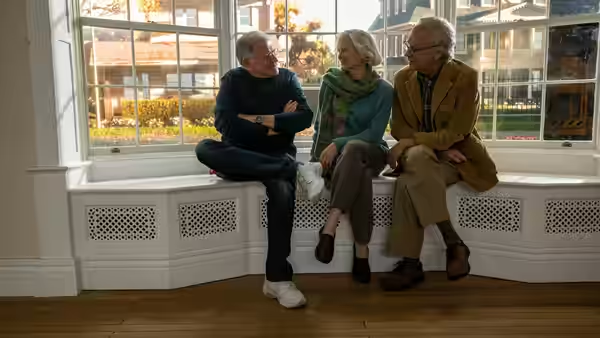
The story is Richard (Tom Hanks) and Margaret (Robin Wright), who meet young and grow old in this room, and Al (Paul Bettany) and Rose (Kelly Reilly), the generation before them. Hanks and Wright are de-aged for much of the running time, and this is where the film lost us. Young Richard’s face is smooth in a way skin is not, the mouth a fraction behind the words, the eyes fixed while the rest of him moves. We found it uncomfortable, then dull, then uncomfortable again, and we could never stop looking at the join. Hanks at his own age is fine. Hanks made young is a computer’s guess at a photograph.
The script does not help. Zemeckis and Roth write people who announce what they feel and then announce what year it is, and the fixed camera means they must do it from the sofa. Other households pass through the house for a scene or two, and history stops in when it has a costume to show us, then leaves before anyone in it has become a person. Nothing can be followed out of the door, so every scene ends when its panel closes, and Goldsmith has to cut the century into pieces a minute or two long. Nothing is allowed to build.
Wright is the reason to stay. Margaret is the one character who wants something the house cannot give her, and Wright plays the wanting without the script’s help, mostly in how she looks at the door. Bettany has one good scene of sour domestic cruelty and makes it count. Alan Silvestri’s score is quiet for long stretches and then swells exactly when you expect it to, which is a pity, because the quiet passages are the better ones. And there is a scene near the end we will not describe, two people in a room they both know too well, that got at us more than the preceding ninety minutes had earned. We were surprised, and slightly cross to be surprised so late.
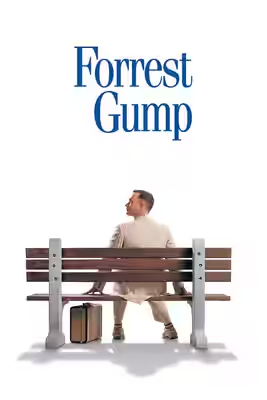
Zemeckis, Hanks, Wright and Roth made Forrest Gump together in 1994, and Burgess, Johnston and Silvestri were on that film too. It also ran a small life through big history, and it at least gave the history a joke or a song. This one gives it a change of wallpaper. Zemeckis has spent much of the last two decades testing what a camera can be made to do, and this is his most disciplined experiment in years. It is also the one with the least in it.
The 12 certificate is right. Watch it at home if you must watch it, where the panels shrink towards the size of the pages they came from and the effect makes more sense. The camera never leaves the room. About an hour in, we rather wished it would.