Lloyd Bacon’s service comedy is thin and knows it. James Cagney, all elbows and grievance, carries 87 minutes on cheek, with Pat O’Brien barking back and real ships behind them. The second half asks us to take the hero seriously, and we did not quite.
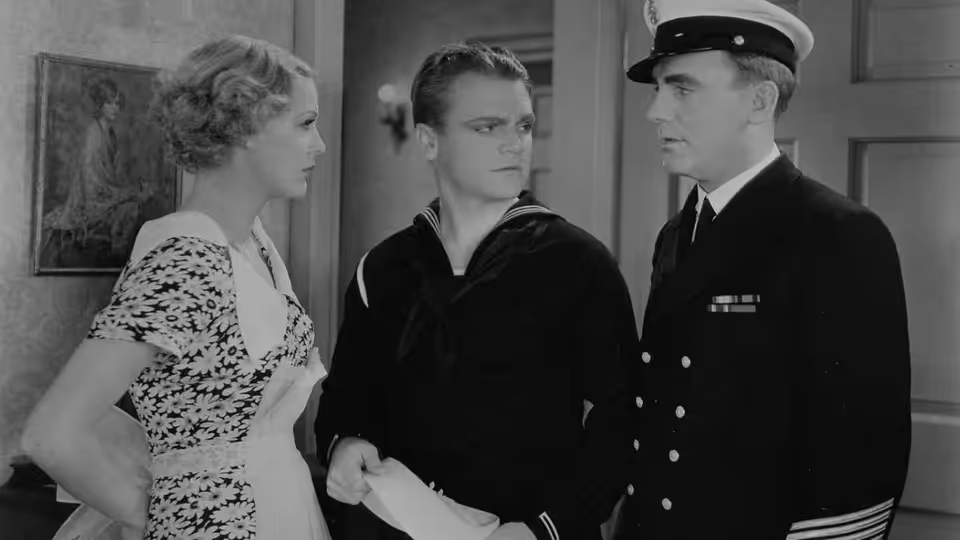
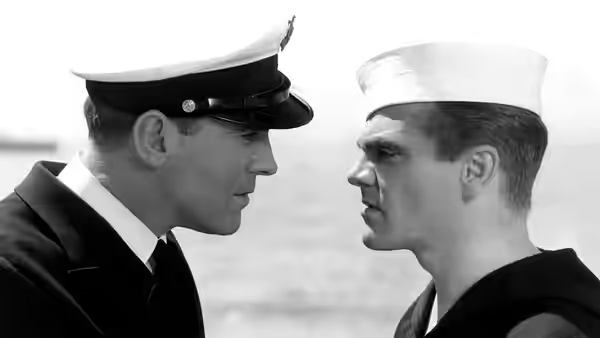
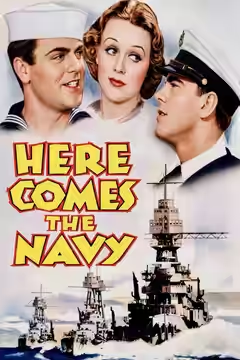
The poster promised James Cagney, Pat O’Brien and the whole United States fleet, and for once the poster is honest. Here Comes the Navy is a recruiting film with a plot attached, and Lloyd Bacon does not pretend otherwise. Chesty O’Conner (Cagney), a shipyard riveter with a mouth on him, picks a fight with a navy chief, Biff Martin (O’Brien), loses, and enlists so he can have another go. Then he falls for the chief’s sister. That is the whole of it, and at 87 minutes it does not need more. It is worth your evening if 1930s knockabout is your thing. If it is not, nothing here will convert you.
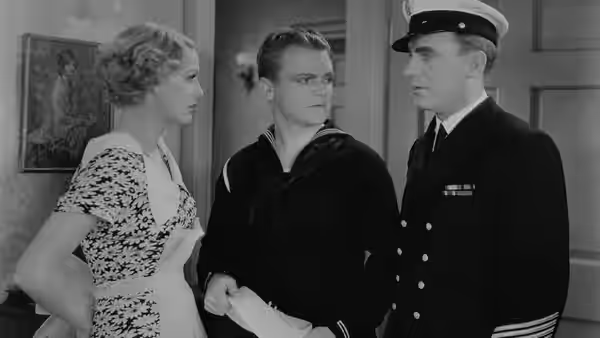
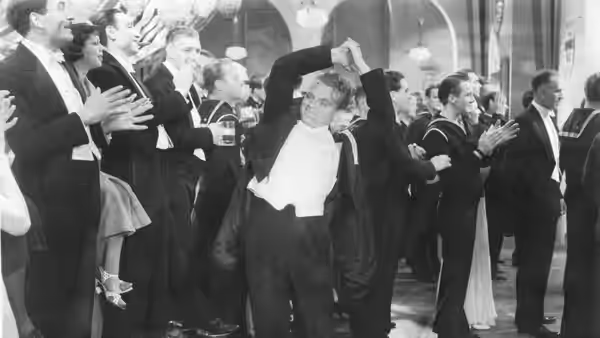
Cagney is the reason to watch, and he knows it. He plays Chesty as a man who cannot pass a doorway without knocking the frame on purpose. He talks faster than anyone else on screen, walks as if the floor owes him money, and treats every officer’s order as an opening bid. We laughed out loud at the dance hall, where Guinn ‘Big Boy’ Williams, as the floor manager, tries to keep the peace between two men who plainly came for a fight, and the fight arrives on schedule. What surprised us was how much we enjoyed Cagney doing nothing: standing at attention with his jaw working, hating every second, saying not a word. He is funnier still than when he is talking.
O’Brien has the harder and duller job. Biff is the loud one, the man who has read the rulebook and would like you to hear it, and O’Brien plays him at full volume from the first scene, which leaves him nowhere to go. Cagney needles, O’Brien bellows, and the film loves them both. Frank McHugh’s Droopy is the sidekick who did not want to be here, and Maude Eburne, as his mother, gets the best two minutes of the supporting cast by looking at her son as if he were a parcel delivered to the wrong address.
Arthur Edeson shot much of it on real ships, with the navy’s cooperation, and it shows. The deck is wide and hard-lit, the guns are the size of houses, and the men are small white figures moving about on grey steel. It gives a slight comedy a weight it did not earn on the page. George Amy cuts the brawls fast. Orry-Kelly’s costumes for Gloria Stuart set her against a wall of white uniforms, so that she reads as the one person on screen who is not in the navy. That is more or less her character.
It is also the film’s weakness. Dorothy Martin is a prize, not a person; Stuart is warm and does what she can, but the script gives her a brother to placate and a man to wait for, and little else. Dorothy Tree’s Gladys, the girl from the dance hall, has more snap in her few scenes than Dorothy has in the whole picture. The bigger problem is Chesty. Around the midpoint the film starts to want us to admire him, and the moment it does he becomes less interesting. A pest is funny. A pest being taught the value of service is a training film with better lighting. The last act moves to a set piece at sea and in the air that we will not describe, and it is well staged, but by then the comedy has gone quiet and we missed it.
There are stretches where the film simply stops to look at the fleet: ships in line, guns swinging, sailors hauling rope. They are handsome and they are padding, and a film this short has no business padding. Robert Barrat’s Commander Denny and Willard Robertson’s executive officer are there to explain the rules Chesty is breaking, and they do it clearly and often.
Set against Bacon’s Footlight Parade (1933), which also had Cagney and a great deal more going on, this is a smaller, plainer film. Set against Cagney’s gangster pictures, it is the same man with the gun taken away and a cap put on. Watch it for him, on a wet afternoon, and do not expect the second half to keep the promises of the first. The navy comes out of it looking well, which was rather the point.