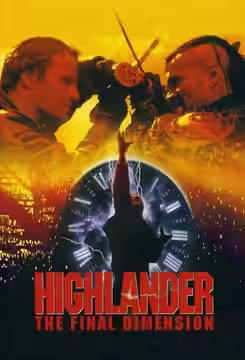
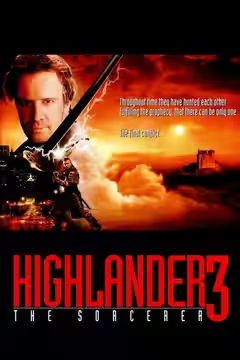
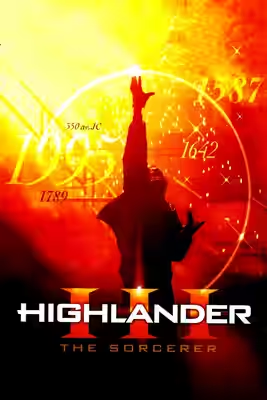
The third Highlander film wipes the second from the record and starts again, and Mario Van Peebles’s cackling sorcerer is the only part that justifies the effort. The rest is a shorter, duller copy of the first film with better light and worse ideas.
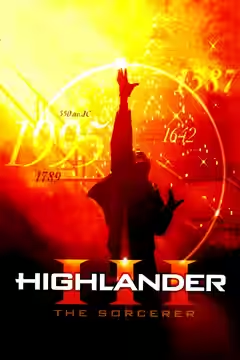
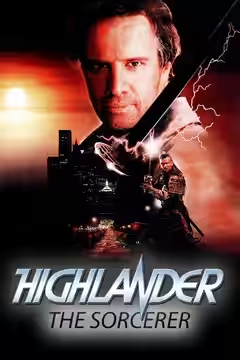
Highlander III: The Sorcerer does something sequels rarely admit to: it pretends the last one never happened. Nothing here refers to the second film, and Connor MacLeod (Christopher Lambert) is once more the last of his kind, grieving and waiting. The screenplay, by René Manzor, Brad Mirman and Paul Ohl from a story by William N. Panzer and Mirman, goes back to the shape of the first picture almost beat for beat: a wise teacher in the past, a monster who wants Connor’s head, a woman in the present who asks the questions, a big city for the finale. Andy Morahan directs, and at 99 minutes it is at least brisk.
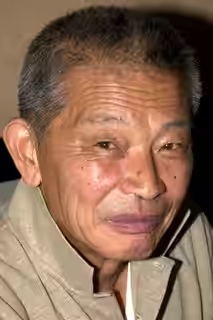
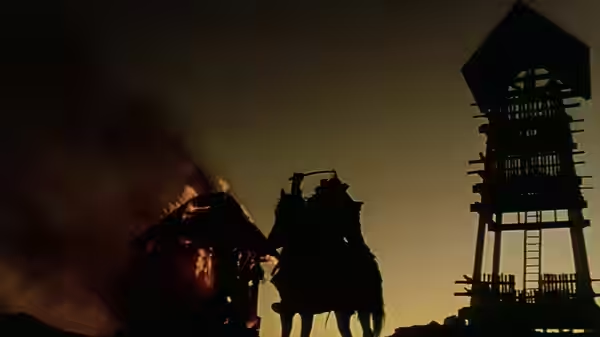
The opening stretch with Nakano (Mako) is the best-looking in the film. Ben Morahan and Gilles Aird fill his quarters with smoke, firelight and hanging iron, and François Aubry and Steven Chivers light Mako from below until he looks carved out of rock. Then Kane (Mario Van Peebles) arrives, and the film finds the one thing the first Highlander did not have.
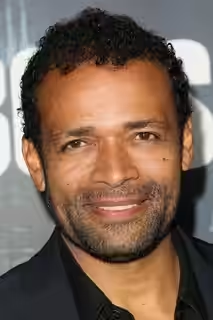
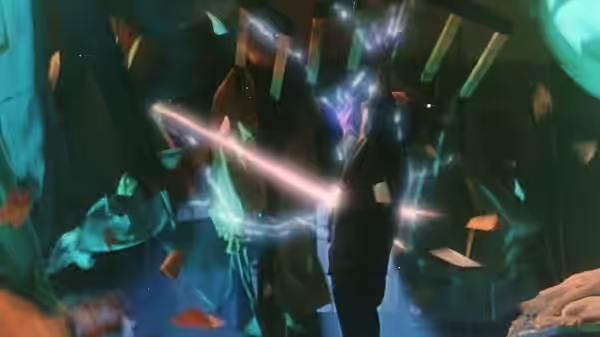
Van Peebles is having a wonderful time. He laughs at his own lines, leers at everything with a pulse, and plays Kane as a man who finds immortality hilarious and everybody else slow. Kane also has the sorcery of the title, which is the brief for the effects team: he turns into something else and back, and the transformations are smooth for 1994. The first time it happened we sat up. By the third it is the same shot with a different background, and Kane has stopped being frightening and become a man doing a trick.
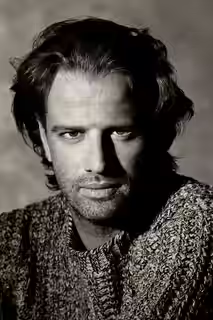
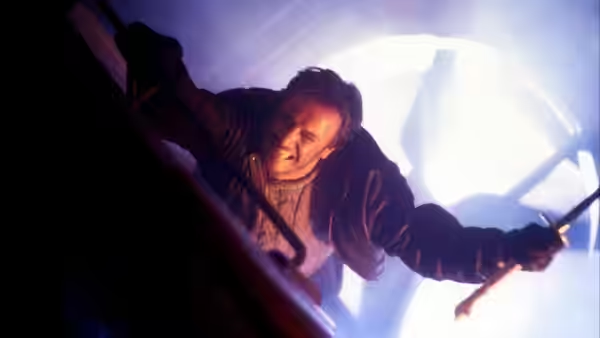
Lambert plays Connor as he always has, hoarse and faintly amused, and he is at his best when the film leaves him alone. In the Moroccan scenes, Aubry and Chivers shoot the rooftops in warm late light and he looks for once like a man who has had centuries to learn to sit still. Deborah Kara Unger has two parts, Alex Johnson and Sarah. She is good in both and given almost nothing in either. Alex asks the questions; Sarah gets the wigs and the candlelight.
The trouble is the middle hour. Yves Langlois cuts between centuries and countries as if turning pages, and the film is never anywhere long enough to build a scene. Martin Neufeld’s Lt. John Stenn heads a police strand the film keeps forgetting about. We were bored, and then slightly embarrassed about it, because we had come wanting to like a film with a sorcerer in the title and it kept handing us the same scene: Kane appears, Kane laughs, Kane vanishes, Connor stares out of a window. J. Peter Robinson’s score swells under each of these as if something has happened.
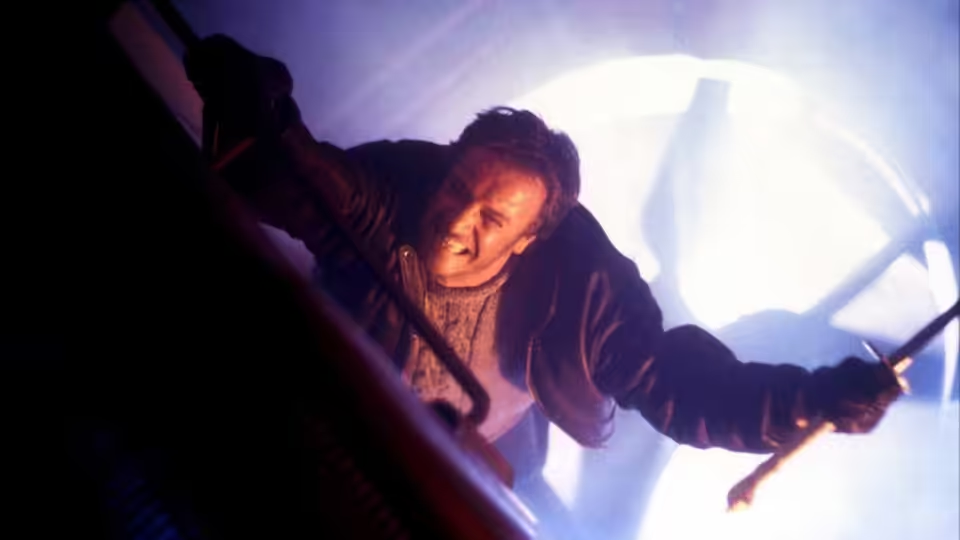
The closing duel earns some of it back. Morahan shoots most of the film like a pop promo, all slow motion and backlit smoke, but here he lets the two men hit each other and Langlois cuts on the blades rather than around them. It is clumsy and it has snap, which is more than the first hour managed.
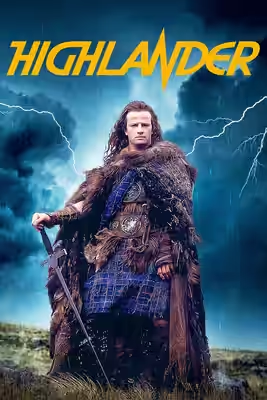
The first film, from 1986, told this story once and told it with more nerve. This one has handsomer locations, and Mario Davignon and Jackie Budin’s costumes are a pleasure, the furs and leather on Kane and his men especially, but it has no idea of its own beyond the sorcerer, and the sorcerer turns out to be a villain with a party trick. Most critics have landed about where we have, split between big dumb fun and dreary, and we found it both at different points in the same evening.
Admirers of Connor MacLeod will want to see him swing the sword again, and 99 minutes is a kindness. Everyone else can treat the first picture as the only one, which is what this film has done with the second.