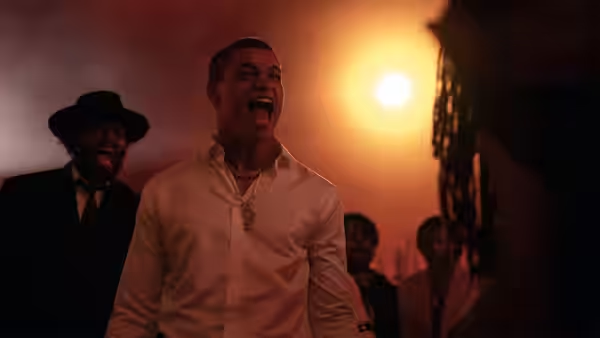
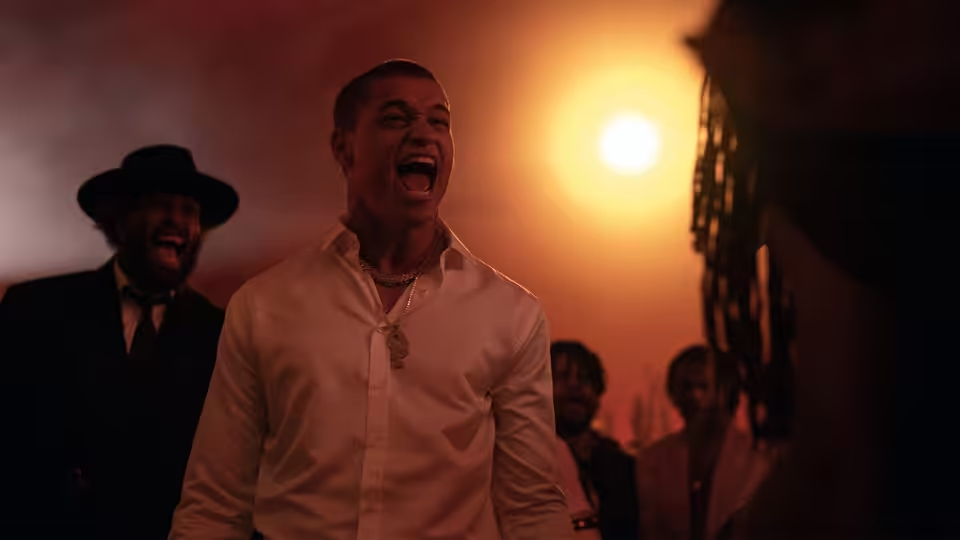
Cam (Tyriq Withers) laughs in a white shirt as men stand behind him at sunset
Film review

HIM

2025 · Directed by Justin Tipping · 1h 36m

In a sentenceMarlon Wayans looks dangerous enough without quite so much assistance from the lighting

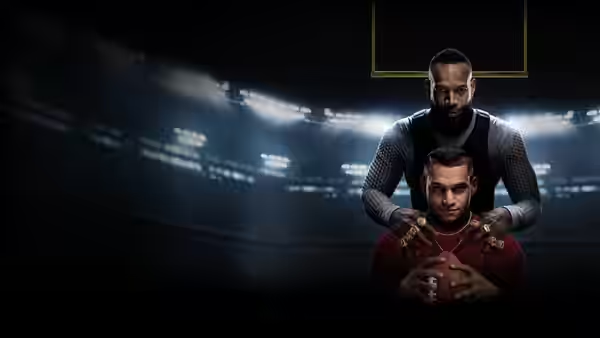
American football provides the setting for Cam (Tyriq Withers), Isaiah (Marlon Wayans) and Elsie (Julia Fox), with ambition and physical punishment bound up in the pursuit of greatness. Isaiah is a quarterback in a sport whose demands on the body become the basis for supernatural horror. Football violence, graphic injuries and religious imagery bring the prospect of sacrifice into the pursuit of sporting success. Cam and Isaiah stand at the centre of a story concerned with what that success requires and the damage done to those involved.

Plays from YouTube when you press play; nothing loads from them until then.

Fi1m review

Marlon Wayans supplies menace, and the football violence has an unpleasant force. But HIM smothers its promising subject in blunt symbolism and confused plotting, leaving too few scares to reward the effort.

HIM has a promising subject for a horror film: American football, with its appetite for bodily punishment and its promises of greatness. Justin Tipping gets some nasty images out of that subject, and Marlon Wayans gives it a threatening human presence. There is too little suspense or thought in the script for us to recommend it. At 96 minutes, it should have room to develop its ideas about what sporting ambition costs; instead, it spends too much time restating them.

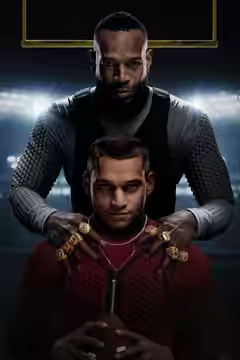
As Isaiah, Marlon Wayans makes the quarterback threatening even when his motives are difficult to read. There is enough force in the performance to keep us watching through stretches where the story has little else to offer. Tyriq Withers, playing Cam, has enough charm to make us wish the writing gave him more to work with. With so little help from the story, the actors’ commitment has to account for much of our interest.

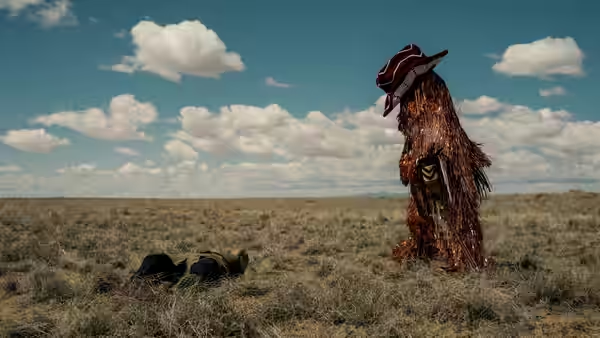
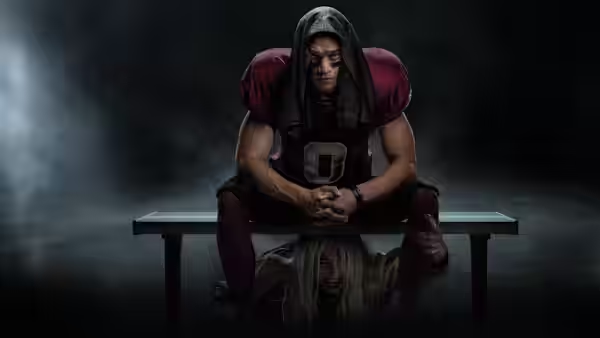
Kira Kelly’s dark cinematography suits a film that wants sporting ambition to feel unsafe. We winced at the X-ray-style violence, which makes bodily injury difficult to ignore. Those images give the criticism of football something specific to work with: the spectacle involves damage to a human body. Justin Tipping is less persuasive when the imagery becomes religious, because the broad suggestion that football has become a faith does little to clarify what the film thinks about its demands.

Jordan Ferrer’s production design helps make that religious imagery imposing, although its prominence also exposes how little the script does with it. There is care in the way the film looks, even when the symbolism is blunt. The Haxan Cloak’s unsettling score gives the images an unease they need, and it works without requiring the story to explain itself. The trouble is that ominous music can sustain discomfort for only so long when the action gives us so little to anticipate.

The screenplay by Justin Tipping, Zack Akers and Skip Bronkie keeps returning to brutality and sacrifice without making either more interesting. Its supernatural plotting is vague enough to weaken our sense of what is at stake, while its broader direction is disappointingly easy to predict. Taylor Joy Mason’s editing cannot bring much order to the competing emphases on football, horror and commentary. The film keeps changing how it presents its subject without finding much more to say about it.

As a sports horror film, it has a straightforward advantage: the physical punishment is already disturbing before anything supernatural is added. The opening suggests that familiar sporting demands might become frightening when we look at them closely. Instead, the increasingly excessive second half makes the football feel less important, and the scares rarely justify that move. We need some sense of how danger operates if we are going to worry about it, and the film leaves too much of that unclear.

No knowledge of football is needed to follow the complaint that success can demand too much of a person. What is missing is a more searching account of who accepts those demands and why. Marlon Wayans can hold our attention, but his performance cannot settle those questions for the writers. Anyone drawn by his name should be prepared for long stretches in which his presence is the only source of tension.

Critical consensus AI synthesised

46
Positive
2
Mixed
8
Negative
8

Most critics find HIM disappointing or uneven, though praise consistently gathers around Marlon Wayans’s committed, unsettling performance. Even several negative reviews credit him with holding attention when the story falters. The film’s imagery also earns broad approval, particularly its graphic treatment of bodily damage and its dark cinematography. Production design and the score receive some praise, with critics often finding more to admire in the craft than in the storytelling.

Reservations centre on muddled plotting, weak scares and underdeveloped ideas about American football’s physical costs and masculine ideals. The spread is wide: Variety finds the body horror effective as a critique of the sport’s brutality, while Empire responds to the ambition and direction despite storytelling problems. Less persuaded critics see the style overwhelming ideas that never develop. Wayans is the closest thing to a point of agreement, though The Guardian dissents, finding his performance overplayed.

Empire
22 September 2025 · Olly Richards
75*

Richards finds the film a riveting, ambitious ride, though its style sometimes overwhelms its storytelling. He especially praises Marlon Wayans’s committed performance and the film’s visually striking direction.

Read the full review →
Variety
17 September 2025 · Peter Debruge
75*

Debruge finds the film a tense, surreal critique of football’s brutal demands, though its style can feel self-indulgent. He praises its unsettling body-horror imagery for making the sport’s physical costs impossible to ignore.

Read the full review →
The New York Times
18 September 2025
64*

The page content is inaccessible, so the critic’s verdict cannot be determined. No specific praise or complaint is available in the supplied text.

Read the full review →
Time Out
17 September 2025 · ★★★ · Elizabeth Weitzman
60

The review gives the film a mixed-positive verdict, describing its blend of gridiron action and gore as spiky. It singles out Marlon Wayans cutting loose as a quarterback.

Read the full review →
The AV Club
18 September 2025 · C · Natalia Keogan
57

Keogan finds the film an unsuccessful blend of football and horror that fails to deliver meaningful cultural critique. She faults its vague supernatural plot and heavy-handed religious imagery for sidelining football’s real-world harms and draining the horror of scares.

Read the full review →
IndieWire
18 September 2025 · C- · David Ehrlich
50

Ehrlich pans the film as dull, compromised, and ineffective at critiquing sports culture. He singles out Marlon Wayans’s intense performance as the one element holding it together.

Read the full review →

Straight answers AI written, from our review

Is HIM worth watching?
HIM has too little suspense to earn our recommendation at 48/100, though Marlon Wayans gives sports-horror enthusiasts a reason to consider it. We find his threatening presence and the painful football violence more effective than the blunt religious symbolism and confused supernatural plotting, which leave too few scares to reward the effort.
How long is HIM, and what is it rated?
HIM runs 1h 36m. It is a horror and mystery film.
Where can I watch HIM in Saudi Arabia?
HIM is not on any streaming or rental service in Saudi Arabia at the moment. It is available in 46 other countries; change your country at the top of the page to see where. Availability is checked daily.
How violent or frightening is HIM, and is it suitable for children?
HIM carries a UK 18 certificate and is unsuitable for children, with graphic injuries and forceful football violence making it a poor choice for the squeamish. We wince at the X-ray-style depictions of bodily damage; the supernatural horror supplies fewer effective scares, but that does not make the physical punishment any easier to watch.
How does HIM compare to The Wrestler?
HIM is the weaker choice beside The Wrestler, which we recommend for its clearer, more affecting treatment of physical damage and professional pride. HIM turns sporting punishment into supernatural horror, with muddled results, while Mickey Rourke gives The Wrestler tenderness and humour, even when its familiar second-chance story presses too hard.
What should I watch after HIM?
After HIM, try The Wrestler (2008, Fi1m 85): Physical damage and professional pride, with the human cost kept painfully clear. Then Perfect Blue (1997, Fi1m 82): Celebrity pressure becomes psychological horror, with far tighter control of its uncertainties; and The Red Shoes (1948, Fi1m 92): Artistic ambition demands sacrifice in a film that makes the bargain hurt.

Cast

If you liked this, try…

  1. Seconds (1966) · not on Fi1m yetA disturbing look at reinvention, with bodily horror rooted in dissatisfaction.

  2. The Wrestler (2008, Fi1m 85)Physical damage and professional pride, with the human cost kept painfully clear.

  3. Perfect Blue (1997, Fi1m 82)Celebrity pressure becomes psychological horror, with far tighter control of its uncertainties.

  4. The Red Shoes (1948, Fi1m 92)Artistic ambition demands sacrifice in a film that makes the bargain hurt.

  5. Foxcatcher (2014, Fi1m 82)A sporting patron’s need for control makes the training environment steadily more frightening.