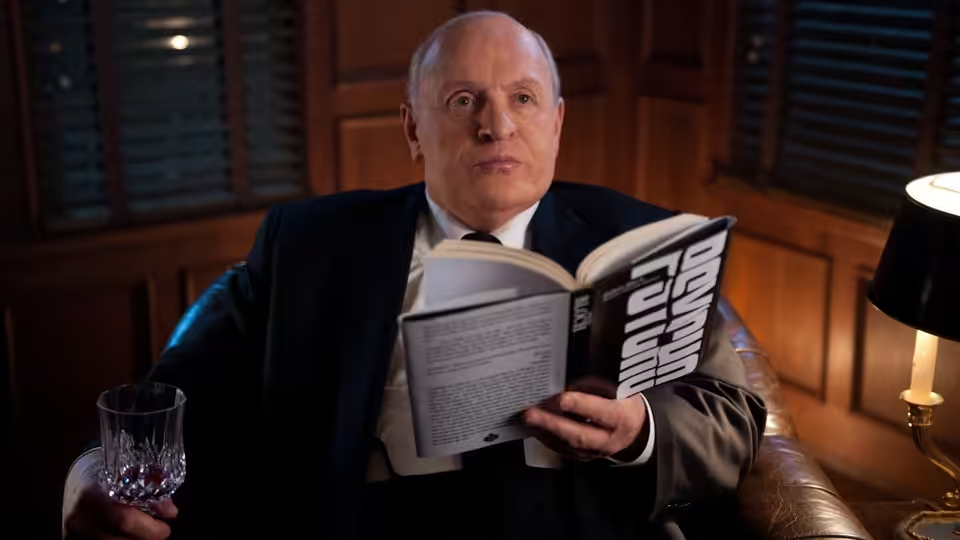
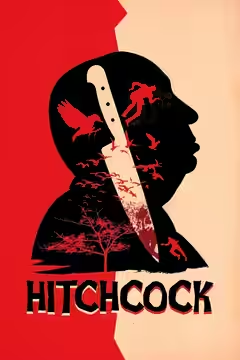
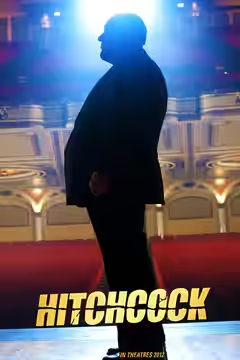
Anthony Hopkins and Helen Mirren bring wit to the marriage, but Sacha Gervasi’s Hitchcock offers little insight into the making of Psycho. Two pleasing performances in a disappointingly shallow film.
Sacha Gervasi’s Hitchcock has a sensible subject: the marriage behind the making of Psycho, and the difficulty of living with a man accustomed to giving directions. The trouble is that the film makes the marriage predictable and the filmmaking strangely uninteresting. Anthony Hopkins and Helen Mirren provide enough friction and humour to keep us watching, but the screenplay by John J. McLaughlin rarely gets beyond familiar complaints about a demanding husband. It is watchable, thin, and less curious about its subject than it ought to be.
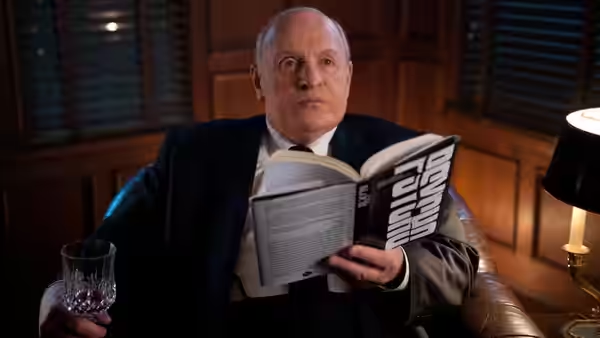
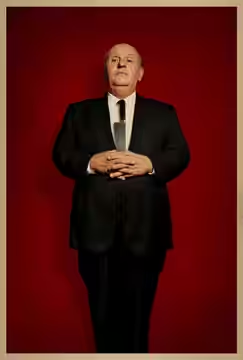
Anthony Hopkins is most enjoyable when he allows Alfred Hitchcock to be stubborn and faintly ridiculous without making him impossible company. The jokes have an appetite behind them; this is a man who enjoys keeping other people occupied with him. Helen Mirren’s Alma Reville has the harder task of making exasperation feel specific rather than dutiful. We laughed at their dry exchanges, because she refuses to treat his stubbornness as another reason to admire him. Their familiarity makes the domestic scenes work for a while.
But John J. McLaughlin keeps returning to marital strain as though each fresh disagreement explains something about the work. It does not help that Alma Reville is more persuasive as a person than the disputes arranged around her. Helen Mirren makes us interested in what she thinks; the script keeps asking how she feels about her husband. That is a dispiriting limitation in a film that wants to give the wife her due.
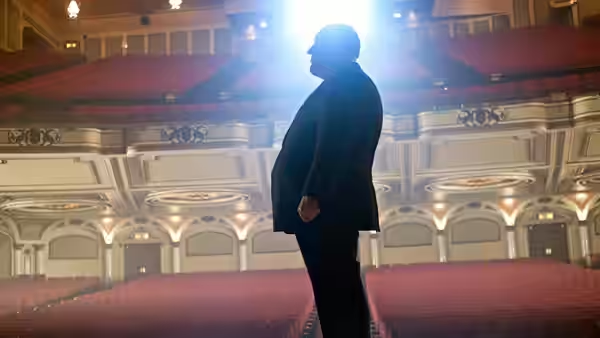
Jeff Cronenweth’s photography contributes little of the unease the subject invites, while Judy Becker’s production design is more satisfying as period Hollywood recreation than as a place where people work. We can recognise the setting without learning much about the job. Danny Elfman’s music helps the lighter passages along, but it cannot supply the tension missing from the marriage. The film’s comfortable manner keeps suggesting that none of these difficulties should trouble us for long.
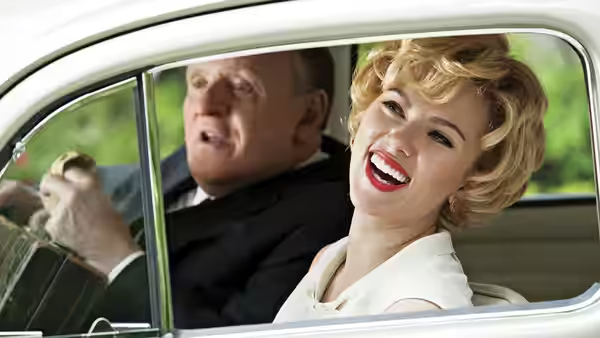
Pamela Martin’s editing keeps the 98 minutes moving, though a brisk pace does not prevent the middle from sagging. The difficulty is repetition: returning to the marriage does not necessarily deepen our understanding of it. Scarlett Johansson provides a welcome change as Janet Leigh, with a composure that makes the production passages feel less laboured. She also gives us someone worth watching outside the central couple, whose disagreements have begun to feel like an obligation by the time the film returns to them.
The scenes linking Alfred Hitchcock with Ed Gein, played by Michael Wincott, are the least convincing attempt to get inside the director’s head. They press for a psychological explanation that the rest of the film has not earned. We do not need a biographical drama to solve its subject, but we do need more than the suggestion that private unhappiness accounts for disturbing work. A film about filmmaking has plenty of room for competing personalities and awkward decisions; here those possibilities are repeatedly narrowed to the husband’s problems.
There is enough pleasure in Anthony Hopkins and Helen Mirren together to understand the appeal. Anyone chiefly interested in the making of Psycho, however, will have to sit through a good deal of domestic business for surprisingly little illumination. Come for their sparring if that is enough; do not expect much instruction in how to frighten an audience.