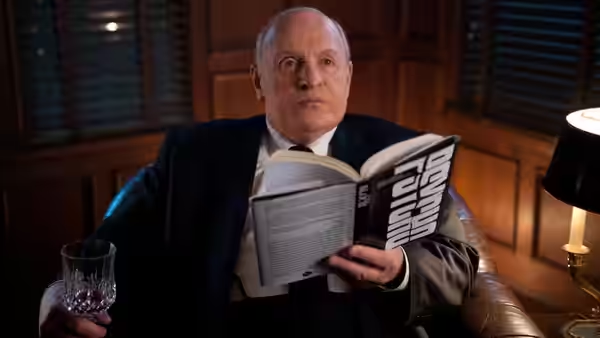
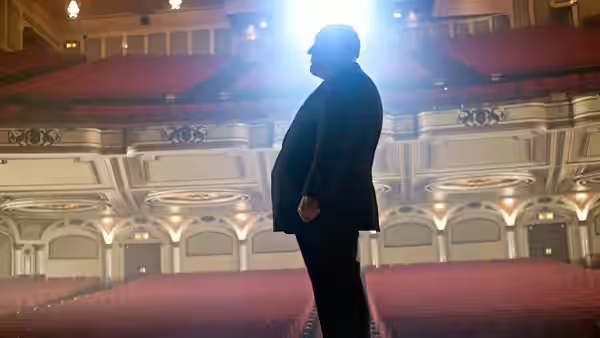
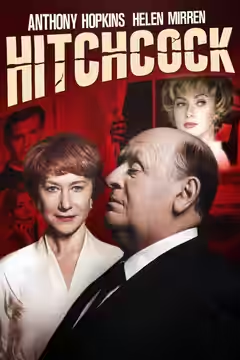
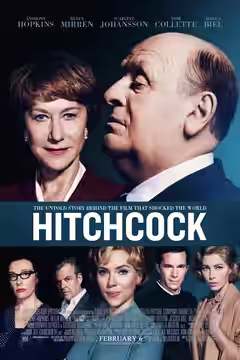
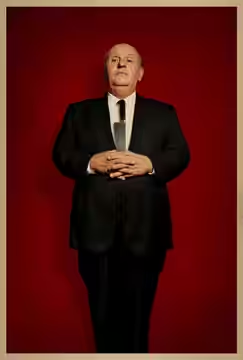
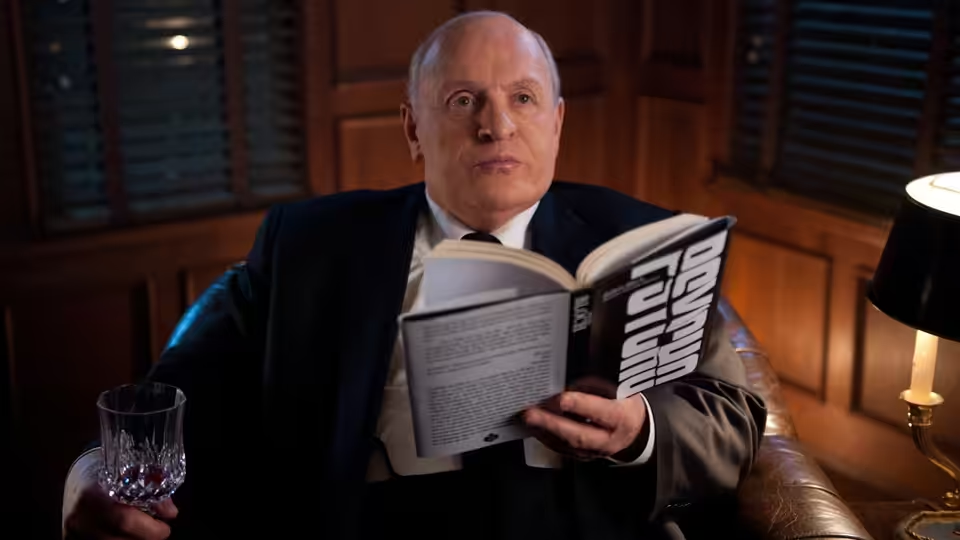
Alfred Hitchcock (Anthony Hopkins) reads a book in a wood-paneled room
Film review

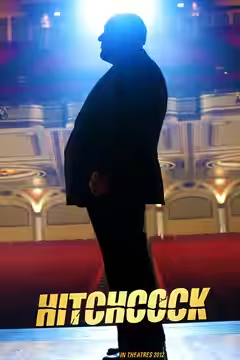
Hitchcock

2012 · Directed by Sacha Gervasi · 1h 38m · Kijkwijzer 14

In a sentenceWe came for Psycho and spent rather a lot of time listening to a couple argue

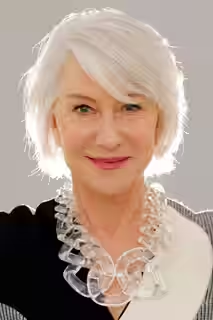
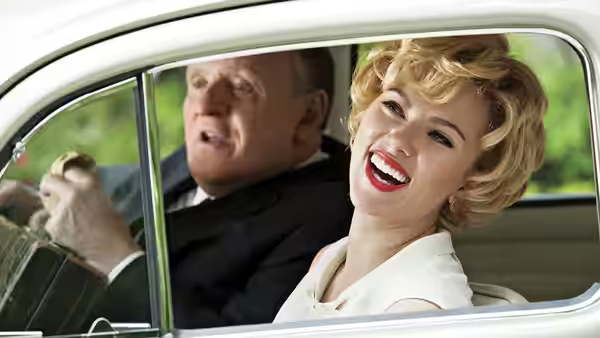
In Hollywood, Alfred Hitchcock (Anthony Hopkins) sets out to make Psycho, a horror film the industry is reluctant to support. His wife, Alma Reville (Helen Mirren), has to contend with the proposed picture and the tensions within their marriage. Janet Leigh (Scarlett Johansson) joins the production as the director presses ahead with his choice of material. The business of making the film runs alongside the couple’s disagreements, with Alfred Hitchcock’s determination to get his own way meeting resistance both at work and at home.

Plays from YouTube when you press play; nothing loads from them until then.

Fi1m review

Anthony Hopkins and Helen Mirren bring wit to the marriage, but Sacha Gervasi’s Hitchcock offers little insight into the making of Psycho. Two pleasing performances in a disappointingly shallow film.

Sacha Gervasi’s Hitchcock has a sensible subject: the marriage behind the making of Psycho, and the difficulty of living with a man accustomed to giving directions. The trouble is that the film makes the marriage predictable and the filmmaking strangely uninteresting. Anthony Hopkins and Helen Mirren provide enough friction and humour to keep us watching, but the screenplay by John J. McLaughlin rarely gets beyond familiar complaints about a demanding husband. It is watchable, thin, and less curious about its subject than it ought to be.

Anthony Hopkins is most enjoyable when he allows Alfred Hitchcock to be stubborn and faintly ridiculous without making him impossible company. The jokes have an appetite behind them; this is a man who enjoys keeping other people occupied with him. Helen Mirren’s Alma Reville has the harder task of making exasperation feel specific rather than dutiful. We laughed at their dry exchanges, because she refuses to treat his stubbornness as another reason to admire him. Their familiarity makes the domestic scenes work for a while.

But John J. McLaughlin keeps returning to marital strain as though each fresh disagreement explains something about the work. It does not help that Alma Reville is more persuasive as a person than the disputes arranged around her. Helen Mirren makes us interested in what she thinks; the script keeps asking how she feels about her husband. That is a dispiriting limitation in a film that wants to give the wife her due.

Jeff Cronenweth’s photography contributes little of the unease the subject invites, while Judy Becker’s production design is more satisfying as period Hollywood recreation than as a place where people work. We can recognise the setting without learning much about the job. Danny Elfman’s music helps the lighter passages along, but it cannot supply the tension missing from the marriage. The film’s comfortable manner keeps suggesting that none of these difficulties should trouble us for long.

Pamela Martin’s editing keeps the 98 minutes moving, though a brisk pace does not prevent the middle from sagging. The difficulty is repetition: returning to the marriage does not necessarily deepen our understanding of it. Scarlett Johansson provides a welcome change as Janet Leigh, with a composure that makes the production passages feel less laboured. She also gives us someone worth watching outside the central couple, whose disagreements have begun to feel like an obligation by the time the film returns to them.

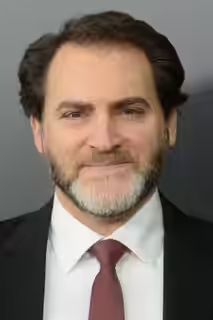
The scenes linking Alfred Hitchcock with Ed Gein, played by Michael Wincott, are the least convincing attempt to get inside the director’s head. They press for a psychological explanation that the rest of the film has not earned. We do not need a biographical drama to solve its subject, but we do need more than the suggestion that private unhappiness accounts for disturbing work. A film about filmmaking has plenty of room for competing personalities and awkward decisions; here those possibilities are repeatedly narrowed to the husband’s problems.

There is enough pleasure in Anthony Hopkins and Helen Mirren together to understand the appeal. Anyone chiefly interested in the making of Psycho, however, will have to sit through a good deal of domestic business for surprisingly little illumination. Come for their sparring if that is enough; do not expect much instruction in how to frighten an audience.

Critical consensus AI synthesised

54
Positive
6
Mixed
9
Negative
7

The consensus on Hitchcock is mixed, with praise clustering around the cast rather than the film’s account of creativity or marriage. Anthony Hopkins and Helen Mirren earn repeated approval for their playful exchanges, dry humour and suggestions of affection beneath the friction. Even several unfavourable reviews find something to enjoy in the performances, while Scarlett Johansson’s Janet Leigh receives occasional praise. The more receptive critics find a lively, accessible entertainment, despite uneven storytelling.

The divide is wide over how much those performances can compensate for a shallow portrait. Reservations centre on tidy psychological explanations and a marital drama that several critics find less compelling than the making of Psycho. The Hollywood Reporter welcomes the marriage’s tensions and warmth; the Los Angeles Times finds it uninteresting. There is disagreement over the Ed Gein scenes, too: Little White Lies praises their intensity, while Digital Spy faults the framing device.

The New Yorker
23 November 2012 · Richard Brody
80*

The critic finds the docudrama lively and engaging despite its workmanlike direction and formulaic storytelling. He singles out Hopkins’s performance and an ecstatic late scene in which Hitchcock conducts a famous set piece.

Read the full review →
IndieWire
3 November 2012 · B · Eric Kohn
77

The review finds the film engaging but ultimately weakened by its detour into marital drama. It praises Anthony Hopkins’s vivid, likable performance as Hitchcock.

Read the full review →
The Guardian
2 November 2012 · festival review · John Patterson
75*

The critic finds the film clever and witty, though its middle section sags. Hopkins and Mirren’s performances are singled out as what makes it live and breathe.

Read the full review →
The Hollywood Reporter
2 November 2012 · festival review · Todd McCarthy
75*

McCarthy finds the film absorbing, entertaining, and lively despite some dramatic ups and downs. He especially praises the dryly witty exchanges between Anthony Hopkins and Helen Mirren, which bring the Hitchcock marriage’s tensions and affection to life.

Read the full review →
Film Comment
· Violet Lucca
64*

The page frames the piece as a review comparing Hitchcock and The Girl. Its accessible text does not reveal the critic’s verdict or a specific point of praise or complaint.

Read the full review →
Screen Daily
2 November 2012 · Tim Grierson
64*

The accessible page does not reveal the critic’s verdict. No specific praise or complaint is visible beyond the film’s identification and metadata.

Read the full review →

Straight answers AI written, from our review

Is Hitchcock worth watching?
Hitchcock is watchable for Anthony Hopkins and Helen Mirren’s dry marital sparring, but we find it too shallow to recommend without reservations and score it 55 out of 100. Their humour helps, though anyone hoping for insight into the making of Psycho gets repetitive domestic disagreements and surprisingly little about the work.
How long is Hitchcock, and what is it rated?
Hitchcock runs 1h 38m and is rated 14 by the Kijkwijzer in Belgium. It is a drama film.
Where can I watch Hitchcock in Belgium?
Hitchcock is streaming on Disney+ in Belgium, and it is also available to rent from Apple TV from €3.99. Availability is checked daily; the links above go straight to each service.
How violent or frightening is Hitchcock, and is it suitable for children?
Hitchcock has a UK 12A certificate, so children under 12 need an accompanying adult at the cinema; that classification does not make it suitable for every child. We would steer families towards caution: the focus is adult marital tension, with scenes linking Hitchcock to Ed Gein, though we cannot give a precise account of violence or frightening imagery.
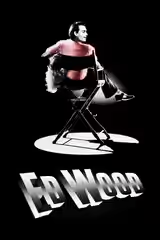
How does Hitchcock compare to Ed Wood?
Hitchcock is the less rewarding choice beside Ed Wood, which we recommend for its humour, kindness and greater affection for people struggling to finish a film. Hopkins and Mirren make Hitchcock intermittently enjoyable, but its marital disputes grow repetitive; Ed Wood gives artistic failure more substance, despite running long.
What should I watch after Hitchcock?
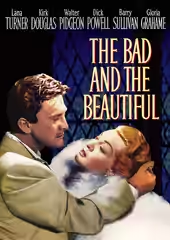
After Hitchcock, try Ed Wood (1994, Fi1m 84): Another troublesome production, with more affection for the people determined to finish it. Then The Bad and the Beautiful (1952, Fi1m 84): Hollywood ambition and damaged loyalties, with sharper teeth behind the polished manners; and Berberian Sound Studio (2012, Fi1m 78): A far more unsettling encounter with the work of manufacturing screen horror.

Cast

Awards

Academy Awards, 2013

Nominated
Best Makeup and Hairstyling

If you liked this, try…

  1. Ed Wood (1994, Fi1m 84)Another troublesome production, with more affection for the people determined to finish it.

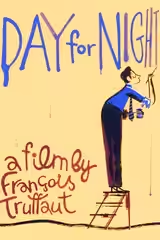
  2. Day for Night (1973) · not on Fi1m yetFor the daily muddle of filmmaking and the relationships strained by it.

  3. The Bad and the Beautiful (1952, Fi1m 84)Hollywood ambition and damaged loyalties, with sharper teeth behind the polished manners.

  4. Berberian Sound Studio (2012, Fi1m 78)A far more unsettling encounter with the work of manufacturing screen horror.

  5. The Wife (2017) · not on Fi1m yetA celebrated husband and an overlooked wife, with the resentment given room.