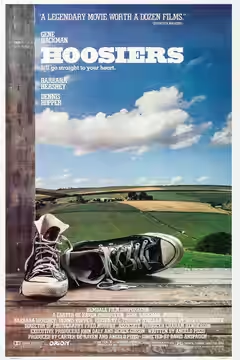
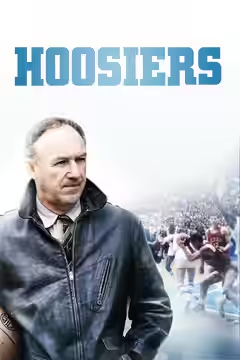
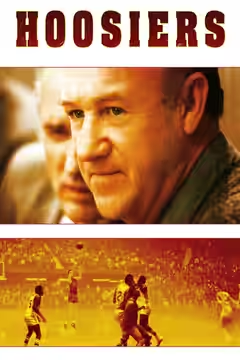
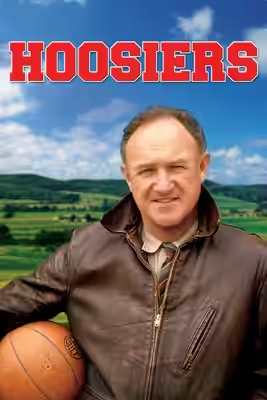
Hoosiers is a satisfying sports drama whose sentiment occasionally gets the better of it. Gene Hackman makes the familiar coaching story worth following, with enough stubbornness to prevent all that encouragement becoming unbearable.
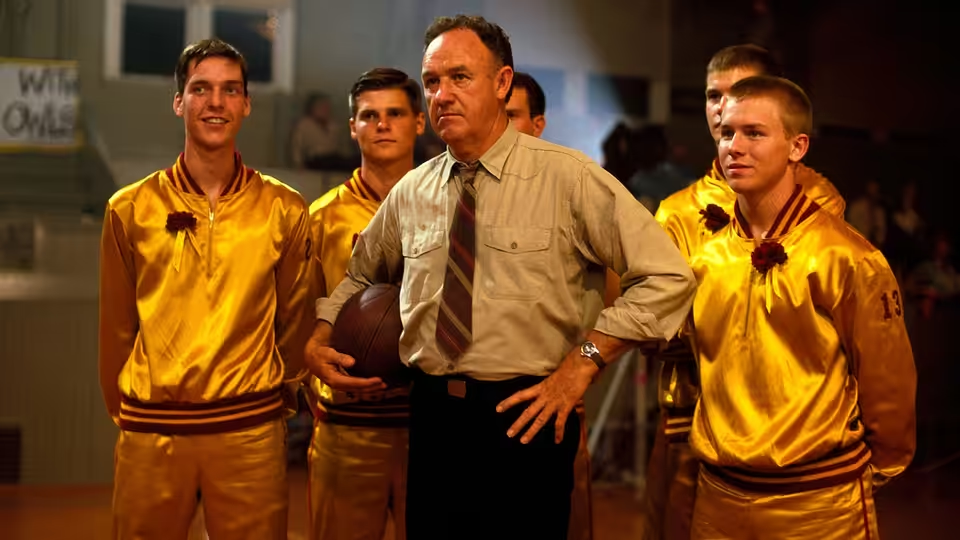
Hoosiers is a satisfying sports drama with a sentimental streak that occasionally needs reining in. David Anspaugh makes the familiar business of a coach meeting his team worth watching before anyone has given us a reason to cheer. Gene Hackman supplies most of that interest, playing Norman Dale with a stubbornness that can make an ordinary exchange feel uncomfortable. He looks capable of making a difficult afternoon worse without imagining he might be responsible.
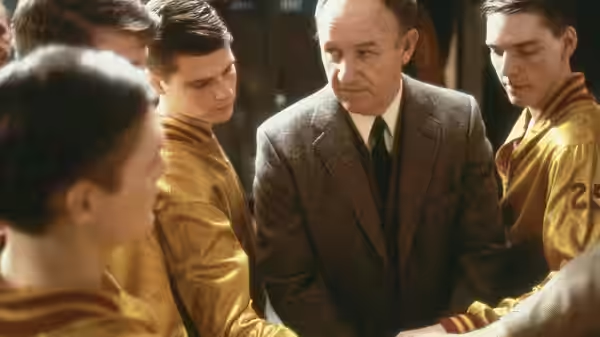
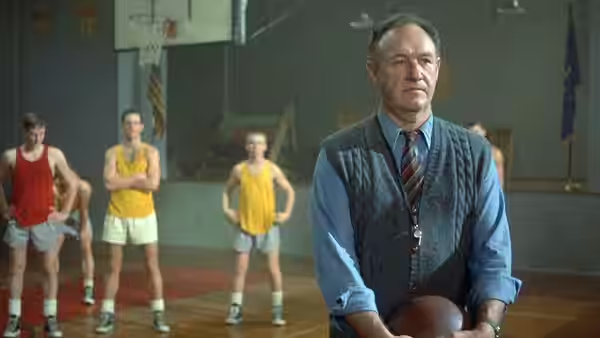
Angelo Pizzo’s screenplay is strongest when it gives Dale an immediate problem to manage, as in the team meeting and first practice. Gene Hackman makes instruction sound like a potential argument, and his authority never seems entirely secure. We were surprised by how tense the first practice made us. The performance keeps us watching for the next disagreement, and makes the business of getting a group of players to listen seem difficult enough to sustain a scene.
Barbara Hershey gives Myra Fleener a welcome firmness, though the writing allows her too little space beside the coach. Dennis Hopper brings a more exposed quality to Wilbur “Shooter” Flatch, and the film sometimes presses his scenes too hard for sympathy. Both performances establish people worth caring about beyond Dale. Angelo Pizzo could have given them more room, especially when the team’s progress starts to dominate our attention.
Fred Murphy’s cinematography gives the town a warmth that helps explain why its fortunes matter so much to the people here. The images invite affection without making every person in them reassuring. David Nichols’s production design keeps the practice setting plain enough that the uneasy group occupying it holds our attention. The space feels used. The nostalgia can become a little airless, but these ordinary surroundings allow the people to look awkward and unpolished.
Carroll Timothy O’Meara’s editing makes the first game readable, allowing us to follow the play and weigh the coach’s decisions. There is no need to manufacture confusion simply because the people on screen are under pressure. Jerry Goldsmith’s score is more eager to tell us how to feel, and its swelling encouragement can arrive before the scene has earned it. The music is affecting, but a little less of it would leave more space for the actors.
The larger weakness is the familiar sports-film assumption that a team’s fortunes should settle everybody’s doubts about themselves. David Anspaugh handles that belief with enough warmth to make it persuasive much of the time, but the insistence can become tiring. A town is allowed to care about its team without every match carrying quite so much moral importance. Against the usual demands of this sort of story, however, the film’s patience with Dale’s difficult manner is a substantial virtue.
There is no need to know the rules before sitting down; the film is clear about what matters from moment to moment. It does ask for a tolerance of sporting sentiment, and we would not recommend it to anyone already allergic. For an evening with a good cast and a coach worth arguing about, it will do nicely.