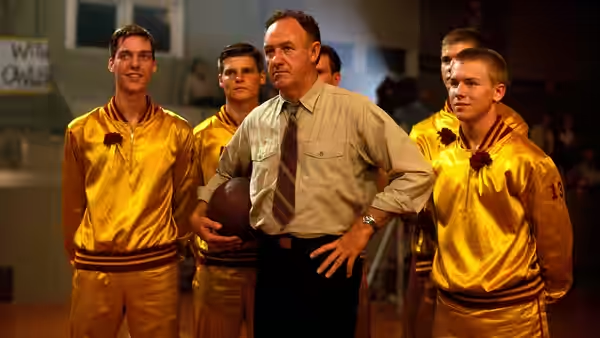
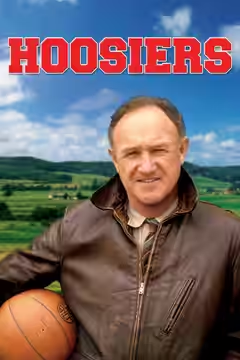
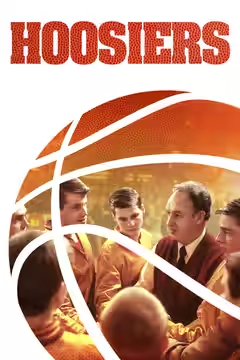
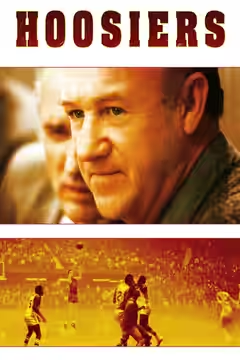
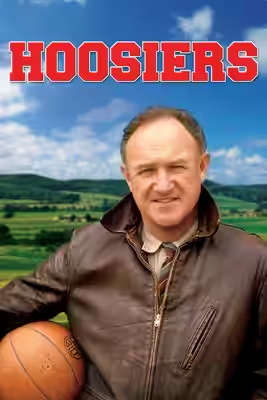
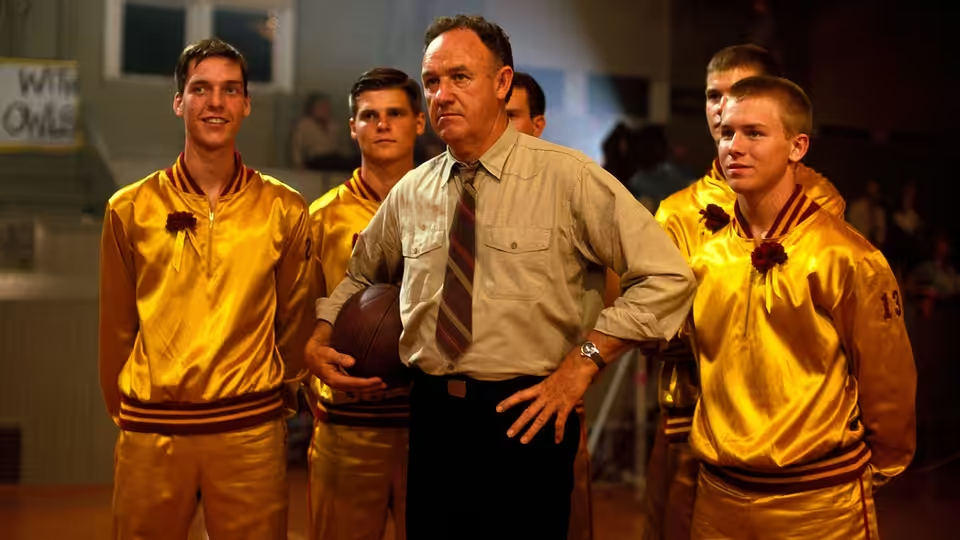
Norman Dale (Gene Hackman) stands with a basketball among players in gold warmups
Film review

Hoosiers

1986 · Directed by David Anspaugh · 1h 54m

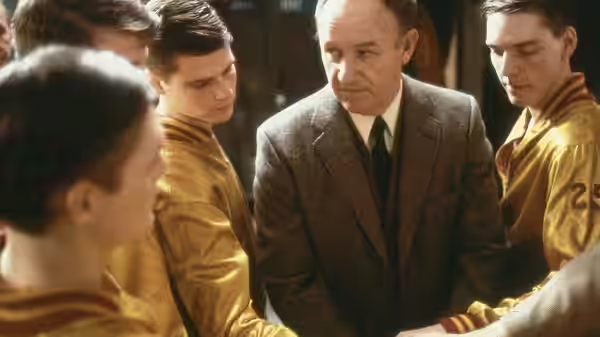
In a sentenceGene Hackman makes a team meeting feel like a disciplinary hearing

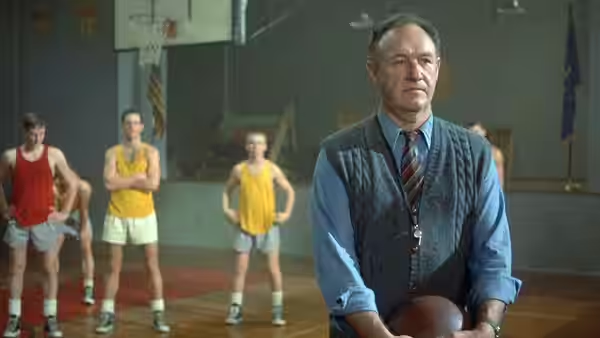
In a small town in postwar America, coach Norman Dale (Gene Hackman) prepares a team for the first game of the season. A meeting with the players and a first practice give him the chance to establish how he wants them to work. Myra Fleener (Barbara Hershey) and Wilbur “Shooter” Flatch (Dennis Hopper) are among the people drawn into his efforts. Dale wants the players to act together, but the team belongs to a town that expects a say in its affairs. Away from practice and the game, a town meeting puts the coach’s standing before the community.

Plays from YouTube when you press play; nothing loads from them until then.

Fi1m review

Hoosiers is a satisfying sports drama whose sentiment occasionally gets the better of it. Gene Hackman makes the familiar coaching story worth following, with enough stubbornness to prevent all that encouragement becoming unbearable.

Hoosiers is a satisfying sports drama with a sentimental streak that occasionally needs reining in. David Anspaugh makes the familiar business of a coach meeting his team worth watching before anyone has given us a reason to cheer. Gene Hackman supplies most of that interest, playing Norman Dale with a stubbornness that can make an ordinary exchange feel uncomfortable. He looks capable of making a difficult afternoon worse without imagining he might be responsible.

Angelo Pizzo’s screenplay is strongest when it gives Dale an immediate problem to manage, as in the team meeting and first practice. Gene Hackman makes instruction sound like a potential argument, and his authority never seems entirely secure. We were surprised by how tense the first practice made us. The performance keeps us watching for the next disagreement, and makes the business of getting a group of players to listen seem difficult enough to sustain a scene.

Barbara Hershey gives Myra Fleener a welcome firmness, though the writing allows her too little space beside the coach. Dennis Hopper brings a more exposed quality to Wilbur “Shooter” Flatch, and the film sometimes presses his scenes too hard for sympathy. Both performances establish people worth caring about beyond Dale. Angelo Pizzo could have given them more room, especially when the team’s progress starts to dominate our attention.

Fred Murphy’s cinematography gives the town a warmth that helps explain why its fortunes matter so much to the people here. The images invite affection without making every person in them reassuring. David Nichols’s production design keeps the practice setting plain enough that the uneasy group occupying it holds our attention. The space feels used. The nostalgia can become a little airless, but these ordinary surroundings allow the people to look awkward and unpolished.

Carroll Timothy O’Meara’s editing makes the first game readable, allowing us to follow the play and weigh the coach’s decisions. There is no need to manufacture confusion simply because the people on screen are under pressure. Jerry Goldsmith’s score is more eager to tell us how to feel, and its swelling encouragement can arrive before the scene has earned it. The music is affecting, but a little less of it would leave more space for the actors.

The larger weakness is the familiar sports-film assumption that a team’s fortunes should settle everybody’s doubts about themselves. David Anspaugh handles that belief with enough warmth to make it persuasive much of the time, but the insistence can become tiring. A town is allowed to care about its team without every match carrying quite so much moral importance. Against the usual demands of this sort of story, however, the film’s patience with Dale’s difficult manner is a substantial virtue.

There is no need to know the rules before sitting down; the film is clear about what matters from moment to moment. It does ask for a tolerance of sporting sentiment, and we would not recommend it to anyone already allergic. For an evening with a good cast and a coach worth arguing about, it will do nicely.

Critical consensus AI synthesised

69
Positive
3
Mixed
0
Negative
1
Los Angeles Times
11 December 1986 · SHEILA BENSON
90*

Benson finds Hoosiers engaging, thrilling and warmly human despite a few flaws. She especially praises Gene Hackman’s compelling performance and Fred Murphy’s atmospheric cinematography.

Read the full review →
Radio Times
★★★★ · Adrian Turner
80

Turner praises the film as a finely drawn study of postwar American life. He singles out Gene Hackman’s swaggering, insightful performance and Jerry Goldsmith’s evocative score.

Read the full review →
The AV Club
8 March 2005 · Scott Tobias
75*

Tobias finds the film’s sentimentality excessive at times but ultimately effective and warmly evocative. He singles out Gene Hackman’s grounded performance for making the big emotional payoffs feel genuine.

Read the full review →
Time Out
· NF
30*

The available description presents the film as cloyingly nostalgic. It singles out the small-town sports story’s emphasis on reaching the State Finals as a source of self-respect.

Read the full review →

Straight answers AI written, from our review

Is Hoosiers worth watching?
Hoosiers is worth watching for its cast and tense coaching scenes, especially if we can tolerate a helping of sporting sentiment; we score it 79 out of 100. Gene Hackman’s stubborn, difficult coach keeps the familiar story interesting, though the swelling music and insistence that matches settle personal doubts can become tiring.
How long is Hoosiers, and what is it rated?
Hoosiers runs 1h 54m. It is a drama and family film.
Where can I watch Hoosiers in Ukraine?
Hoosiers is available to rent from Apple TV from ₴3.99. Availability is checked daily; the links above go straight to each service.
How does Hoosiers compare to Breaking Away?
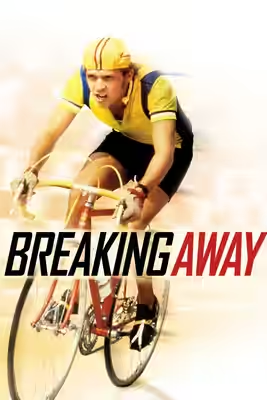
Hoosiers offers a more conventional, sentimental sports drama than Breaking Away, which we favour for its humour and frankness about class. Both care about small-town sporting ambition, but Breaking Away finds more to value away from competition. Hoosiers suits an evening built around a team’s progress, with Gene Hackman giving the familiar coaching story some welcome friction.
What should I watch after Hoosiers?
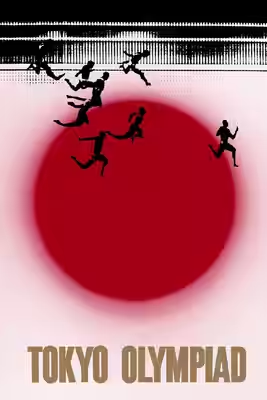
After Hoosiers, try Breaking Away (1979, Fi1m 86): Small-town sporting ambition, class resentment and affection that survives some pointed jokes. Then Bend It Like Beckham (2002, Fi1m 76): Team sport gives family expectations and youthful independence something concrete to quarrel over; and Tokyo Olympiad (1965, Fi1m 88): Patient attention to sporting bodies, anxious spectators and the effort behind public achievement.

Cast

Awards

Academy Awards, 1987

Nominated
Best Original Score
Nominated
Best Supporting Actor

If you liked this, try…

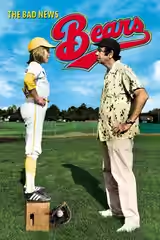
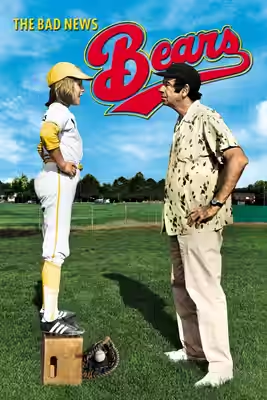
  1. The Bad News Bears (1976) · not reviewed yetA rougher, funnier account of coaching children, with far less faith in adults.

  2. Breaking Away (1979, Fi1m 86)Small-town sporting ambition, class resentment and affection that survives some pointed jokes.

  3. Bend It Like Beckham (2002, Fi1m 76)Team sport gives family expectations and youthful independence something concrete to quarrel over.

  4. The Cup (1999) · not reviewed yetYoung monks’ football obsession brings a lighter touch to sport and community.

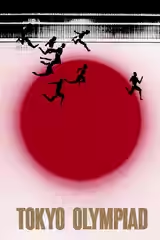
  5. Tokyo Olympiad (1965, Fi1m 88)Patient attention to sporting bodies, anxious spectators and the effort behind public achievement.

Free account

Know what to watch tonight

Two lists that know where things are streaming, collections you can share, your own score beside ours, and Discover that remembers what you have seen.

  • Want to see, sorted by what is streaming now
  • Seen, with your score out of ten
  • No adverts, ever