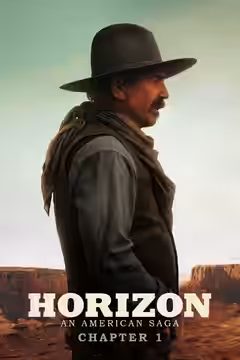
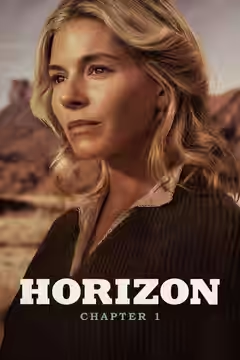
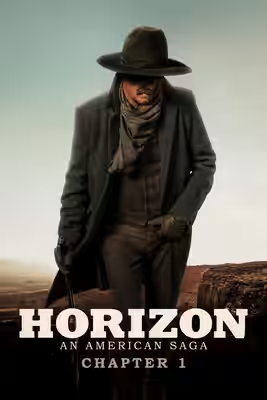
Kevin Costner’s return to the western is handsomely built and honestly meant, and its long night attack on the settlement is properly frightening. It then spreads four stories across three hours, finishes none, and plays like the opening episodes of a series.
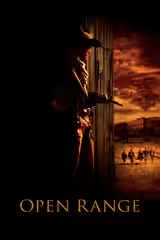
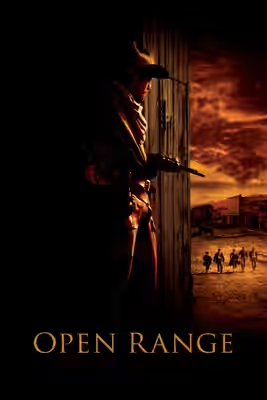
Kevin Costner has not directed a western since Open Range in 2003, and he has come back with the largest thing he has attempted: the first chapter of a saga about the settling of one valley, running 182 minutes and carrying a 15. He directs, produces, takes the lead and shares the screenplay with Jon Baird. The care is plain in every frame. But Horizon starts four stories, takes each to the end of its first act, and stops, and we cannot recommend three hours of that to anyone who wants a film rather than the promise of one.
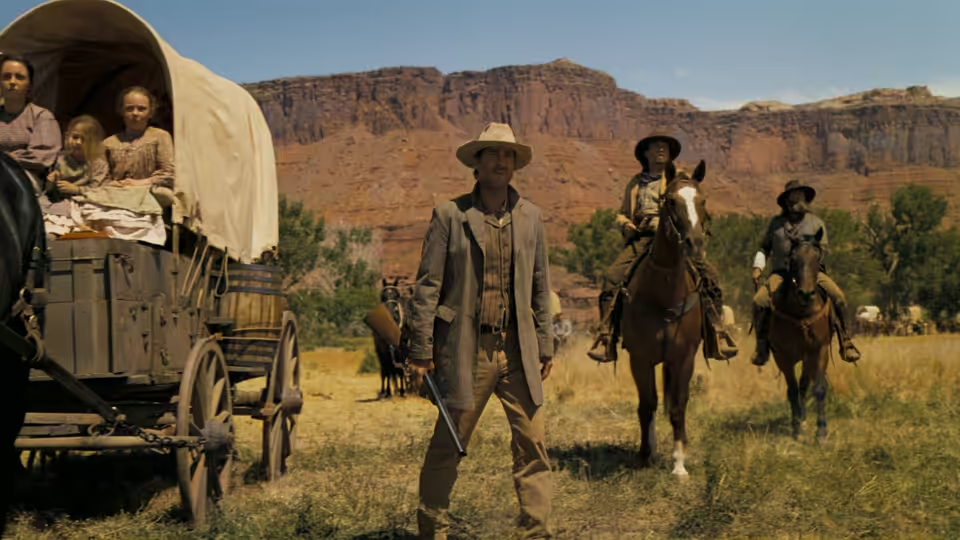
The best of it comes early. A town called Horizon has been staked out on a river in the south-west, and one night it is attacked and burned. Costner and his editor Miklos Wright let the attack run for what feels like half an hour, and J. Michael Muro shoots it mostly by the light of burning roofs, the camera low and among the settlers rather than above them. Frances Kittredge (Sienna Miller) gets her daughter under the floor of the house and holds her there while boots cross the boards over their heads. We were properly frightened for them and stayed frightened, because the film does not cut away to let us breathe. It is the one stretch where the film’s slowness works for it.
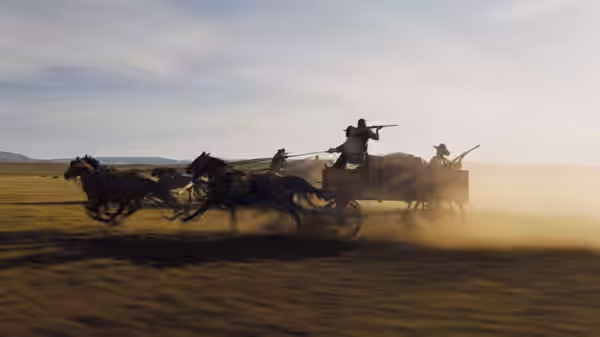
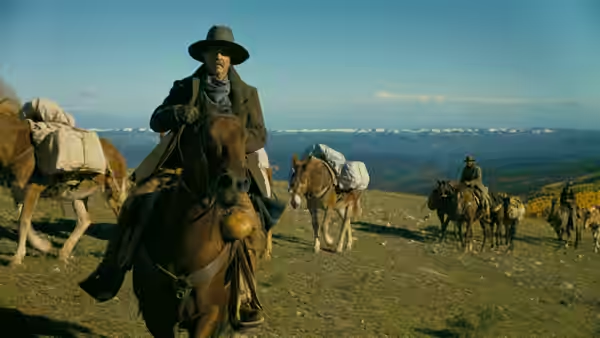
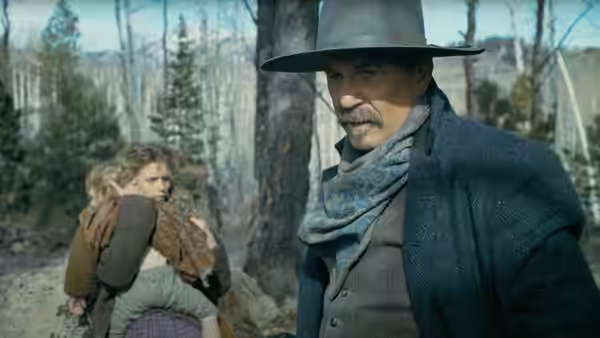
Costner himself arrives late, and the film steadies when he does. Hayes Ellison is a taciturn loner who wants a bath and a bed and gets instead Marigold (Abbey Lee), a baby that is not hers, and a family of killers on the road behind them. Costner has always been good at doing little; here he sits on a horse, says a sentence where another actor would say a paragraph, and lets Lee do the talking. Jeff Fahey’s tracker, riding with the men doing the hunting, is the only villain given a face worth remembering.
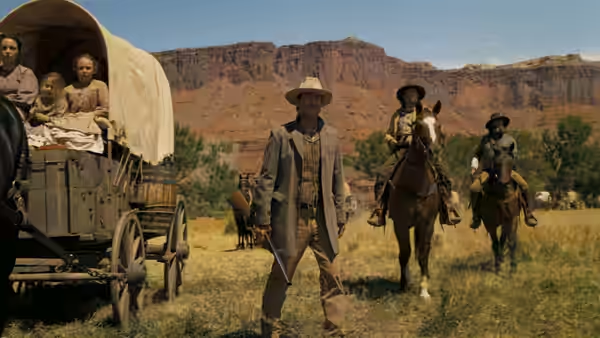
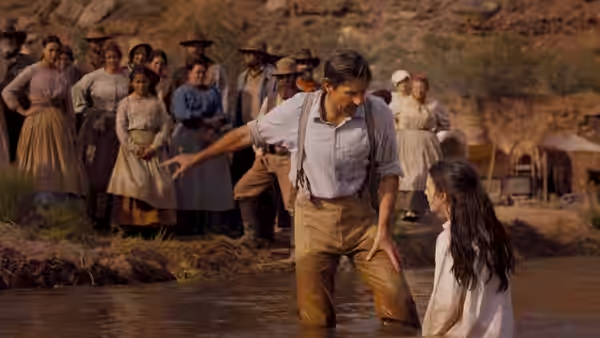
The other strands are where it comes apart. Sam Worthington’s cavalry officer, Trent Gephart, takes Frances and her daughter to the fort, and a courtship begins that the script forgets for forty minutes at a time. Danny Huston’s Colonel Houghton and Michael Rooker’s Sergeant Major Riordan get one good scene each. A wagon train under Luke Wilson’s Van Weyden trundles through with an English couple aboard, Ella Hunt as the wife, whose refusal to do their own chores is the film’s idea of comedy, and it is given about as much screen time as the Native characters. Tatanka Means and Owen Crow Shoe, as Taklishim and Pionsenay, argue over whether to fight the settlers at all. It is the film’s one attempt to look at the other side of the wagon, and it gets perhaps ten minutes.
Muro’s daylight work is what most critics have praised, and it earns it: the valley in long lenses, dust hanging in the light, riders small against rock. Derek R. Hill’s fort and mining camp look lived in, and Lisa Lovaas dresses the settlers in clothes that have been washed in rivers. John Debney’s score trusts none of this. It swells at every vista and again at every reunion, telling us we are watching an epic when the pictures had already said so. Wright’s cutting between the strands is the larger fault. The stories never touch, and each cut away arrives just as the scene we were in had begun to matter.
Around the two-hour mark we noticed we had started counting the storylines still open and wondering which of them the film meant to close. It closes none. We left not angry but unfed, and after three hours that is a complaint.
Dances with Wolves (1990) was also three hours and also unhurried, and it worked because it had one man and one people and followed them to the end. Open Range had two men, a herd and a town, and it finished. Horizon has more of everything and less of a film.
If you are prepared to sit through a long first act, this is a well-made one, and it is better at home, in two sittings, which is how it seems to have been built. If you want a western that ends, Costner has already made two.