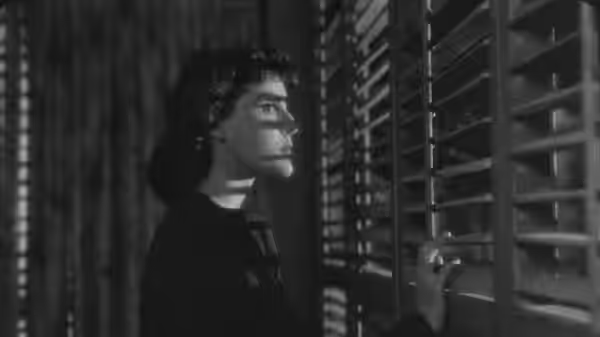
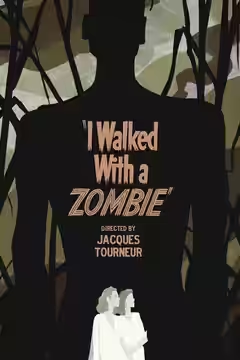
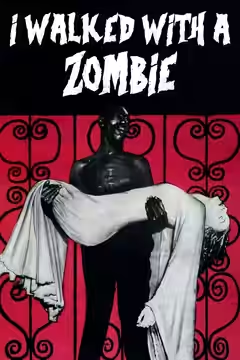
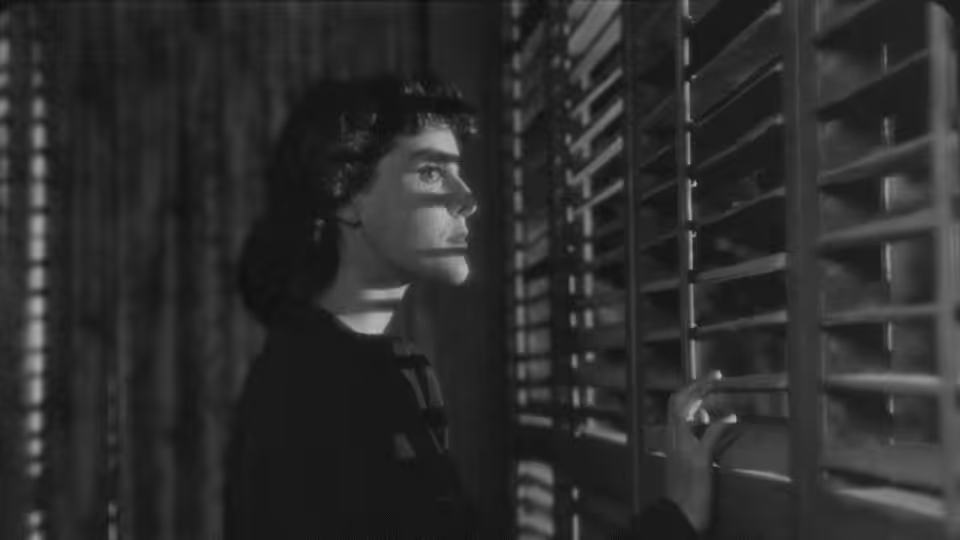
A woman peers through a row of wooden shutters in a dim room
Film review

I Walked with a Zombie

1943 · Directed by Jacques Tourneur · 1h 09m

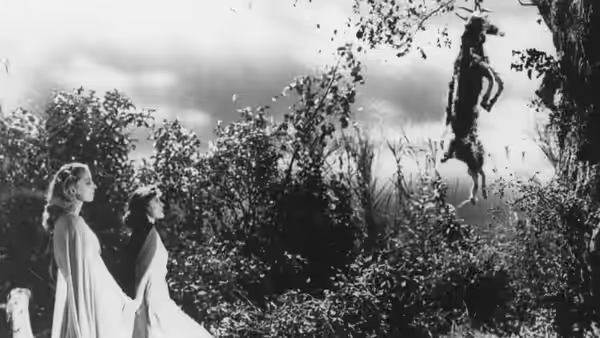
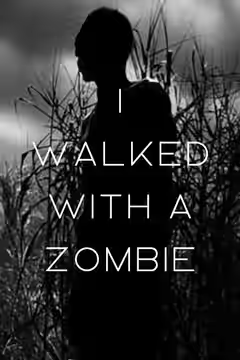
In a sentenceWe would prefer to admire these cane fields in daylight

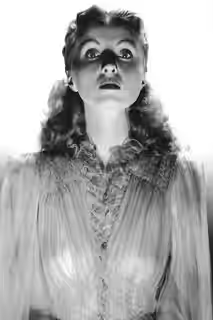
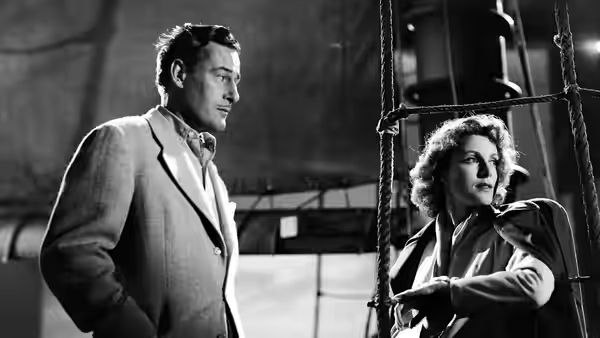
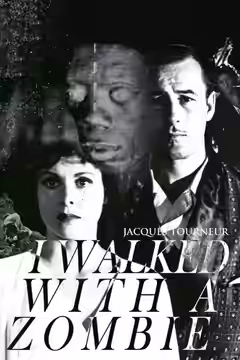
On an island, Betsy Connell (Frances Dee), Paul Holland (Tom Conway) and Jessica Holland (Christine Gordon) figure in a mystery where love, death and voodoo are intertwined. Wesley Rand (James Ellison), Mrs. Rand (Edith Barrett) and Dr. Maxwell (James Bell) are among the people around them. Beyond this circle lie cane fields and a landscape that becomes unfamiliar after dark. Questions of free will run through the human drama, while the possibility of supernatural forces makes ordinary explanations difficult to trust.

Fi1m review

Jacques Tourneur makes an island mystery frightening through shadow, music and patient looking. The dialogue can be stiff, but the sadness gives this compact horror film an uncommon hold on us.

I Walked with a Zombie is a fine horror film with a few stiff conversations standing between us and its considerable power. Jacques Tourneur is interested in how long we can look into darkness before we begin to suspect it contains something. He also makes room for grief, which gives the fear a sadness beyond the immediate threat. The film runs 69 minutes, and its quietness demands more attention than that modest length might suggest.

Produced by Val Lewton, the film draws on Jane Eyre, though recognising the connection is hardly a condition of enjoying it. Curt Siodmak and Ardel Wray’s screenplay places love, death and the ability to choose alongside the possibility of supernatural control. These concerns give the horror an unusual seriousness, although the writing sometimes becomes solemn about things the images have already made disturbing. When the dialogue spells out the characters’ troubles, we want it to leave them alone for a while.

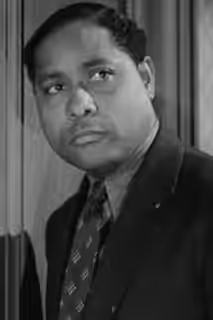
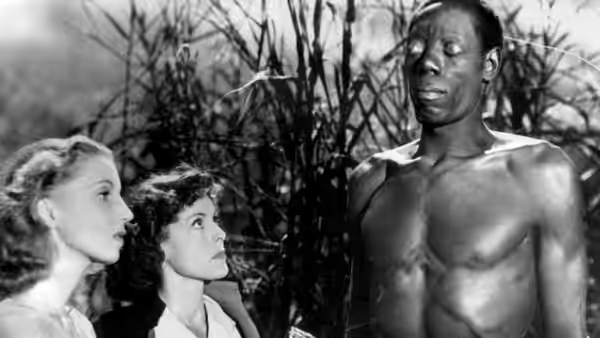
Frances Dee gives Betsy Connell enough steadiness to keep the mystery from becoming a collection of ominous poses. Tom Conway, as Paul Holland, is well suited to the prevailing gloom, though his gravity also exposes how little variety some exchanges have. The performances occasionally feel held in position, waiting for the next unsettling image to arrive. Darby Jones’s Carrefour needs far less explanation to trouble us.

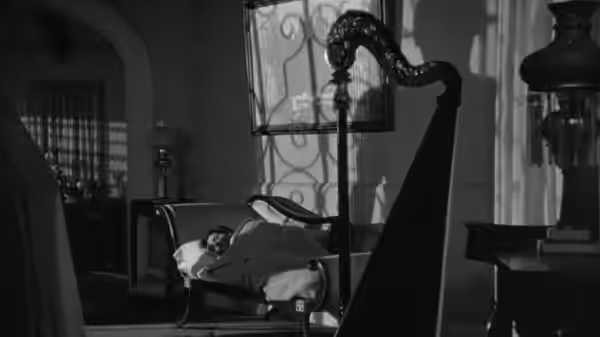
J. Roy Hunt’s cinematography makes darkness difficult to look away from: the shadows have such firm edges that we start studying them for movement. During the walk through the cane fields, the setting becomes frightening without losing its recognisable shape. We were frightened by that passage, because there is enough visible space to keep searching and too little light to feel certain of what we see. Tourneur gives us time to worry about it.

Mark Robson’s editing is most effective when it allows that uncertainty to last, rather than hurrying towards an answer. A film this short can still afford to let us wait, and the pauses give us time to examine the darker corners of the picture. Roy Webb’s music strengthens the unease without making the mystery feel any easier to solve. It is an effective accompaniment to images that already have us looking for trouble.

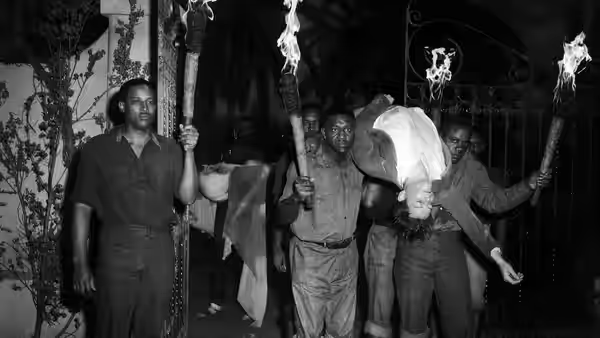
The treatment of voodoo matters to how seriously we take the fear. Tourneur allows religious belief a dignity that horror often discards once it has acquired some useful frightening images. The colonial setting also makes the question of who can control another person’s life uncomfortable beyond the immediate mystery. There is room to question how much the island’s people get to speak for themselves, but the film takes their beliefs seriously enough to leave us uncertain.

Anyone looking for a succession of attacks may find this subdued, and the heavier dialogue does occasionally interrupt the spell. Its strongest passages ask us to watch a place until we no longer feel comfortable in it, which requires a little patience and rewards close attention. Choose it for an evening without interruptions; the cane fields deserve more than a glance between conversations.

Critical consensus AI synthesised

73
Positive
5
Mixed
0
Negative
1
Time Out
· TM
85*

The review presents the film as an especially elegant and imaginative entry in Val Lewton’s low-budget horror cycle. It singles out the film’s inventive adaptation of Jane Eyre, which anticipates Jean Rhys’s Wide Sargasso Sea.

Read the full review →
Empire
1 January 2000 · Kim Newman
80*

Newman finds the film remarkably eerie and atmospheric. He singles out the haunting night walk through the cane fields and its unforgettable island creature.

Read the full review →
Radio Times
★★★★ · Alan Jones
80

Jones regards the film as a classic of poetic horror. He praises Tourneur’s direction and the lighting, shadows, setting and music for creating a disturbing atmosphere.

Read the full review →
Slant Magazine
21 October 2024 · ★★★★ · Chuck Bowen
80

Bowen praises both films as haunting, visually rich works, and finds I Walked with a Zombie especially subtle and thorny in its treatment of colonialism. He singles out Tourneur’s sculptural shadows and striking visual symbols for making the film’s themes intimate and powerful.

Read the full review →
Variety
31 December 1942 · Variety Staff
30*

The review finds the film disappointing overall despite some effective horror. It praises several terrifying passages but criticizes the trite dialogue and ponderous acting.

Read the full review →
Eye for Film
25 December 2020 · Amber Wilkinson
88*

Wilkinson finds the film a haunting, melancholic work whose gothic atmosphere carries a deeper meditation on love, death and free will. She especially praises its chiaroscuro cinematography and respectful, mysterious treatment of voodoo.

Read the full review →

Straight answers AI written, from our review

Is I Walked with a Zombie worth watching?
I Walked with a Zombie is worth watching for patient horror viewers who enjoy suggestion and uncertainty; we score it 84 out of 100. Tourneur makes shadows and the walk through the cane fields frightening, while grief gives the mystery an unusual sadness, though stiff dialogue occasionally interrupts its hold on us.
How long is I Walked with a Zombie, and what is it rated?
I Walked with a Zombie runs 1h 09m. It is a mystery and horror film.
Where can I watch I Walked with a Zombie in Sweden?
I Walked with a Zombie is not on any streaming or rental service in Sweden at the moment. It is available in 11 other countries; change your country at the top of the page to see where. Availability is checked daily.
How violent or frightening is I Walked with a Zombie, and is it suitable for children?
I Walked with a Zombie has a UK PG certificate, but its sustained unease calls for caution with younger or easily frightened children. We find the walk through the dark cane fields frightening because it keeps us searching for something we cannot clearly see; the emphasis is on uncertainty rather than a succession of attacks.
How does I Walked with a Zombie compare to Cat People?
I Walked with a Zombie is a strong companion to Cat People, and we recommend both for horror built through shadows, hesitation and suggestion. The island mystery gives grief and religious belief particular weight, while Cat People draws much of its strength from Simone Simon’s performance; both have stiffness in the acting or dialogue, but retain their power to unsettle us.
What should I watch after I Walked with a Zombie?
After I Walked with a Zombie, try Cat People (1942, Fi1m 86): Jacques Tourneur makes ordinary surroundings unsafe through shadows, hesitation and suggestion. Then Ugetsu (1953, Fi1m 89): Desire and sorrow lead through a ghost story that never needs to shout; and The Spirit of the Beehive (1973, Fi1m 87): Patient images and a child’s watchfulness make familiar places feel quietly unsafe.

Cast

If you liked this, try…

  1. Cat People (1942, Fi1m 86)Jacques Tourneur makes ordinary surroundings unsafe through shadows, hesitation and suggestion.

  2. The Innocents (1961) · not on Fi1m yetAnother troubled household where careful lighting makes certainty hard to come by.

  3. Ugetsu (1953, Fi1m 89)Desire and sorrow lead through a ghost story that never needs to shout.

  4. The Spirit of the Beehive (1973, Fi1m 87)Patient images and a child’s watchfulness make familiar places feel quietly unsafe.

  5. Atlantics (2019) · not on Fi1m yetLove, labour and restless spirits give another coastal setting its unease.