Mike Judge’s comedy about a future too stupid to water its crops is funnier and nastier than its reputation as a prophecy suggests. The world is built with real care; the plot is not, and the narrator will not stop explaining.
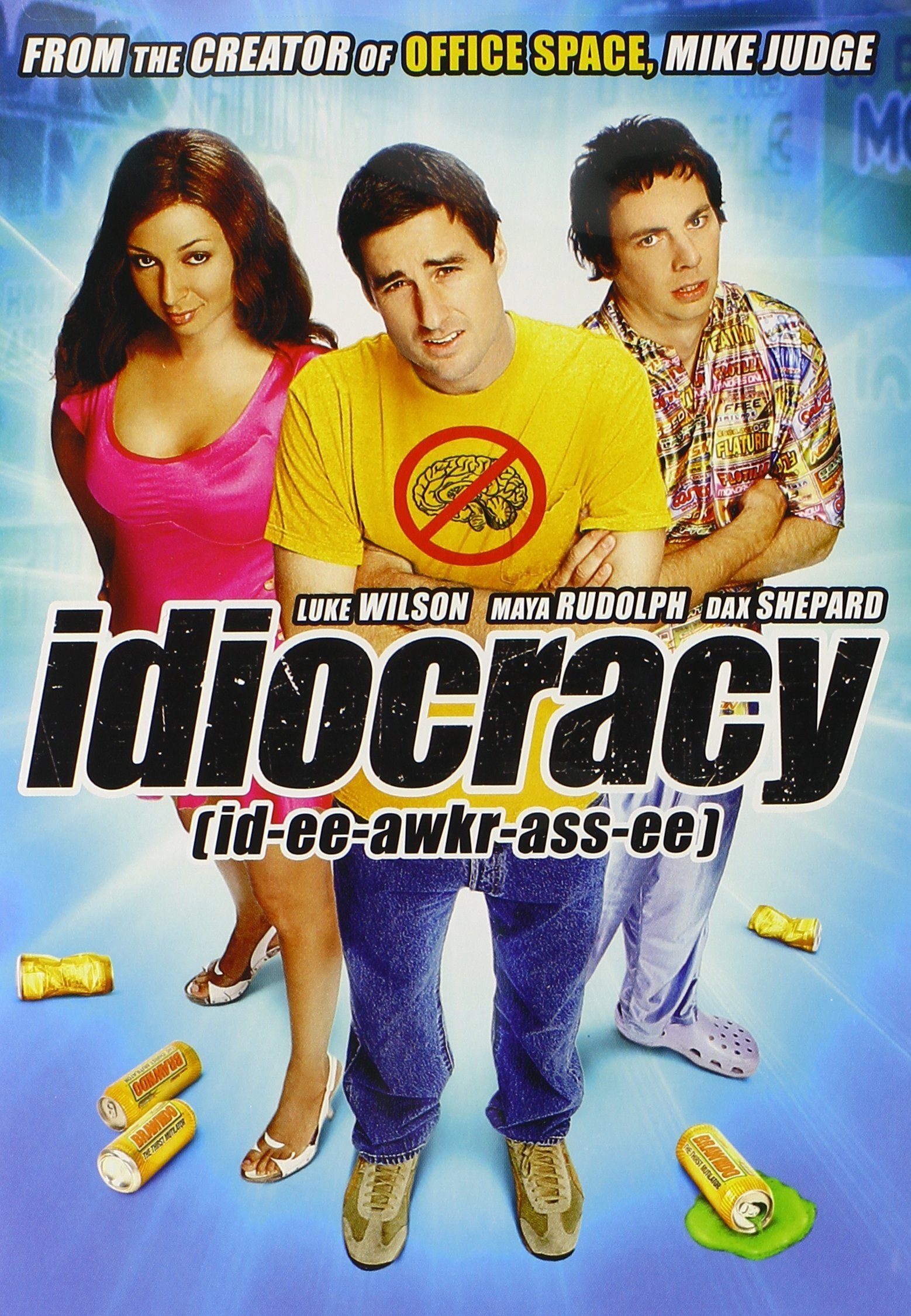
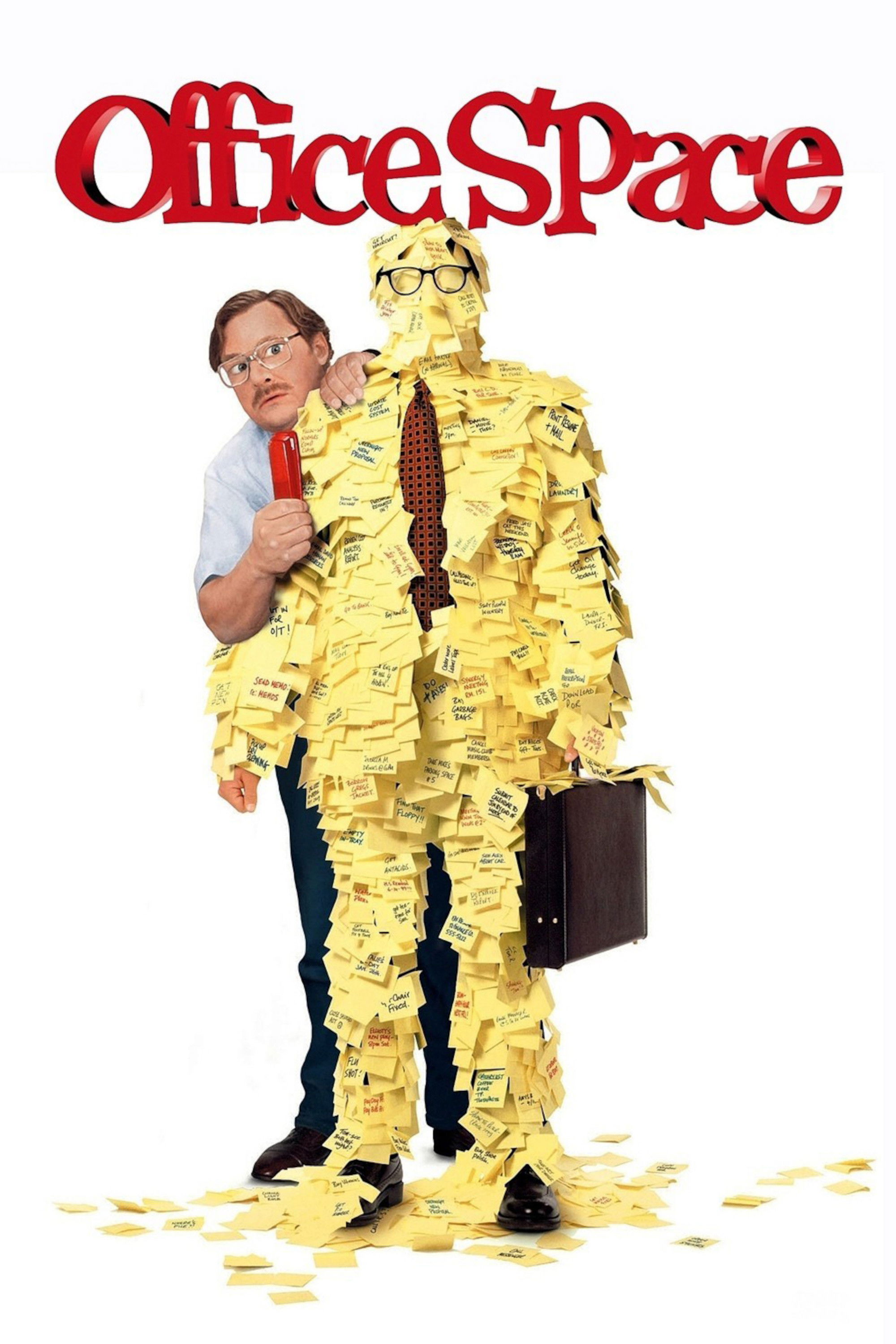
Mike Judge, who made Office Space (1999) and Beavis and Butt-Head, has spent a career being interested in stupid people, and here he gives them the planet. Idiocracy opens with a short lecture on evolution, freezes an ordinary man and thaws him out in 2505 to discover that nature has stopped rewarding brains. It is a one-joke film. The joke is a good one, and Judge and his co-writer Etan Cohen find more angles on it than 85 minutes would seem to allow. What they do not find is a plot.
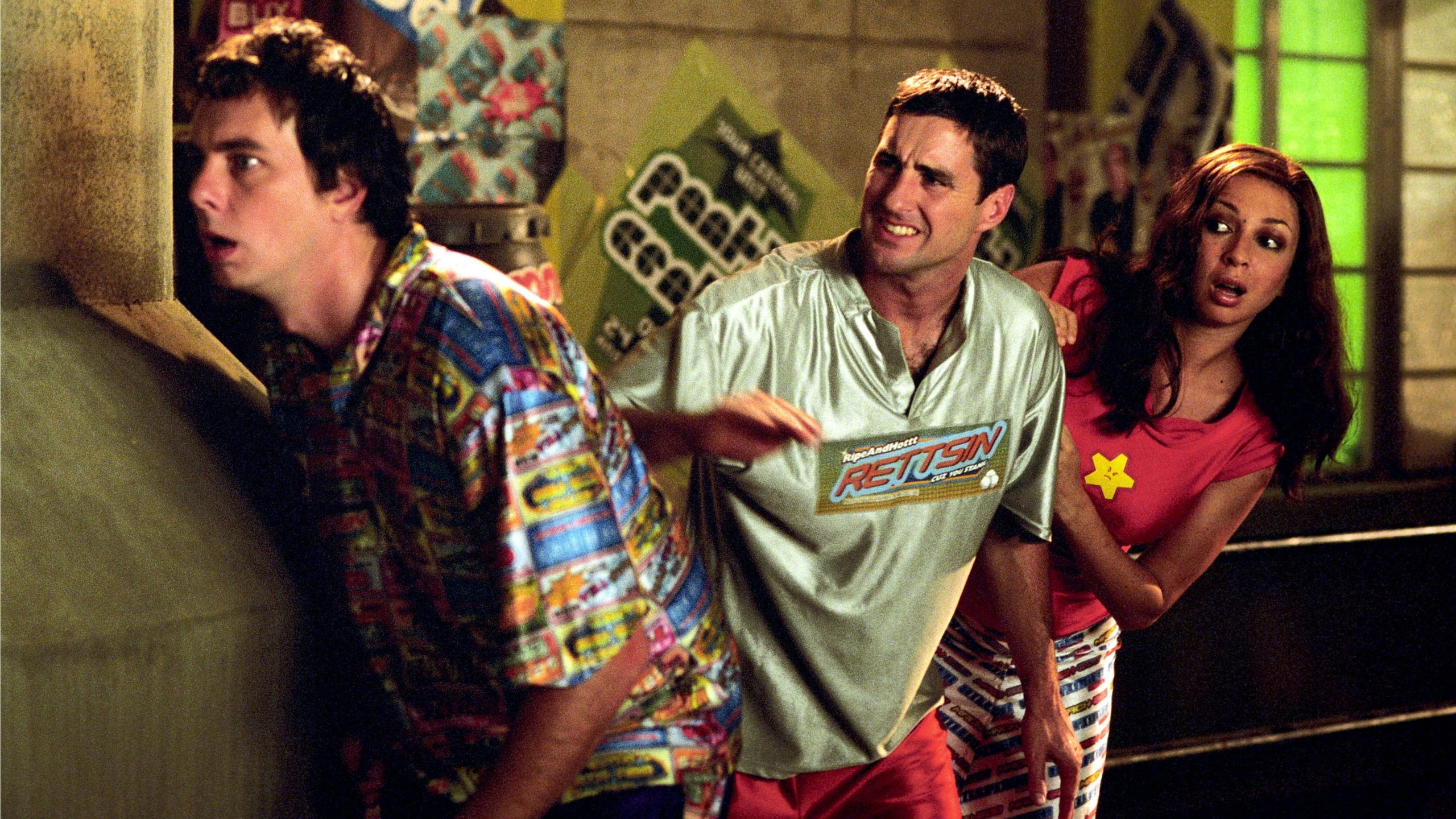
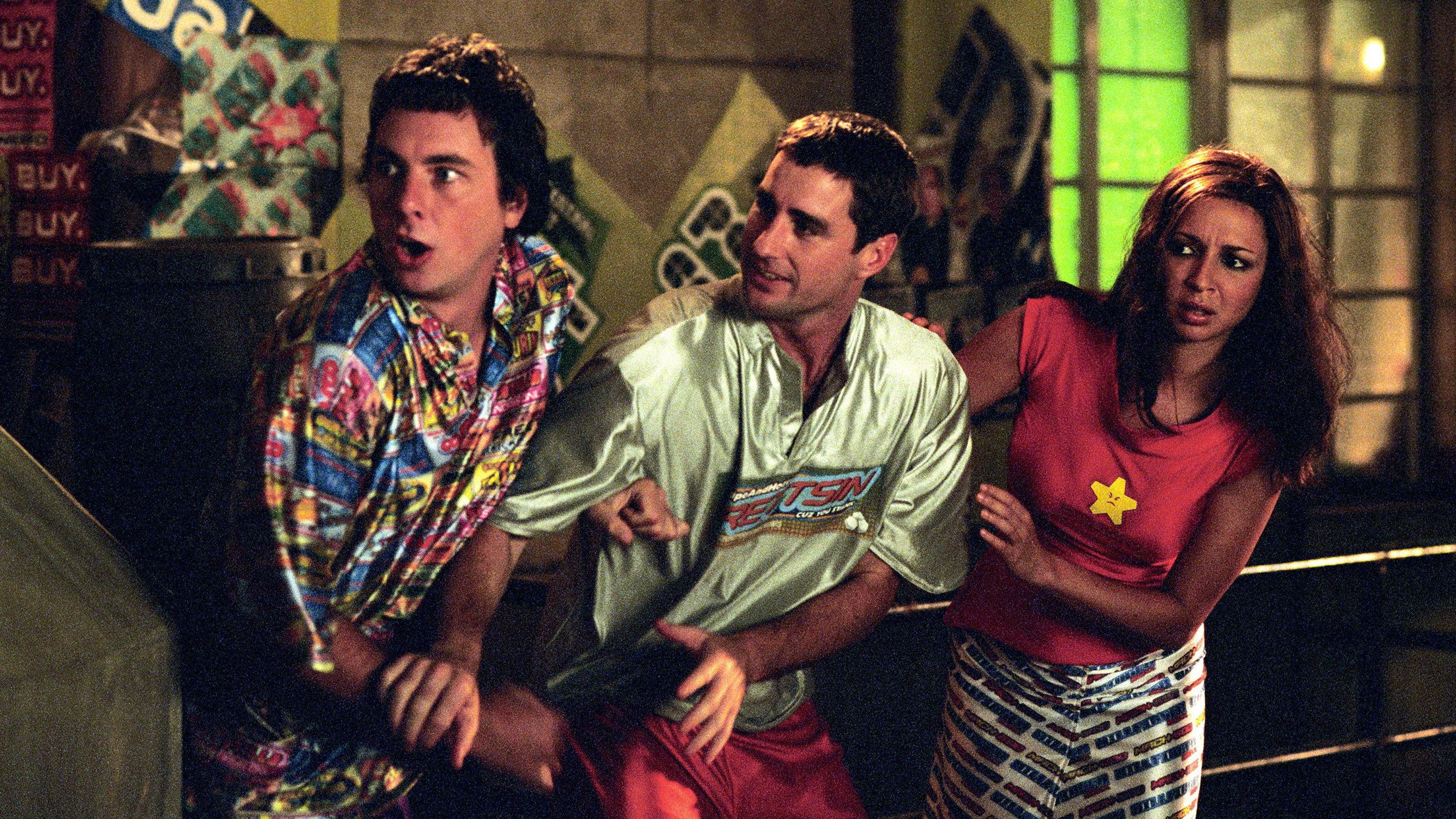
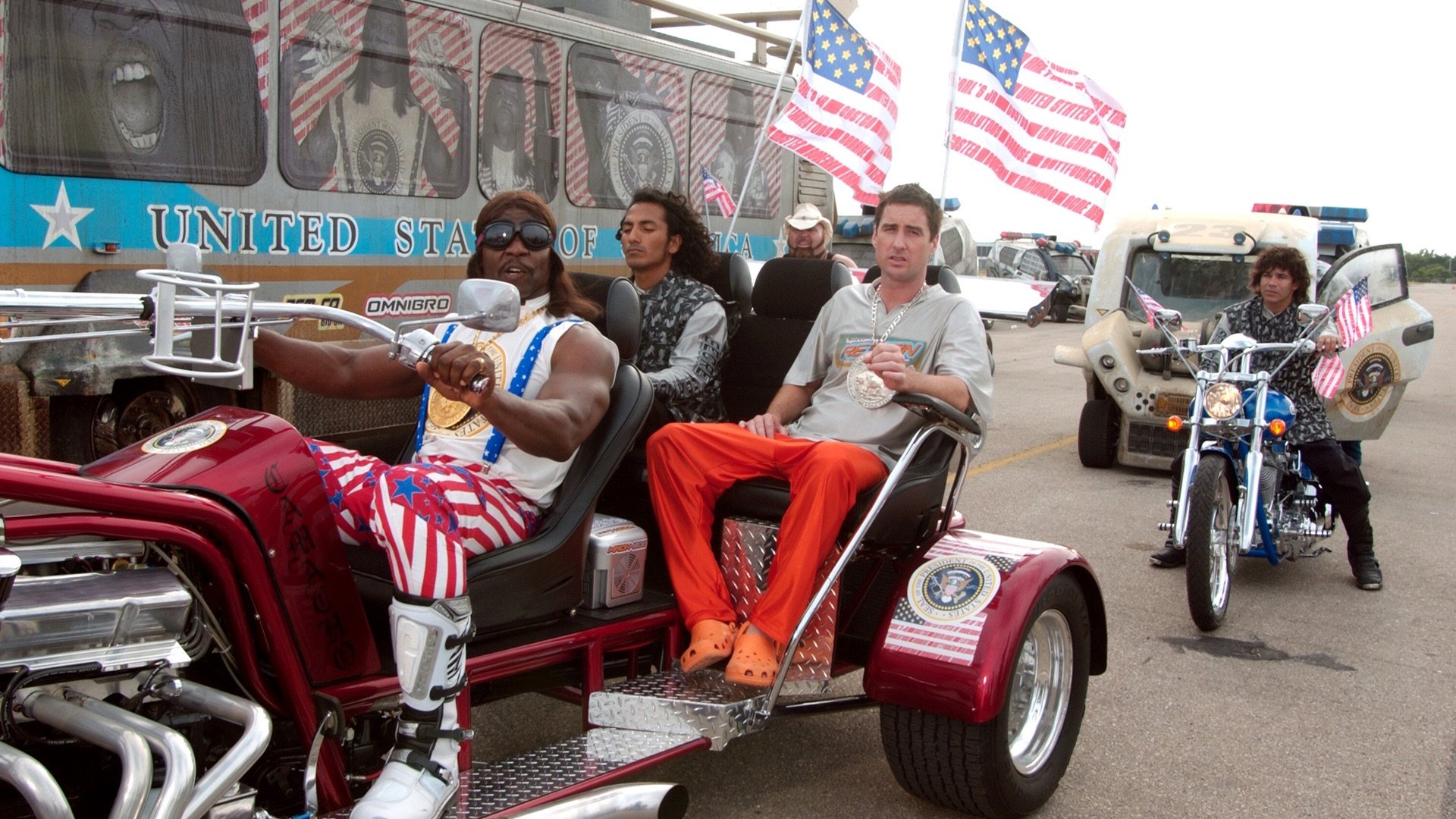
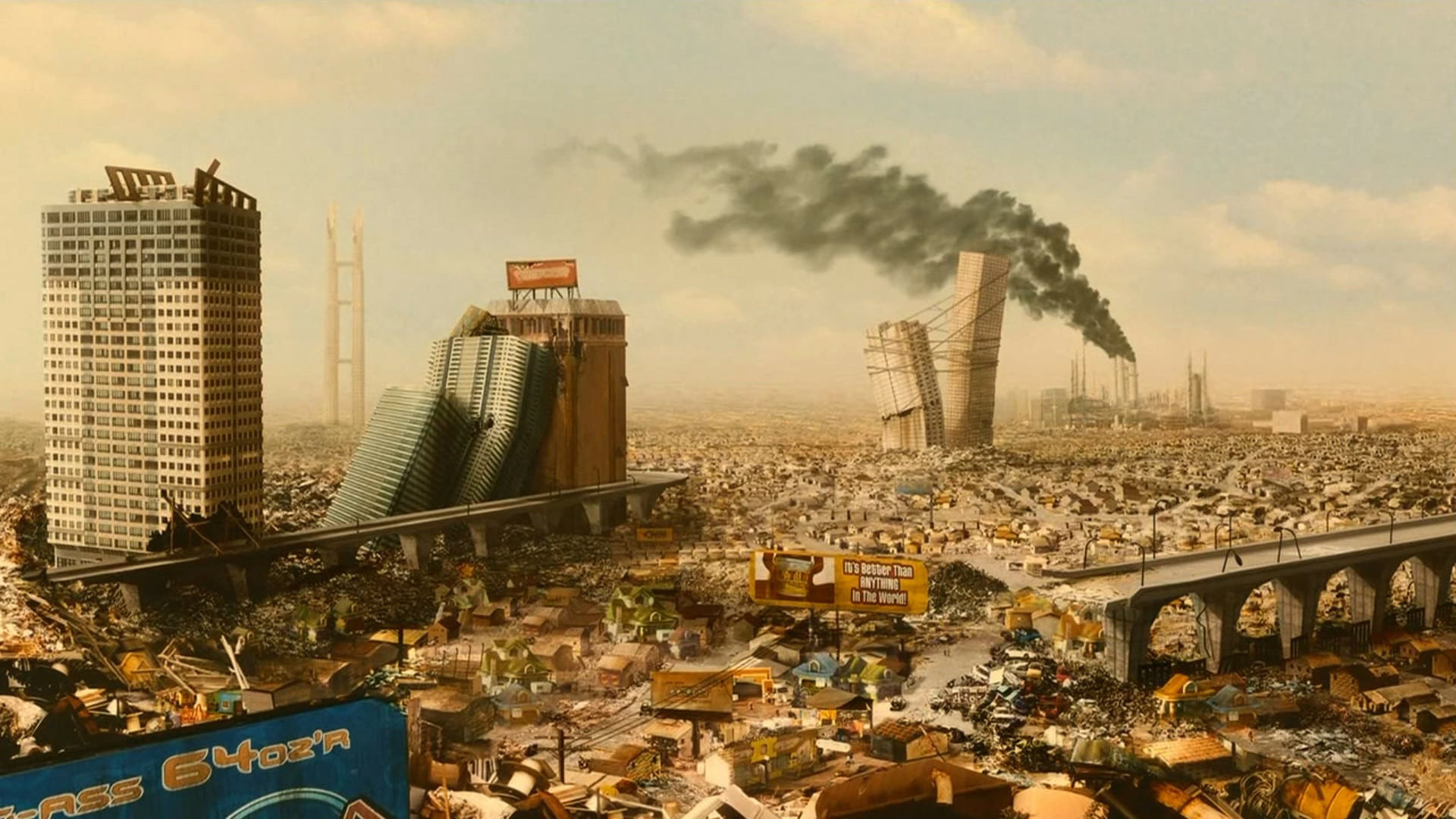
The world is the achievement. Darren Gilford’s production design gives us a city where the skyscrapers lean on each other and are tied together with cable, where every surface that can carry an advertisement does, and where a single shop the size of a county has its own law school. Debra McGuire dresses the population in sponsored clothing and puts President Camacho in a sleeveless flag and a belt of bullets. Tim Suhrstedt shoots it all in flat, hard daylight with no attempt to make it handsome, which is right. There is a hospital whose diagnostic machine is a row of pictures, and a doctor (Justin Long) who reads the results as if in a language he half remembers.
We laughed hard in the first half hour, and we can say exactly where. The doctor’s diagnosis. The courtroom, in which the prosecutor’s case is mostly volume and Frito, for the defence, agrees with him. The discovery that the crops are dying because the country has been watering them with a sports drink, and the boardroom in which the drink’s executives explain that water is what comes out of the toilet. That scene is the film’s best writing, a room of people who cannot follow a two-step argument and are furious at being asked to, and Luke Wilson plays Joe’s patience in it like a man trying to coax a cat down from a tree.
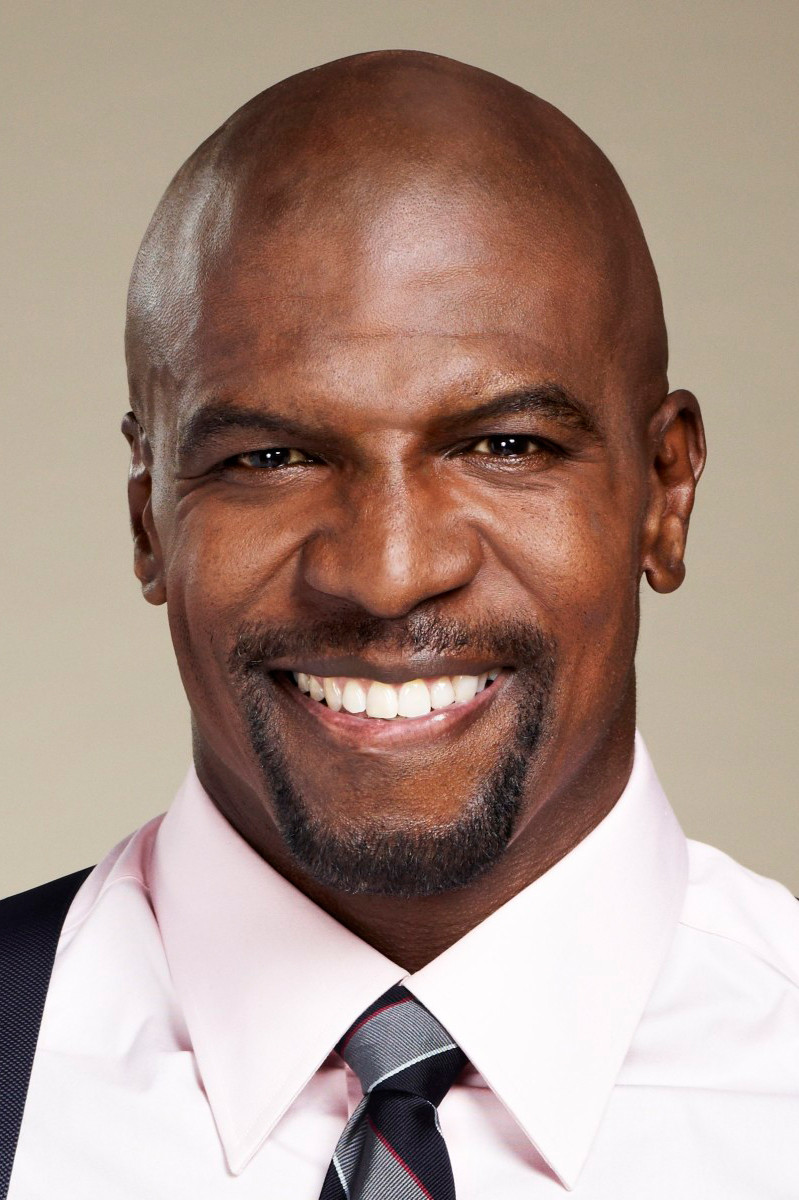
Wilson is the right kind of blank. Joe Bauers is average by design and Wilson does not fight it; he is decent and dim, and when he starts being called the smartest man alive he looks as if he has been handed someone else’s coat. Terry Crews, as Camacho, a former wrestler and adult film performer who governs by shouting and firing a machine gun into the ceiling, is the film’s engine. He plays the president as a man who knows the job is a performance and means to do it well. Dax Shepard’s Frito is pitched at one note and holds it. Maya Rudolph has almost nothing to do and does it gracefully; Rita is a woman the plot needs found and returned, and nobody asks her what she thinks of the future.
The trouble is everything between the jokes. The plot is a list of errands: find Rita, find the time machine, fix the crops, stay out of prison. David Rennie’s cut has the joins showing. Scenes stop rather than end, and a narrator is wheeled in every few minutes to say what we have just seen and what we are about to. The voiceover tells us the population is stupid again and again, long after we have noticed. The narration is the film’s largest fault, because it treats the audience the way the film’s future treats Joe, and it does not read as a joke. Theodore Shapiro’s score is mock-heroic brass and we could not hum a bar of it the next day.
There is also a meanness in it that we felt. The prologue divides humanity into a careful, childless professional couple and a fecund man in a vest, and the film’s sympathies are not in doubt. Every idiot on screen is poor, loud and covered in logos. We laughed at them, then felt slightly ashamed of ourselves, then noticed the film had not felt anything at all. Judge’s King of the Hill was fond of the people it mocked. Here the fondness survives only for Frito, who is kind to Joe in his way, and after an hour the contempt gets tiring.
Since 2006 the film has acquired a reputation as a prophecy. We would rather not add to it. Being right about the future is not the same as being good about it, and no film is improved by the news. What is on the screen is a fast, ugly, frequently funny sketch stretched to feature length. Watch it at home with someone who will forgive the narrator. It runs 85 minutes and carries a 15.