John Krasinski’s fantasy about abandoned imaginary friends is handsome, sincere and short on jokes, and it never settles what its own world is for. Cailey Fleming holds it together almost single-handed; the film around her keeps changing its mind.
John Krasinski has written and directed a family film about the imaginary friends children leave behind when they grow up, and where those friends go. IF is warmly shot, well cast and short on laughs, and its real trouble is that it never works out the rules of its own world. It runs 104 minutes and carries a U, and the adults in the cinema will be the ones fidgeting.
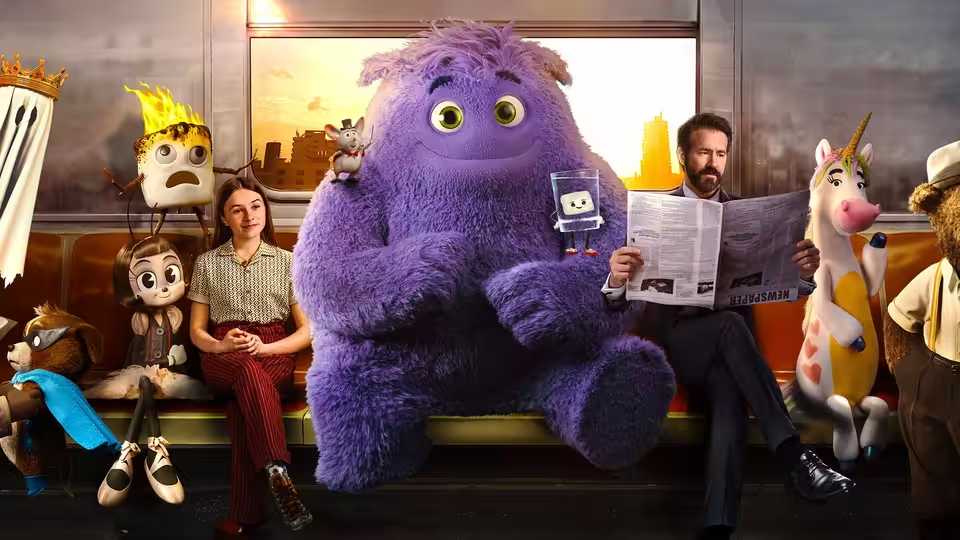
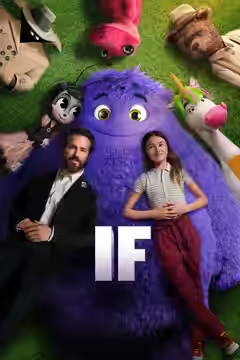
Bea (Cailey Fleming) arrives at her grandmother’s flat with her father in hospital and has decided she is finished with childish things. Fleming is the reason the film holds together. She plays Bea as a girl who has taught herself to be capable because nobody else is coping; when the script hands her a joke she plays it straight, and when it hands her grief she plays that straight too. Fiona Shaw, as the grandmother, is given too little to do.
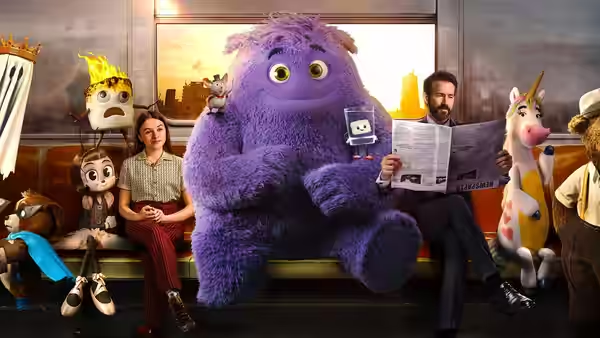
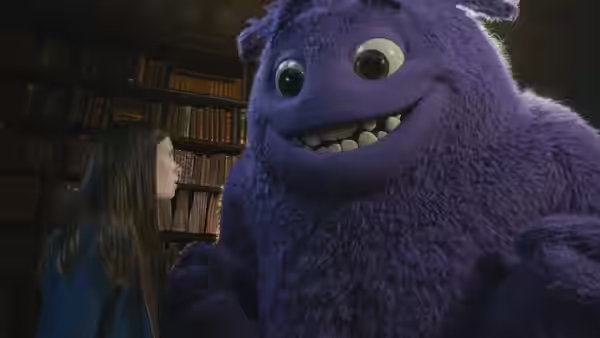
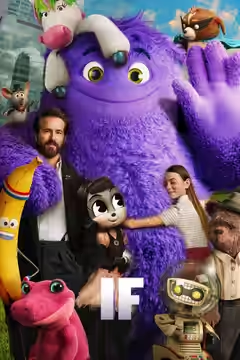
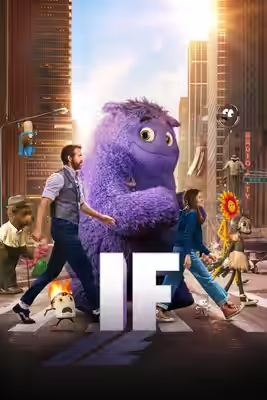
The creatures are the film’s best work. Blue (Steve Carell) is a purple furry thing the size of a sofa who moves like a dog that knows it is about to be told off. Blossom (Phoebe Waller-Bridge) has a butterfly’s face and the flat look of a much older cartoon. Lewis (Louis Gossett Jr.) is an old bear who looks after the forgotten ones, and Gossett gives him a tiredness the script could not have written. When Blue sits on a bed the bed gives, and Janusz Kamiński lights the creatures with the same warm, late-afternoon glow he gives the flat. Jess Gonchor’s design for the friends’ home, a warren of rooms that change to suit whoever stands in them, is the one place the film’s imagination goes somewhere new.
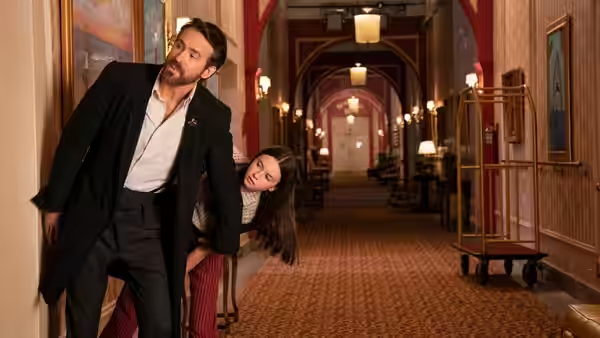
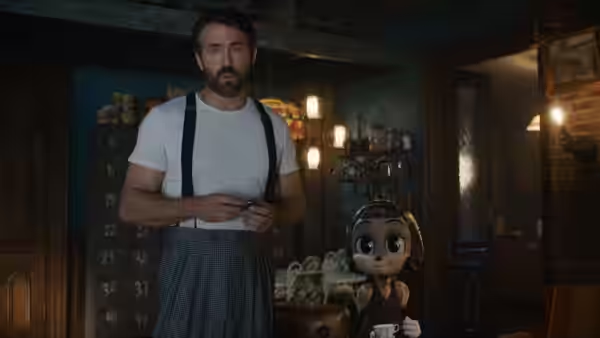
Ryan Reynolds plays Cal, the neighbour upstairs who can see them too, and Krasinski has asked him to put away the smirk. He does, mostly, and what is left is a tired man scowling at cartoons. Several critics have called him miscast; we would say he is cast well and written thinly. Cal matches abandoned friends to new children and has no reason we can see for doing it, so Reynolds spends the film looking as if waiting to be told what he wants.
The comedy is left to Blue, who falls over things, and to Krasinski, who plays Bea’s father as a man who copes with a hospital ward by clowning in it. We saw what the clowning was for and did not laugh. The plot sets up its matchmaking scheme in the first half hour and then wanders off from it, and Christopher Rouse and Andy Canny cut the middle stretch as if hoping we would not notice how little happens. Past the hour we were bored, in a film with a purple monster in it. Michael Giacchino’s score is pretty and the film leans on it too hard, strings swelling under every soft moment before we have decided what we feel.
Then, late, it got us. There is a scene between Fleming and one of the older friends that we will not describe, and it moved us more than anything before it had earned. Fleming’s face does it, watching, saying almost nothing, and for a minute the film is what Krasinski wanted: a story about a child who grew up too fast being handed a little of her childhood back. It does not last.
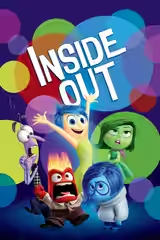
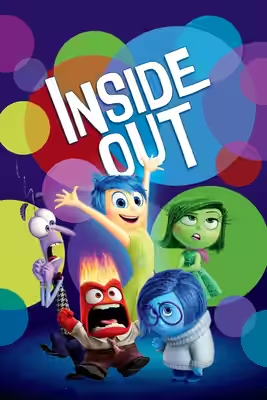
The film invites comparison with Pixar and does not survive it. Toy Story (1995) and Inside Out (2015) each began with one rule about the inner life of children and never broke it. IF changes its rules whenever a scene needs it to: who can see the friends, what happens to them when they are forgotten, why any of it matters to Bea. Krasinski’s own A Quiet Place (2018) had one rule, stay silent, and kept it.
Take children under ten and they will like Blue and ask for him afterwards. Go as an adult and you will get one good scene, one good child actor and an hour of waiting for the film to make up its mind. It is a U, so it will frighten nobody. It may bore them.