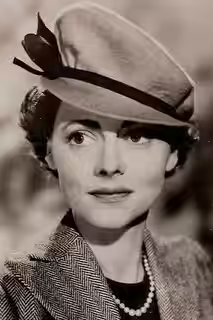
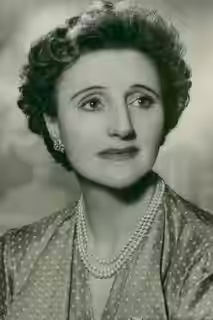
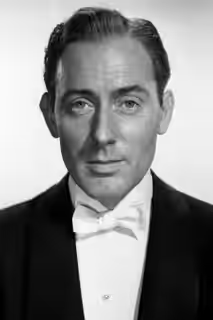
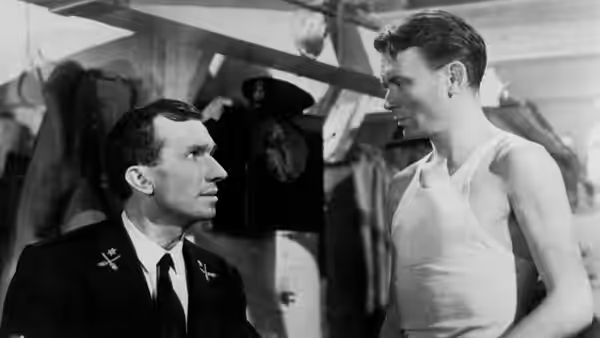
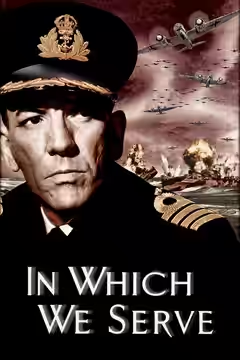
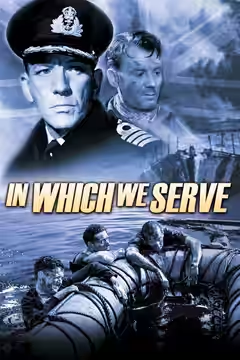
Coward and Lean’s wartime film about one destroyer and the men who served on her is stiffer than its reputation and better than its detractors allow. The class attitudes have dated; the sinking, the raft and the scenes ashore have not.
Noël Coward wrote In Which We Serve, produced it, composed its music, co-directed it with David Lean and plays its captain. That is a lot of Coward, and the film has some of his weaknesses: it likes a speech, and it does not much like an argument. But it also has his discipline. It runs 115 minutes and does not waste many of them. It is a film made in the middle of a war to make the people fighting it feel steadier, and it is honest about that, which is why it has lasted better than most of its kind.
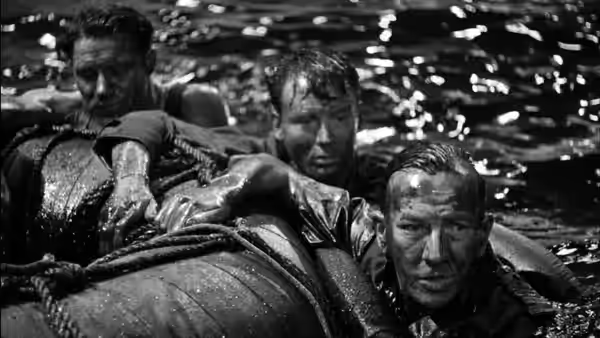
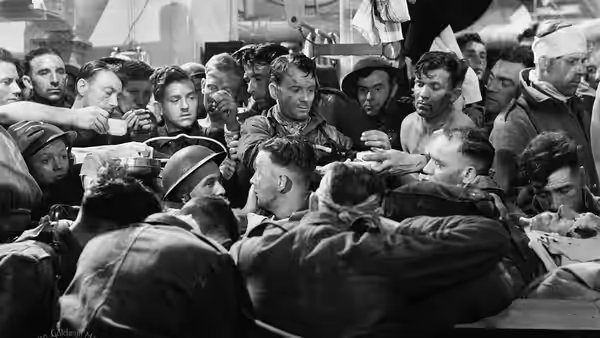
The shape is the good idea. A voice tells us this is the story of a ship. We watch HMS Torrin built, launched and sent to sea, and then, within the first quarter of an hour, we watch her bombed and sunk off Crete. The survivors climb onto a raft in the oil, the aircraft come back to strafe them, and the rest of the film is what the men remember while they hang on. Each return to the water is a small shock, and Thelma Connell’s cutting keeps it so: a face on the raft, a fade, a kitchen, a train, and then the water again, always a little emptier than before.
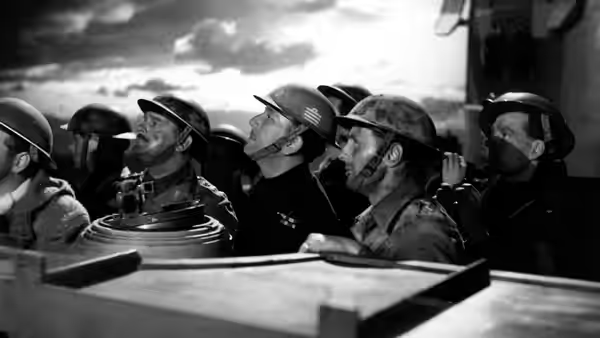
Ronald Neame shoots the raft from the level of the men in it, so the sea fills the frame and the sky is only a strip where the bombers arrive from. The oil on the faces catches what light there is and the men look already half drowned. The action at sea is done with models and back projection and it looks like it, though the sound of the ship’s guns and the shudder of the deck when they fire cover a fair amount. Coward’s own score is sparing and sits under the domestic scenes rather than the naval ones, which is the right way round.
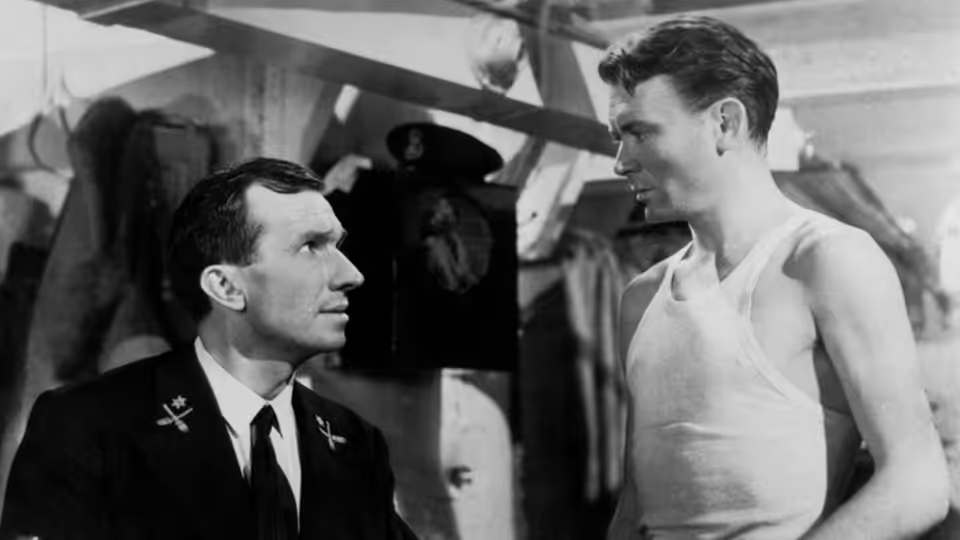
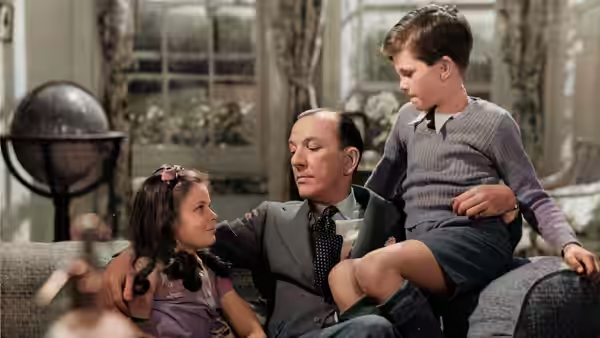
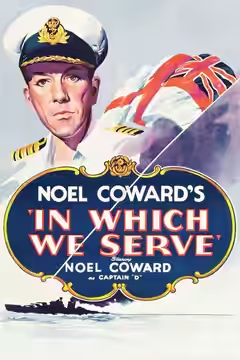
Coward the actor is the film’s oddest element. His Captain Kinross addresses a ship’s company in the voice he used for drawing rooms, clipped and light, and it ought not to work. Mostly it does not; he stands for the officer class rather than playing a man. Then he gives a speech to the new crew about wanting a happy ship and an efficient ship, without raising his voice once, and the restraint does what shouting would not. Celia Johnson, as his wife Alix, has the film’s best scene, a Christmas toast in which she names the Torrin as the other woman in her marriage and wishes her well. It moved us more than we expected, because Johnson plays it as a joke that has stopped being one somewhere in the middle, and nobody at the table quite knows where to look.
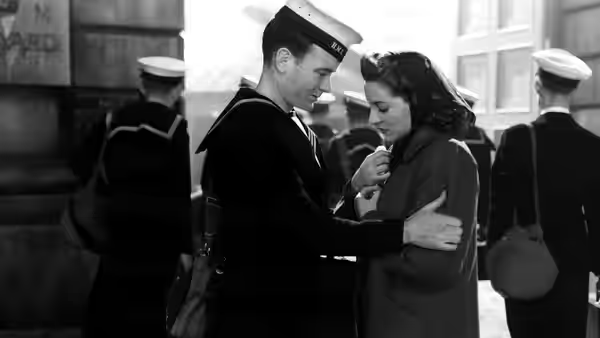
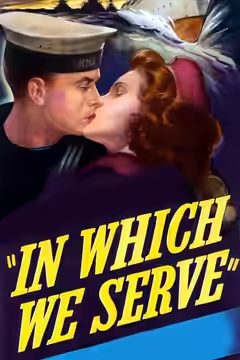
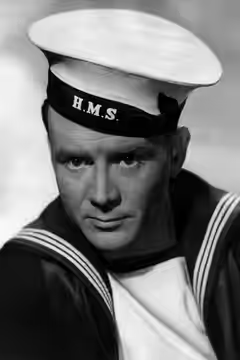
Below decks the film is warmer and looser. John Mills’s Shorty Blake meets Kay Walsh’s Freda on a crowded train and the two of them talk their way into a marriage in a few minutes of screen time, which is roughly how it happened for a good many people that year. Bernard Miles gives Chief Petty Officer Hardy a slow, contented decency, and Joyce Carey, as his wife Kath, gets a great deal from almost nothing, chiefly by listening. The homes ashore are arranged by rank, the captain’s house, the petty officer’s semi, the seaman’s terrace, and the film is entirely untroubled by the arrangement. It nagged at us, not because the film lies about the class system but because it never once wonders whether the system deserves the loyalty it is asking for.
The wardroom officers, credited as No. 1, Flags, Guns and Torps, are types rather than people, and the film knows it and does not mind. Some lines are aimed over the actors’ heads at the audience of 1942. And by the third return to the raft we were impatient with the device, because we could see the mechanism turning and knew whose memory was next.
Lean is credited alongside Coward, and it is his first credit as a director. Which of them did what is not on the record and does not much matter to a viewer; what is on screen is a story told cleanly, without fat, by people who plainly believed it. It is worth an evening if you have any interest in the war, in the Navy, or in how a country talked to itself when it was frightened. It carries a U certificate, which tells you a good deal about how the Royal Navy was permitted to swear in 1942.