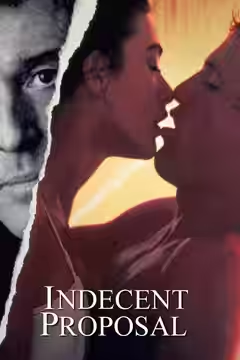
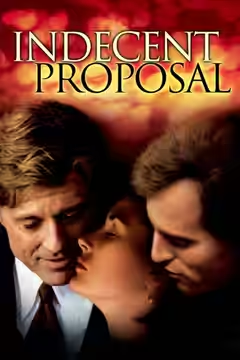
Adrian Lyne has a hook most films would kill for and treats it as a tragedy. Moore and Harrelson give the marriage a pulse; Redford gives it a smile and some lighting. Handsome, soft-centred and far too pleased with its own seriousness.
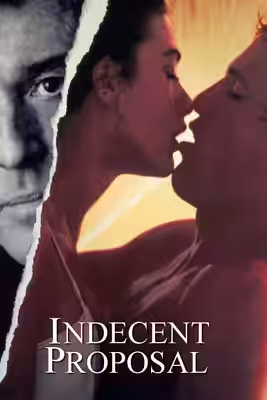
Adrian Lyne’s film, from Amy Holden Jones’s screenplay of Jack Engelhard’s novel, has one of the cleanest hooks of its decade: a rich man offers a broke couple a million dollars for a night with the wife. The trouble is that Lyne treats the hook as a tragedy, and for 117 minutes nobody on screen is allowed to find any of it funny, or absurd. It is handsome, well acted in two of its three main parts, and dull in the way only a glossy film can be. We came out wanting the comedy it kept refusing to be.
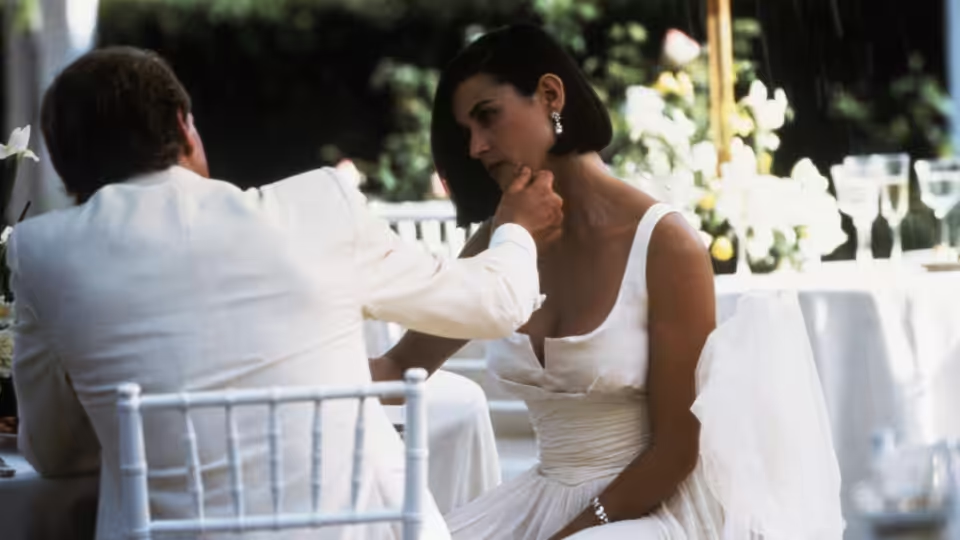
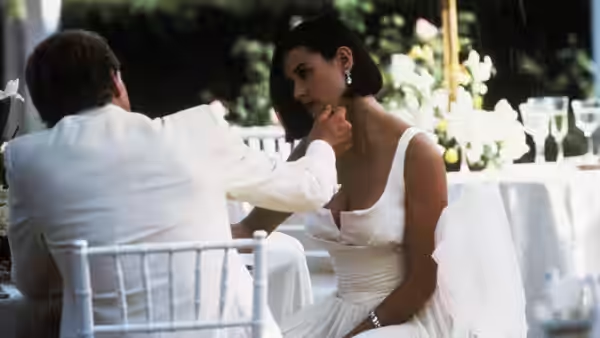
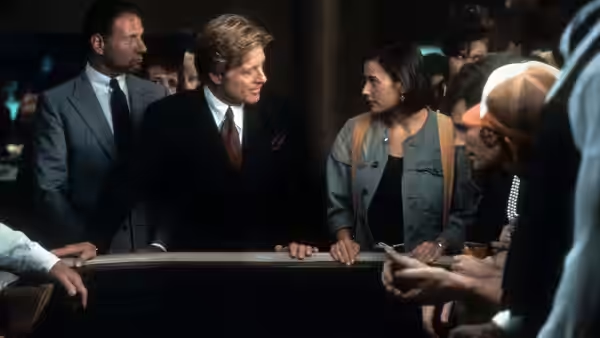
The first forty minutes are the good part. Diana (Demi Moore) and David Murphy (Woody Harrelson) run out of money with a house half built and drive to Las Vegas with what is left. Howard Atherton shoots the casino lit from below, green felt and gold ceilings and faces catching the glow off the tables, and Joe Hutshing cuts the gambling so that we feel the money going a beat before the characters do. When John Gage (Robert Redford) makes his offer and the couple take it upstairs, Moore and Harrelson are both good. He talks himself round to it; she watches him do it and says less and less. We believed in that marriage completely, which made the next hour harder to forgive.
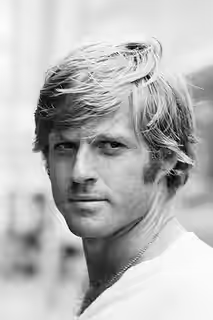
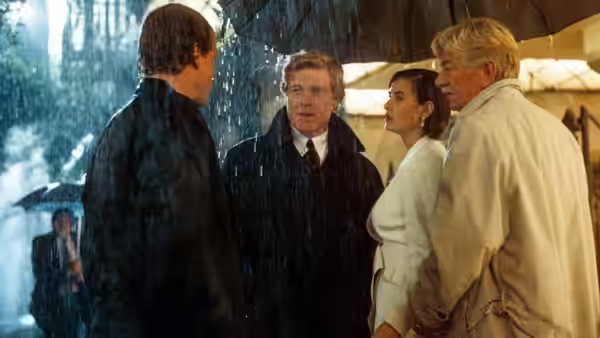
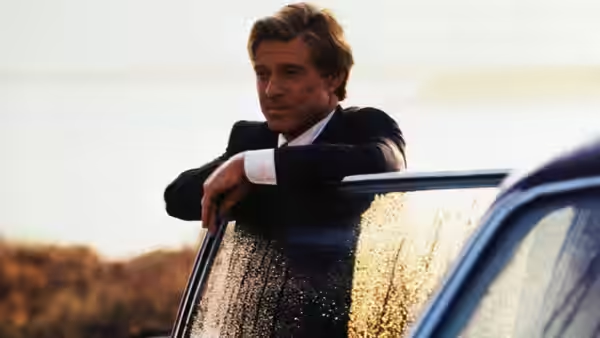
Redford is the problem, and Lyne has made him so. He shoots him the way a church shoots a saint, lit from behind and never hurried, speaking as a man not used to being interrupted. Gage is meant to be a monster who is also irresistible, and the film cannot bring itself to do the monster half. Gage turns up at the class David teaches, and the students admire him and his Rolls-Royce, and so does the camera. Redford played a rich man with nothing behind the smile in The Great Gatsby in 1974 and let us see the nothing. Here he smiles and lets the lighting finish the job.
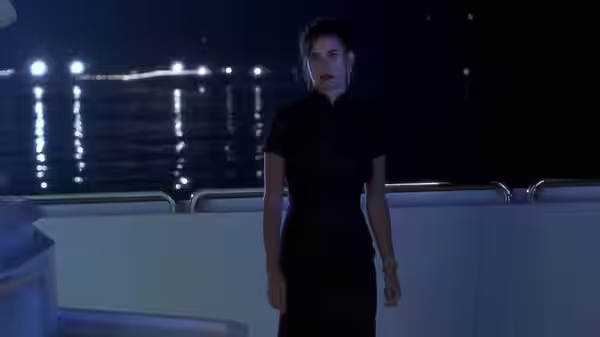
The craft is expensive and of a piece. Mel Bourne gives Gage a hotel suite the size of a railway station and the Murphys a half-built house of bare timber on a hillside, and that contrast is the film’s one good visual idea. John Barry’s score swoons, long strings over long shots of water, and does more of the emotional work than the script does. Beatrix Aruna Pasztor, Bernie Pollack and Bobbie Read put Moore in black and Redford in grey, which makes its point in their first scene together and then keeps making it.
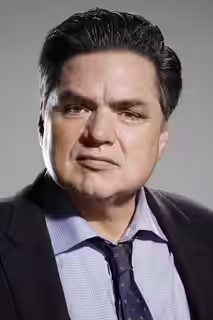
Then there is the middle hour, in which the Murphys sulk. Its question, whether a marriage can survive knowing its price, is a good one, and Jones’s script hands it to two people who mostly sit in separate rooms. Harrelson is asked to brood, and brooding is not what he is for. Moore has more to do and does it; her Diana is the only person on screen who seems to understand that the deal was also something she chose. We laughed, once, at a declaration delivered with a straight face that the film plainly thought its finest moment, and then felt mean about it, because Moore was working so hard to carry the scene. Oliver Platt, as Jeremy, gets the only lines that admit how ridiculous all this is.
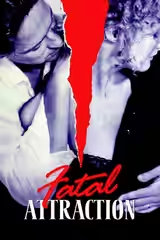
The second half heads somewhere we will not describe, except to say that most critics found the ending hard to credit, and so did we. The reviews were savage, more than the film deserves, and we are a few points kinder, mostly on account of Moore, Harrelson and that first act in Las Vegas. Lyne’s Fatal Attraction (1987) was about sex and consequence and had the sense to be frightening. This one keeps the sex almost entirely off screen, and it cannot stop admiring the money.
Watch it with someone you are prepared to argue with afterwards, because the row is the best thing about it, and it happens on your sofa rather than on the screen. The 15 certificate is about right; there is less here to blush at than the tagline promises.