Film review

Eyes Wide Shut

1999 · Directed by Stanley Kubrick · 2h 39m · MPA R

In a sentenceA doctor takes his wife’s imagination personally and makes a long evening of it

DramaThrillerMystery

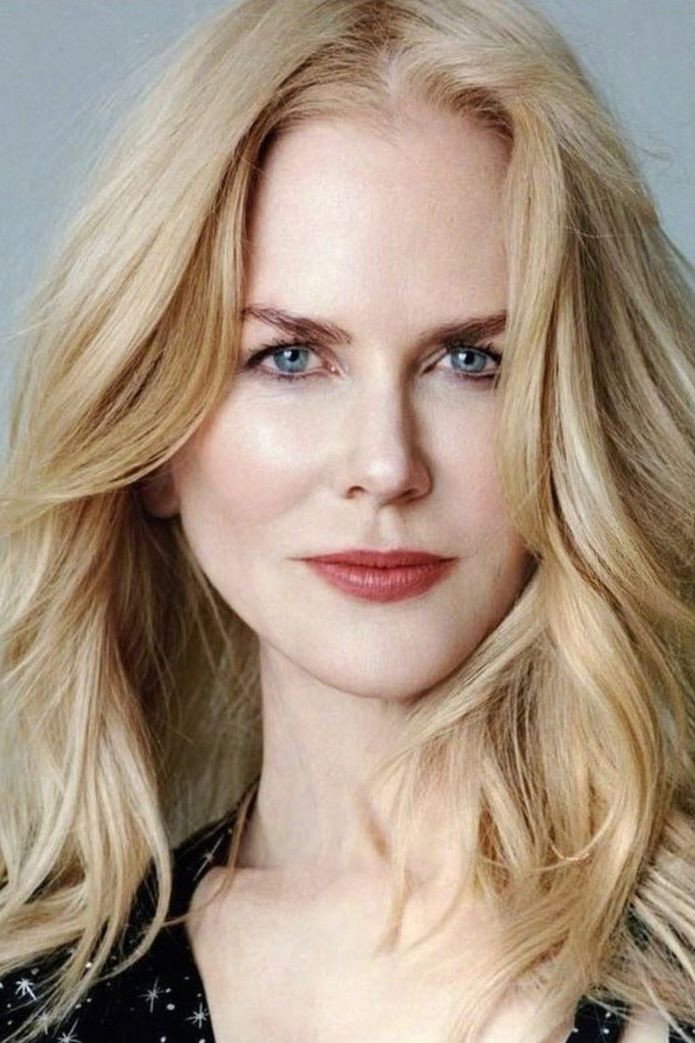
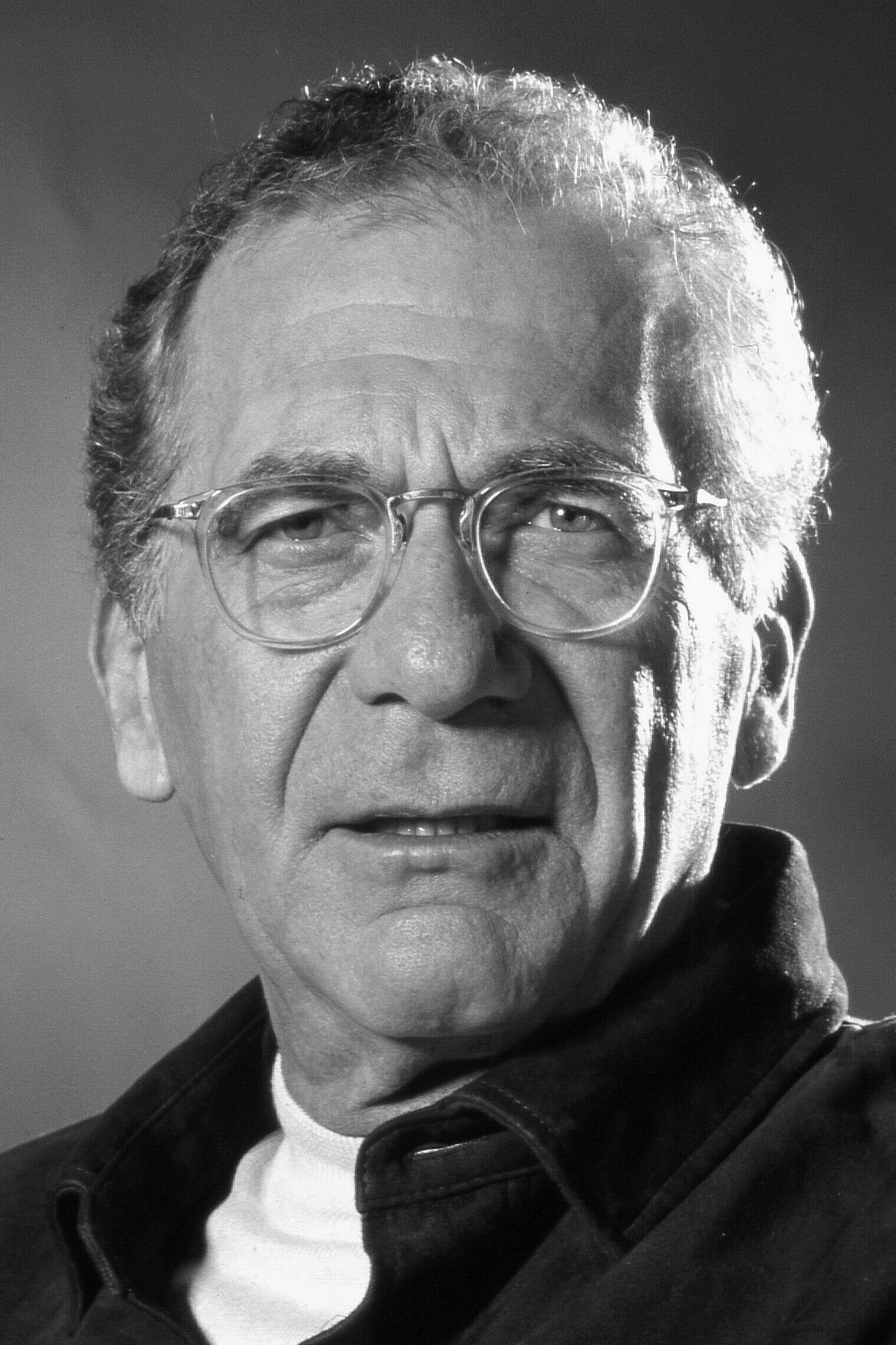
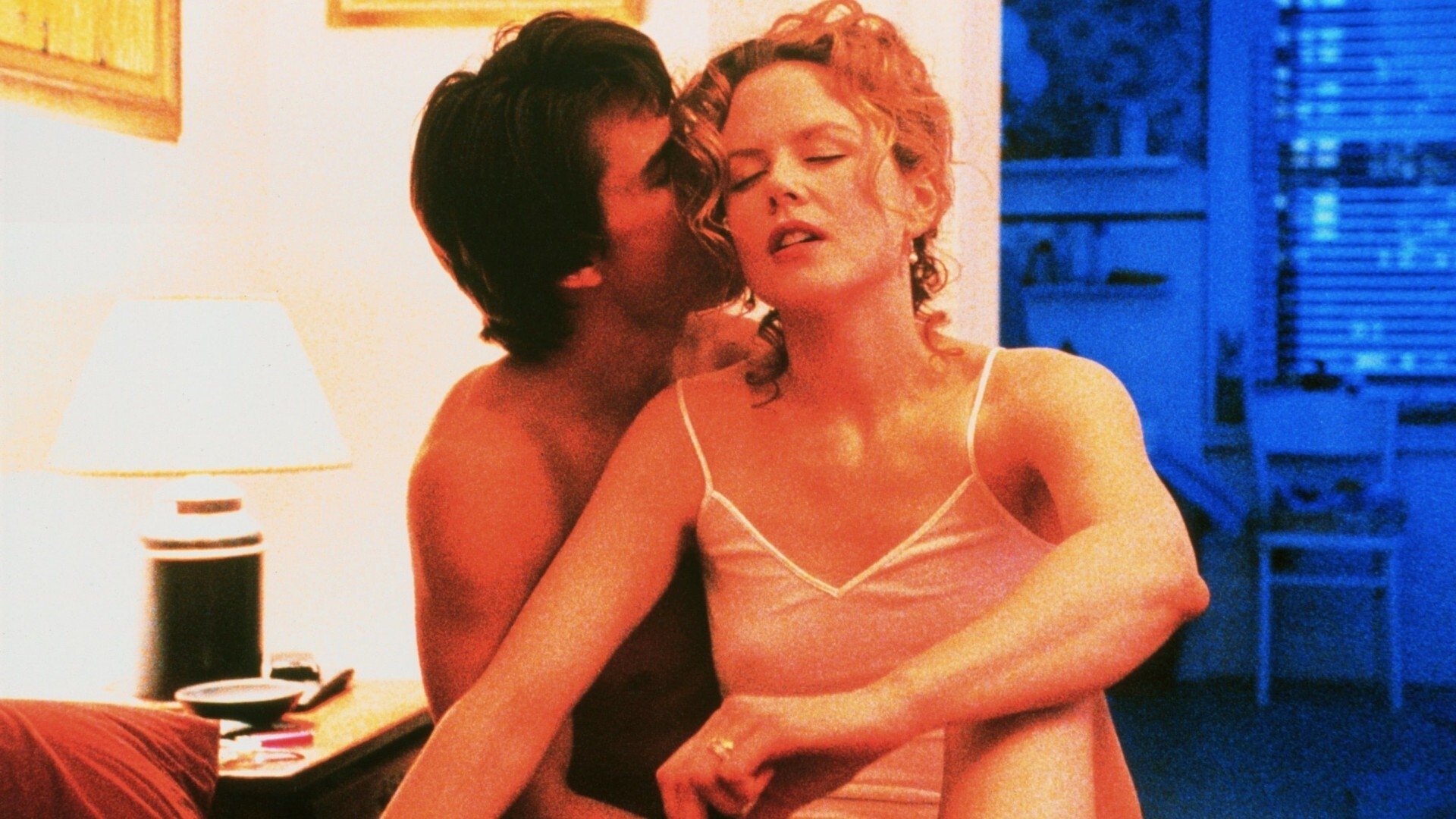
Dr William Harford (Tom Cruise) and his wife Alice (Nicole Kidman) confront desires that complicate their understanding of their marriage. As William moves through a series of encounters outside their home, sex becomes entangled with secrecy and social power. Alice’s privacy challenges what he assumes he knows about her, while his own yearnings raise questions about fidelity and commitment. Stanley Kubrick directs a story that follows the couple’s domestic tensions into situations governed by the logic of a nightmare. Sydney Pollack plays Victor Ziegler, with Todd Field as Nick Nightingale and Vinessa Shaw as Domino.

Plays from YouTube when you press play; nothing loads from them until then.

Fi1m review

Stanley Kubrick’s unsettling marital thriller rewards its slow pace with an unusual understanding of jealousy. Cruise and Kidman are compelling together, though the film’s scrutiny of women’s bodies sometimes undermines its respect for their private thoughts.

Eyes Wide Shut is an unsettling, perceptive film about marriage, and its occasional ponderousness is worth tolerating. Stanley Kubrick approaches sexual jealousy through a husband’s difficulty accepting that his wife has thoughts he cannot supervise. The screenplay, by Kubrick and Frederic Raphael, gives that ordinary possessiveness the space and gravity of a thriller. Its most disturbing suggestion is that familiarity with another person can encourage some fairly foolish assumptions about them.

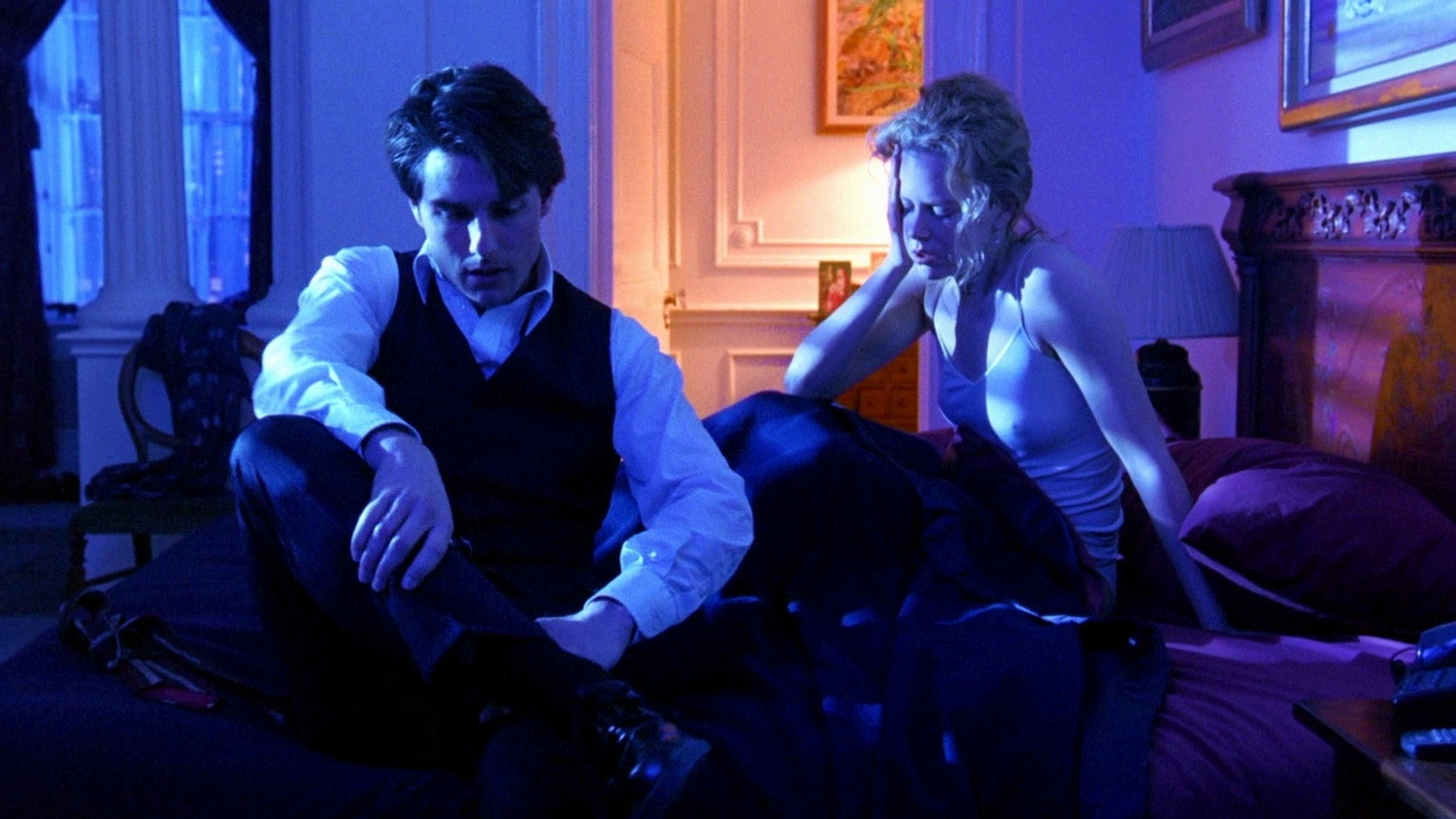
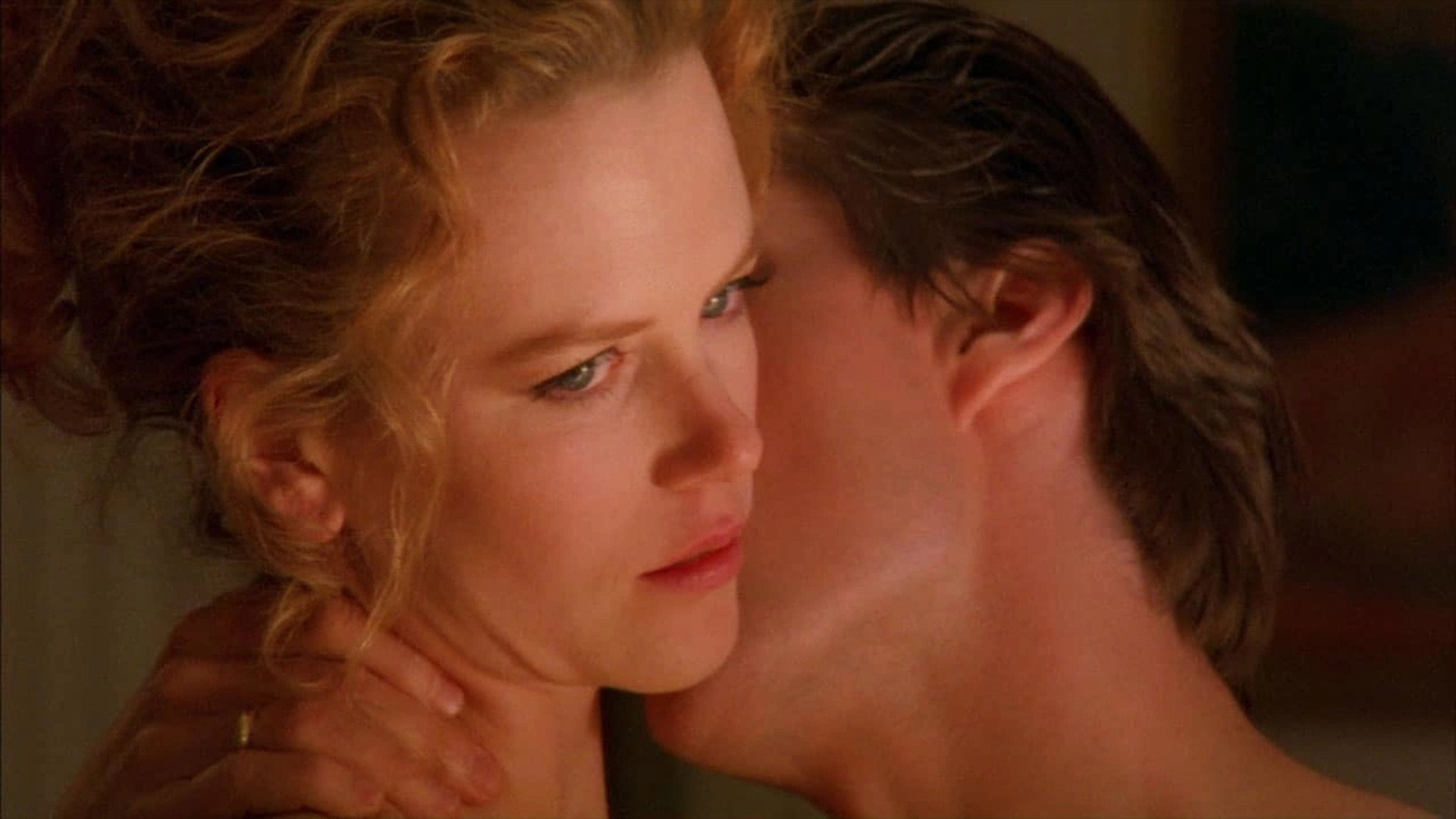
Tom Cruise plays Dr William Harford with an earnestness that makes his lack of understanding painfully credible. Nicole Kidman’s Alice seems capable of a private life even while he is giving her his full attention, and Kidman never makes that privacy feel like a performance of mystery. We felt uneasy during their domestic scenes, because Cruise makes the husband’s need to understand everything about his wife feel so familiar. Both actors make the strain within the marriage convincing without making the couple seem beyond affection.

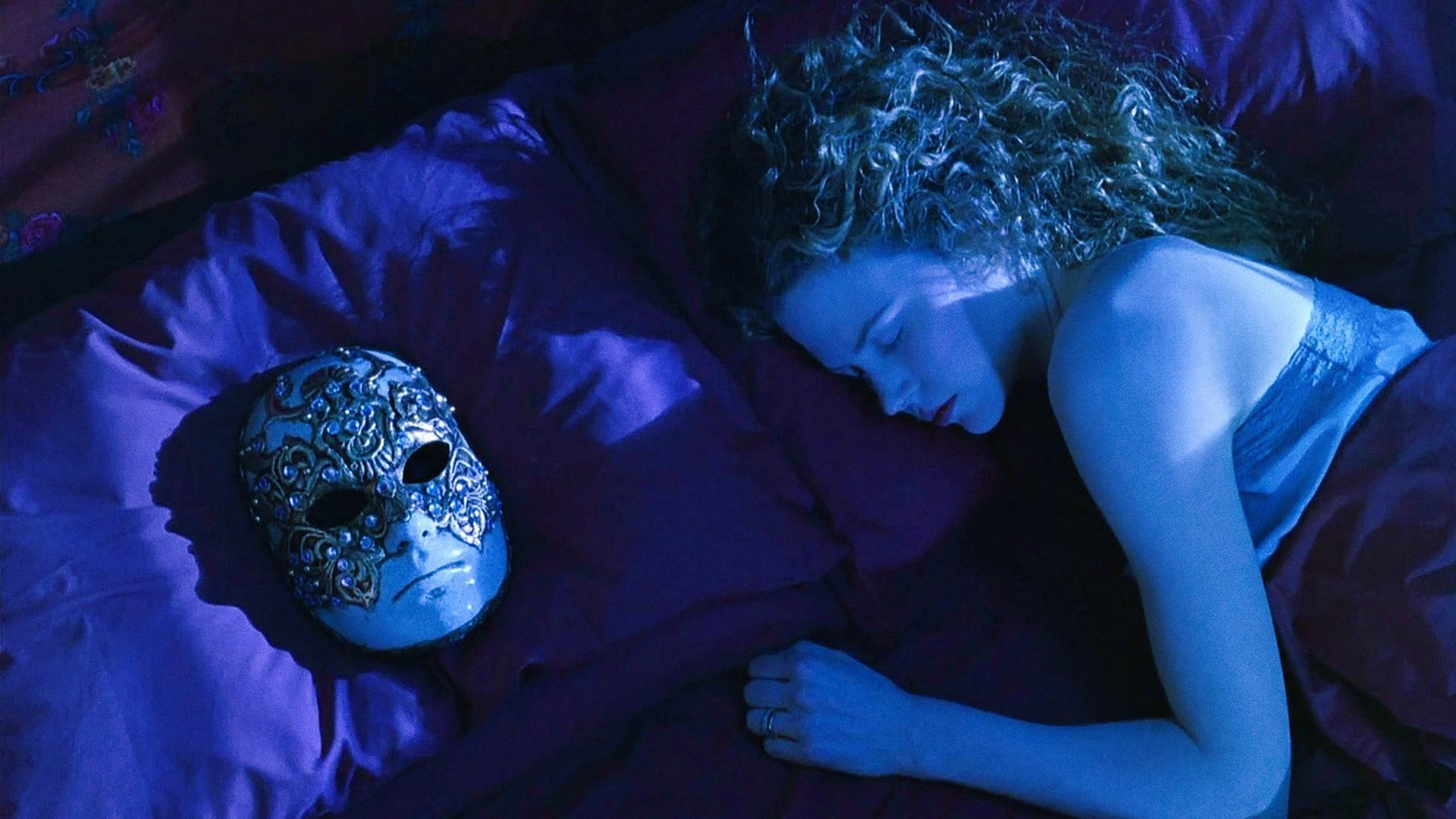
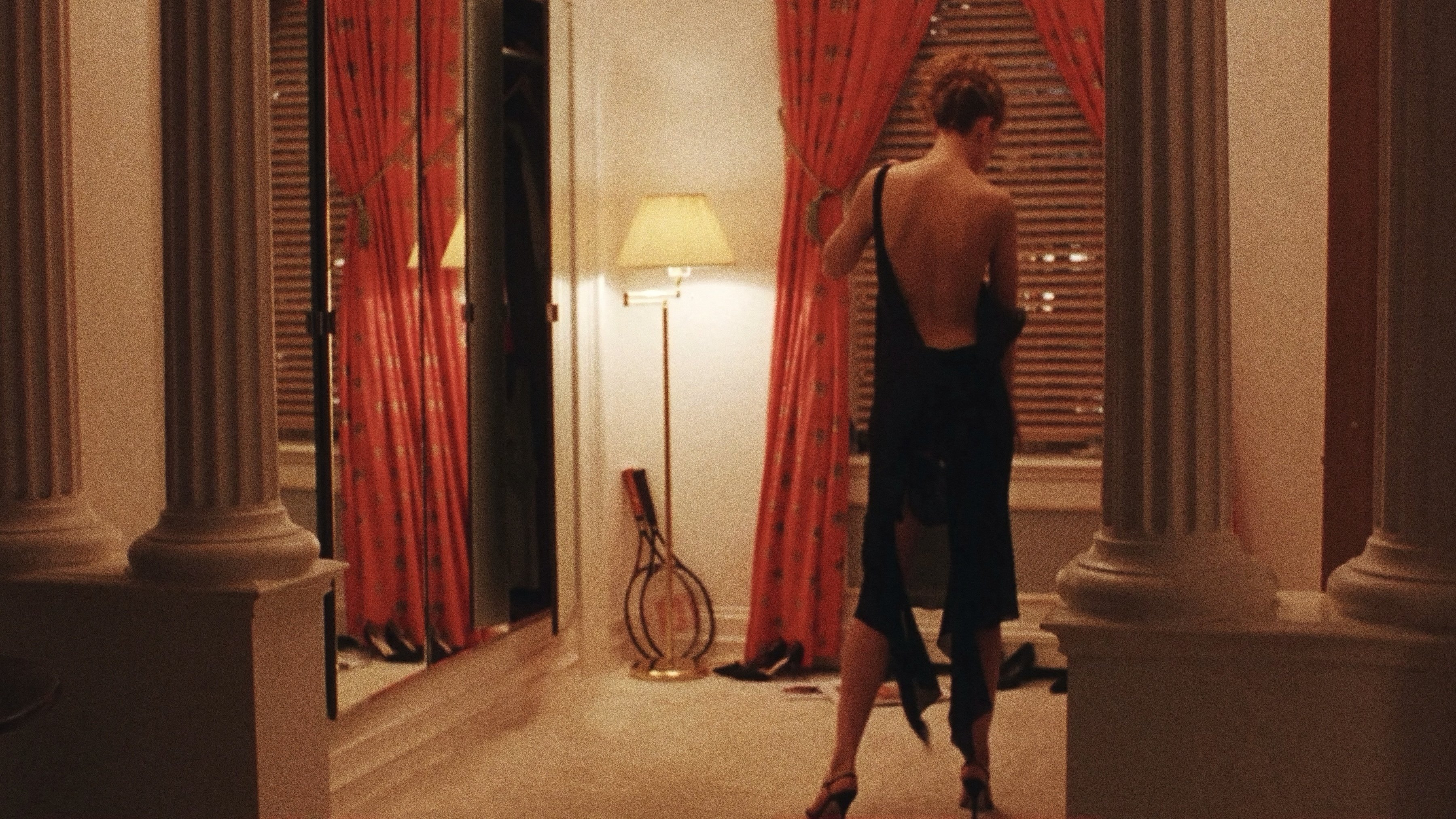
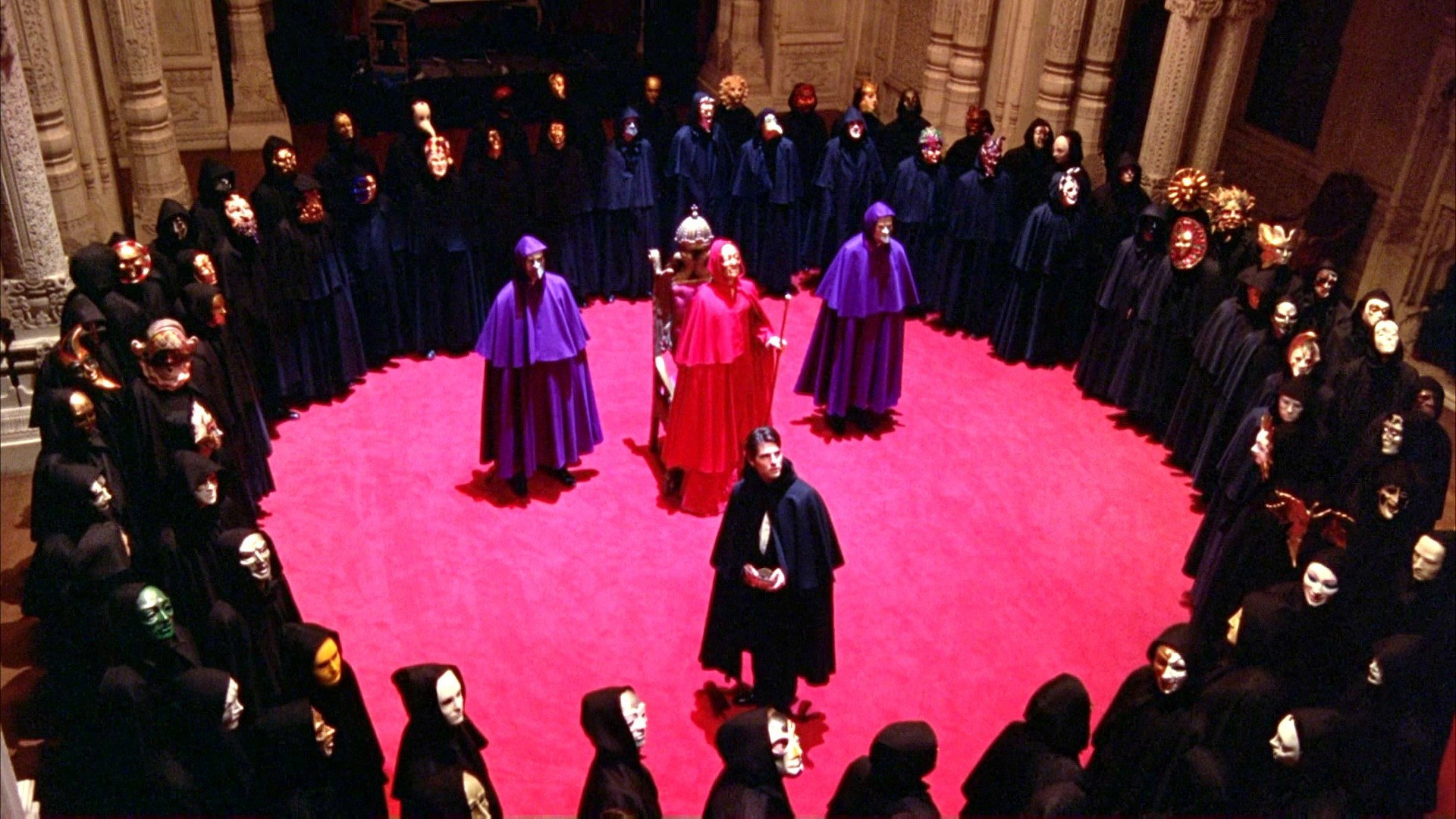
Larry Smith’s photography gives the domestic intimacy a disconcertingly composed appearance; we are allowed to look without being encouraged to feel at ease. Production designers Roy Walker and Leslie Tomkins make the surroundings feel arranged for scrutiny, so that even private space seems insufficiently private. The stylisation can look mannered, but it suits a story in which ordinary encounters acquire the pressure of a nightmare. The people remain recognisable even when the places around them begin to feel strange.

Nigel Galt’s editing gives the wandering plenty of time, and some of that time is productive: anticipation becomes a source of discomfort in itself. Jocelyn Pook’s music deepens the unease, helping the film sustain its dreamlike mood across encounters that need not lead anywhere definite. But Kubrick’s insistence on deliberation sometimes becomes wearing, and the pauses do not all contain something worth waiting for. We can accept that frustration is part of the experience and still wish a few stretches moved faster.

The treatment of women is a more substantial reservation. Kubrick and Raphael give Alice’s privacy real weight, yet the film’s prolonged interest in female nudity can make the other women seem available chiefly for inspection. Kidman’s intelligence makes that unevenness more conspicuous. There is a limit to how much the husband’s restricted understanding can excuse the way a film looks at everyone around him.

Most critics are less persuaded than we are, particularly by the slow pace and the lack of erotic heat. We think they undervalue the discomfort those qualities produce: desire here can be embarrassing, stalled and difficult to reconcile with an existing life. As a sexual thriller, it asks for considerable patience with uncertainty, and its strangeness is more persuasive than its efforts to excite. The domestic scenes give that uncertainty consequences we can recognise.

At 159 minutes, this is a poor choice for a distracted evening or for anyone expecting the easy momentum of a mystery being solved. Put aside the expectation that every strange encounter will yield a useful answer. We recommend it when there is time afterwards for a conversation about the couple on screen, before anyone starts drawing comparisons with the couple on the sofa.
Critical consensus AI synthesised

5 of 6
Positive
2
Mixed
2
Negative
1
Radio Times
★★★★ · Jayne Nelson
80

Kubrick's final film could have been a masterpiece with its creepiness and grandeur, especially the orgy sequence, but feels tame to modern eyes with an uncomfortable focus on female nudity; it remains a hypnotic story of a marriage falling apart.

Read the full review →
The Guardian
29 November 2019 · Peter Bradshaw
70*

The critic finds the film fascinating and disquieting as Kubrick's final work, noting its chilling emphasis on ruling-class secrecy that resonates more strongly now. He singles out the committed performances by Cruise and Kidman for praise while acknowledging some dated elements like the orgy scene.

Read the full review →
Empire
1 January 2000 · Angie Errigo
65*

As an epilogue to Kubrick's career the film is unmistakably Kubrickian and a must-see for acolytes, though the unconverted may find it stylish but overblown. The critic singles out Cruise's performance for lending the film essential humanity amid its cold observation of relationships.

Read the full review →
The Independent
11 September 1999
60*

The film is a unique cinematic object that fails as conventional melodrama but is interesting for its anachronistic values and defence of commitment over licence. The critic singles out the domestic scenes between Cruise and Kidman for their intense, unexpected carnality.

Read the full review →
Total Film
10 September 1999
30*

Kubrick has gone out with a whimper rather than a bang; the film is a let-down that is tedious, unerotic and affected, resembling an ultra-long episode of Tales Of The Unexpected. The critic singles out the snail-like pace and pretentious posturing that douse any sparks from the stars.

Read the full review →
Film Comment
1 September 1999 · Richard T. Jameson

The critic finds the film compelling, engrossing and mesmerizing despite its length and deliberate pace. He singles out the radical visualizations of female privacy, including a startling early scene with Alice Harford, for praise.

Read the full review →

Cast

Stills

If you liked this, try…

Belle de jour poster

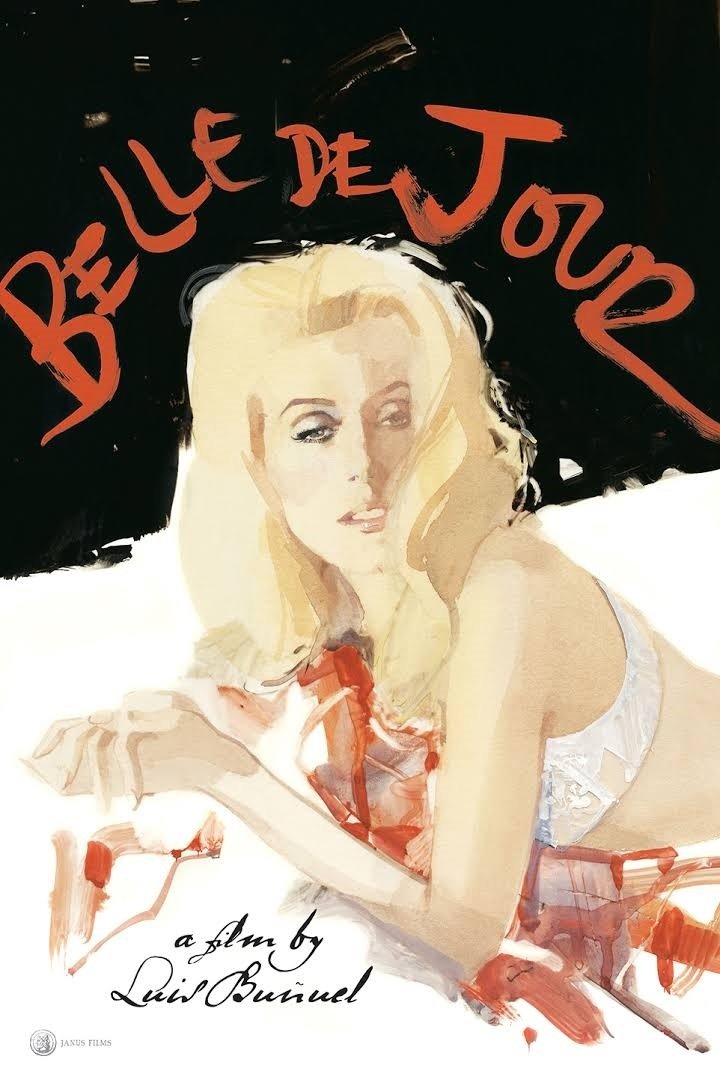
Belle de jour

1967 · Another marriage troubled by sexual fantasy, with even less reassurance about reality.

The Conversation poster

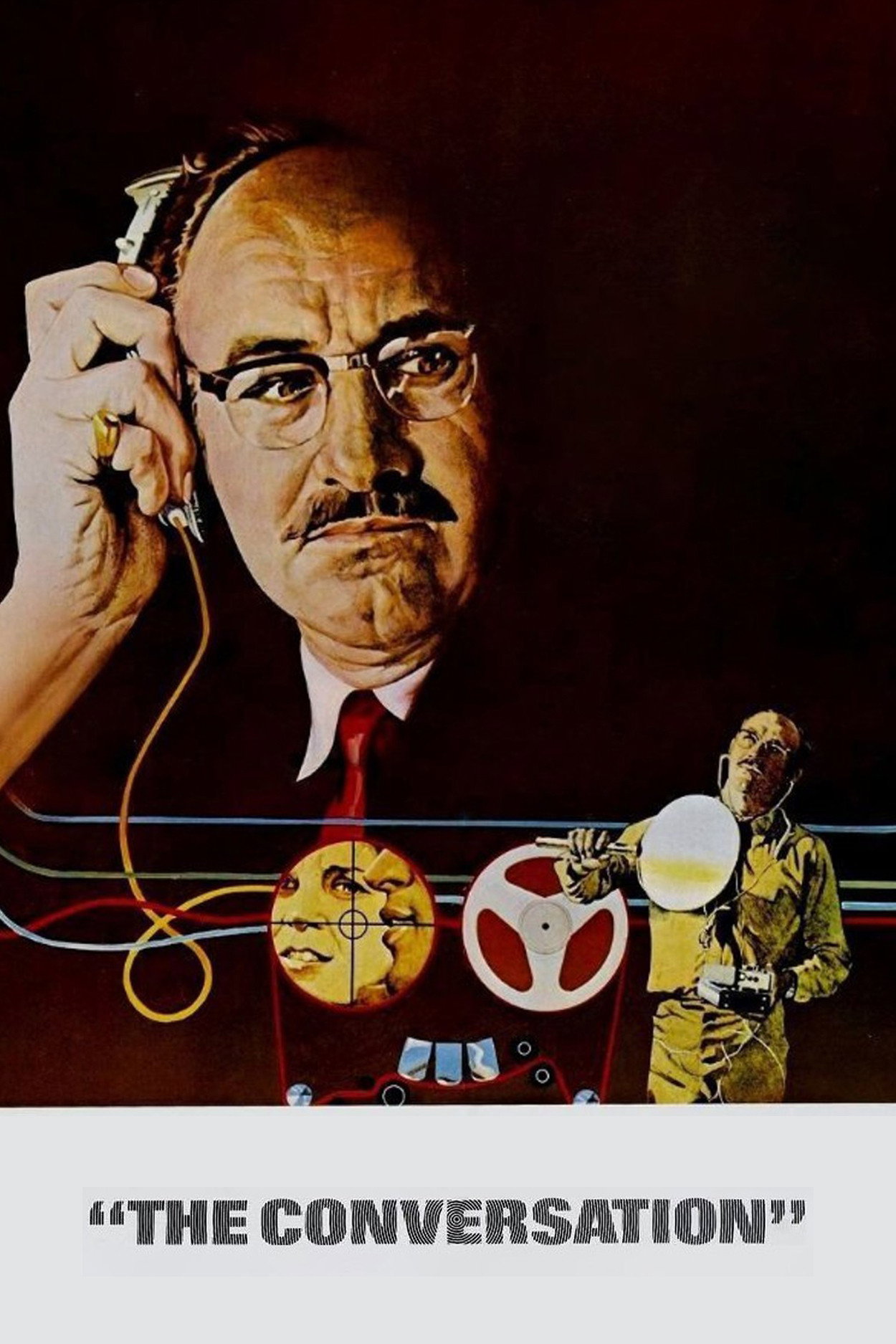
The Conversation

1974 · Private fears grow through obsessive attention to details that refuse to settle.

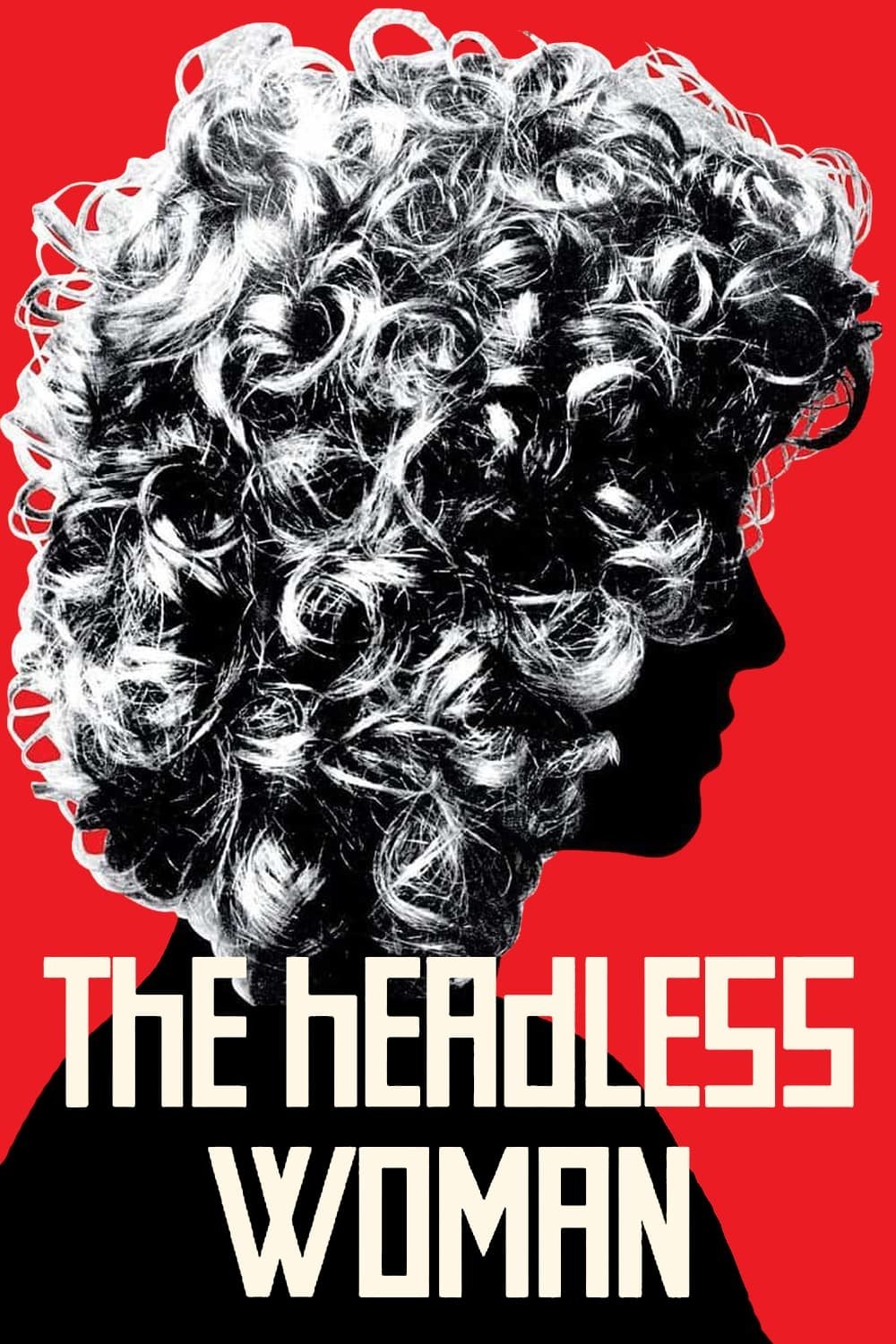
The Headless Woman poster

The Headless Woman

2008 · A more compact nightmare of privilege, uncertainty and the convenience of looking away.

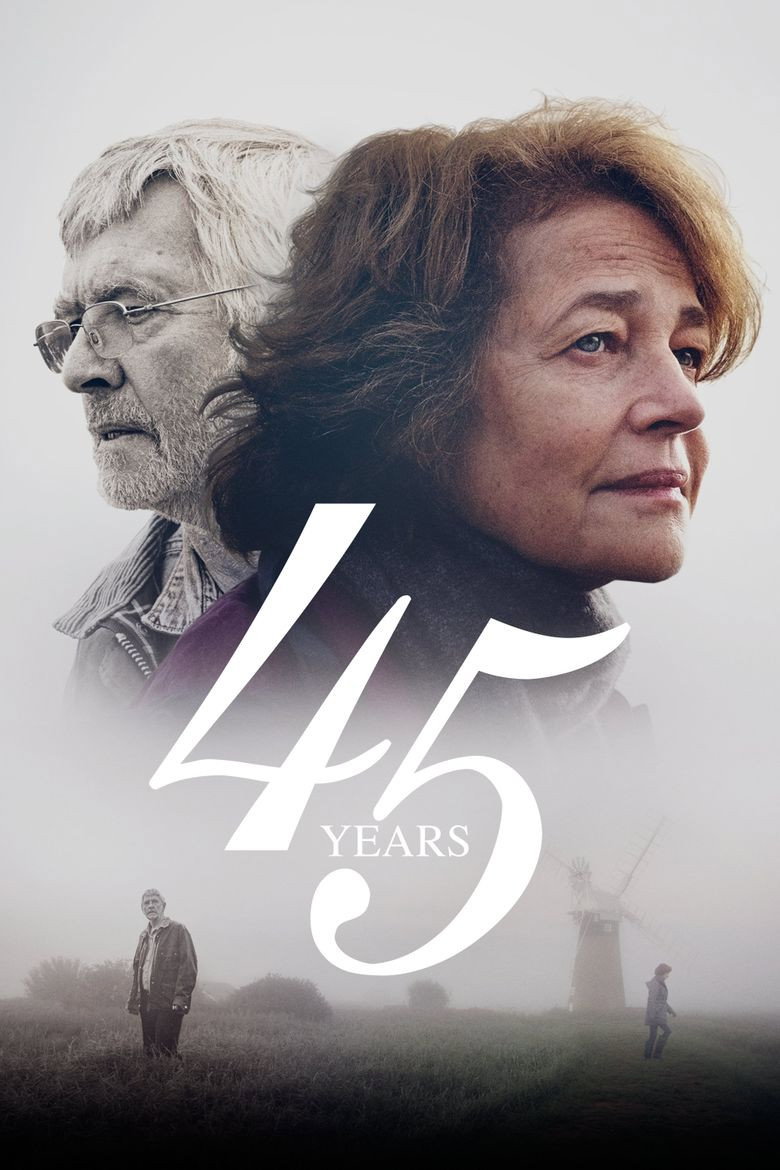
45 Years poster

45 Years

2015 · A long marriage becomes unfamiliar when one partner discovers the other’s private history.

Burning poster

Burning

2018 · Jealousy and class suspicion make every encounter harder to read with confidence.