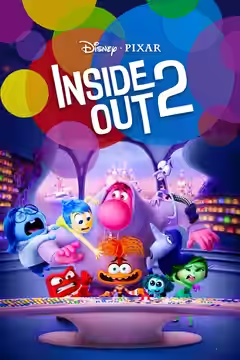
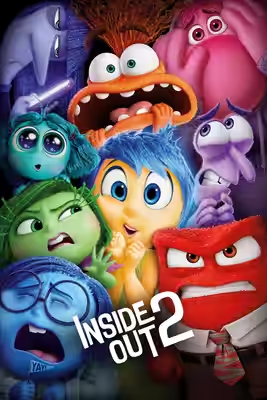
Kelsey Mann’s sequel puts a thirteen-year-old’s head in the hands of Anxiety and follows the first film’s map almost turn for turn. It is kind, funny and well made, and one sequence late on is the real thing. The rest is a good copy.
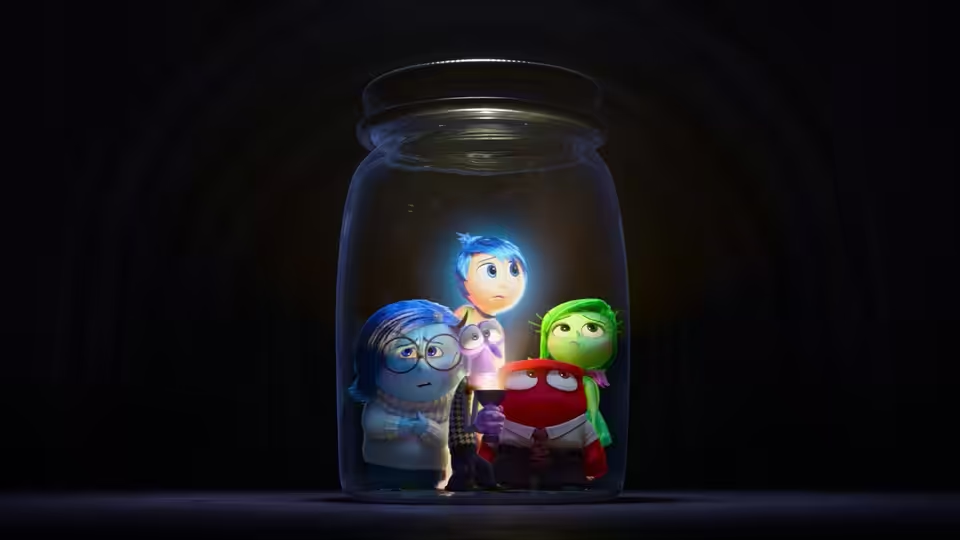
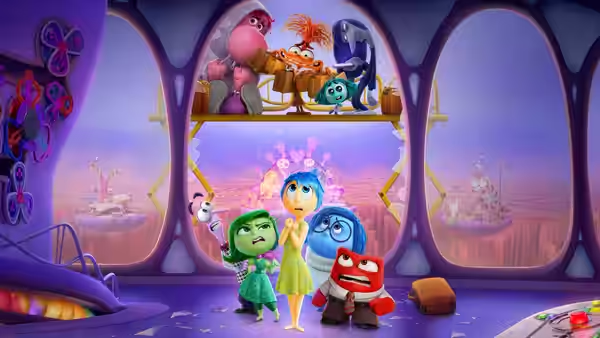
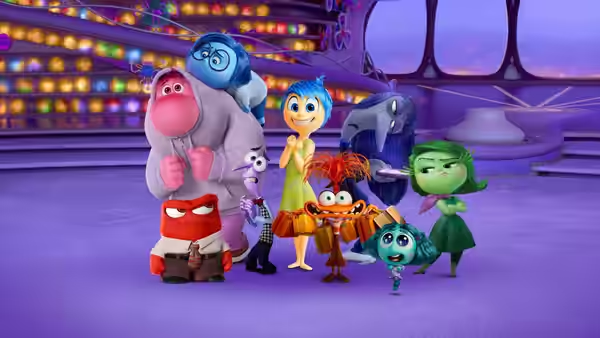
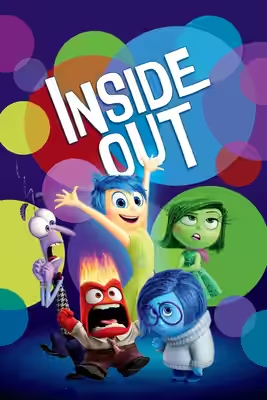
Nine years after Pete Docter’s Inside Out (2015), Riley has turned thirteen and her head is under new management. Kelsey Mann’s sequel, from a screenplay by Dave Holstein and Meg LeFauve, opens with the five original emotions running a tidy shop, then sounds an alarm marked puberty and lets a demolition crew loose on the console. In the morning the newcomers are at the desk. Riley, meanwhile, is at a three-day ice hockey camp with her two best friends, trying to catch the eye of the older girls she will be at school with next year. It is a good film, decent-hearted and often funny, and it is built on the same chassis as the first one, and the join shows.
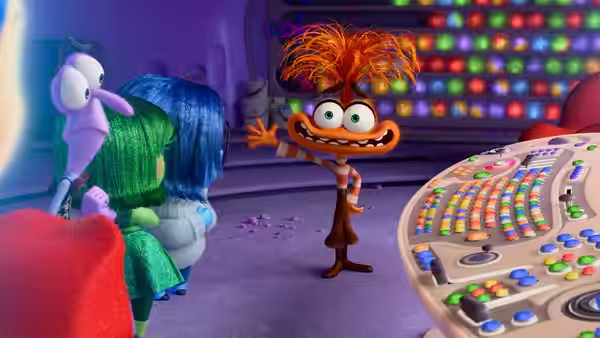
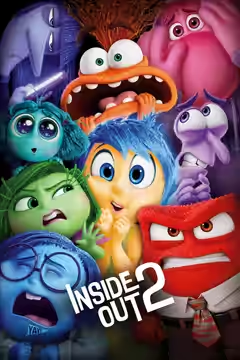
The new emotion in charge is Anxiety, and she is the reason to go. Maya Hawke voices her as a fast talker with a rising pitch, the sort of colleague who has already drafted the apology for the mistake you have not made yet. Jason Deamer’s team draw her as a frayed orange bundle with a grin too wide for her face and a pair of eyes that never settle. She means well. She is planning for every possible future so Riley will be safe in all of them, and the film is honest that this is how she does her damage. Ayo Edebiri’s Envy is small and wide-eyed and wants whatever the older girls have. Adèle Exarchopoulos plays Ennui flat on a sofa, running the console from her phone in a French drawl, and every one of her lines got a laugh from the adults in our screening.
The craft is Pixar’s usual standard, which is to say high. Jonathan Pytko and Adam Habib light the mind like a stage, hard-edged and saturated, and shoot the rink in cooler daylight, so the cuts between the two never confuse. Deamer gives Riley’s sense of self a physical shape, a glowing root system fed by strings of belief, and the sequence in which Anxiety starts pulling old strings out and threading new ones in is the film’s best piece of design. Maurissa Horwitz cuts the scrimmage games fast and cross-cuts them with the panic at the desk, so that a fumbled pass and a shouted order arrive together. Andrea Datzman and Michael Giacchino’s score is lighter than the first film’s and leans on the old theme whenever it wants us to feel the loss, which is often.
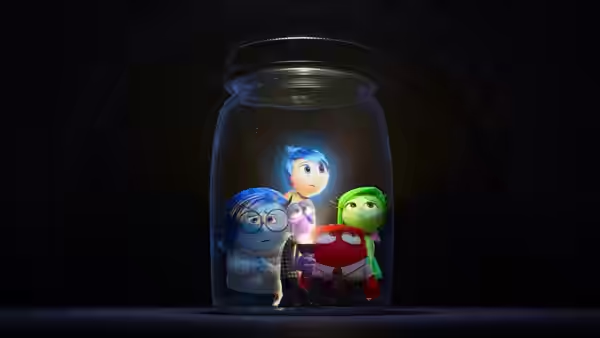
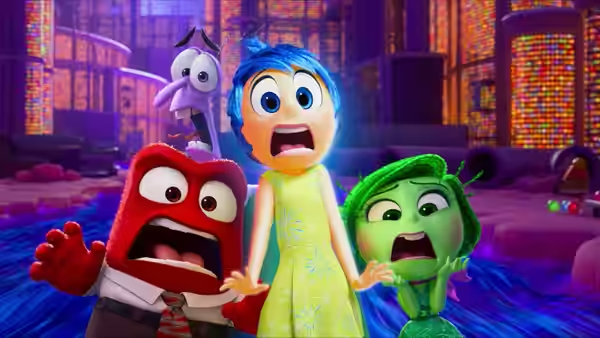
The trouble is the route. Once Anxiety has thrown the old emotions out of headquarters, the film sends Joy and her colleagues on a long trek back through the back of the mind, meeting the odd characters who live there, which is precisely what happened last time. The stops are pleasant and none of them matters. A gag about sarcasm is set up, explained and then explained again. Amy Poehler’s Joy is written a little tired this time, which is a good idea the script keeps talking about rather than showing. Tony Hale and Liza Lapira take over Fear and Disgust and you will not notice the change, partly because the two of them are given so little to do.
Then there is a sequence late on, at the rink, which we will not describe. We had spent the previous half hour mildly irritated by the film’s habit of stating its lesson, and we were not ready to be got at. We were. The picture goes quiet, the cuts slow down, and the film trusts the image for perhaps a minute. It is the only time it does, and it is enough to send you out of the cinema kinder than you went in.
Inside Out had one clean idea, that sadness is useful, and it took the whole film to earn it. This one has a subtler idea, that worry is love with the brakes gone, and it earns it for one scene and talks around it the rest of the time. Bring a twelve-year-old if you have one; they will see themselves and pretend not to. Adults should go for Hawke and for that late scene, and forgive the road trip. It runs 97 minutes and carries a U.