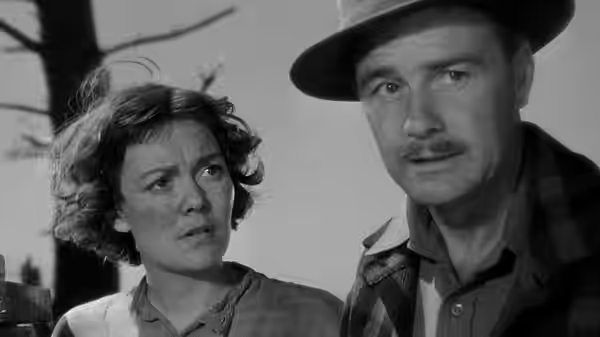
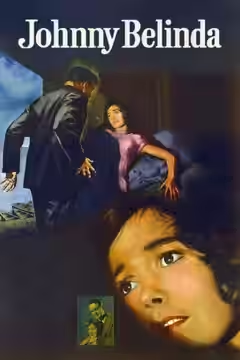
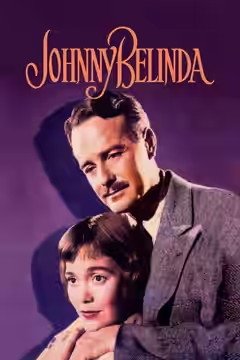
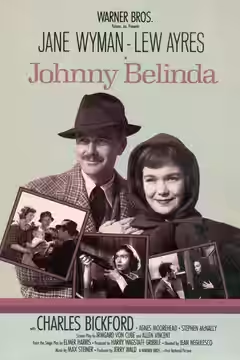
A melodrama about a deaf young woman on a Nova Scotia farm, kept honest by Jane Wyman, who plays the part without a word and never begs for pity. The village is drawn more broadly, and Max Steiner’s score begs on her behalf.
Elmer Harris’s play Johnny Belinda had done its business on the stage, and Warner Bros bought it knowing what it was: a story about a deaf and mute farm girl in a small fishing village, an assault, and a baby the village would rather not explain. Under the censorship of 1948 the assault could not be shown and could barely be named, so what Jean Negulesco’s film has instead is a long look at a face. It is a weepie, and it knows it. What surprised us is how often it declines to weep.
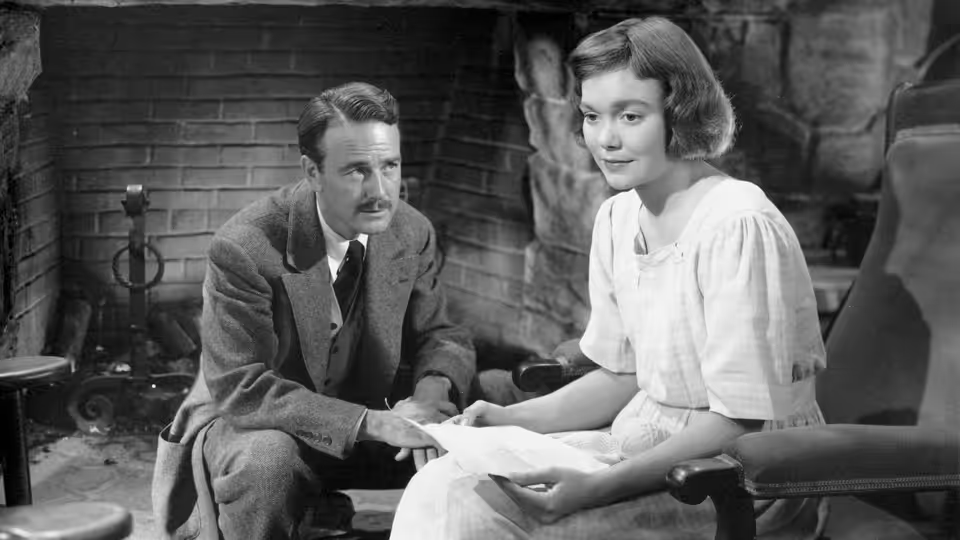
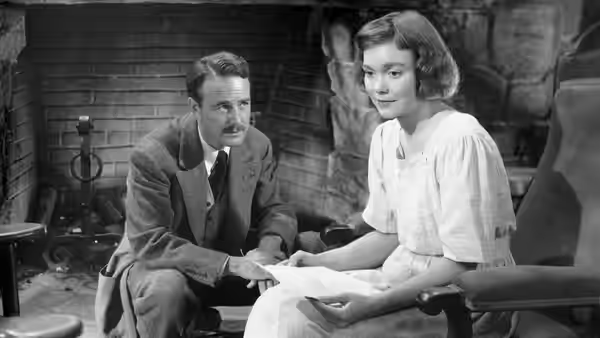
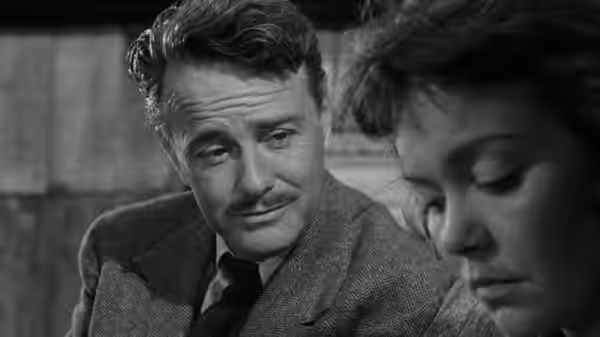
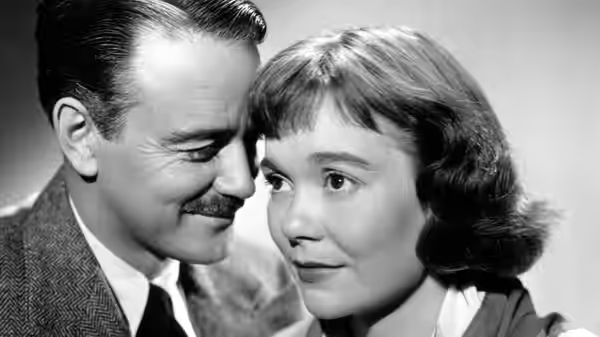
Jane Wyman has no lines. She has her hands, once Robert Richardson (Lew Ayres), the new doctor, begins to teach her to sign, and before that she has only her eyes and the set of her shoulders, and the film asks her to carry its opening stretch on those alone. She does it by underplaying. Belinda is not a saint and not a child; she is a young woman who has spent her life being talked over, and Wyman shows her attending with her whole body to things she cannot hear. The scene in which she grasps that the shapes his fingers make are words, that a thing on the table has a name and she can now say it, moved us more than we were prepared for. Nothing in the staging tells us to be moved. Negulesco holds on her and lets us watch it arrive.
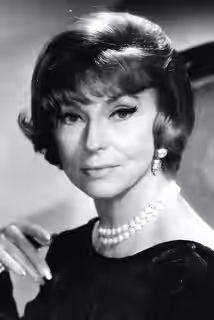
Charles Bickford plays her father, Black MacDonald, who runs the mill and has never called his daughter anything but the Dummy, as the rest of the village does. He is a granite piece of casting and Bickford is wise enough not to melt. When the man begins to see her differently, the voice stays as hard as before; only what he does with his hands changes. Agnes Moorehead’s Aggie MacDonald, the aunt, is sharper and quicker and gets the film’s best dry lines, and Moorehead plays her thaw as something that costs her.
Ted McCord photographs the village in black and white with a good deal of fog and a fair amount of mud, the mill wheel turning behind half the scenes at the MacDonald place. The coast is northern California standing in for Nova Scotia and it stands in well; the light is flat and cold and nobody has been asked to look pretty in it. David Weisbart’s cutting is patient in the mill and the doctor’s surgery and brisker in the village, which is the right way round. Max Steiner’s score is the problem. It arrives at every feeling a bar before the actors do and stays after they have finished, and there were three or four moments when Wyman had done the work and the strings insisted on doing it again.
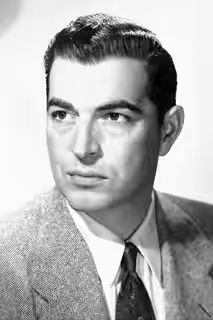
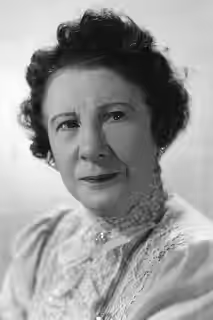
The village is the film’s other weakness. Rosalind Ivan’s Mrs. Poggety, Mabel Paige’s Mrs. Lutz and Ida Moore’s Mrs. McKee are a chorus of gossips written with a thick pencil, there to say the worst thing about the doctor and the girl at the moment the plot needs it said. Stephen McNally’s Locky McCormick is a brute from his first scene, and Jan Sterling, as Stella, the woman he is courting, is given little to do until late on. Lew Ayres’s doctor is decent, patient and slightly wooden; the film needs him to be good, and Ayres settles for being good rather than interesting.
The second half takes the story where the play took it, toward a public reckoning we will not describe, and it is there that the film becomes ordinary. Allen Vincent and Irma von Cube’s screenplay keeps the speeches short and the hysteria out, which is more than most adaptations of stage melodrama managed in the period, but the machinery of the final act is machinery all the same. Everything the film does best happens in a room with two people in it and one of them not speaking.
Negulesco was a studio director who made what he was given, and here he was given something worth handling carefully. Critics at the time thought it better than its material, and so do we. At 102 minutes it does not dawdle. Watch it for Wyman and Bickford, and if you find the music too much, you will not be alone on the sofa.