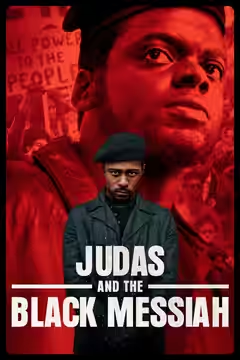
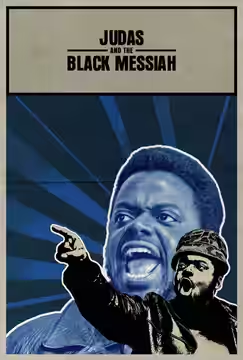
Shaka King tells Fred Hampton’s story through the FBI informant who sold him, and gets two fine performances out of the arrangement. The speeches are electric and the frame around them is a thriller; the join shows, and we recommend it anyway.
Bill O’Neal (LaKeith Stanfield) steals cars in Chicago with a fake FBI badge, until the real FBI picks him up. Agent Roy Mitchell (Jesse Plemons) offers him a way out of a prison sentence: join the Illinois chapter of the Black Panther Party and report on its chairman, Fred Hampton (Daniel Kaluuya). Shaka King’s second film tells Hampton’s story from the margins, through the man paid to watch him, and the title tells you what King thinks of that man. It is a good film with a flaw in its foundations, and the flaw is the decision that makes it a thriller.
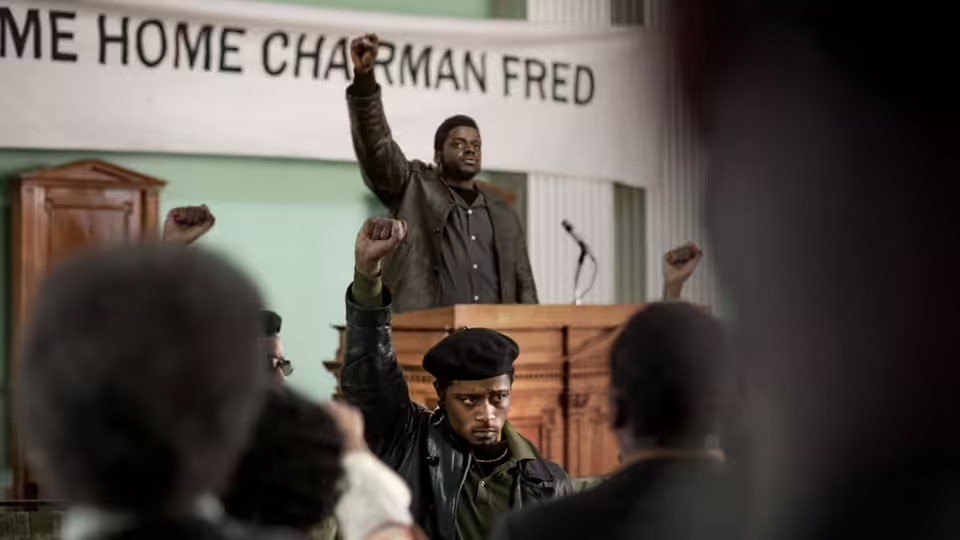
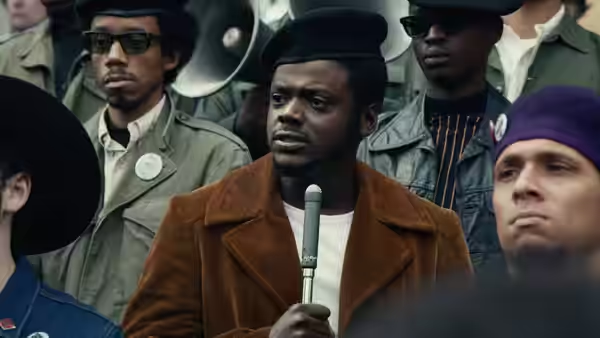
Hampton was a talker, and the film gives him a church, a hall and a crowd and lets him go. Kaluuya works the speeches from the chest, dropping to a rasp on the refrains, and Sean Bobbitt shoots him low and close so the ceiling presses down on him. We are not easily moved by a man at a lectern. We were moved twice, and the second time we noticed we had stopped looking at Stanfield, standing at the edge of the frame doing what the Bureau pays him for. That is the film’s case in one shot: you cannot listen to Hampton and keep your distance, and O’Neal is trying to.
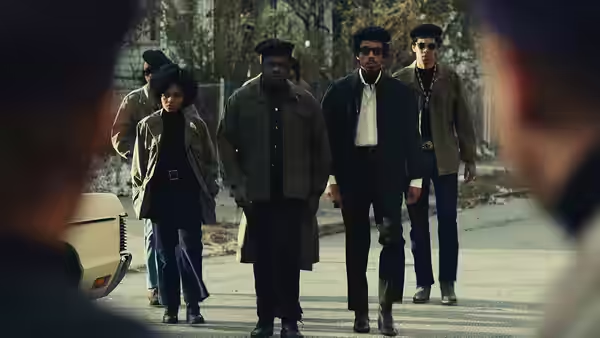
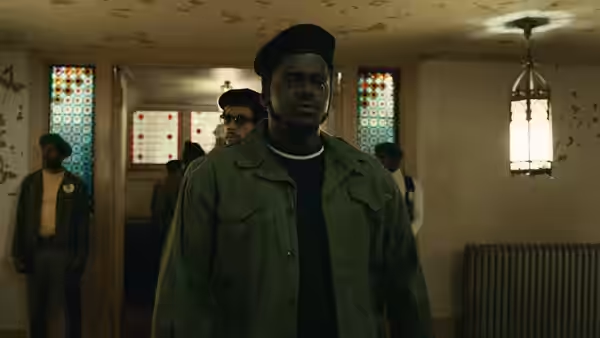
Off the stage Kaluuya is quieter and better. Hampton walks into a hall where the Young Patriots, poor white Southerners with a Confederate flag on the wall, are meeting, and talks them into a coalition without pretending to like the flag. With Deborah Johnson (Dominique Fishback), a poet who joins the chapter, he is formal and slightly clumsy, and Fishback plays her as the one person who sees him whole rather than as a chairman. Their scenes are small, a kitchen, a bed, a notebook, and they are where we felt most for anyone.
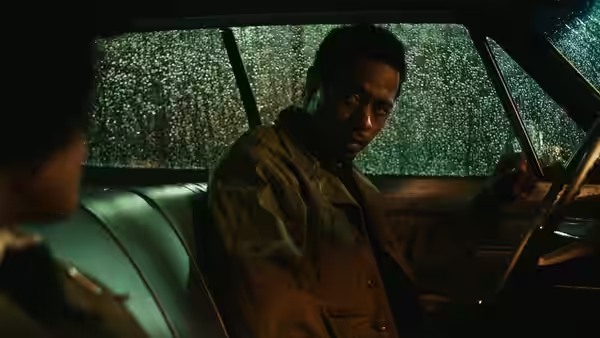
Stanfield has the harder job and the thinner script. O’Neal is written as a man with no politics who wants a car and his freedom, and Stanfield gives him eyes that never settle and a laugh that arrives a beat late. His best scenes are with Plemons: a steak dinner, Mitchell’s living room, the agent talking about his baby while an envelope moves across the table. Plemons is a reasonable-sounding man who never raises his voice and never asks what the job is for. Charlese Antoinette Jones’s costumes keep score; as the envelopes get thicker, O’Neal’s coats get better.
But the film cannot decide what O’Neal thinks, and declines to show us. It opens with a recreation of a television interview he gave years later, returns to it, and he gives nothing away. The screenplay, by King and Will Berson, could not find him and settled on calling the blankness a mystery. The man whose name comes first in the title is the least legible person on screen, and 125 minutes is a long time to spend behind eyes that will not tell you what they see.
The other weak stretch is the Bureau’s top floor. Martin Sheen plays J. Edgar Hoover under prosthetics, asking his agents what they would do if their daughters brought home a black man. Something like it was said, we do not doubt, and we still winced, because everywhere else King trusts the ordinary to be frightening and here he reaches for a monster. Mark Isham and Craig Harris’s score, low brass and unsteady percussion, works well on the streets and badly here, underlining lines that were already underlined.
The rest of the craft is sound. Sam Lisenco’s Panther office, posters, hand-lettered signs, breakfast tables, looks used rather than dressed, and Bobbitt gives the winter city its sodium orange and leaves the FBI the greys, so you know whose scene you are in before anyone speaks. Kristan Sprague cuts the one gun battle for geography, so we know which window the shots are coming from, and cuts the meetings for faces, which is harder.
Watch it for Kaluuya, stay for Fishback, and accept you will leave knowing the chairman better than the man who sold him. The film assumes you know the history. If you do not, do not look it up first.