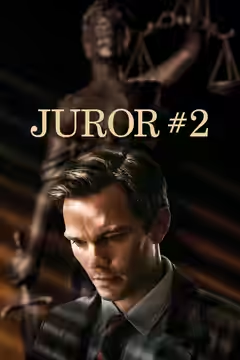
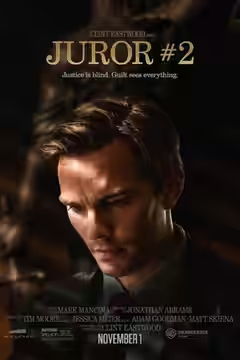
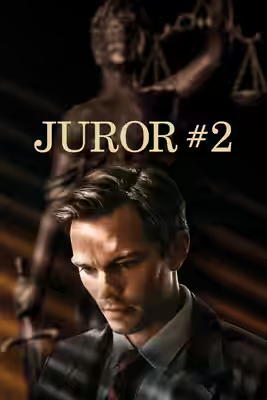
Clint Eastwood’s courtroom drama puts a juror on trial inside his own head, and Nicholas Hoult carries it with a face that keeps trying to stay still. The premise creaks in places. The final shot is the best thing in it.
Justin Kemp (Nicholas Hoult) is a recovering alcoholic about to become a father, and his wife Allison (Zoey Deutch) is near the end of a pregnancy that has already frightened them both. He asks the judge (Amy Aquino) to excuse him from jury duty and she does not. The trial is a murder: James Sythe (Gabriel Basso) is accused of killing his girlfriend after a row in a bar, and she was found dead below a bridge on a wet night. Then a witness describes that night, and Justin remembers where he was. He was in the bar, and he drove home over the bridge and hit something in the dark.
Jonathan A. Abrams’s script gives this away early, and the film is better for it. This is not a whodunnit. It is about a man in a jury box working out what he owes a stranger and what he owes his wife. We liked it. It is plain, well built and 114 minutes long, and if courtroom dramas are your evening it is a good one, provided you can swallow more coincidence than a real court would.
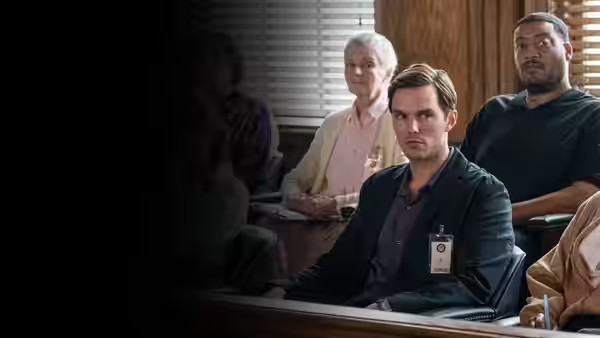
The realisation is the scene the film is built on, and Hoult plays it without a gasp. He sits and listens and swallows. Yves Bélanger holds the camera on him in the flat daylight of the courtroom while the witness talks about the rain, and our stomach went before his face did. Joel Cox and David S. Cox then cut back to the bridge, headlights, wipers, a thud, a man peering over a rail into black water, and each return adds one detail the last one withheld. Mark Mancina’s score is a few notes of piano and long stretches of nothing, which is right.
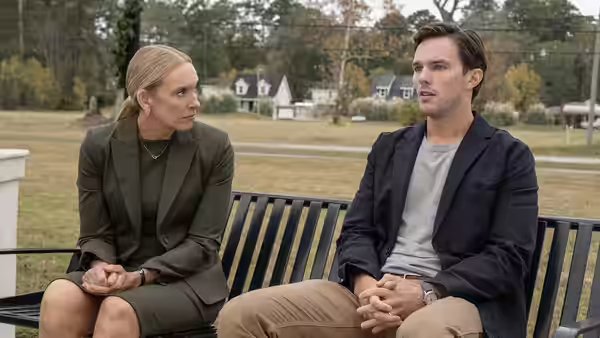
Toni Collette’s Faith Killebrew is the prosecutor and she is running for district attorney, so a conviction would help her. Collette plays her tight and certain and then lets small doubts in one at a time. Deborah Hopper puts her in sharp dark suits and Hoult in soft shirts and cardigans, so you can tell at a glance who is prosecuting and who is trying not to be noticed. Chris Messina’s defence lawyer, Eric Resnick, is tired and decent and overworked. Kiefer Sutherland gets one strong scene as Larry Lasker, Justin’s sponsor and a lawyer, setting out in a level voice what a man with Justin’s history could expect if he walked into a police station and told the truth.
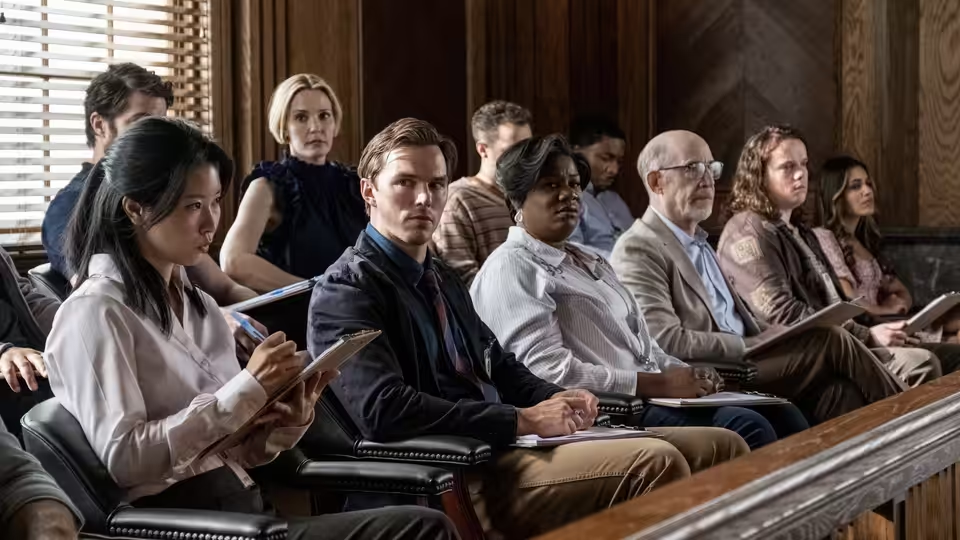
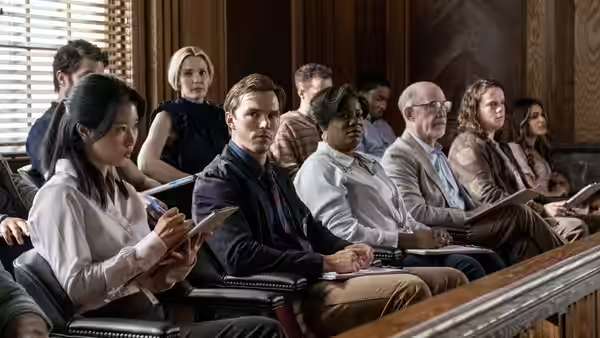
The jury room is where the film has most fun. Ronald R. Reiss gives it a long table, bad coffee and a window nobody looks out of, and Eastwood fills it with people who want to go home. Cedric Yarbrough’s Marcus wants it over. Adrienne C. Moore’s Yolanda made up her mind on the first day. J.K. Simmons’s Harold is a retired detective who cannot stop detecting, and Simmons plays him as the most dangerous man at the table without raising his voice. The film knows we have all seen 12 Angry Men (1957), and it turns that story inside out: the lone juror arguing for doubt has reasons he cannot say aloud.
Now the creaking. The bar, the bridge, the timing: several things must line up and they do, and several people must fail to check what a real prosecutor would check in an afternoon. We groaned once, at a piece of evidence nobody goes looking for until the story needs it. Deutch is given a bump and a worried face and not much else. Some critics have found the holes fatal. We did not, because the film is not asking to be believed as procedure; it is asking what you would do, and it asks seriously.
Set against Eastwood’s other films about ordinary men and the institutions around them, Mystic River (2003), Changeling (2008), Sully (2016), this is quieter and shorter and has less to prove. There is no speech about the system. There is a man, a room and a question. The reviews so far have treated it as a farewell, and we would rather judge it as a film, which it can stand. The last shot, which we will not describe, is held longer than most directors would dare, and it sent us out quieter than we expected.
It is a 12A and there is nothing in it a teenager could not watch. See it with someone who will argue with you afterwards about what Justin should have done. The argument will last longer than the film.