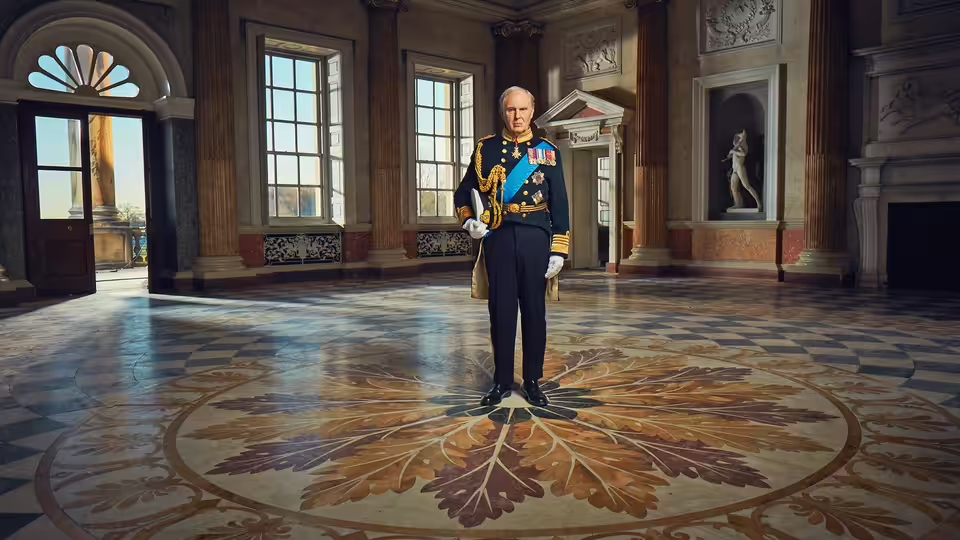
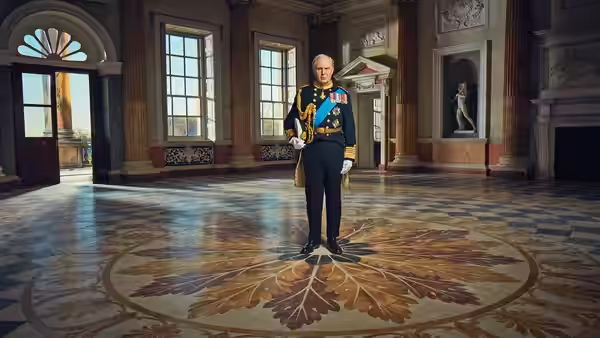
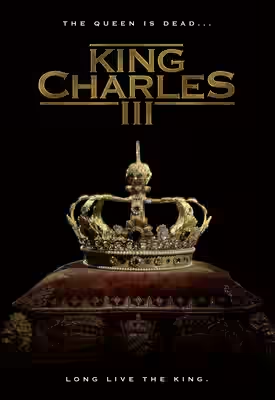
Tim Pigott-Smith makes King Charles III worth the effort. Mike Bartlett’s blank verse gives Charles dignity but can become wearing, while the unlikely politics need indulgence; this darkly funny drama rewards an appetite for formal language.
King Charles III is worth watching for Tim Pigott-Smith, whose Charles makes an unlikely political tragedy feel personal. Rupert Goold directs Mike Bartlett’s drama with a seriousness that suits its central performance, though the sustained blank verse makes a considerable demand on the ear. We recommend it to anyone with an appetite for talk and political drama. The qualification matters: the writing sometimes insists on formality long after we have accepted the convention.
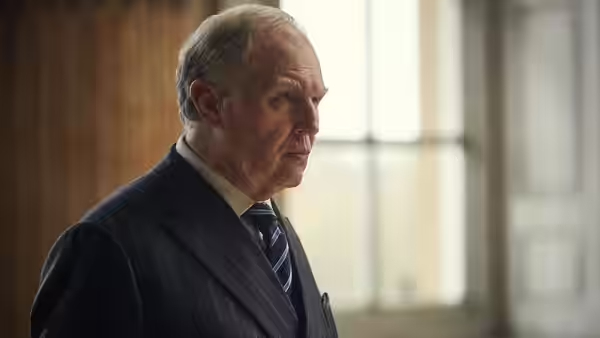
Charles needs to interest us as a person if this is to work, and Tim Pigott-Smith gives him enough dignity to hold our attention. We were moved by the seriousness with which he speaks the verse. He makes the formal language sound like something this man needs to explain himself, and the feelings remain recognisable even when the circumstances stretch belief. He earns our sympathy without asking us to agree with Charles. That performance keeps the film’s more questionable ideas from becoming fatal to it.
Mike Bartlett’s writing is less consistent. The blank verse gives the drama gravity and a useful distance from ordinary political conversation; nobody need mistake this for a transcript. It also helps the humour, because the language retains its composure while the material grows darkly absurd. Yet an entire film pitched this way needs changes of pace and pressure. There are stretches when we find ourselves noticing the effort of the phrasing more than the thought being expressed.
The same imbalance affects the visual work. Philippe Kress’s cinematography and Andrew McAlpine’s production design are supporting contributions here, and neither distracts from the actors. That restraint is sensible, although the film’s visual choices do less to hold our attention than its leading performance. Rupert Goold keeps the writing central to the experience. We sometimes wanted a stronger sense of what the camera could contribute beyond giving us access to the speaking.
Elen Pierce Lewis’s editing faces a related problem. At 89 minutes, this is a compact film, yet the verse can make individual passages feel longer than they need to be. The pacing is most persuasive when the language is allowed to gather force without our becoming conscious of its demands. Jocelyn Pook’s music contributes less to our sense of momentum than the speech does. That leaves a considerable amount resting on the delivery of each sentence.
Political implausibility is the other reservation, and a larger one than the occasional stiffness. A drama about public power has to persuade us that its people might behave this way, however unlikely their situation. Here the wish to create a tragedy occasionally seems to determine the behaviour before the characters have had much say in it. The intelligence and dark humour survive that pressure. But we have to supply some belief that the writing ought to have earned, particularly when the drama asks to be taken most seriously.
This calls for a particular sort of attention, and its brevity should not be mistaken for lightness. Watching while doing something else would make the formal speech an obstacle almost immediately. We would give the actors time to make the language sound natural, while accepting that some passages remain more laborious than they should. Save it for an evening when there is time to listen.