Peter Jackson’s King Kong makes the bond between Ann Darrow and the ape matter enough to carry a long evening. Naomi Watts and Andy Serkis give it tenderness; the repeated action sequences make its 188 minutes harder work than necessary.
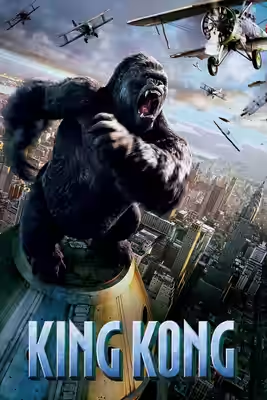
Peter Jackson’s King Kong is a moving, often thrilling adventure that could use a firmer cut. At 188 minutes, it asks us to share its director’s appetite for every creature, every danger and every extra complication. We can, for long stretches, because the film takes both the excitement and the people caught in it seriously. It also understands an essential requirement of a giant-monster film: there must be a reason to care when the creature stops making a mess.
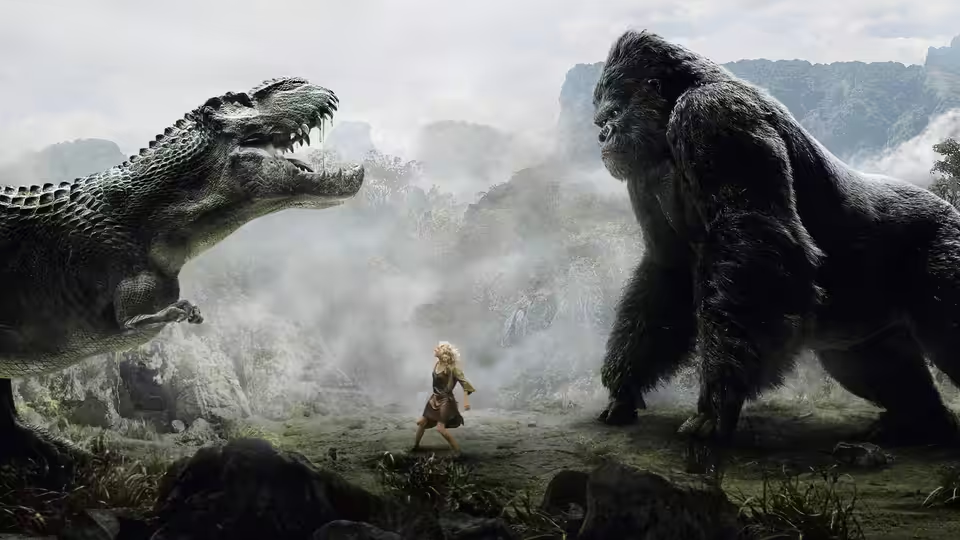
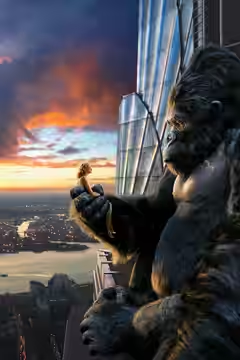
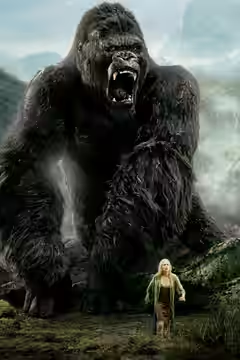
That reason is Ann Darrow, played by Naomi Watts with an alertness that keeps the effects from doing all the acting. She gives each response time to register, making an exchange possible without needing words from both participants. We were moved by the attention they pay each other, especially the sense that she is watching him as closely as he watches her. The tenderness feels earned because neither performance makes their growing understanding seem easy or inevitable.
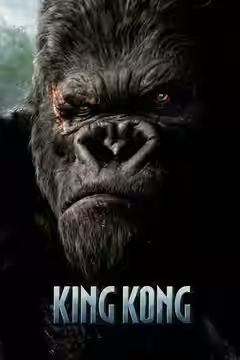
Andy Serkis’s performance gives Kong enough distinct reactions for us to begin anticipating his behaviour. He remains sufficiently unpredictable that his strength still worries us, even when our sympathies are with him. The effects work succeeds because we become absorbed in wondering what he will do next. Peter Jackson allows these encounters time to develop, and the pauses give the creature a personality that survives the surrounding commotion.
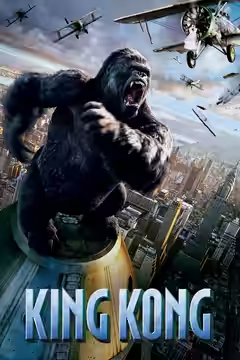
Grant Major’s production design gives New York enough bustle and detail to hold our attention before the expedition gets going. The temptation is to keep looking around the frame, even when the story could use a push towards the sea. Andrew Lesnie’s cinematography helps keep the people readable amid the size and activity of their surroundings. The occasional unconvincing effect is noticeable, but the images usually give us a clear sense of what the human body is up against.
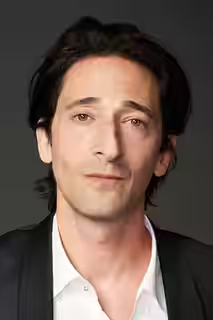
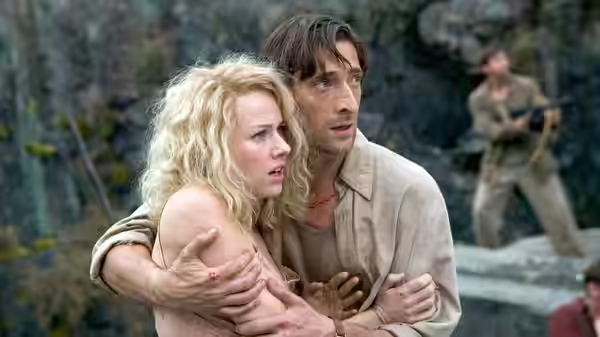
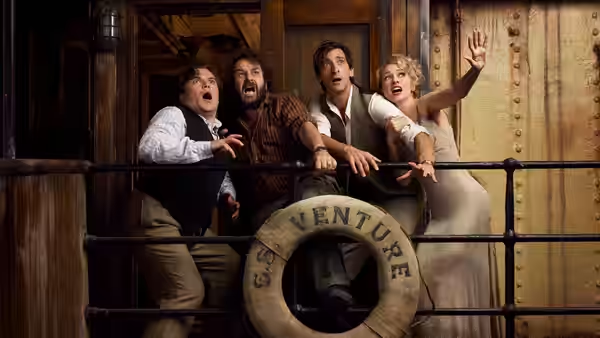
Jack Black brings a useful pushiness to Carl Denham, whose enthusiasm can so easily excuse whatever he wants to do next. The part gives the human cast some welcome friction, though the same cannot be said for every travelling companion. Adrien Brody’s Jack Driscoll needs more to do if he is to command the attention the film gives him. Too many supporting characters are introduced with the expectation that time spent alongside them will make them interesting.
Jamie Selkirk’s editing is lively within the action, but too indulgent about how much action survives. A dangerous situation repeatedly acquires another complication after it has already made its point, and exhaustion begins to blunt excitement. James Newton Howard’s score is generous with the feeling, sometimes too generous when the central performances have already told us what matters. Some restraint here would have helped, particularly when the music presses an emotional response that the faces have already earned.
The pleasure is that the film believes we might care about Kong without needing to laugh at that possibility. There is little embarrassment about its fear or its tenderness, and that suits this sort of adventure. We would gladly lose some of the repeated jeopardy to spend longer with these two unlikely companions. Watch it when nobody needs an early night.