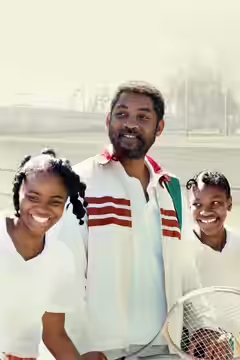
Reinaldo Marcus Green’s film about the making of Venus and Serena Williams is warm, well acted and a good deal softer on its subject than he was on anyone else. Will Smith is fine; Aunjanue Ellis-Taylor is better.
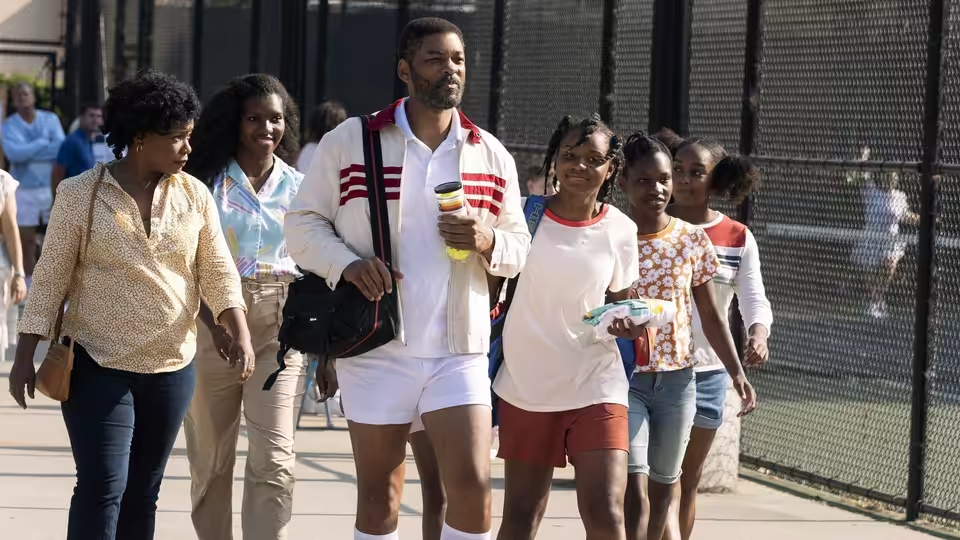
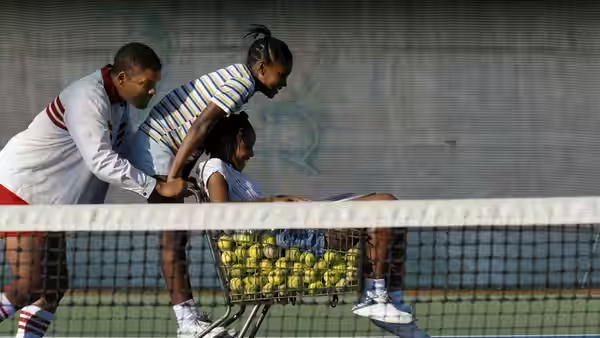
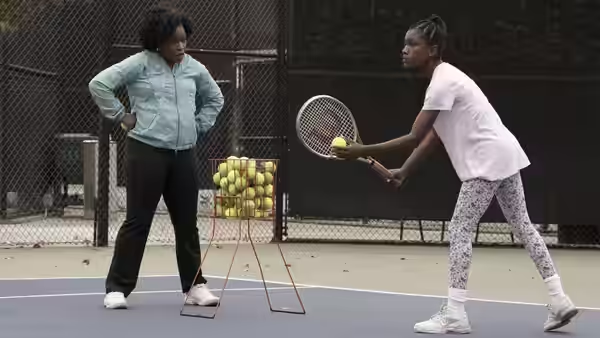
Reinaldo Marcus Green’s film tells the story of Venus and Serena Williams by telling the story of their father. Richard Williams wrote a plan for two tennis champions before either girl was born, and King Richard follows him as he carries it out on the public courts of Compton, California, with a shopping trolley of old balls and a stack of homemade brochures. Zach Baylin’s script runs from those courts to the edge of Venus’s professional career. It is a family drama first and a tennis film a long way second, and it is warm, well acted and easy to sit through. It is also 144 minutes long, and it never asks a hard question of the man at its centre.
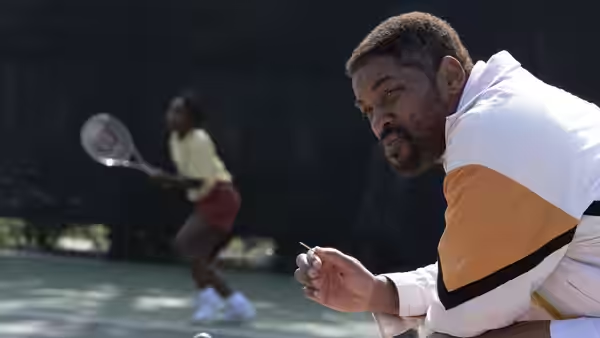
Will Smith plays Richard with a stoop, a drawl, white shorts and socks pulled to the knee, and a habit of talking over anyone who disagrees with him. It is a performance rather than a star turn. He lets Richard be tiresome, lets him repeat himself, lets his daughters roll their eyes behind his back, and he is good at the man’s cunning, the way he flatters a coach and then changes the terms once the coach has said yes. What Smith does not do, because the script will not let him, is make Richard frightening. We are told he is difficult, and then, every time, we are shown that he was right.
Aunjanue Ellis-Taylor is the best thing in the film. Her Oracene works nights as a nurse, coaches Serena while Richard concentrates on Venus, and watches her husband collect the credit. For a long stretch she says almost nothing. Then there is a scene in the kitchen in which she tells him what the plan has cost and who else has been paying for it, and Ellis-Taylor plays it low and level, no raised voice, no tears. It moved us more than anything that happens on a court, and the reason is plain: she is the only person in the film allowed to say Richard is wrong without being proved a fool by the end of the scene.
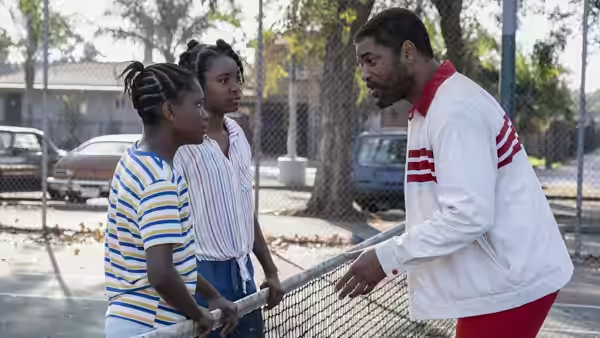
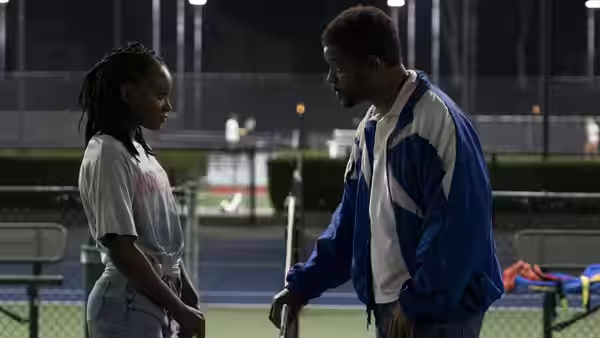
Saniyya Sidney plays Venus as a watchful teenager who wants what her father wants and is starting to want it on her own terms, and the film’s best stretches are the ones where she and Smith negotiate. Demi Singleton’s Serena spends most of the film waiting her turn, which the script notices, mentions and sets aside. Tony Goldwyn is brisk as Paul Cohen, the first coach to take Venus on. Jon Bernthal arrives later as Rick Macci, all moustache and Florida grin, and is funny simply by staying cheerful while Richard rewrites their agreement in front of him.
Robert Elswit shoots Compton in low, warm evening light, so the cracked courts look like somewhere a person might choose to be, and when the film reaches Florida he declines to make it look like paradise. Pamela Martin cuts the tennis so that we can follow it: the ball goes over the net and comes back, and a point is a point rather than a blur of feet. Kris Bowers’s score, mostly piano and strings, sits under the family scenes telling us they are tender when the acting has already said so. Sharen Davis puts the girls in bright early-nineties colours and Richard in the same outfit for a decade, and Wynn Thomas and William Arnold give the Williams house one crowded bedroom for five girls.
The trouble is what the film will not do. Its Richard is stubborn and embarrassing and occasionally cruel with his mouth, and he is, in the end, right about everything. Each coach and neighbour who doubts him is shown up within a scene or two, and the parts of his life the family would rather not discuss get a line each, if that. It was made with the family’s cooperation and it looks like it. Around the two-hour mark, with another practice under way and another sceptic about to be proved wrong, we grew restless, and then a little cross that a story this good was being told this carefully.
Green’s previous film, Monsters and Men (2018), was about people who did not get the last word. This one gives Richard all of them. To its credit, it cares more about a father and daughter talking in a parked car than about a scoreboard, and it ends on a match we will not describe. It is worth an evening if you like your sports films with the sport in the background. Bring a parent; they will recognise more of Richard than they would like to.