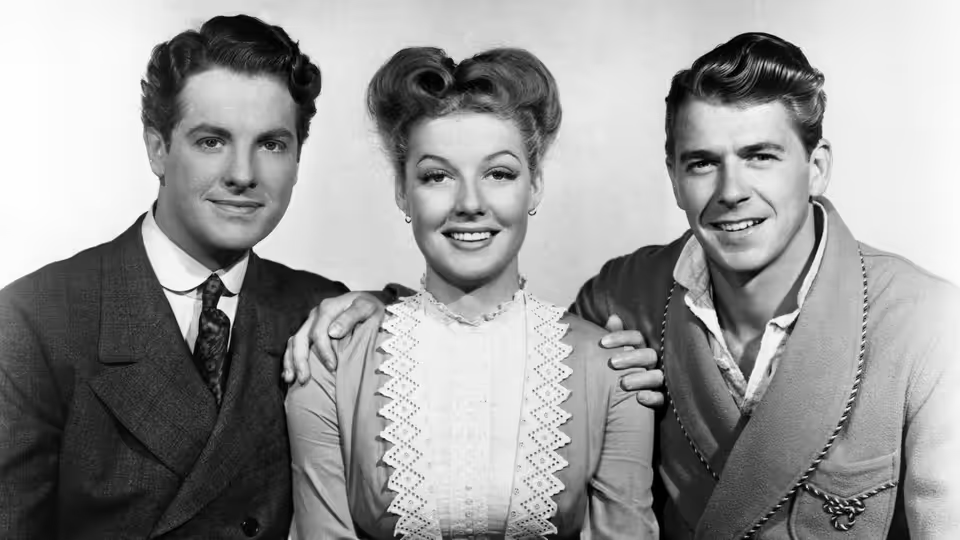
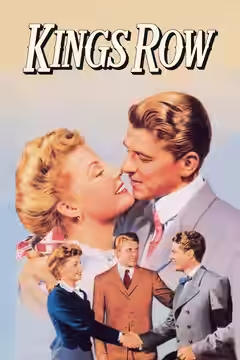
Sam Wood’s film of Henry Bellamann’s scandalous novel is small-town melodrama done with real skill: handsomely built, superbly scored and acted with conviction by nearly everyone. The censored script leaves gaps where the horrors should be, and Robert Cummings is too mild for the centre.
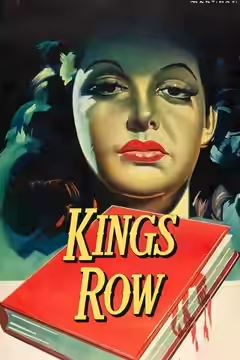
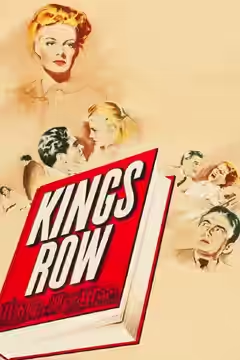
Kings Row is a small American town in 1890, and the film that takes its name is about what goes on behind its front doors. Henry Bellamann’s novel, published in 1940, told the town’s secrets bluntly. Casey Robinson’s screenplay has to tell them with the Production Code office reading over his shoulder, so the worst things happen off screen and a great deal of Erich Wolfgang Korngold’s orchestra happens on it. What survives is a handsome, long, absorbing melodrama. We enjoyed most of its 127 minutes, and we can see exactly where the knife went in.
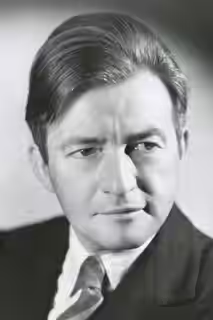
The best of it is in the Tower house. Claude Rains plays Dr Alexander Tower as a man who has decided to sit very still for the rest of his life: he reads, he speaks quietly, he pours a drink, and the parlour gets colder. Betty Field plays his daughter Cassandra with a bright, quick nervousness that never settles, as if she has been told to be charming and cannot remember why. Their scenes together unsettled us more than anything the film shows outright. Robinson is not allowed to say what is wrong in that house, and Rains and Field make us feel it anyway. The censor cut the words; the actors kept the meaning.
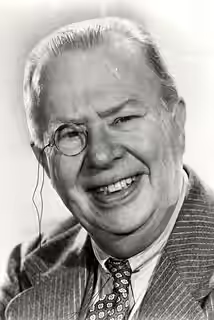
Across town is the other doctor, and he is no safer. Charles Coburn’s Henry Gordon is all genial bulk on the porch, and Judith Anderson’s Harriet runs the household, and her daughter Louise (Nancy Coleman), with a stare and a closed door. Anderson has few lines and is the most frightening person in the film. Nancy Coleman gets the hardest job, a girl coming apart in a house that will not admit anything is wrong, and she does it without the film giving her much room.
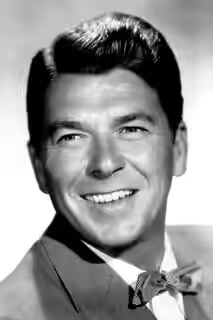
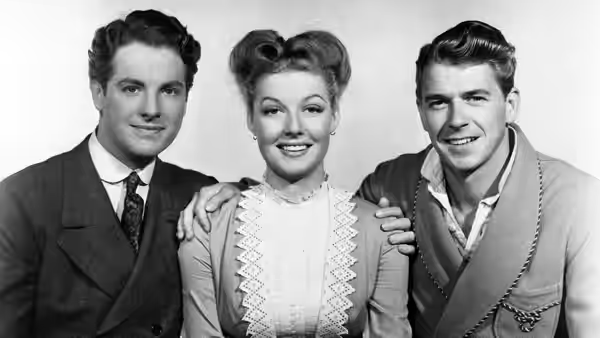
Ronald Reagan is better here than anywhere else we have seen him. Drake McHugh is a rich boy with a buggy and no plans, and Reagan plays him with an easy grin and a slouch that says he has never once been refused anything. Ann Sheridan, top billed, arrives late as Randy Monaghan, the girl from the wrong side of the tracks, and the film relaxes the moment she walks in; she is warm and plain-spoken and she and Reagan are good together. The second half sends Drake somewhere we will not describe. It gives Reagan one line, spoken from a bed, that most readers will already know, and he earns it. We did not expect to be moved by it and we were.
William Cameron Menzies lays the town out so that we always know where we are: the von Eln house and orchard on the hill, the Gordons’ porch, the Tower place behind its fence, the tracks and the Monaghan house on the other side of them. James Wong Howe shoots the lawns in hard sunlight and the interiors in deep focus, with a lamp or a banister crowding the front of the frame, so the rooms feel smaller than the houses. Orry-Kelly puts Sheridan in cotton and Anderson in black and lets us draw our own conclusions. Korngold’s main theme, brass over surging strings, is one of the great Hollywood tunes, and anyone who knows the Star Wars fanfare will hear where it came from. There is a lot of it. Whole conversations are carried on above the orchestra, and the film would be sharper with about a third of the music removed.
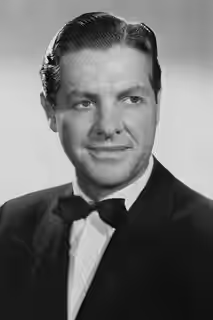
The trouble is at the centre. Robert Cummings plays Parris at eighteen and at thirty, in Kings Row and in Vienna, with the same pleasant, slightly anxious face. The film asks him to carry its ideas about medicine and cruelty and he carries them like a parcel. Ralph Dawson has to cover some fifteen years, and the boyhood section moves briskly, but the stretch with Parris abroad is a film waiting for letters to arrive. Kaaren Verne’s Elise Sandor turns up late as his reward, and Harry Davenport’s Colonel Skeffington and Maria Ouspenskaya’s Madame von Eln are there to explain wills and property whenever the plot needs it.
The reviews have disagreed since the week it opened. One 1942 critic found it turgid; we did not. It is long, and it is soft where the book was hard, but it is not dull, and everything from Peyton Place onwards owes it a debt. See it for Rains, Field and Anderson, and for Reagan’s one great scene. If you ever find yourself in Kings Row, stay in good health.