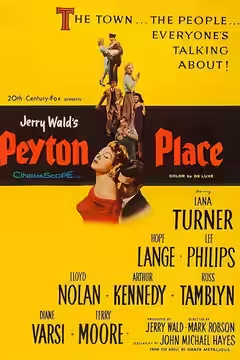
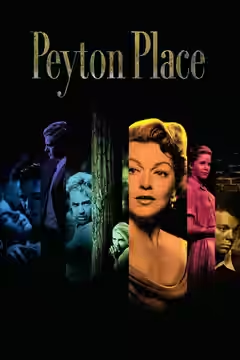
Mark Robson’s film of the scandalous bestseller is handsome, well acted by its young cast and a good deal more polite than it ought to be. Hope Lange and Diane Varsi make it worth the evening; the 157 minutes around them do not always help.
Grace Metalious’s novel was the book people hid inside other books. Jerry Wald’s production of it is the film you could take your mother to, and that is both its achievement and its problem. Peyton Place is a good-looking, well-mannered 157 minutes about a town that runs on hypocrisy, and for long stretches it is too well-mannered to say so out loud. It is worth seeing for two young actresses and one long, frightening scene, and it is a slog in between.
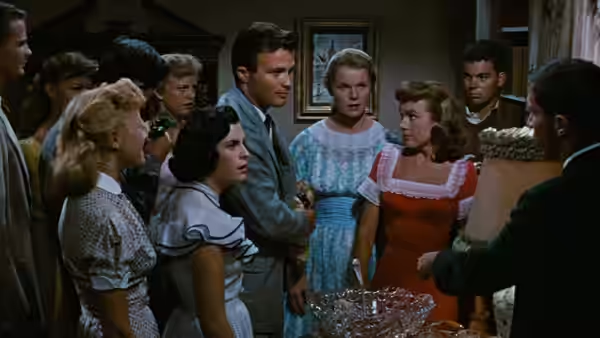
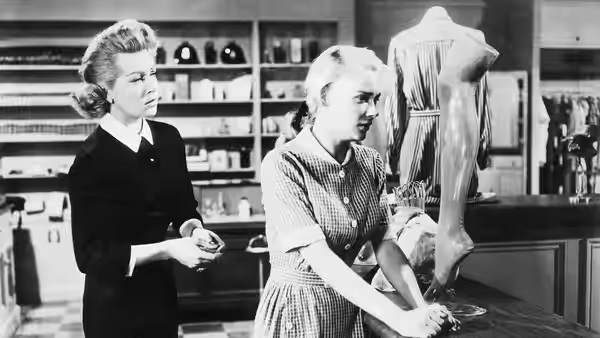
John Michael Hayes’s screenplay keeps the novel’s shape: a New England mill town, a dozen households, and a year in which most of them come apart. The spine is Constance MacKenzie, Lana Turner’s dress-shop owner with a locked past, and her daughter Allison, who wants to write and cannot understand why her mother flinches at the new principal. Around them Hayes arranges the shy boy with the smothering mother (Russ Tamblyn), the rich boy and the girl from the wrong side of town (Barry Coe and Terry Moore), the doctor who keeps everyone’s secrets (Lloyd Nolan), and, across the tracks, the Cross family. It is a lot of doors to open and Robson opens them one at a time.
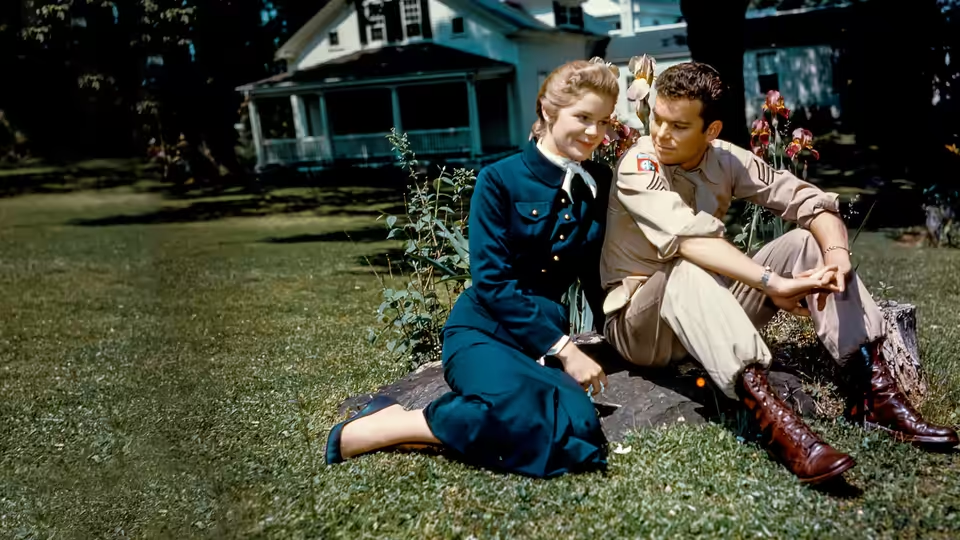
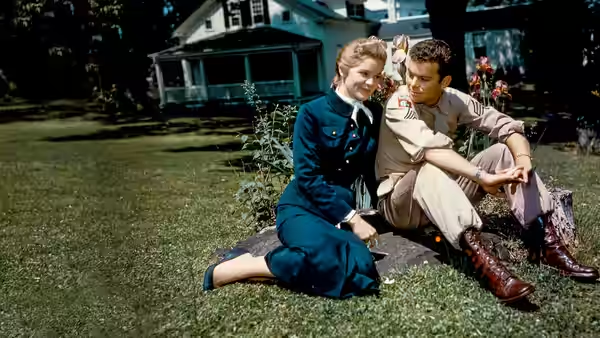
William C. Mellor shoots the town in wide, bright colour, and it is the film’s strongest argument. The white houses sit under red and yellow trees, the mill smokes at the end of the valley, and the light is always the light of a good day. Adele Palmer puts Turner in tailored greys that make her look like a woman who has decided never to be noticed again, and the schoolgirls in cardigans and full skirts that tell you their mothers chose them. Franz Waxman’s main theme, strings rising and settling over the hills, is lovely the first time and had, by the fourth, become the sound of the film telling us everything was fine.
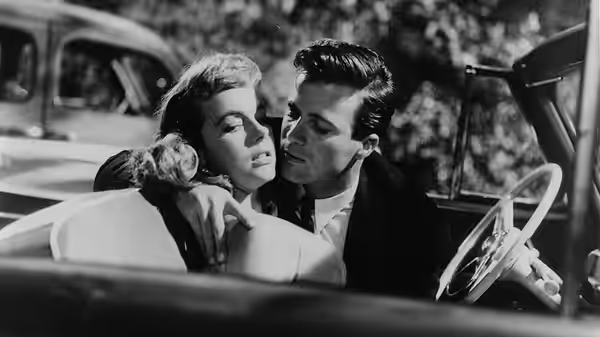
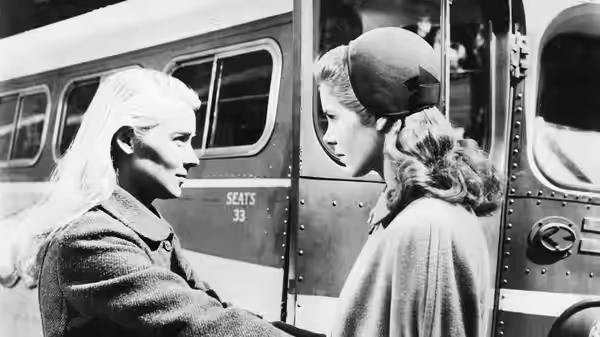
Diane Varsi is the reason the first hour works. She plays Allison as a bright, awkward girl who talks too fast and reads too much, and she makes the town’s pieties look small simply by standing next to them. Hope Lange has the harder part. Selena is the girl who has to be cheerful because the alternative is unbearable, and Lange lets us see the effort in it, a smile that is held a second longer than it should be.
Then Lucas Cross comes home. Arthur Kennedy plays him drunk, wounded and dangerous, and the scene in the Cross shack, with the lamp low and Betty Field’s Nellie pretending not to see, frightened us in a way nothing in the pastel town had prepared us for. Robson shoots it plainly, no music, the camera staying with Selena’s face. It is the one moment where the film and the book want the same thing, and it is over quickly. What happens afterwards we will not describe, except to say that the film draws the curtains again as fast as it can.
The trouble is everything the curtains hide. Bretherton and Clark cut between so many households that none of the middle stretch is allowed to build; a scene at the MacKenzies’ is interrupted by a scene at the Harringtons’ which is interrupted by a dance. Turner is stiff in a role that needs a woman thawing, and Lee Philips’s Rossi is so reasonable, so well pressed, that we could not see why anyone in town would object to him or fall for him. Around the ninety-minute mark we caught ourselves counting the subplots still to be resolved, and there were five. Slant is right that the film means to indict the town; the New Yorker was right in 1957 that it takes an age doing it.
Douglas Sirk was making the same kind of picture at the same time and letting the colour do the screaming. Robson keeps his voice down throughout, and Hayes, who wrote Rear Window, knows how to make a neighbourhood feel watched but not, here, how to make it feel judged. The result is a film about a town that will not say what it knows, made by people who will not quite say it either.
Watch it at home, over two nights if you like; it breaks cleanly at the halfway point and loses nothing. Stay for Varsi and Lange, and for Kennedy, who is on screen for perhaps twenty minutes and is the only person in Peyton Place who is exactly as bad as the town thinks.