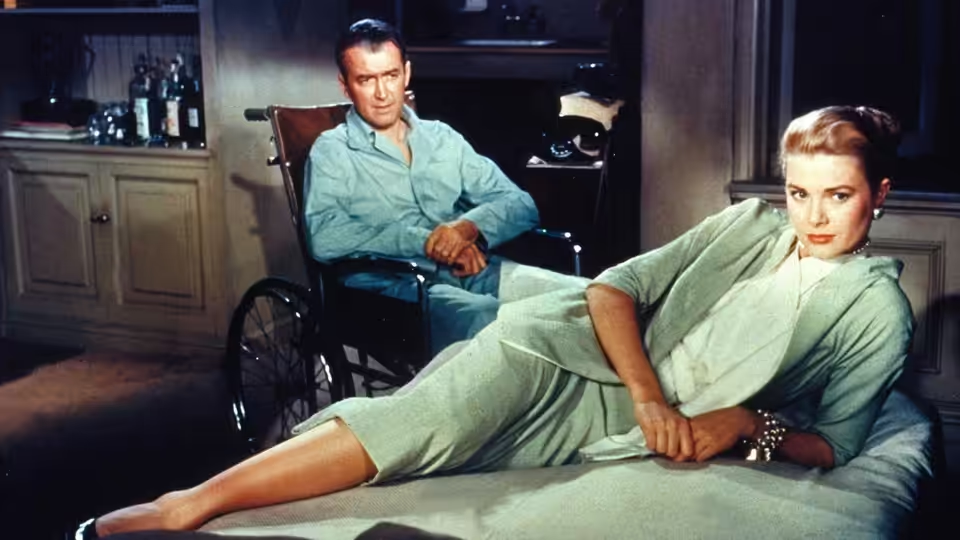
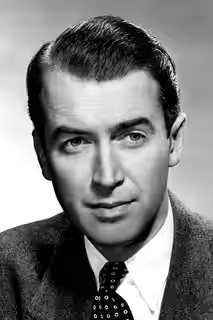
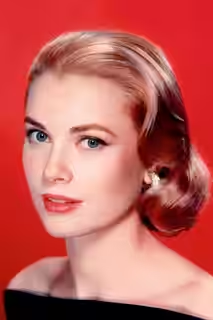
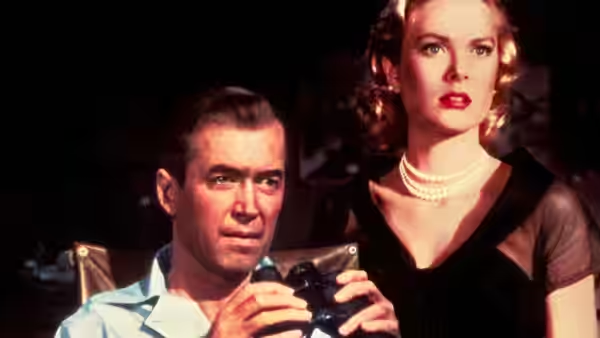
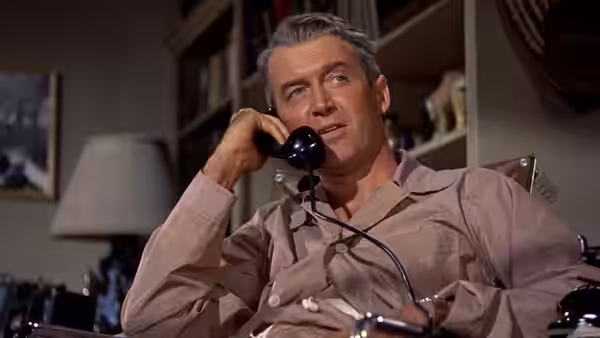
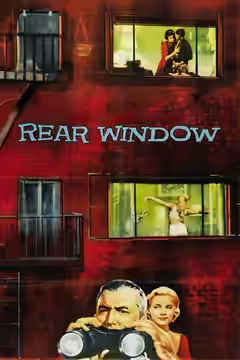
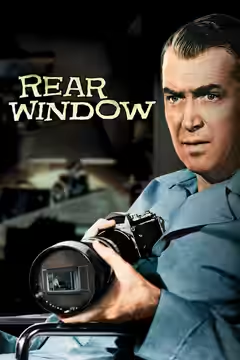
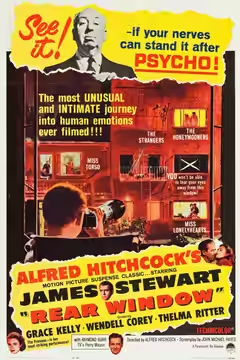
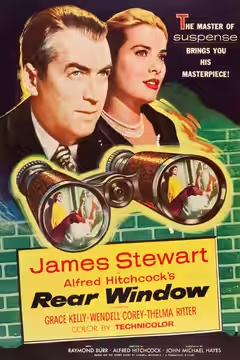
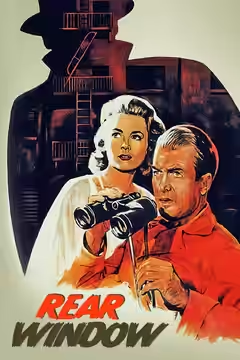
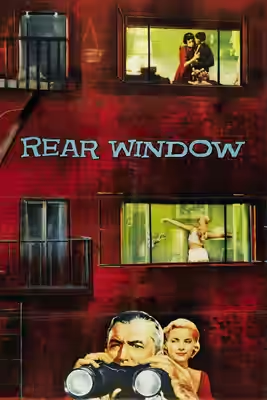
Alfred Hitchcock’s courtyard thriller is exceptional: funny, unsettling and exact about how it makes us watch. James Stewart and Grace Kelly keep it warm, though some neighbours are drawn rather broadly.
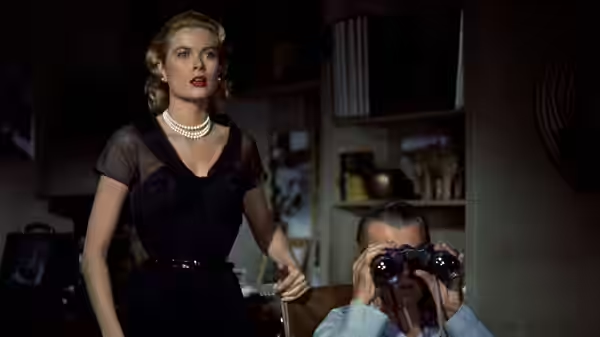
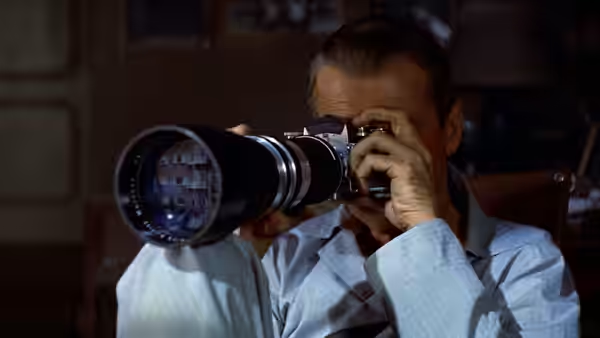
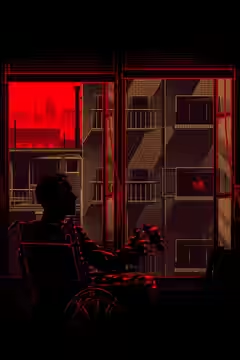
Rear Window makes an excellent evening out of behaviour we would discourage in anyone living opposite us. Alfred Hitchcock confines our attention to a courtyard and lets James Stewart’s L.B. Jefferies look on our behalf, until his curiosity becomes difficult to separate from ours. The premise gives the thriller a clear practical problem: how does a film keep us interested when so much depends on watching from a distance? Hitchcock trusts us to notice things, and gives us time to wonder what we have missed.
Cinematographer Robert Burks makes the restricted viewpoint do useful work. Across the courtyard, the windows divide up the neighbours’ lives, so that choosing where to look means leaving someone else unwatched. We found ourselves wanting a better view, then felt uneasy about how readily we had joined in. The camera gives us enough to invite an opinion of these people, but keeps us too far away to justify our confidence; that distance accounts for much of the suspense.
Editor George Tomasini keeps that act of looking clear, linking the observer to whatever has caught his attention without cluttering the sequence. We can follow Jefferies as he looks, and see how little he needs before deciding he knows something. The courtyard set is equally important: its separate domestic spaces provide variety within a single view, without requiring a change of location to refresh our interest. The restriction helps us learn the place, which makes each return to it more absorbing.
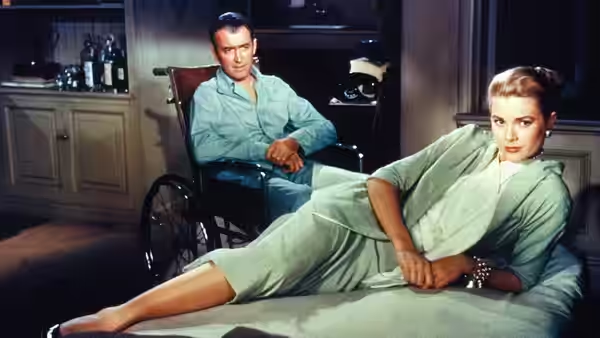
John Michael Hayes’s screenplay gives Stewart and Grace Kelly’s Lisa Fremont room to be funny and attracted to each other. Their exchanges prevent Jefferies’ watching from becoming the only activity that matters, although some of the romantic dialogue sounds too carefully prepared. Stewart makes curiosity seem companionable, so we accept Jefferies’ nosiness more readily than we should. Kelly gives the romance enough warmth to hold our interest alongside the mystery. Thelma Ritter, as Stella, supplies dry humour without making the suspense feel like an interruption.
The sound is unusually restrained for a thriller. Franz Waxman’s music shares the soundtrack with natural sounds that make the courtyard feel occupied. Hitchcock leaves us listening for information instead of relying on a score to announce every change in mood. That restraint works because it makes the watching feel ordinary, even as we grow suspicious of what we are seeing.
The neatness does have a cost. Some neighbours seem too easily sorted into little stories, and the distance that makes them intriguing also limits how fully we can know them. Yet the usual risk of a confined thriller, that we grow tired of the same surroundings, scarcely registers here. Hitchcock keeps giving us reasons to look again, and we never wanted him to hurry us somewhere else. Put the phone away; it is worth keeping track of where Jefferies is looking.