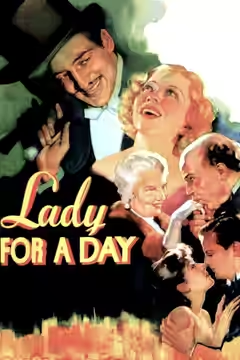
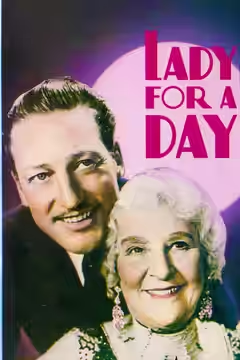
Capra’s Depression fairy tale about an apple seller passed off as a society lady is nonsense, and May Robson makes it hurt anyway. The second half dawdles with reporters and policemen, but the film stays warm without ever going soft.
Frank Capra takes a Damon Runyon story about the crooks and panhandlers of Broadway and turns it into a Depression fairy tale, and the surprising thing, ninety years on, is how little of it has curdled. Robert Riskin’s screenplay asks you to believe that a gambler, his girlfriend, a pool-hall con man and most of the city’s beggars would drop everything so that an old apple seller can pretend to be rich for a week. Nobody in the film quite believes it either, which is what saves it. It is a good picture, funny for most of its 96 minutes and touching in a few of them, and its weaknesses are in the plot rather than the people.
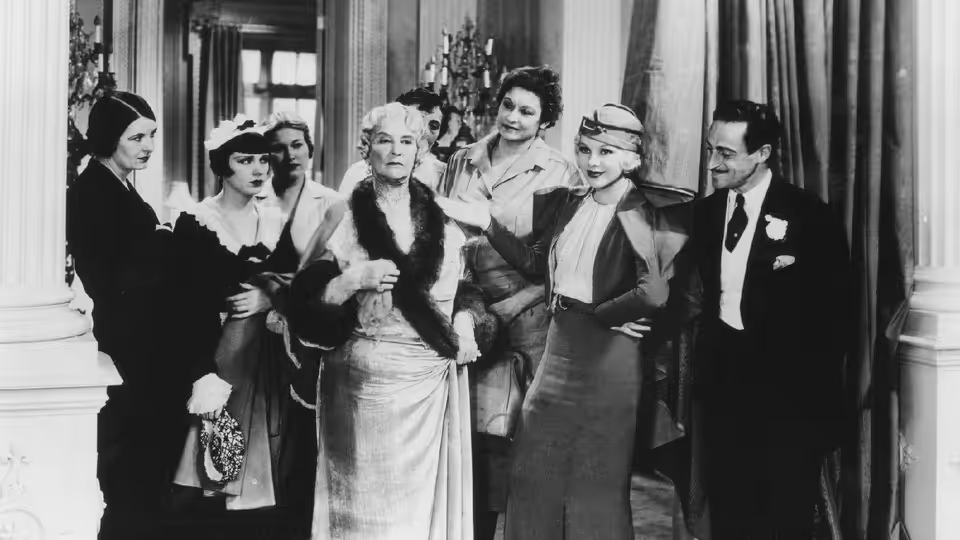
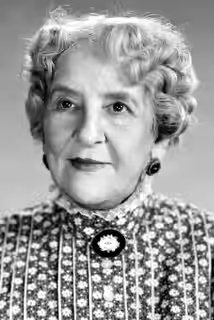
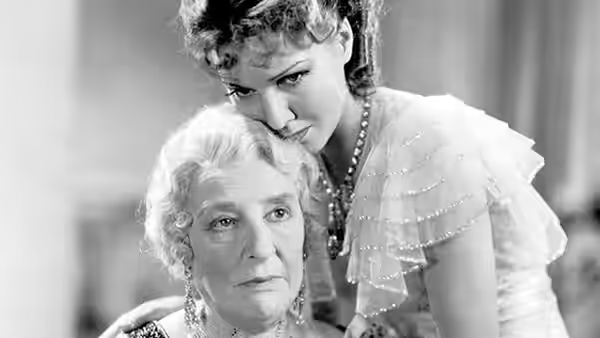
May Robson is the reason to watch. She plays Apple Annie as a drunk with a temper, not a saint, and she keeps the temper when the furs go on. The scene we will remember is the one where Missouri Martin’s girls have finished with her and she is left in front of a mirror in a borrowed gown. Robson does not smile. She looks at the woman in the glass as though she had met her once, years ago, and been rude to her. We had come expecting to be worked on and found instead that we were quietly upset, and it was the stillness that did it: Capra holds the shot and lets the face do everything.
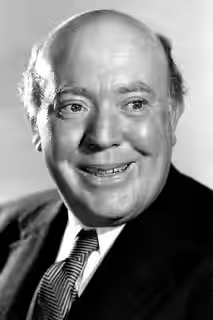
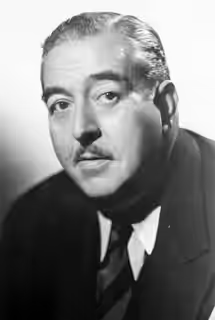
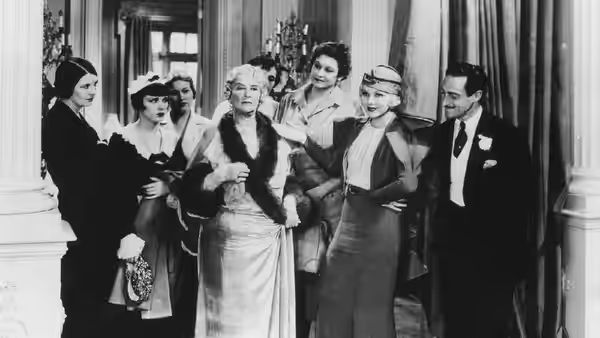
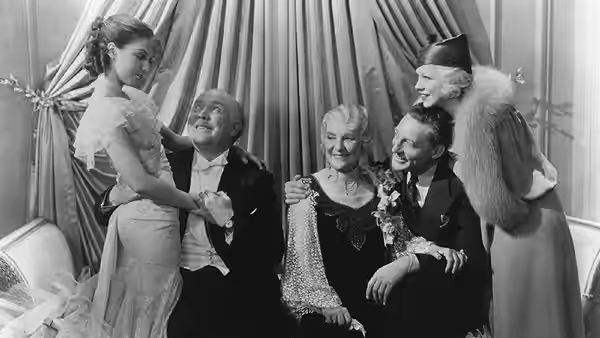
Around her Capra assembles a gallery of Runyon types and gives each a turn. Warren William, so often the cad in the pre-Code pictures of these years, plays Dave the Dude as a man embarrassed to be kind who does it anyway. Ned Sparks, as his lieutenant Happy McGuire, delivers every line in a gravel monotone through a cigar and gets the biggest laughs in the film without appearing to try. Guy Kibbee’s Judge Henry G. Blake talks like a man who has read half a dictionary and is saving the rest. Glenda Farrell is quick and warm as Missouri, and Nat Pendleton, as a heavy called Shakespeare, has a face that is funny before it moves.
Joseph Walker lights Annie’s tenement room in hard shadow and the borrowed flat in a soft glow, so the lie is better lit than the truth. Robert Kalloch’s gowns for Robson fit her perfectly, and she wears them as if they might bite. Gene Havlick cuts fast in the first half, with headlines and telephones carrying the plot, and Howard Jackson’s music is used sparingly, in the manner of the time, which leaves the actors room to be quiet. It is a handsome, modest film that never looks as though it cost much.
The flaws are in the plot. Jean Parker’s Louise and Barry Norton’s Carlos are the two people the whole conspiracy exists to deceive, and neither is given a character; they are a nice pair of clothes with a wedding attached. Walter Connolly does more as the Count, mostly by looking unimpressed. And once the lie is up and running, Riskin has to keep it running, so the second half fills with reporters who ask questions, an Inspector MacCreary (Robert Emmett O’Connor) who asks more, and a good deal of business about who has been locked in which room. Annie is off screen for long stretches and the film is thinner without her. The last movement takes a turn we will not describe, and it asks a good deal of your goodwill.
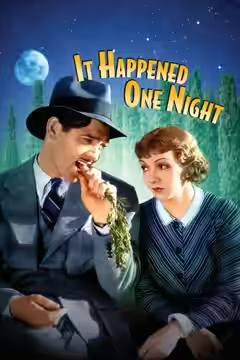
Capra made this before It Happened One Night and Mr. Deeds Goes to Town, and the sentiment here is lighter on its feet than it would become; he has not yet decided that every film must end with a speech. He remade it in 1961 as Pocketful of Miracles, at greater length and to less effect, which tells you what this version got right. Most of that is Robson.
Watch it on a wet Sunday afternoon with someone who claims not to like old films. It is 96 minutes, nobody sings, and the crooks are nicer than the gentry, which is a Runyon idea and still a pleasant one.