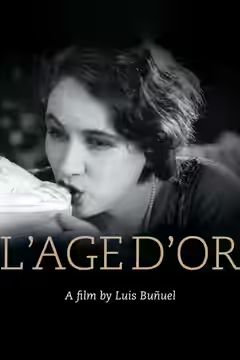
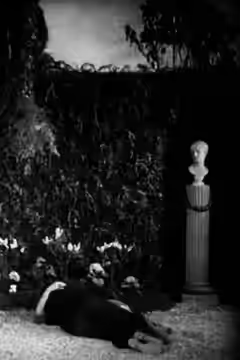
Luis Buñuel’s L’Âge d’or is funny, abrasive and uneven in its attacks on sexual morality and religion. We recommend it for the sly jokes, with a caveat about the more laboured provocations.
Luis Buñuel’s L’Âge d’or is a good, uneven comedy about the trouble respectable people have with sexual desire. It attacks religion and middle-class morality with an impatience that can be funny, although forcefulness is sometimes mistaken for a sufficient joke. We recommend it for its quieter humour and its startling images, without pretending that every provocation still works. Its willingness to be unpleasant is part of what makes it worth seeing.
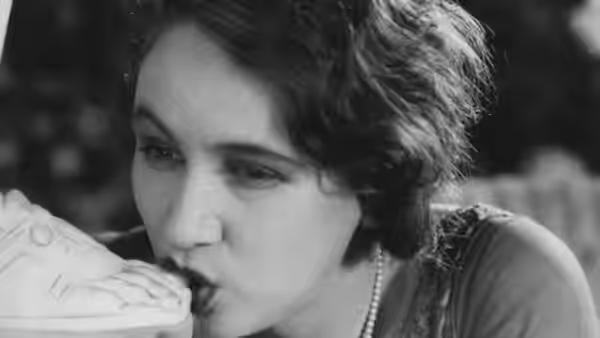
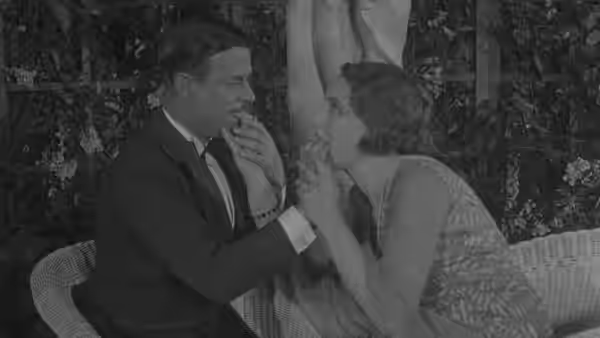
Gaston Modot plays The Man and Lya Lys plays The Woman, a central pairing stripped even of personal names. That anonymity suits a film concerned with the rules imposed on desire, though it also limits the warmth we might expect from a romance. The cast includes a Governor, played by Josep Llorens Artigas, and a Marquise of X, played by Germaine Noizet. Their titles establish social standing before we have learnt anything else about the people holding them.
The screenplay is credited to Luis Buñuel and Salvador Dalí, and its humour is stronger when it gives indignation less room. We laughed at the quieter jokes, which make middle-class disapproval seem foolish without needing to shout it down. The broader attacks on sexual morality are less consistently amusing. They can insist so hard on their own daring that we begin to notice the effort more than the joke.
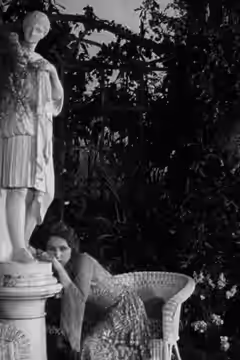
Albert Duverger’s cinematography gives the film much of its ability to startle, and the pictures often make the humour feel sharper. Alexandre Trauner’s production design supports the social distinctions embodied by the Governor and the Marquise of X. Both contributions help keep the satire attached to people and their privileges, rather than letting it become a lecture about freedom. The visual surprises remain effective even when we have guessed where a joke is heading.
Luis Buñuel also edits, and the variation between subtle humour and open provocation gives the film an uneven rhythm. Some passages allow a welcome pause to appreciate the absurdity, while others push their point harder than necessary. The music credits are shared by Luis Buñuel and Georges Van Parys, but it is the imagery that supplies the strongest impression. There is enough variety to sustain curiosity, even when an individual joke falls flat.
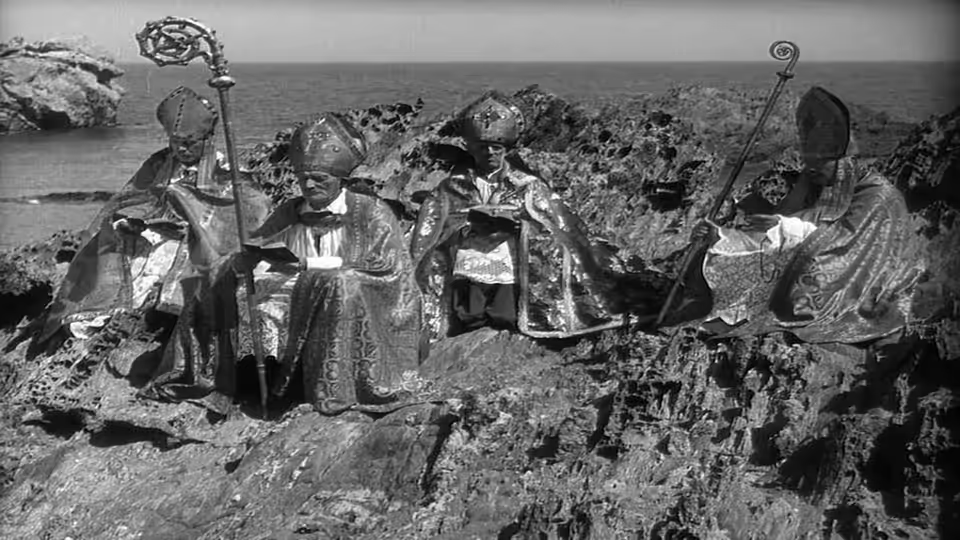
The religious attacks remain more unsettling than some of the complaints about sexual restraint. They ask us to examine the authority behind the rules, which is more interesting than simply treating the rules as an inconvenience. As a romance, the film offers little reassurance, and that suits its hostility to approved behaviour. As a comedy, it still has to earn each laugh, and a few of its louder provocations struggle to do so.
At 63 minutes, L’Âge d’or does not demand a long evening, though its abrasive manner makes it feel less slight than that running time suggests. Its strengths are sufficient to recommend it without pretending that age has made every joke wiser. We would choose it for company willing to argue about where the humour stops working. Anyone hoping for an affectionate romance should choose something else.