Jack Conway’s newspaper farce gives Powell, Loy, Harlow and Tracy a scheme with too many moving parts and lets them talk their way through it. The plot creaks in the last twenty minutes; the talk never does.
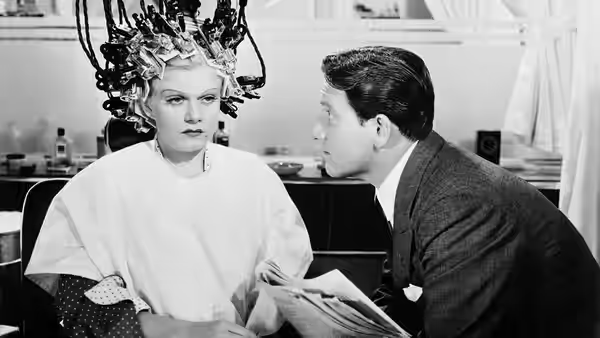
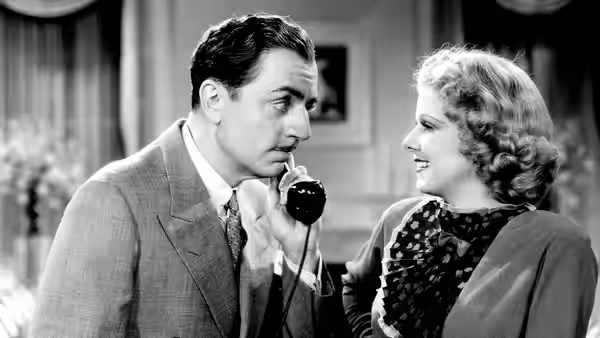
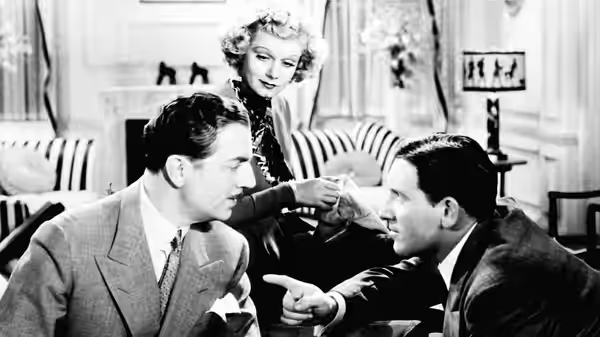
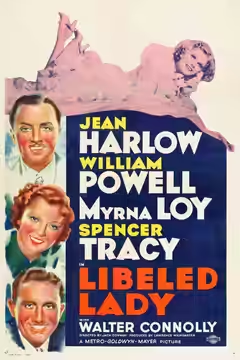
A managing editor named Haggerty (Spencer Tracy) is on his way to the altar when his paper prints a story it cannot stand up: that the heiress Connie Allenbury (Myrna Loy) has broken up a marriage. She sues. Rather than apologise, Haggerty decides to make it true after the fact. He hires Bill Chandler (William Powell), a former newspaperman between jobs, marries him in name only to his own fiancée Gladys (Jean Harlow), and packs him off to charm Connie so she can be caught with a married man. It is a bad idea, and Jack Conway’s film knows it. The pleasure is in watching four professional liars try to make it work.
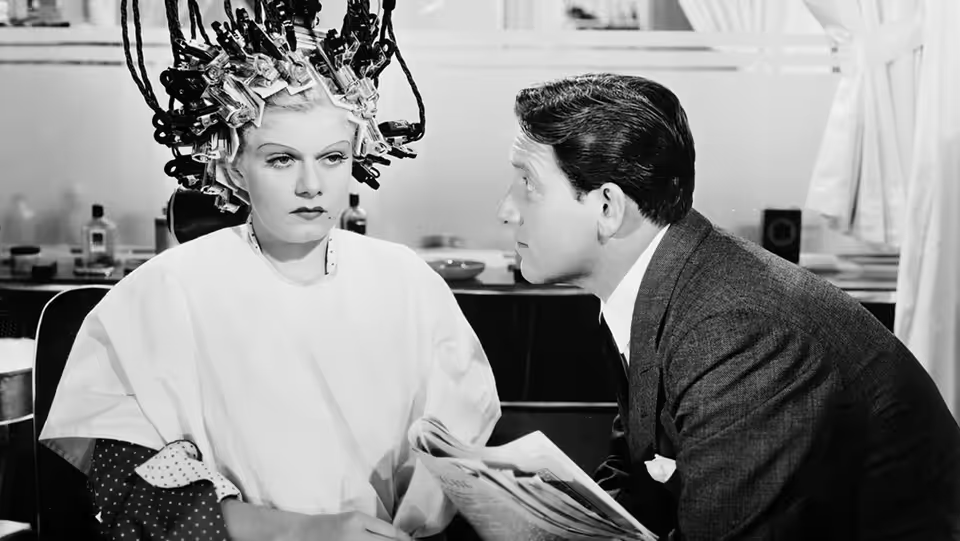
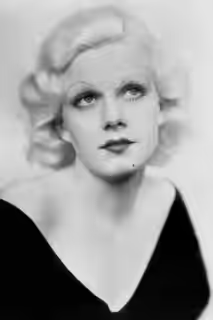
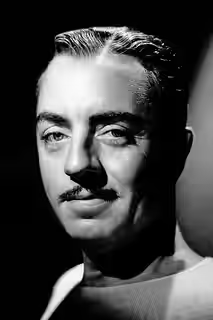
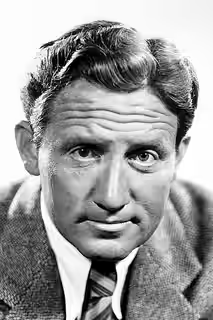
The talk is the thing. The screenplay is credited to George Oppenheimer, Howard Emmett Rogers and Maurine Dallas Watkins, from a story by Wallace Sullivan, and the lines come fast and land clean. Powell does what he did best: says something outrageous in the voice of a man ordering lunch. Harlow’s Gladys is the one character who says what she thinks, loudly and at once, and the film is kinder to her for it than the men in it are. Tracy keeps Haggerty light and slightly desperate, a man who has had a good idea every ten minutes for twenty years and is starting to run out.
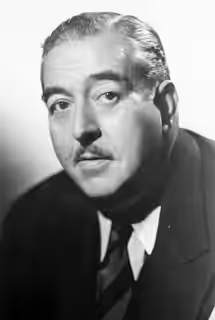
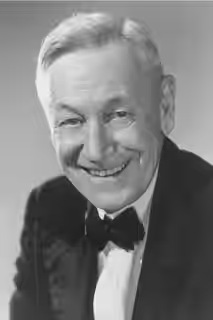
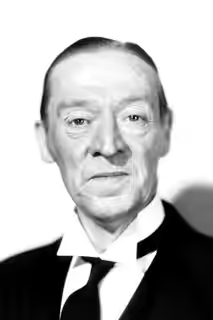
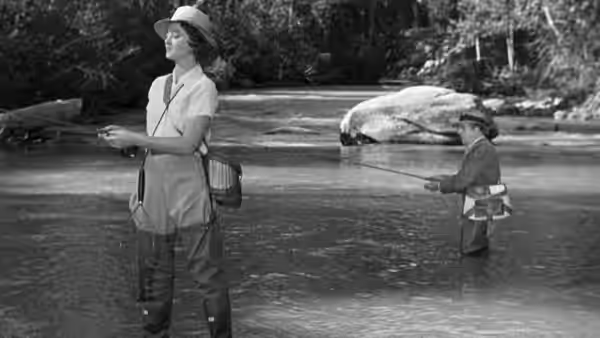
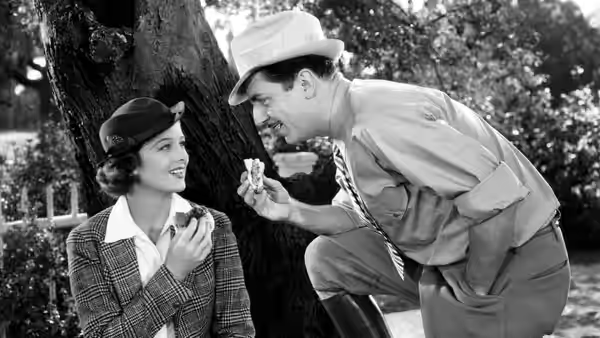
We laughed out loud at the stretch where Chandler learns that Connie’s father (Walter Connolly) is a fishing man and sets about becoming one. A fishing instructor (E. E. Clive) tries to teach him to cast. Powell holds the rod as if it might go off. He asks questions with the confidence of a man who has read about fishing and understood none of it, and E. E. Clive answers with the weariness of a man who has met that man before. It is the funniest thing in the film and nobody in it raises their voice.
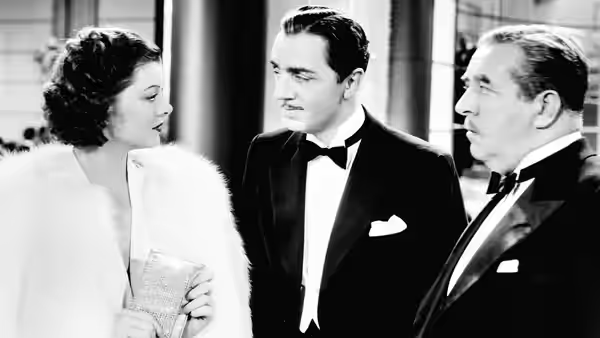
Norbert Brodine shoots it the MGM way, so Harlow is lit like something on a jeweller’s counter, white satin and pale hair against dark rooms, and Loy is given softer, warmer light the moment the film wants us to like her. The liner, the hotel suites and the Allenbury house are large and bright, and the camera mostly stands still and lets the people cross them. William Axt’s music does its job and gets out of the way. Fredrick Y. Smith cuts to the dialogue rather than the action, which is right for a film in which almost nothing happens that is not said.
What does not work is how much plot there is. Every character has a scheme, every scheme needs a scene to explain it, and the last twenty minutes are spent on marriage law and paperwork. Connie is the thinnest part: for the first half she exists to be lied to, and Loy has to build a person out of reaction shots until the script remembers to give her something to want. The Tracy and Harlow engagement, meant to be the heart of the thing, drifts out of sight for long stretches and has to be fetched back. Around the eighty-minute mark we noticed we were waiting for the explanations to finish rather than enjoying them.
One review calls the film an excuse for its stars to coast. We would put it differently: they are doing what they were paid for, and it takes more skill than it looks. The smaller parts earn their keep too. Mrs. Burns-Norvell (Cora Witherspoon), a shipboard gossip with a daughter to marry off, and Mr. Bane (Charley Grapewin), the publisher who wants the lawsuit gone, are each sketched in a couple of scenes.
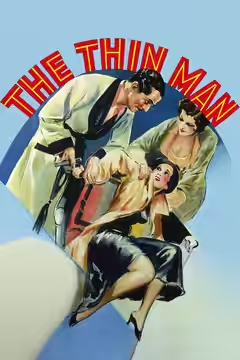
Powell and Loy had already made The Thin Man two years earlier, and the ease between them here is the same; the difference is that Nick and Nora were on the same side. My Man Godfrey, also from 1936, gave Powell a better-built film to be smooth in. Libeled Lady is a rung below those, and a rung is not far.
Watch it on a wet evening with someone who likes to hear people talk. It runs 98 minutes, and for about eighty of them you will not notice.