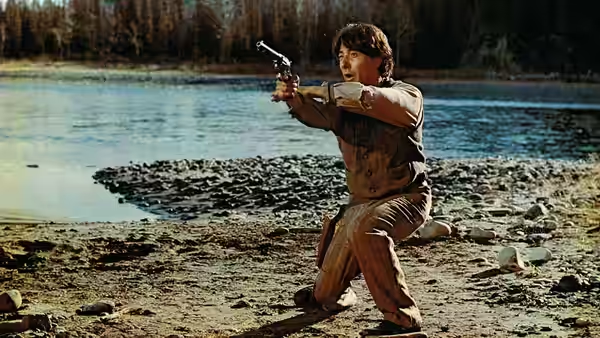
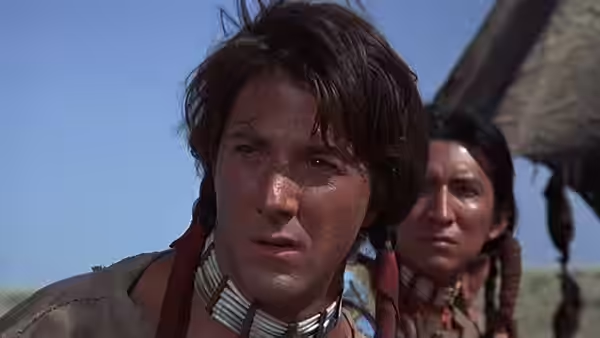
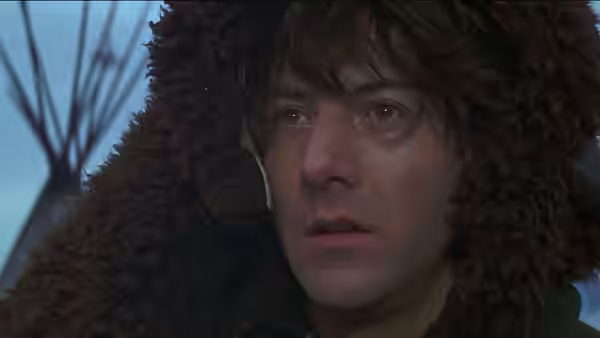
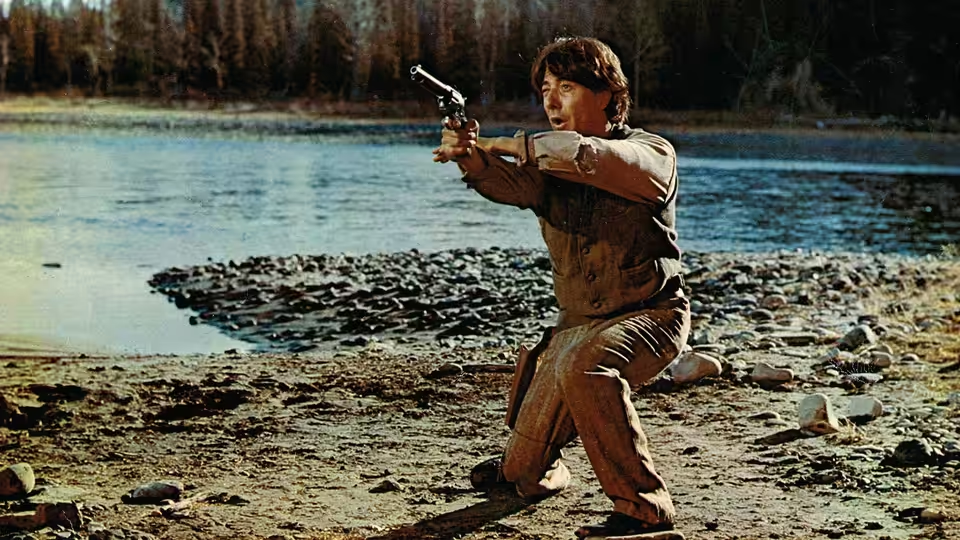
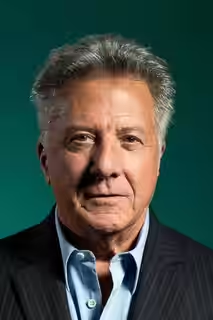
Jack Crabb (Dustin Hoffman) kneels on a lakeshore, aiming a revolver
Film review

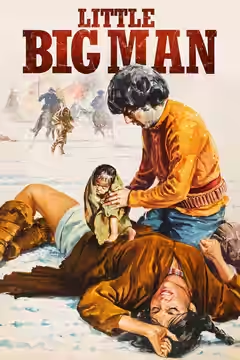
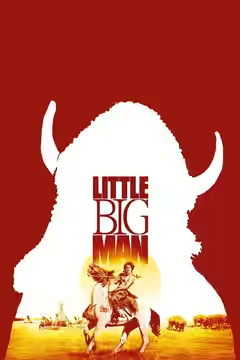
Little Big Man

1970 · Directed by Arthur Penn · 2h 19m

In a sentenceDustin Hoffman tells the tale; Chief Dan George is the one we would sit beside

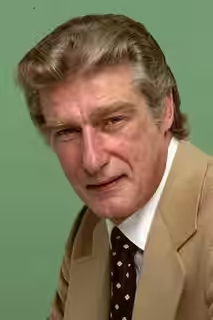
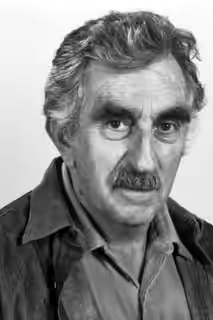
Jack Crabb (Dustin Hoffman) is the central figure in an account that leaves open whether he is a forgotten hero or an extravagant liar. Old Lodge Skins (Chief Dan George) and Mrs. Louise Pendrake (Faye Dunaway) are among its characters, alongside Gen. George Armstrong Custer (Richard Mulligan) and Wild Bill Hickok (Jeff Corey). Comedy shares space with adventure and drama as Crabb provides the perspective on these figures and their place in the West. Calder Willingham adapts the story from Thomas Berger’s novel.

Fi1m review

Arthur Penn’s Western is funny, humane and sometimes too eager to explain its morals. Dustin Hoffman keeps the tall tale moving, and Chief Dan George gives it feeling that survives the more laboured passages.

Arthur Penn’s Little Big Man is a good Western with a habit of explaining things we have already understood. Its comedy is broad, its anger is serious, and the movement between them can be clumsy. Yet Dustin Hoffman gives Jack Crabb enough personality to carry the film through its looser stretches, while Chief Dan George supplies some welcome warmth. There is enough pleasure here to forgive the unevenness, though the preaching takes more patience.

Calder Willingham’s screenplay, adapted from Thomas Berger’s novel, has a useful starting point in the question of Crabb’s reliability. A forgotten hero and an extravagant liar can both be entertaining company, provided the actor does not keep asking for our approval. Dustin Hoffman lets the exaggeration stand, giving us room to enjoy its cheek. The broadness is part of the pleasure, even when the film pushes it further than it needs to.

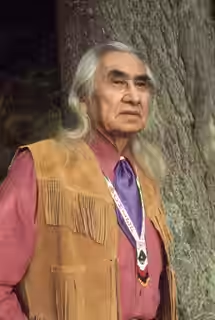
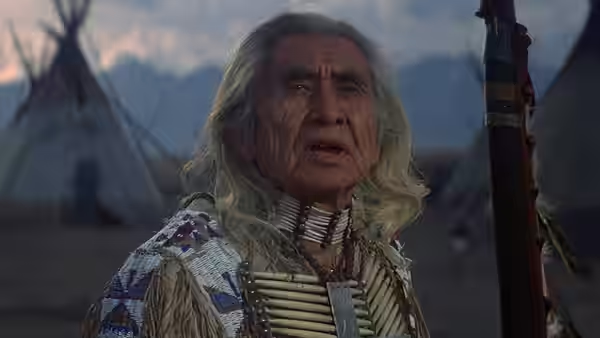
Chief Dan George gives Old Lodge Skins a different pace. We were moved by the dignity he brings to the philosophical passages, because he makes the thoughts feel personal and carefully considered. There is humour in the performance, too, without the constant pressure to turn a character into a comic example. He gives these passages enough ease that we want to stay with him, even when the surrounding film seems impatient to make another point.

Harry Stradling’s cinematography gives the film a handsome scale without making its size the whole attraction. Dean Tavoularis’s production design lends substance to a story whose exaggerations could otherwise become exhausting. We need to believe there is a place beyond the joke, and their work helps us do that. The images accommodate both the burlesque and the serious material; the screenplay is less comfortable moving between them.

Dede Allen’s editing faces the harder problem of making these encounters feel like a continuous experience. Individual passages have energy, but the accumulation is uneven, and some stay after the point has been made. At 139 minutes, the film gives us enough time to notice which diversions are entertaining and which are merely postponing the next encounter. The writing compounds that problem by pressing its moral lessons long after their meaning is clear.

John Paul Hammond’s music offers a welcome looseness, although it cannot smooth out every change of tone. Arthur Penn is attempting something worthwhile: a Western that makes its familiar heroic claims look doubtful and gives historical wrongs their weight. The film becomes less persuasive when its people are caricatures arranged to make that case. A revisionist Western still needs to let its characters surprise us, and here we can sometimes recognise their allotted purpose too quickly.

Give it an evening when a wandering Western sounds inviting. The occasional drag is worth bearing for Dustin Hoffman and Chief Dan George, especially if broad comedy appeals more than solemn heroics. Anyone who needs a tight plot should look elsewhere.
Critical consensus AI synthesised

60
Positive
2
Mixed
4
Negative
1

The reviews lean towards a mixed response to Little Big Man, with praise for its ambition and performances rather than agreement that its approach works throughout. The favourable accounts find an entertaining, sly tragicomedy that challenges Western myths through Jack Crabb’s perspective. Acting draws the clearest praise: Dustin Hoffman is a strength, while Chief Dan George earns particular appreciation for his dignity and philosophical contributions.

Reservations concern pacing, caricature and the fit between broad comedy and historical suffering. Some encounters drag even for admirers, and Variety sees promise in the mixture of burlesque and serious sketches without offering an enthusiastic endorsement. The New Yorker supplies the sharpest dissent, arguing that the move towards solemn political messaging weakens both the humour and the film’s larger ambitions. The spread is wide, though two inaccessible review texts limit how fully the reasons behind the scores can be compared.

Radio Times
★★★★ · David Parkinson
80

Parkinson regards the film as an ambitious, sly and handsome tragicomedy, though some encounters drag. He particularly praises Chief Dan George’s dignified performance.

Read the full review →
Empire
1 January 2000 · Kim Newman
70*

Newman finds the Western entertaining despite its caricatured, exaggerated approach. He singles out Dustin Hoffman’s performance as a particular strength.

Read the full review →
Time Out
· GA
67*

The review presents the film as an epic post-Western seeking to demythologize its subject. It singles out Jack Crabb’s perspective as the lens for that approach.

Read the full review →
The New York Times
15 December 1970 · Vincent Canby
65*

The article appears to be a review of the film, but its critical verdict and specific praise or complaints cannot be verified from the inaccessible page.

Read the full review →
RogerEbert.com
64*

The review text was unavailable, so its verdict cannot be established. The accessible page showed only a browser-check message, with no praise or complaint to assess.

Read the full review →
Variety
31 December 1969 · Variety Staff
50*

The review finds the film’s mix of burlesque and serious sketches an ambitious, potentially worthwhile way to approach historical wrongs. It singles out Chief Dan George’s philosophical contributions as outstanding.

Read the full review →

Straight answers AI written, from our review

Is Little Big Man worth watching?
Little Big Man is worth watching if a wandering Western with broad comedy appeals; we score it 72 out of 100. Dustin Hoffman keeps the tall tale moving, and Chief Dan George gives it warmth, but we find the moral lessons overexplained and the 139-minute journey uneven.
How long is Little Big Man, and what is it rated?
Little Big Man runs 2h 19m. It is a western and comedy film.
Where can I watch Little Big Man in Estonia?
Little Big Man is not on any streaming or rental service in Estonia at the moment. It is available in 21 other countries; change your country at the top of the page to see where. Availability is checked daily.
How does Little Big Man compare to Dead Man Walking?
Little Big Man offers sprawling Western comedy, while Dead Man Walking is a capital-punishment drama we recommend more warmly for its emotional force. Both can make their moral points too deliberately, but Susan Sarandon and Sean Penn’s difficult encounters make the latter our choice for serious drama; Hoffman and Chief Dan George suit an evening of looser storytelling.
Is Little Big Man based on a true story or a book?
Little Big Man is adapted by Calder Willingham from Thomas Berger’s novel, rather than presented as a true story. Jack Crabb’s uncertain reliability—forgotten hero or extravagant liar—is part of the pleasure, and we find the performances give readers unfamiliar with the book enough reason to watch.
What should I watch after Little Big Man?
After Little Big Man, try Dersu Uzala (1975, Fi1m 82): Patient companionship and respect for knowledge that supposed civilisers fail to value. Then Dead Man (1995, Fi1m 84): A stranger, quieter Western that makes familiar frontier stories look distinctly suspect; and Hunt for the Wilderpeople (2016, Fi1m 82): An unlikely travelling partnership gives broad comedy a stubbornly human centre.

Cast

Awards

BAFTA Film Awards, 1972

Nominated
Best Actor in a Leading Role
Nominated
Best Original Music

United Nations Awards, 1972

Nominated
United Nations Awards

Academy Awards, 1971

Nominated
Best Supporting Actor

Golden Globes, 1970

Nominated
Best Supporting Actor – Motion Picture

National Society of Film Critics Award for Best Supporting Actor, 1970

Won
National Society of Film Critics Award for Best Supporting Actor

If you liked this, try…

  1. The Ballad of Cable Hogue (1970) · not on Fi1m yetAnother wandering Western with room for foolishness, tenderness and awkward changes of tone.

  2. Dersu Uzala (1975, Fi1m 82)Patient companionship and respect for knowledge that supposed civilisers fail to value.

  3. Dead Man (1995, Fi1m 84)A stranger, quieter Western that makes familiar frontier stories look distinctly suspect.

  4. Smoke Signals (1998) · not on Fi1m yetStorytelling, grief and dry humour, with characters allowed to contradict themselves.

  5. Hunt for the Wilderpeople (2016, Fi1m 82)An unlikely travelling partnership gives broad comedy a stubbornly human centre.