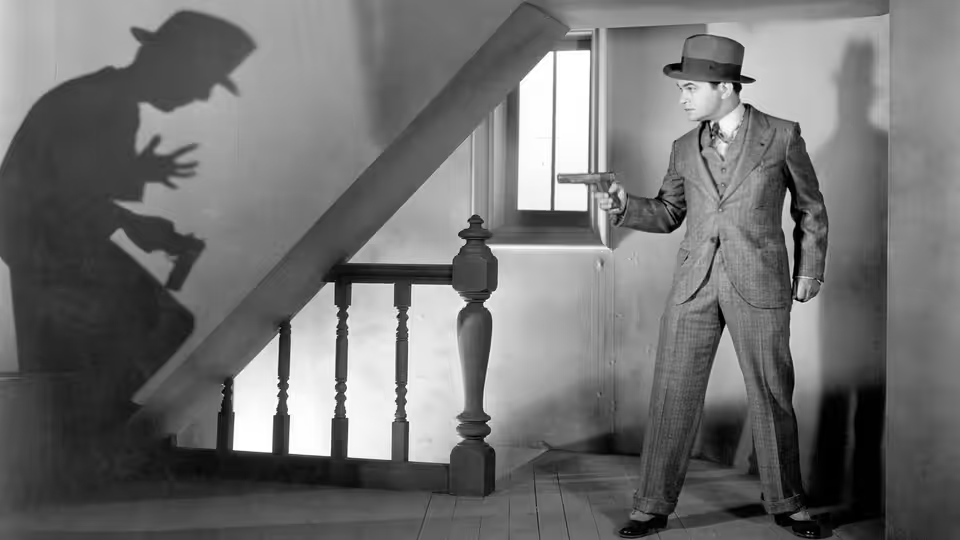
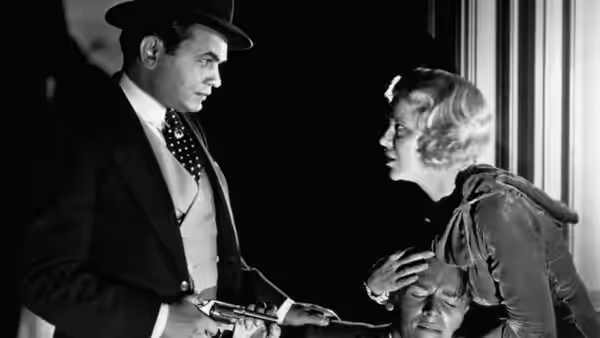
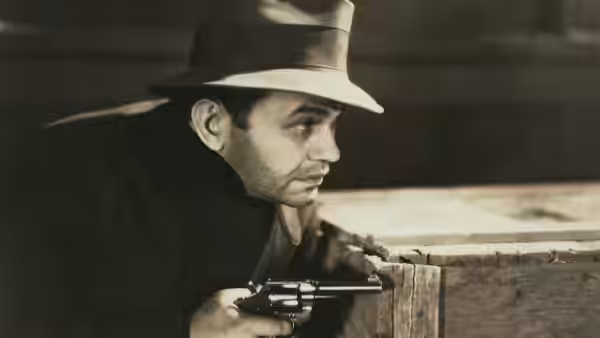
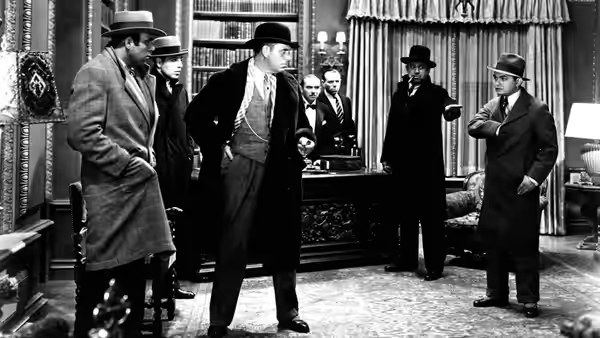
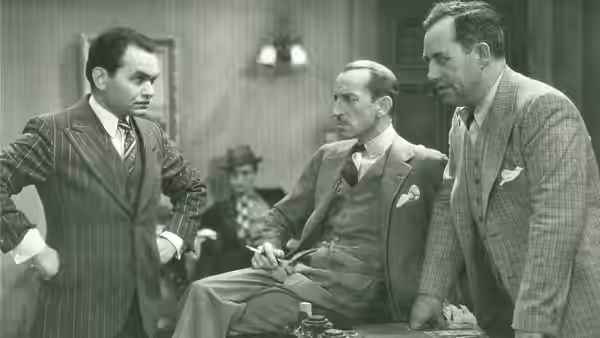
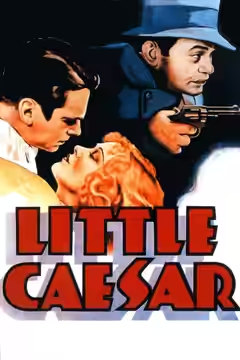
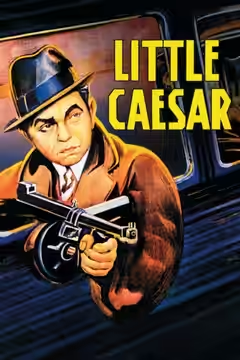
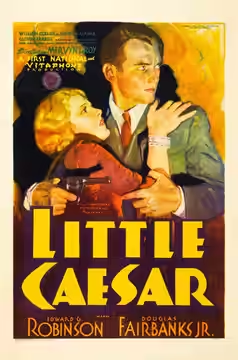
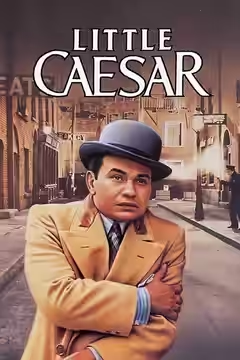
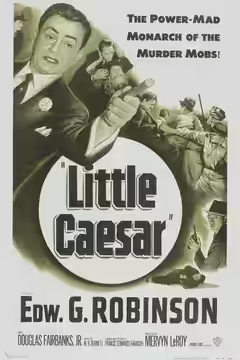
Little Caesar is worth seeing for Edward G. Robinson’s force and unexpected pathos. Mervyn LeRoy’s stiff direction and a familiar crime story limit it, but the brisk pace helps.
Mervyn LeRoy’s Little Caesar is worth 78 minutes for Edward G. Robinson, provided a gangster’s hunger for power is your idea of an evening’s entertainment. The performance keeps a familiar crime story involving, even when the direction grows stiff. The film asks us to understand the desire to command and the importance it assumes in one man’s life. Its lead supplies that understanding more convincingly than the writing does.
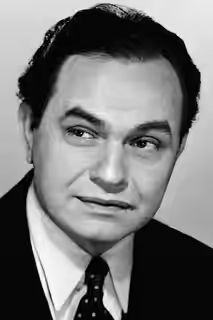
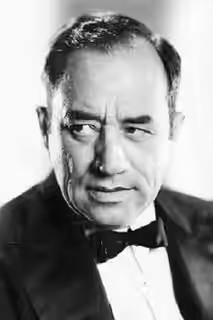
As Caesar Enrico ‘Rico’ Bandello, Edward G. Robinson makes the hunger for power feel aggressive and painfully needy. He gives the forceful playing enough vulnerability to prevent Rico becoming merely an unpleasant man we are obliged to watch. We found him unexpectedly touching, because the performance never quite hides his need to be taken seriously. Understanding that need does not make him agreeable, but it keeps our attention on him even when the surrounding drama becomes predictable.
That is useful work for a screenplay by Robert N. Lee and Francis Edward Faragoh, adapted from W.R. Burnett’s novel. The hardboiled plotting is familiar enough that the writing rarely surprises us on its own. Too often, we seem to understand a character’s function before we have much sense of the person. The central performance has to supply the complications that the writing leaves out, and there are stretches when the supporting characters could use some of that attention.
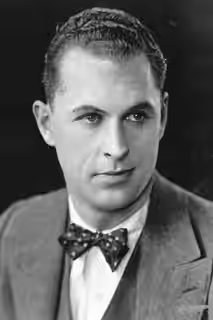
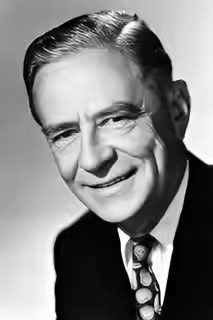
Douglas Fairbanks Jr. plays Joe Massara and Glenda Farrell plays Olga Stassoff, but neither gives us quite the same reason to lean forward. That is partly the drawback of such a forceful lead: the surrounding performances begin to look smaller even when there is little wrong with them. We wanted more from these people than a temporary change of company. They do not leave as clear an impression as Rico, and the film feels thinner whenever our interest in him has to sustain everything else.
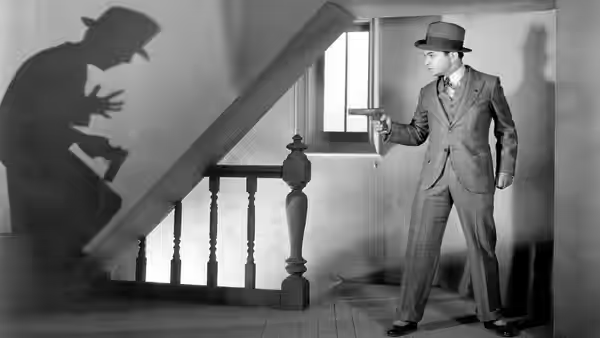
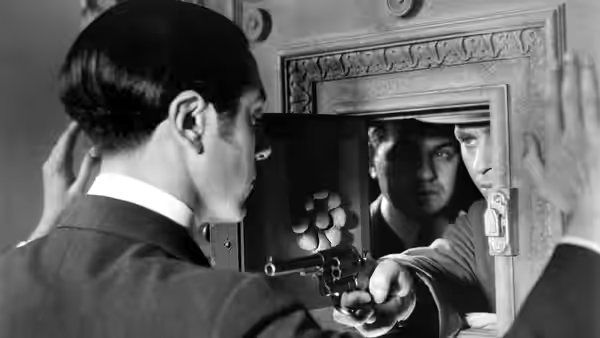
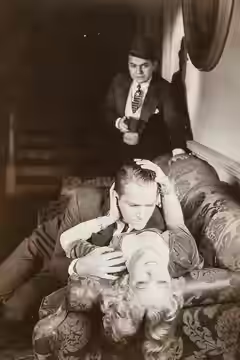
Tony Gaudio’s cinematography gives the acting room, though Mervyn LeRoy’s staging can leave the images feeling inert. The patience is welcome when a performance rewards it, but elsewhere we become conscious of how little the direction contributes. The stiffness matters because it makes already familiar writing harder to overlook. Being made in 1931 explains why a film might look its age; it does not oblige us to find every limitation charming.
Ray Curtiss’s editing helps considerably, keeping the drama moving rather than allowing the familiar plotting to become ponderous. At 78 minutes, the film does not demand much indulgence. The music credited to David Mendoza makes less impression than the acting, which is not a serious complaint when the central performance offers so much to attend to. The pace gets us through the stiff passages without making them any more expressive.
A gangster film needs to make the attraction of power comprehensible, and this one succeeds whenever Rico holds our attention. It is less persuasive when the other characters must carry the drama without him. The limitations matter, particularly for anyone hoping for equally forceful work across the cast, but the central performance remains worth the evening. Choose it for Edward G. Robinson, and accept that the direction will not always keep up.