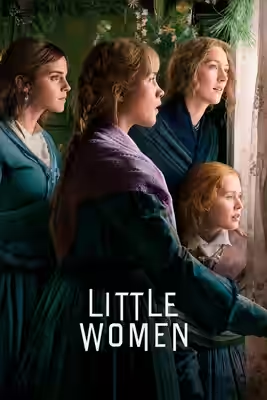
Greta Gerwig cuts Alcott’s novel into two timelines and lets the March sisters talk over one another, and it works: quick, warm and sharper about money than any version we have seen. The cutting sometimes hurries and the score never stops. We recommend it.
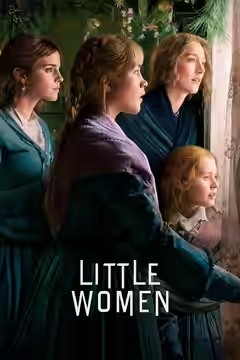
Greta Gerwig has taken Louisa May Alcott’s novel, which most people can recite in outline, and cut it in two. One half is the sisters’ adult lives: Jo March (Saoirse Ronan) is away from home selling stories, Amy (Florence Pugh) is abroad being taught to paint and to marry well, Meg (Emma Watson) has a husband and no money, and Beth (Eliza Scanlen) is unwell at home. The other half is the childhood, four girls under one roof and their father away. Gerwig cuts between the two on a look or a gesture. We know what happens to these girls, so she gives us the consequences first and asks us to watch the causes with that knowledge in our laps.
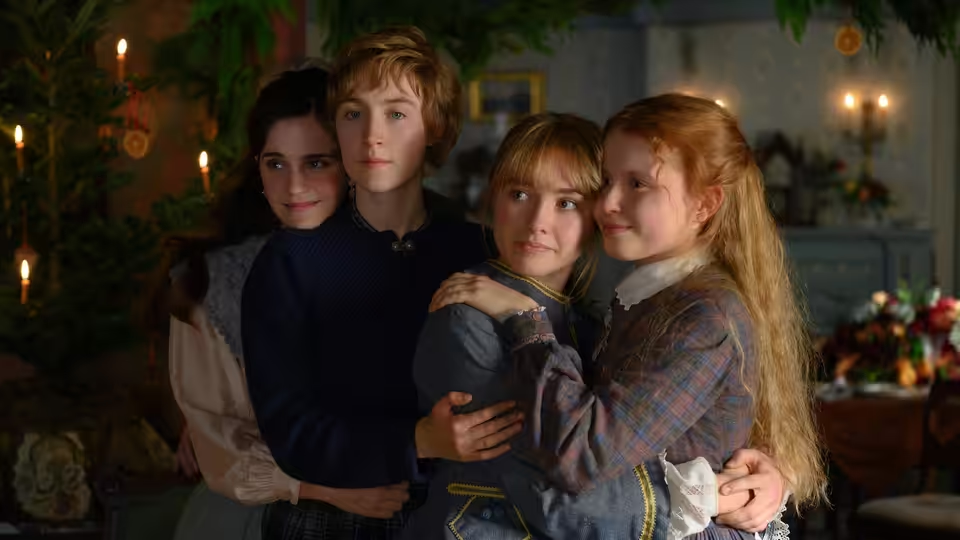
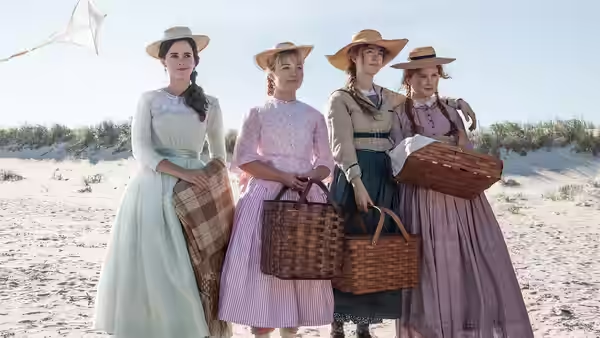
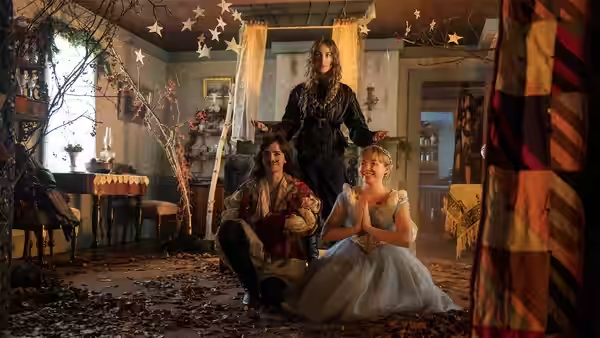
It works because of the people doing the cutting and the lighting. Nick Houy edits the joins so they feel like memory rather than a trick: someone in the present thinks of home, and there home is. Yorick Le Saux shoots the childhood in warm yellow, candles and firelight and low winter sun through the windows, and the adult years in a cooler grey, so you always know where you are without a caption. Jess Gonchor’s March house is small and never tidy, coats on chairs, doors open, a mother and four girls and Hannah (Jayne Houdyshell) in rooms built for half that number. Jacqueline Durran puts Jo in waistcoats and boots and lets the sisters pass clothes between them, as sisters do.
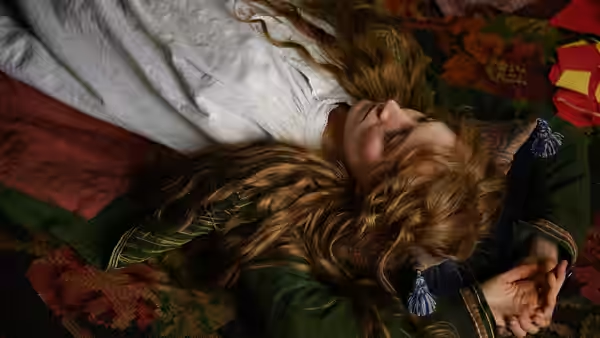
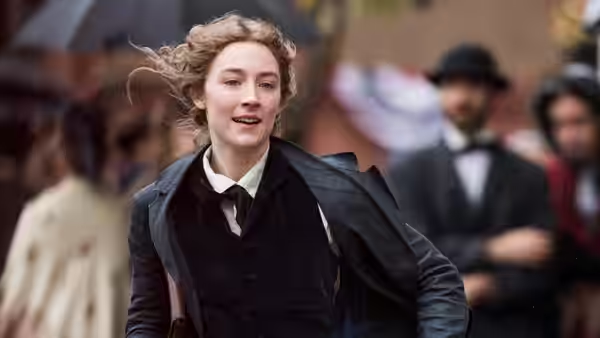
Ronan plays Jo as someone who is always talking louder than everyone else and knows it. She runs everywhere, writes lying on the attic floor with ink on her fingers, and when Tracy Letts’s publisher Mr. Dashwood cuts her story and lectures her on what readers want, she argues about the fee. Pugh, though, is the one we kept watching. Amy has been the spoilt sister of this book for a century and a half, and Pugh plays her as the one person in the family who has done the sums. Her speech to Laurie in her studio, laying out marriage as a question of who owns what, moved us more than we expected, because she does not deliver it as a complaint. She delivers it as arithmetic, flatly, while cleaning a brush.
Timothée Chalamet’s Laurie slouches through the film with his collar undone, the rich boy next door who has never been told no by anyone but the March girls, and he is best when he is being turned down. Chris Cooper, as his grandfather Mr. Laurence, has a scene at a piano with Scanlen’s Beth that we would not change a frame of. Laura Dern’s Marmee is quicker to anger than the saint of earlier versions; there is a scene with Jo where she admits as much, and we believed her. James Norton’s John Brooke and Louis Garrel’s Friedrich Bhaer are decent men given about a scene and a half each.
Not all of it holds. The overlapping talk in the March house is a pleasure the first two times and tiring by the fifth; you start to want someone to finish a sentence. The crosscutting that makes the film’s best joins also robs a few scenes of the time they needed, so a quarrel is over before it has started. Alexandre Desplat’s score, piano over strings, is handsome and nearly always on, underlining moments Ronan and Pugh had already made without help. The cast does not visibly age across the years the film covers, so the hair does most of the work and does not always manage. Bob Odenkirk, as Father March, arrives and is given almost nothing to do.
The last twenty minutes do something with the book’s ending that we will not describe, except to say that Gerwig has read the arguments about it and has an answer of her own. Some will find it too clever. We found it an honest way through a problem Alcott never solved. It is the first version of this story we have seen that keeps asking who is paying for what, and the first in which Amy gets a fair hearing.
It is a U certificate and runs 135 minutes, and it does not feel long. Watch it with a sister if you have one. She will tell you which March girl she is, and she will be wrong.