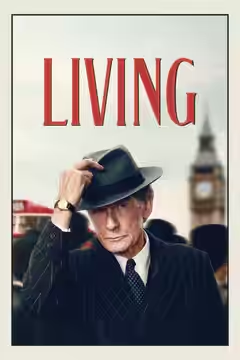
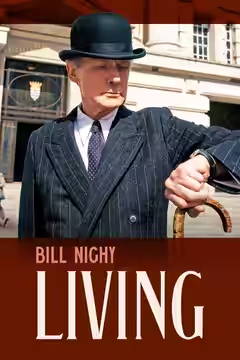
Bill Nighy makes Living quietly moving, with Aimee Lou Wood bringing welcome warmth to its carefully arranged period world. We recommend it for their scenes together, with a warning that the stately pace sometimes hardens into stiffness.
Oliver Hermanus’s Living is worth an evening for Bill Nighy’s performance, even when its measured pace becomes stiff. The film takes seriously Williams’s wish to leave something meaningful behind, without requiring him to become an easier man to read. Kazuo Ishiguro’s screenplay gives that difficulty room, sometimes more room than the story needs. We are asked to pay attention to someone whose feelings are not readily available, and the lead performance makes that attention worthwhile.
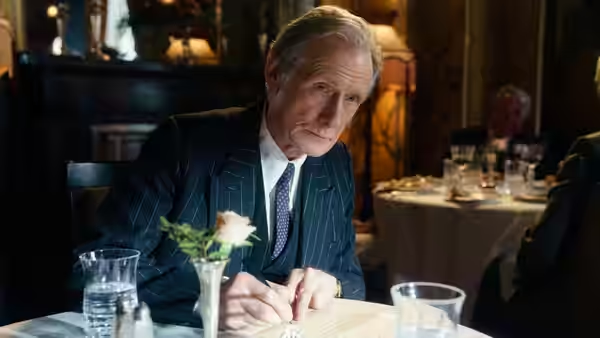
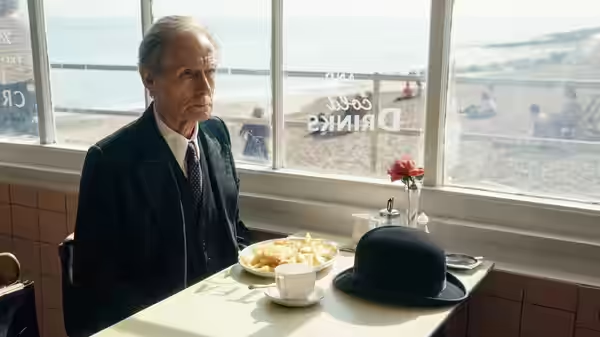
Bill Nighy is precise about how much Williams allows to show. There is a danger with such a contained performance that the audience ends up supplying feelings the actor has not found, but that rarely happens here. The slight changes in expression make the reserve seem effortful, and leave us watching closely for the next response. Williams remains difficult to know, yet we never doubt that there is someone worth knowing beneath the manner.
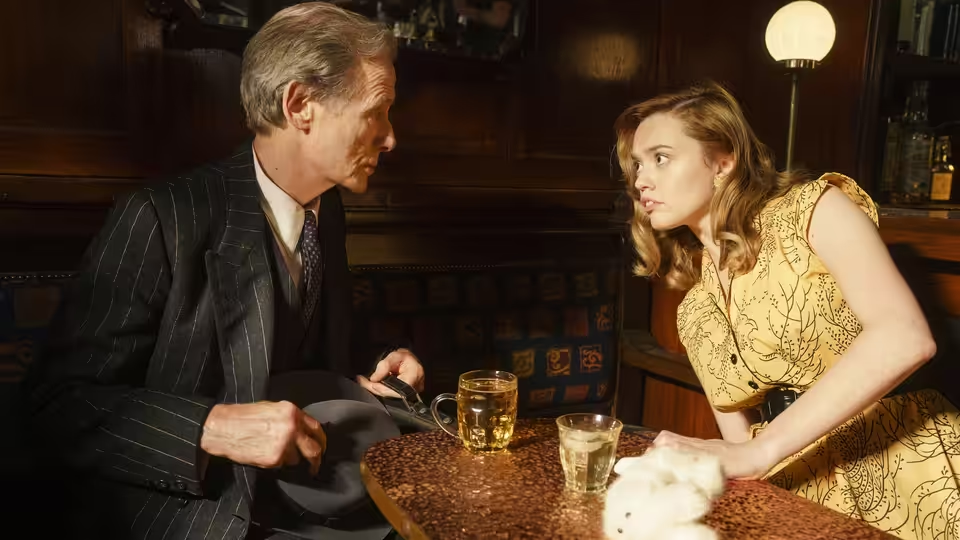
We were moved more than we expected by the scenes between Williams and Margaret Harris. Aimee Lou Wood gives their connection warmth without making her own performance as restrained as Bill Nighy’s, and the contrast gives their exchanges some welcome ease. His small responses matter because she seems capable of reaching him without forcing an explanation. These scenes give us time to become interested in both people, and to care about how they get on together.
Jamie Ramsay’s expressive framing makes the County Hall setting properly imposing, and gives the period surroundings a role beyond looking handsome. Helen Scott’s production design helps establish a 1950s world in which Williams’s formality feels ordinary. That matters: a less convincing setting could make him look like a collection of quaint habits preserved for our amusement. At times, though, the polished images are a little too comfortable to look at for a story troubled by the passing of time.
The pace is less consistently judged. At 102 minutes, Living is not long, but Chris Wyatt’s editing leaves stretches that feel slower than the performance requires. Emilie Levienaise-Farrouch’s music can also press too hard, adding emotional emphasis where Bill Nighy has already made a modest response sufficient. These are occasional irritations, but both make us aware of how firmly the film would like to guide our feelings.
Williams’s family life is less fully drawn than his connection with Margaret Harris, and that leaves a gap in our understanding of him. Kazuo Ishiguro and Oliver Hermanus are better at allowing us to feel his reserve than at exploring everything that has sustained it. Still, a period drama about regret can easily become a procession of tasteful lessons, and the actors mostly prevent that here. The strongest scenes allow affection and awkwardness to coexist without tidying either away.
We do not need the film to explain its concern with mortality quite so carefully. Its most persuasive evidence is already in the effort Williams makes to connect, and in the attention Margaret Harris gives him. Those exchanges stayed with us more than the polished period images. See it for the company of Bill Nighy and Aimee Lou Wood, and allow for the slow going between their scenes.