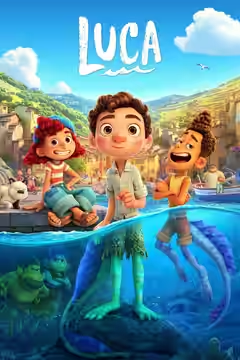
Enrico Casarosa’s seaside fantasy is funny and affecting, and its Italian coastal town is a pleasure to explore. The friendship holds our attention more reliably than the loose, sometimes meandering story.
Luca is a warm, gently funny seaside fantasy whose central friendship earns our affection, even when the story wanders. Director Enrico Casarosa gives the children room to enjoy each other’s company, and that proves a sound use of a family film’s time. The possibility of living among humans matters because it lets the boys discover a place together, with all the excitement of having somebody to share it with. We recommend it for that easy companionship, with a warning that the middle grows slack.
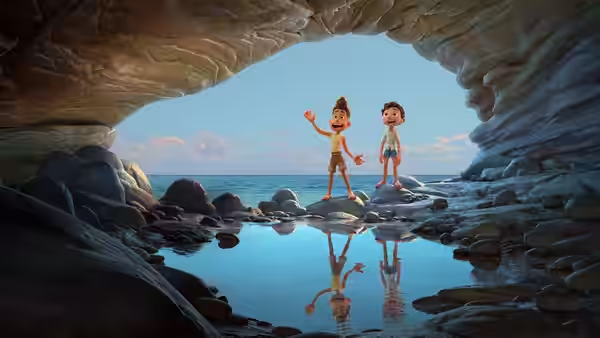
Jacob Tremblay gives Luca Paguro a tentative eagerness that makes his curiosity appealing without turning him into a permanently astonished child. Jack Dylan Grazer supplies Alberto Scorfano with more confidence, and the voices are different enough for their exchanges to feel spontaneous. We felt protective of Luca because the uncertainty in Jacob Tremblay’s delivery makes joining in sound like a risk. The affection between the boys is convincing before the film asks us to draw any larger lesson from it.
Emma Berman’s Giulia Marcovaldo gives that friendship a welcome third presence, lively enough to keep the boys from monopolising our attention. The screenplay by Mike Jones and Jesse Andrews is less assured when it needs to make the wider cast equally interesting. Some supporting figures are easy to recognise and harder to care about, which leaves the voices doing more work than the writing. The children remain engaging, but the story does not always give their time together enough direction.
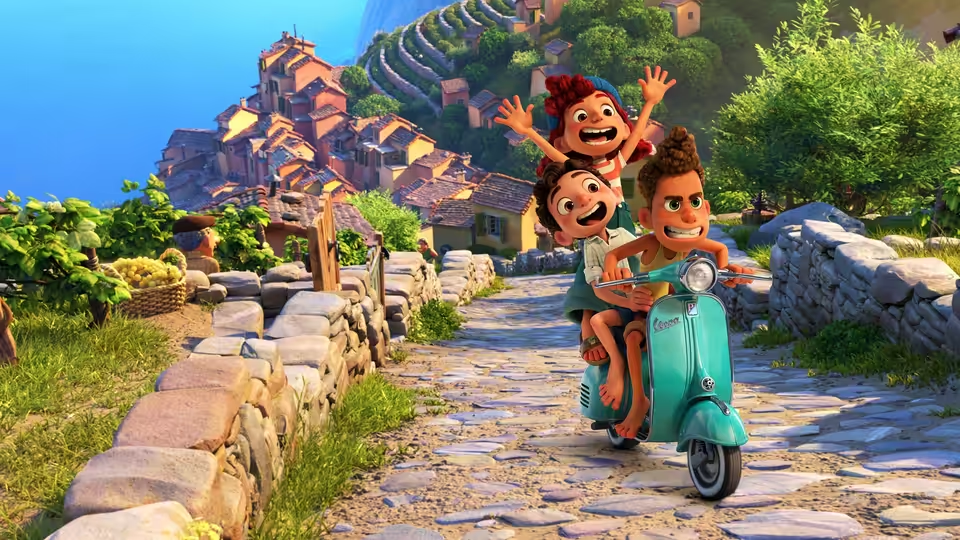
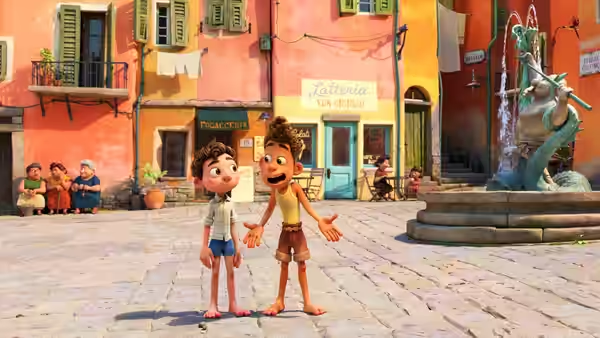
Daniela Strijleva’s production design gives Portorosso soft colours and a convincing sense that people live there. There is pleasure in simply looking at the town, something a more hurried film might have discouraged. Cinematographers David Juan Bianchi and Kim White make the water bright and clear, and give the town a warmth that makes the boys’ fascination understandable. The animation’s slightly hand-drawn appearance helps too, keeping the seaside from looking so polished that we stop believing anyone could enjoy themselves there.
Editors Catherine Apple and Jason Hudak are less successful at making the separate adventures gather speed. Individual stretches are pleasant, yet the episodic plotting means we sometimes feel the film could carry on ambling without much changing. Dan Romer’s music is warm and sympathetic, though its encouragement to feel can seem unnecessary when the voices have already done the work. At 95 minutes, the film is short enough for family viewing, but not quite tight enough to avoid a few restless patches.
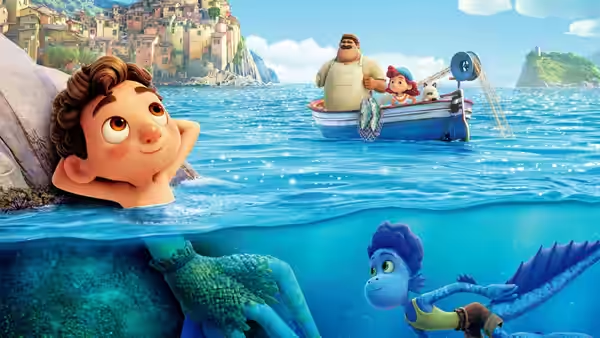
The sea creatures’ human disguises also give the friendship a particular vulnerability. Being accepted while keeping something important hidden is a worry the film makes easy to understand, and it leaves room for more than one reading. We do not need the boys to stand for every child who has felt different. Their wish to belong is enough, although the broader message becomes less interesting whenever it overtakes their individual personalities.
Against the expectations of a family adventure, this is gentle, with more interest in company and place than in pushing breathlessly onwards. Some viewers will reasonably want a busier plot, and the loose middle does them few favours. Choose it for a family evening when nobody needs another film trying to exhaust them.