George C. Wolfe has filmed August Wilson’s play with such care that it never stops being a play. It is worth 93 minutes of your evening for Chadwick Boseman and Viola Davis, who do two different kinds of great work in the same small room.
George C. Wolfe has taken August Wilson’s play about a single afternoon in a Chicago recording studio and filmed it faithfully, which is both the point and the problem. Ruben Santiago-Hudson’s screenplay keeps Wilson’s long speeches close to whole. Nobody has tried to turn this into something it is not. What we get is 93 minutes of two great performances and a good deal of standing around, and the two performances are enough. Just.
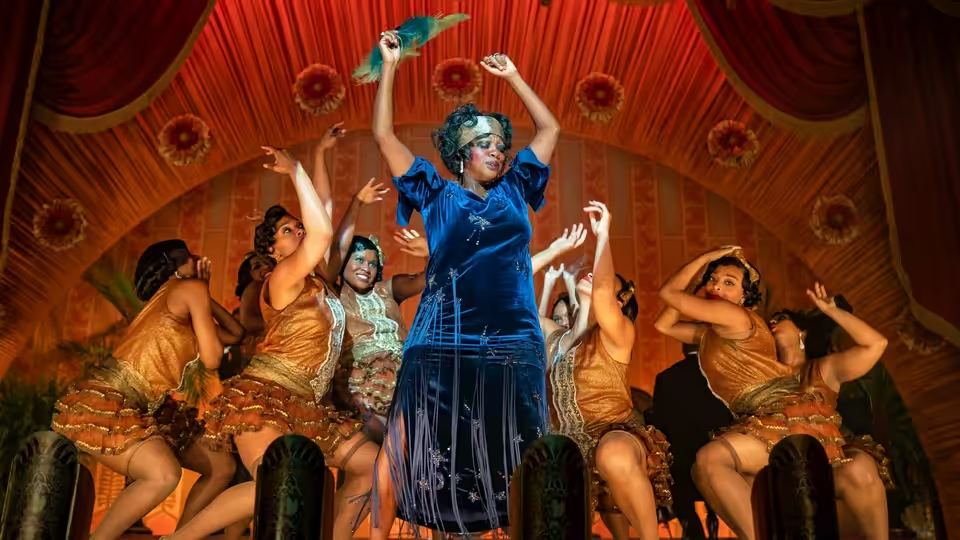
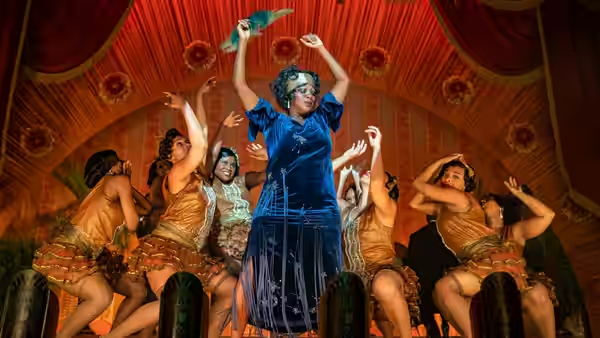
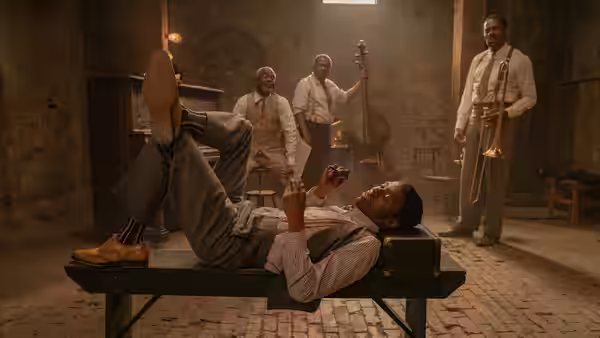
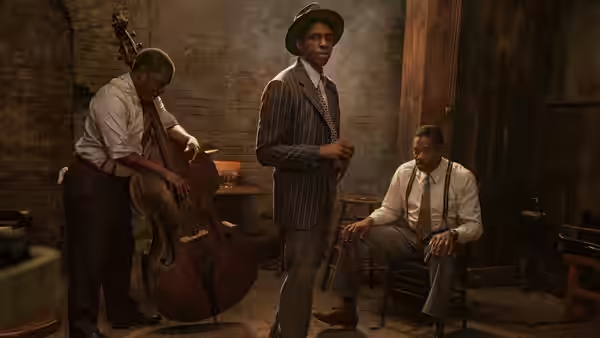
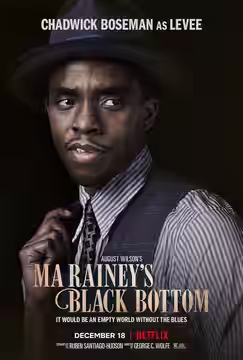
It opens away from the studio, at a tent show at night in the South, a crowd packed in under canvas while Ma Rainey (Viola Davis) sweats through greasepaint and grins with gold teeth. Then Chicago, 1927, and a basement rehearsal room where her band waits for her. Cutler (Colman Domingo) runs things and wants the session over. Toledo (Glynn Turman) has read a book and would like to tell everyone about it. Levee (Chadwick Boseman) has bought a pair of yellow shoes and cannot stop looking at them, and he has his own arrangement of Ma’s song in his pocket and a plan for what the men upstairs will do when they hear it.
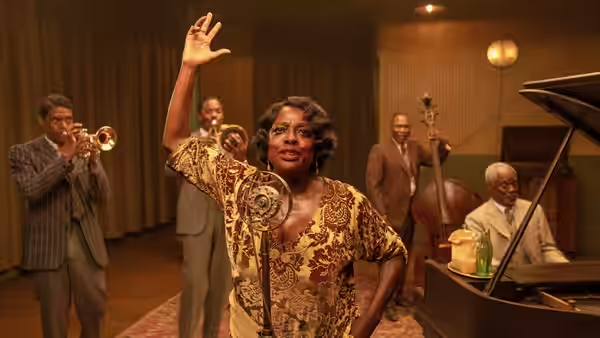
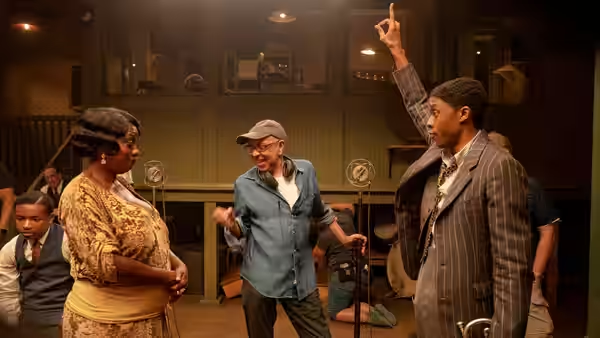
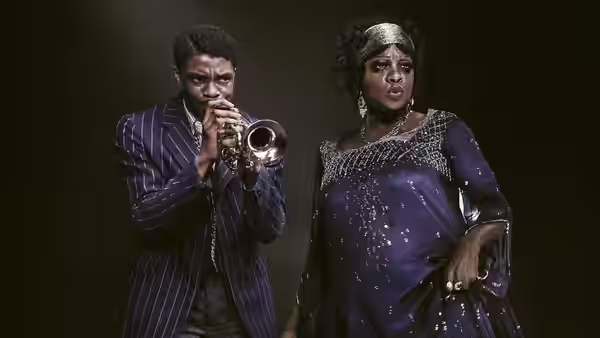
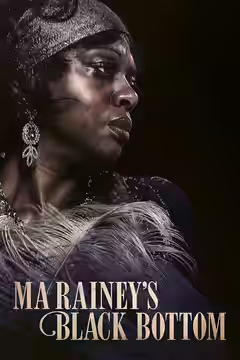
Davis plays Ma as a woman who has worked out precisely how much power she has in that building and spends every ounce of it. She will not sing until someone has fetched her a Coca-Cola. She insists that her nephew Sylvester (Dusan Brown), who stammers, does the spoken introduction, and she makes the manager Irvin (Jeremy Shamos) and the owner Sturdyvant (Jonny Coyne) stand there and wait while he tries. Ann Roth dresses her in sequins and heavy stuff that has no business in that heat, and Davis lets the sweat run through the make-up and does not wipe it. The singing scenes are her weakest; the voice never quite belongs to the woman we have been watching. Everything else does.
Boseman is the one who moves. Levee bounces on those shoes, shadow-boxes, rattles the locked door at the back of the basement that leads nowhere, and talks, and talks. He gets two long speeches, one about what happened to his mother in the Georgia countryside when he was eight, one aimed straight at God, and Boseman plays both as a man trying to shout down a memory. We sat very still through the first one. We are aware, as everyone watching will be, that this is his last performance, and we tried to put that aside and could not; but the speech would have floored us anyway, because he lets the charm fall off Levee’s face a piece at a time and never puts it back.
The craft is sound and it is modest. Tobias A. Schliessler lights the basement yellow and close, the studio upstairs pale and cool, so that going up the stairs feels like surfacing. Mark Ricker’s basement is pipes, a ceiling fan and that useless door, a room built to make grown men feel like boys kept after school. Andrew Mondshein cuts between the two floors so the waiting has a rhythm, and the recording takes, with Branford Marsalis’s tight period brass, are the best filmed music in the film because they are really arguments about whose version gets made. What Wolfe rarely finds is a shot that says something the words have not. The camera stands back and waits for the speech to finish.
Turman is quietly superb as Toledo, the only man in the basement who has thought about why they are all in it, and Domingo holds the band together with the weariness of someone who has done this a hundred times. Taylour Paige, as Dussie Mae, understands exactly what Levee’s shoes are for. The last act takes a turn we will not describe. The film hurries it, and then adds a coda about who ends up owning this music that is blunt and, we thought, earned.
Denzel Washington, who produces here, directed Fences (2016), the last Wilson adaptation to reach a screen, and that too felt like a very good production seen from the stalls. This one is shorter, hotter and better acted, and no more of a film. See it for the two of them, and give the speeches room; they were written to be heard, not glanced at.