Mervyn LeRoy’s life of the Curies is handsome, patient and about as dangerous as a cup of tea. Greer Garson and Walter Pidgeon make two shy scientists’ courtship believable, and the long stretch in the shed is the best thing in it.
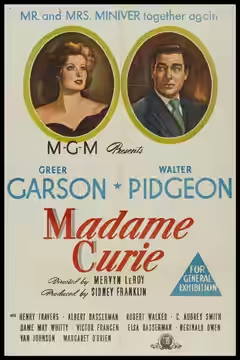
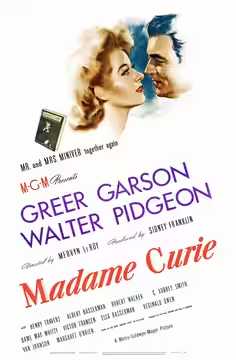
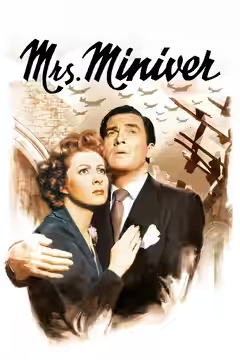
MGM sold Madame Curie with the line “Mr. and Mrs. Miniver together again”, which tells you the approach. Greer Garson and Walter Pidgeon, a year after Mrs. Miniver, play the Polish student and the shy French physicist who found radium, and Mervyn LeRoy directs them as a couple first and a laboratory second. The script, by Paul Osborn, Hans Rameau and Christina Stead and taken from Ève Curie’s biography of her mother, has been boiled down as thoroughly as the ore. What producer Sidney Franklin has left is handsome, patient, decent and sweeter than the life. We liked it, with reservations, mostly about sugar.
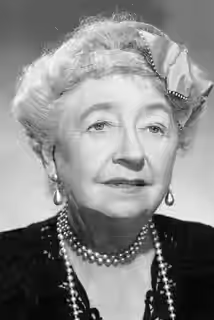
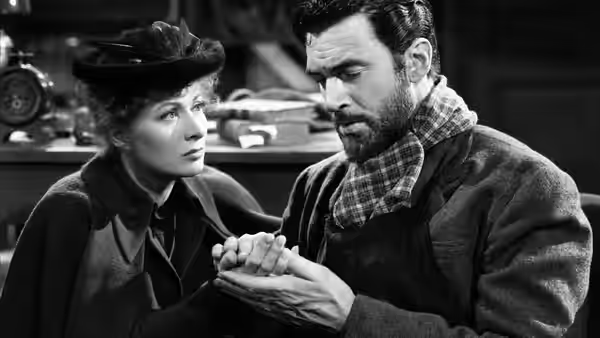
The courtship takes up the first hour and is better than it sounds. Pierre is a man who forgets to eat and cannot say a plain sentence to a woman; Marie is a woman nobody has yet tried to say one to. Pidgeon plays him with his hands in his pockets and his eyes on the floor, and his proposal, delivered as a lecture on the usefulness of marriage to science, is the best-written scene in the film. Henry Travers and May Whitty, as his parents, get a summer at a country house and make it warm without making it soft.
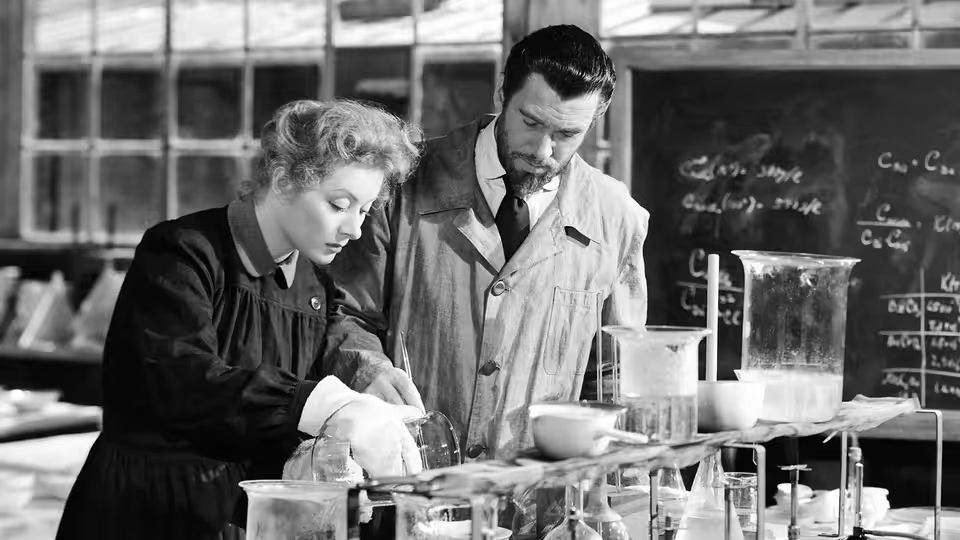
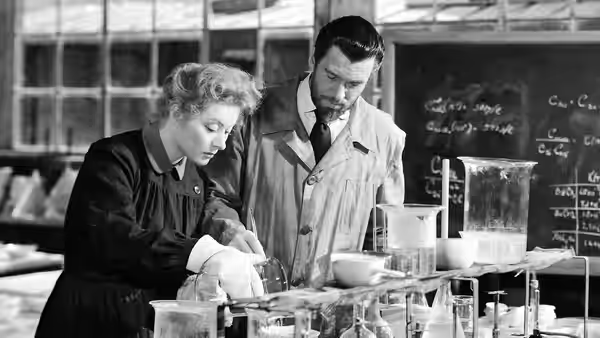
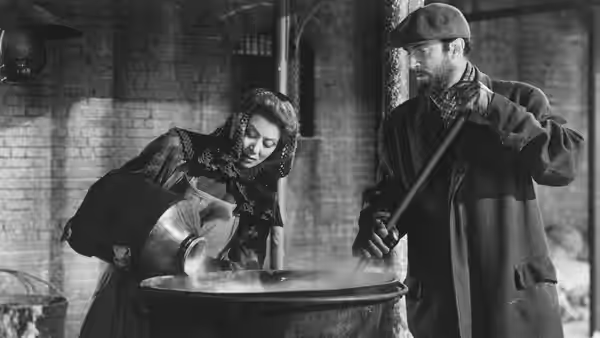
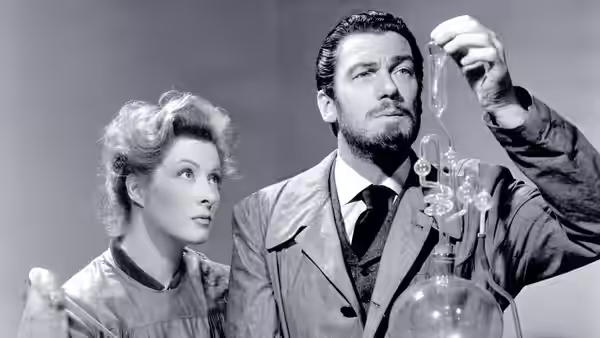
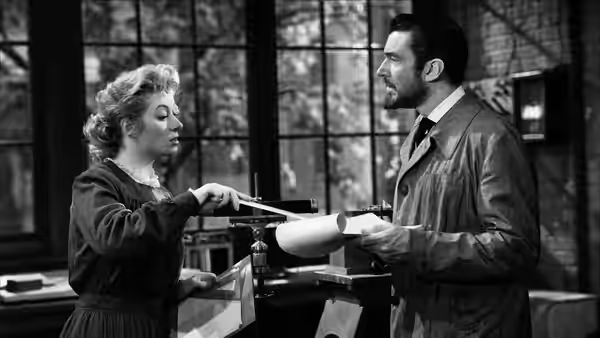
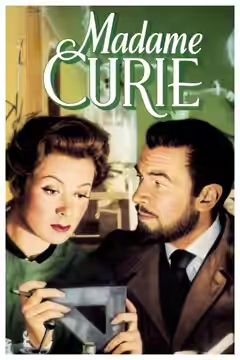
Then comes the shed, and the film finds its subject. Marie has noticed that a sample of ore gives off more energy than its uranium can account for, and the pair set out to isolate whatever is responsible from tons of the stuff. Joseph Ruttenberg lights the place from one skylight and a row of boiling vats, so that steam fills the frame and the two people are shapes moving through it. Harold F. Kress cuts the years into pouring, stirring, crystallising and starting again, with time advanced by a line of dialogue rather than a caption. It moved us more than we had planned, and it was not the discovery that did it. It was the failure before the discovery: a dish that should hold something and holds a stain, and Garson looking at it for a long time before going back to the vats.
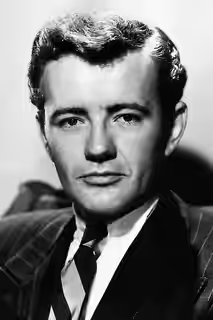
The film’s science is repetition, which is accurate. Nobody has a eureka. Robert Walker, as the assistant David Le Gros, is there to say out loud that it looks hopeless. Reginald Owen’s Becquerel and Albert Bassermann’s Perot are the older men who report the strange facts and wait to see what a woman will do with them. Herbert Stothart’s score is the least patient thing on screen. It swells at every doorway, and in the shed, where silence would have served, it insists on telling us the mood.
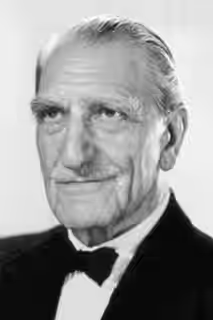
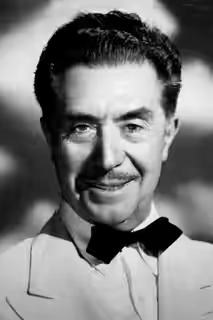
The sweetness is the problem. Marie is never allowed to be difficult, never tired in a way that makes her unkind, never anything but gracious to men who have just told her she cannot have a laboratory. The President of the University (Victor Francen) turns her down, and the refusal is over in a line and forgiven in the next. Irene Lentz dresses Garson in dark, plain wool for years of the story and never lets a hem get dirty, which is how the film treats poverty, acid and radium too: nobody is marked by any of it. Margaret O’Brien turns up as Irene at five to prove the Curies had a home life. C. Aubrey Smith arrives late as Lord Kelvin to bless the enterprise from behind a beard.
The last third takes a turn we will not describe, though anyone who has opened an encyclopaedia knows what it is. Garson plays it quietly, and LeRoy, who was a harder director in Little Caesar and I Am a Fugitive from a Chain Gang a decade earlier, briefly remembers how to hold a shot and let it hurt.
The reviews so far are all favourable, and we can see why. A studio drama about two people doing chemistry for four years should not hold, and this one holds for most of its 124 minutes. It is a Sunday afternoon film, and we mean that kindly. Draw the curtains halfway and let it take its time.