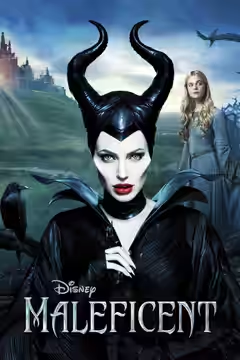
Angelina Jolie is a perfect fit for the horns and gets the film’s few good lines. Around her, Robert Stromberg’s revision of Sleeping Beauty is handsome in patches, rushed in storytelling and so anxious to redeem its villain that it forgets why anyone liked her.
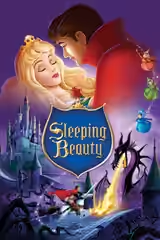
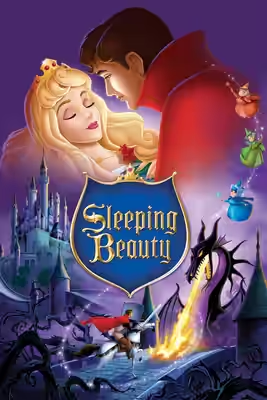
Disney goes back to its own Sleeping Beauty (1959), takes the horned fairy who cursed a baby because she was left off a guest list, and asks what she had against the baby. Linda Woolverton’s script gives her a childhood, a sweetheart and a grievance, and the tagline says “Don’t believe the fairy tale.” The trouble is that the film does not believe in its villain either. It has 97 minutes and it spends most of them making her nicer.
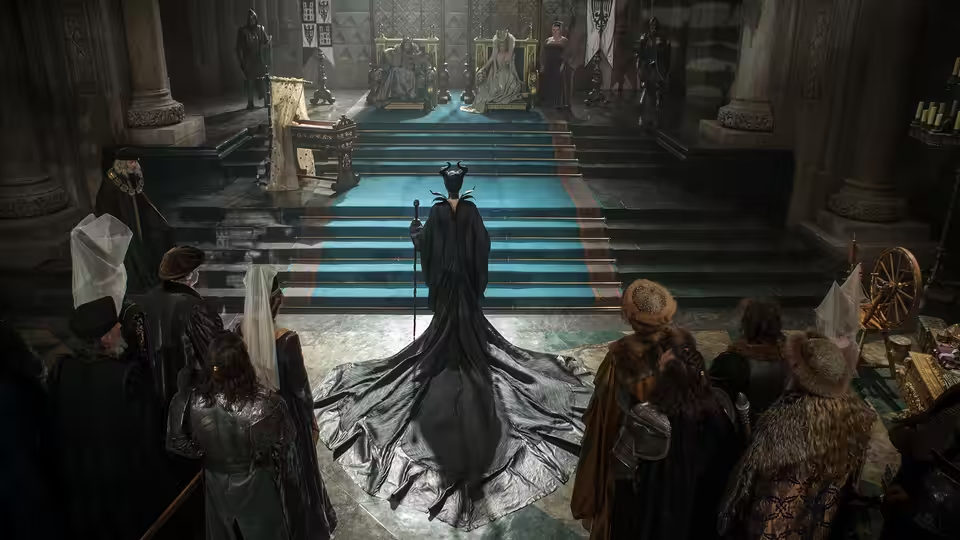
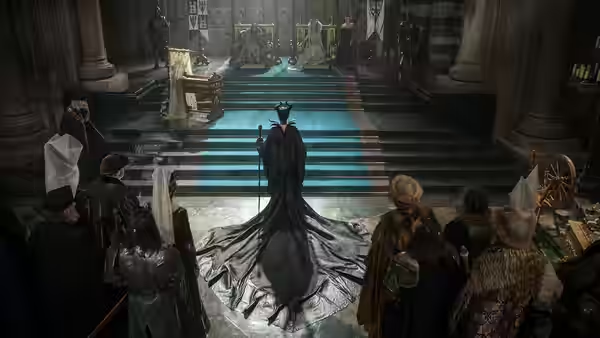
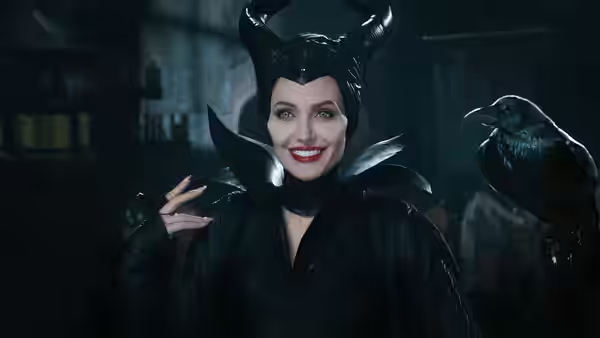
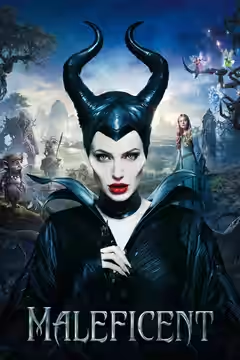
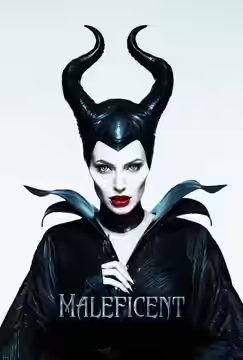
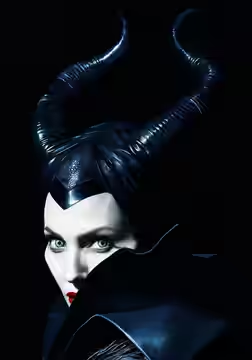
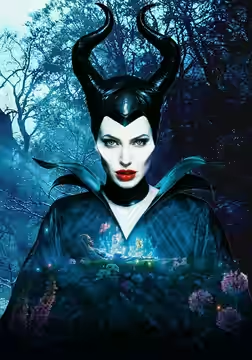
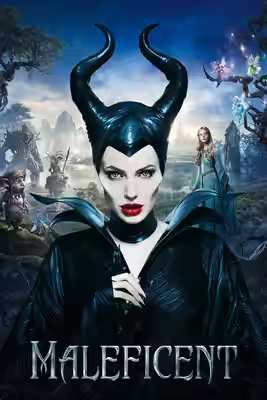
Angelina Jolie is the reason to watch and the film knows it. The cheekbones are built out with prosthetics until her face is a set of angles, the horns are bound in black leather, and she moves little but her eyebrows and her vowels. Her entrance at the christening is the best scene by a distance: she glides up the hall, bows to a frightened court, and delivers the curse in the tone of a hostess who regrets she cannot stay. Later she tells a baby to its face that she does not like children, and we laughed, surprised at how dry she is allowed to be.
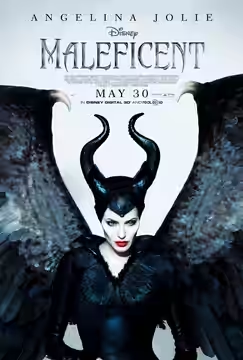
The other scene that works is the one that should not be in a PG film at all. Stefan (Sharlto Copley), the boy she loved, drugs her and cuts off her wings while she sleeps. Robert Stromberg holds on Jolie’s face as she wakes and finds them gone, and the noise she makes is not a fairy-tale noise; it is a woman discovering what has been done to her body. We were shaken. It is the one moment the film has the nerve to be about what it says it is about, and the script never goes back there.
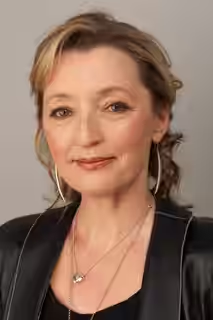
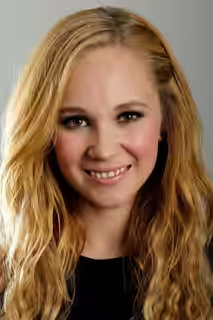
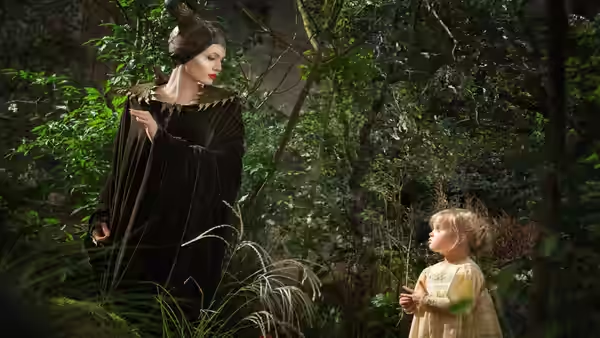
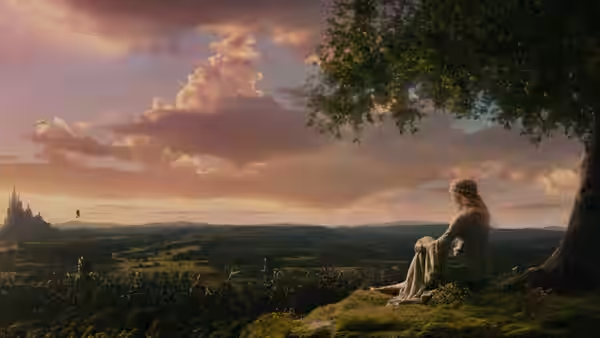
Stromberg designed the world of Avatar (2009) before he directed anything, and it shows both ways. Gary Freeman and Dylan Cole’s Moors are a lit garden of glowing pools, walking trees and mud creatures with faces. Dean Semler shoots them in a permanent late afternoon and King Henry’s castle in slate blue, so you always know which side of the border you are on. Jane Clive and Anna B. Sheppard give Jolie high black collars and horns wrapped in leather that look handmade rather than rendered. The failure is the three pixies. Imelda Staunton, Lesley Manville and Juno Temple are shrunk by the effects to the size of starlings with their own faces pasted on, and spend what feels like a quarter of the film squabbling in a cottage. We were bored there, and it was the particular boredom of watching good actors wasted.
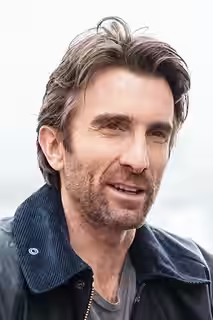
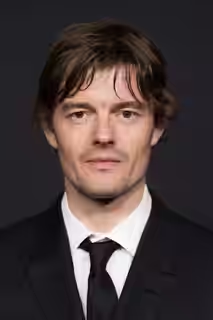
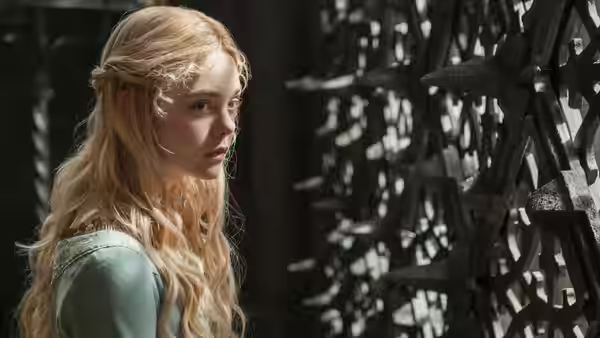
The structure is the deeper problem. Chris Lebenzon and Richard Pearson cut sixteen years into a montage and the story into blocks that do not join. Copley is asked to play a king going mad and given three scenes to do it in, so he shouts in a Scottish accent at things off screen. Elle Fanning’s Aurora is sunny and has no other quality. Brenton Thwaites’s Phillip rides in on a horse and is at once the butt of a joke about princes. Sam Riley’s Diaval, a raven given a man’s shape who resents every other animal he is turned into, is the best supporting turn. James Newton Howard supplies a choir for the Moors and a swelling theme for the wings, pleasant throughout and loud at the finish.
The 1959 Maleficent frightened children because she had no reason. Woolverton wrote Beauty and the Beast (1991) and knows how to make a monster lovable, and that is what goes wrong here: she does it again, and the film is left with a villain nobody is allowed to enjoy and an antagonist nobody feared in the first place. The last twenty minutes do pick up, and we felt the lift, for reasons we will not describe.
Take a child who knows the cartoon. They will like the Moors and the eyebrows and ask you on the way home why the bad lady was nice. The film had 97 minutes to answer that and spent them changing the subject.