Pablo Larraín closes his run of films about famous women with the most handsome and the coldest. Angelina Jolie is composed and exact as Callas, Edward Lachman lights her like a painting, and the film keeps her behind glass for two hours.
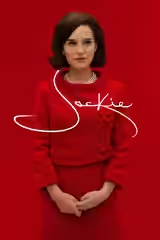
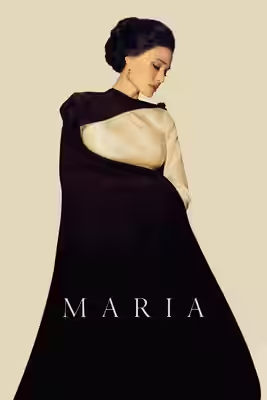
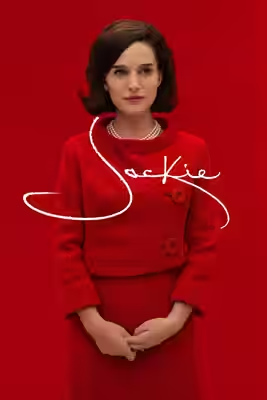
Pablo Larraín has done this twice before. Jackie (2016) gave Natalie Portman a few days after Dallas; Spencer (2021) gave Kristen Stewart a Christmas at Sandringham. Maria gives Angelina Jolie the last week of Maria Callas’s life, in a Paris flat in September 1977, with a butler, a housekeeper, a piano and a great many pills. It is the best-looking of the three and the least alive. We admired it for two hours and were never once sure it wanted us any closer.
The setup is simple. Callas has not sung in public for years. She is trying again, in a rehearsal room with the pianist Jeffrey Tate (Stephen Ashfield), and she is being interviewed at length by a young man with a camera crew (Kodi Smit-McPhee) who introduces himself as Mandrax. Mandrax is also the name on her pill bottles, and Steven Knight’s script makes sure we notice. That is the film’s method throughout: a good idea, then a line of dialogue to explain it.
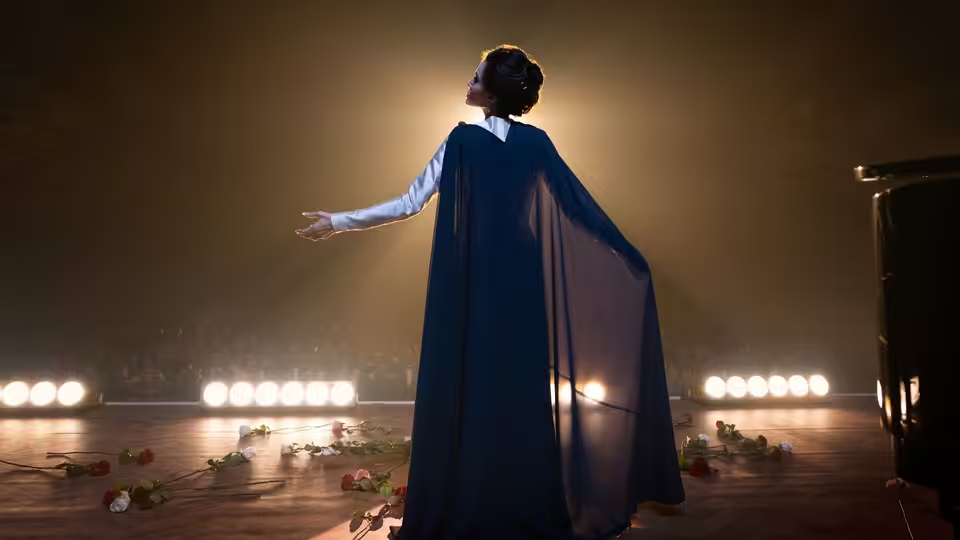
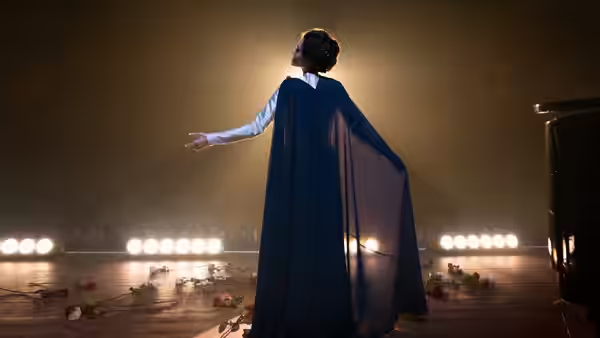
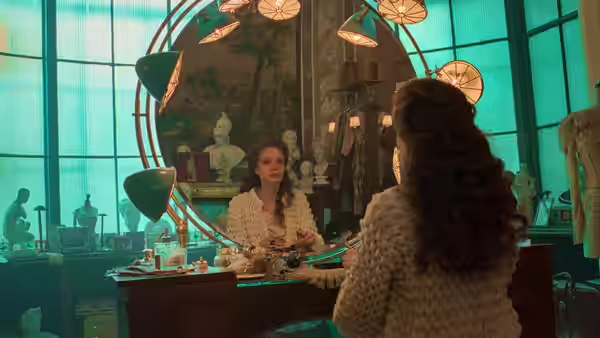
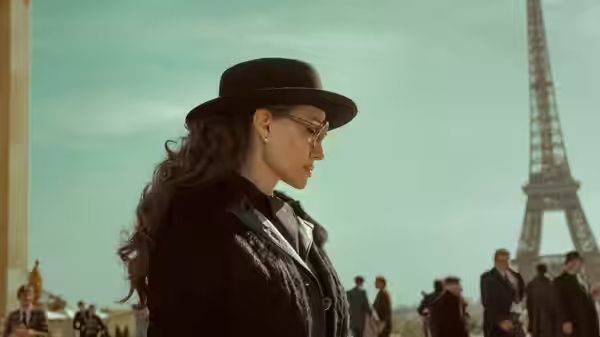
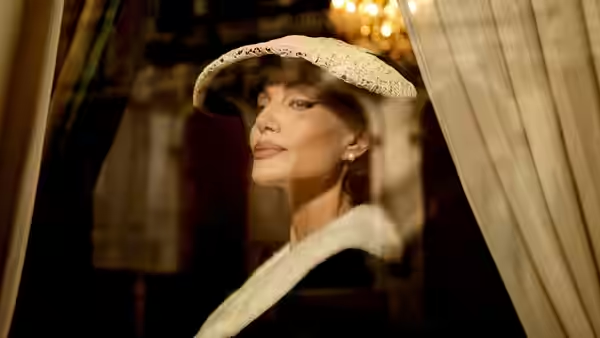
What is on screen is often lovely. Edward Lachman shoots the flat in low autumn light, brown and gold, curtains half drawn, and the streets of Paris in the same colours, so that the whole city seems to be indoors. When Callas walks out and imagines an orchestra playing for her under the trees, or a chorus singing to her in the rain, Lachman shoots the vision as plainly as breakfast, and the plainness is the point. Guy Hendrix Dyas fills the flat with things worth looking at, and Massimo Cantini Parrini dresses Jolie in coats and hats and dark glasses that do half the acting for her. She looks, at every moment, like someone who expects to be photographed.
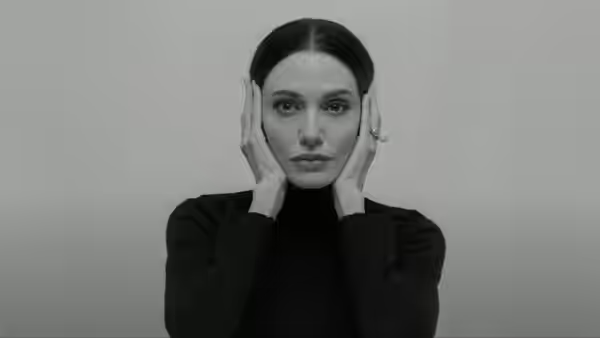
Jolie is careful, controlled and often good. She lowers her voice, slows her walk, and gives the staff instructions in the tone of a woman who has never been refused. The best of her is in the small dry cruelties: the correction of a waiter, the refusal to eat, the piano moved from one room to another because she has decided so. What she does not do, or is not asked to do, is let anything crack. The singing is the voice of Callas herself on record, with Jolie mouthing to it and, in the rehearsal scenes, a weaker sound laid in. The rehearsals work, because the voice is meant to fail. The flashbacks to her prime work less well, because we can see the join.
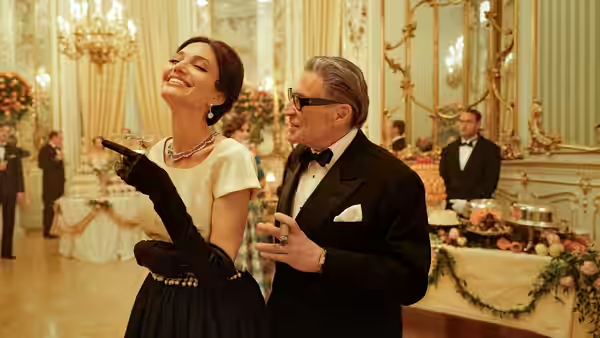
The warmth is downstairs. Pierfrancesco Favino, as Ferruccio, moves the piano, hides the pills and watches her with the patience of a man who has done both for a long time. Alba Rohrwacher’s Bruna cooks meals nobody eats and tells the truth when nobody else will. Every scene with the two of them has more feeling in it than any scene with Onassis (Haluk Bilginer, a charming bully in the flashbacks), and we suspect Larraín knows it, because he keeps going back to them. Caspar Phillipson turns up for one scene as John F. Kennedy, which is the kind of thing that happens in these films.
We were moved once, and it was not by anything Knight wrote. About an hour in, a recording of Callas in her prime plays over Jolie’s face as she listens to it, and the gap between the sound and the woman did in forty seconds what the film had been trying to do all along. Then it was gone, and we were back to the rehearsal room, the pills, the interview and the walk, and by the ninetieth minute we had seen that cycle enough times to know it was the structure. Sofía Subercaseaux cuts slowly and lets scenes sit past the point where they have said their piece. We were not bored, exactly. We were waiting for the film to want something.
Jackie was furious and Spencer was frightened, and both films let us feel it. Maria is tired, which is fair to its subject, but Larraín treats the tiredness as something to admire rather than something to get inside. The real Callas, on the recordings the film uses so well, could not sing a note without meaning it. The film around her has its meanings written down and read aloud.
See it for Lachman and Favino, for the coats, and for the voice, which is the reason any of this exists. Then go and find the records. It runs 123 minutes and carries a 12A.