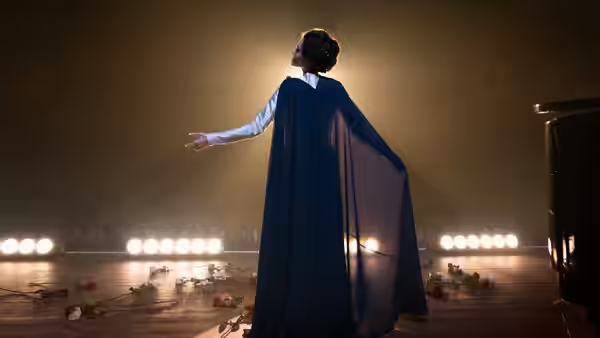
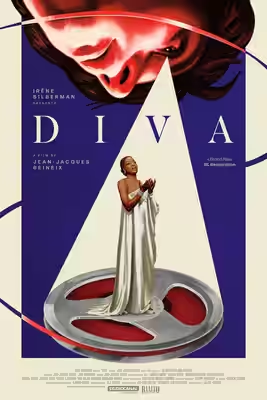
a woman in a blue cape stands with arms open on a rose-strewn stage
Film review

Maria

2024 · Directed by Pablo Larraín · 2h 03m · Derzhkino 16+

In a sentenceThe furniture is moved daily, the pills are taken hourly, and the voice on the record is the only one allowed to feel anything

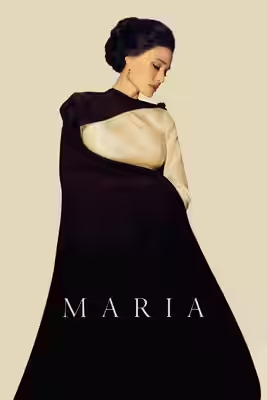
Paris, September 1977. Maria Callas (Angelina Jolie) has not sung in public for years and lives in a large flat with her butler Ferruccio (Pierfrancesco Favino), her housekeeper Bruna (Alba Rohrwacher) and a supply of pills. She is rehearsing again, in private, with the pianist Jeffrey Tate (Stephen Ashfield), and giving interviews to a young television reporter (Kodi Smit-McPhee) who may or may not be there. Between the rehearsals the film goes back through her life: a girlhood in wartime Greece with her sister Yakinthi (Valeria Golino), the years with Aristotle Onassis (Haluk Bilginer), the nights when the voice did what she asked of it. Pablo Larraín directs from a script by Steven Knight.

Plays from YouTube when you press play; nothing loads from them until then.

Fi1m review

Pablo Larraín closes his run of films about famous women with the most handsome and the coldest. Angelina Jolie is composed and exact as Callas, Edward Lachman lights her like a painting, and the film keeps her behind glass for two hours.

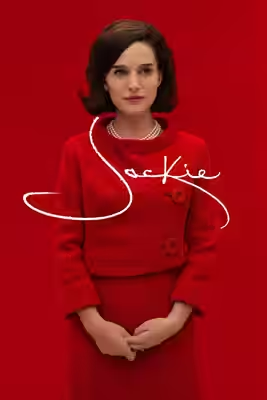
Pablo Larraín has done this twice before. Jackie (2016) gave Natalie Portman a few days after Dallas; Spencer (2021) gave Kristen Stewart a Christmas at Sandringham. Maria gives Angelina Jolie the last week of Maria Callas’s life, in a Paris flat in September 1977, with a butler, a housekeeper, a piano and a great many pills. It is the best-looking of the three and the least alive. We admired it for two hours and were never once sure it wanted us any closer.

The setup is simple. Callas has not sung in public for years. She is trying again, in a rehearsal room with the pianist Jeffrey Tate (Stephen Ashfield), and she is being interviewed at length by a young man with a camera crew (Kodi Smit-McPhee) who introduces himself as Mandrax. Mandrax is also the name on her pill bottles, and Steven Knight’s script makes sure we notice. That is the film’s method throughout: a good idea, then a line of dialogue to explain it.

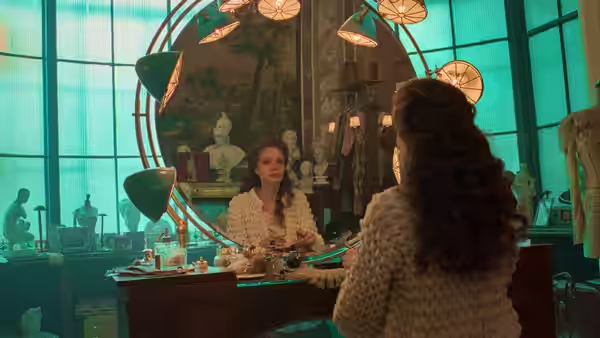
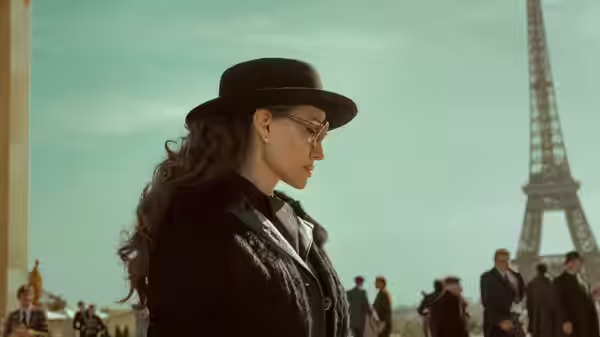
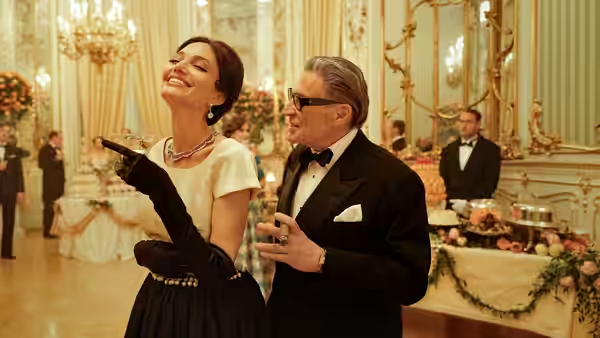
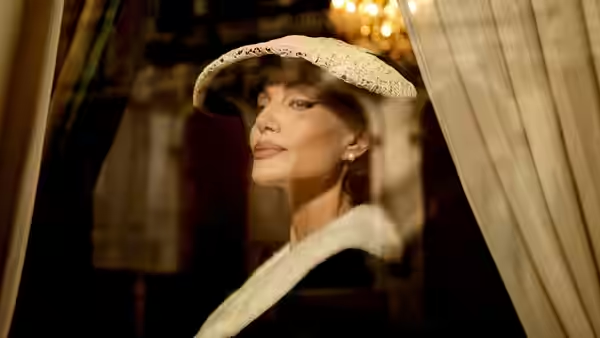
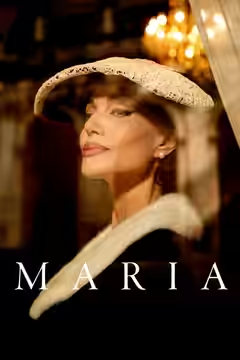
What is on screen is often lovely. Edward Lachman shoots the flat in low autumn light, brown and gold, curtains half drawn, and the streets of Paris in the same colours, so that the whole city seems to be indoors. When Callas walks out and imagines an orchestra playing for her under the trees, or a chorus singing to her in the rain, Lachman shoots the vision as plainly as breakfast, and the plainness is the point. Guy Hendrix Dyas fills the flat with things worth looking at, and Massimo Cantini Parrini dresses Jolie in coats and hats and dark glasses that do half the acting for her. She looks, at every moment, like someone who expects to be photographed.

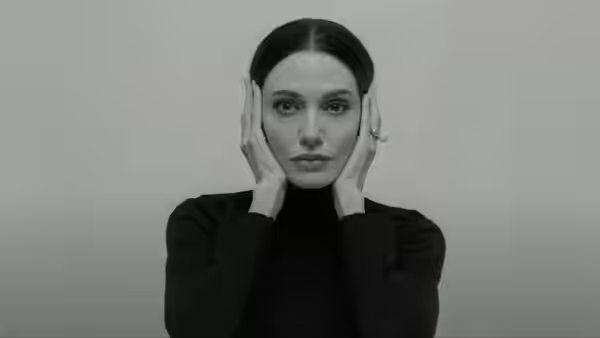
Jolie is careful, controlled and often good. She lowers her voice, slows her walk, and gives the staff instructions in the tone of a woman who has never been refused. The best of her is in the small dry cruelties: the correction of a waiter, the refusal to eat, the piano moved from one room to another because she has decided so. What she does not do, or is not asked to do, is let anything crack. The singing is the voice of Callas herself on record, with Jolie mouthing to it and, in the rehearsal scenes, a weaker sound laid in. The rehearsals work, because the voice is meant to fail. The flashbacks to her prime work less well, because we can see the join.

The warmth is downstairs. Pierfrancesco Favino, as Ferruccio, moves the piano, hides the pills and watches her with the patience of a man who has done both for a long time. Alba Rohrwacher’s Bruna cooks meals nobody eats and tells the truth when nobody else will. Every scene with the two of them has more feeling in it than any scene with Onassis (Haluk Bilginer, a charming bully in the flashbacks), and we suspect Larraín knows it, because he keeps going back to them. Caspar Phillipson turns up for one scene as John F. Kennedy, which is the kind of thing that happens in these films.

We were moved once, and it was not by anything Knight wrote. About an hour in, a recording of Callas in her prime plays over Jolie’s face as she listens to it, and the gap between the sound and the woman did in forty seconds what the film had been trying to do all along. Then it was gone, and we were back to the rehearsal room, the pills, the interview and the walk, and by the ninetieth minute we had seen that cycle enough times to know it was the structure. Sofía Subercaseaux cuts slowly and lets scenes sit past the point where they have said their piece. We were not bored, exactly. We were waiting for the film to want something.

Jackie was furious and Spencer was frightened, and both films let us feel it. Maria is tired, which is fair to its subject, but Larraín treats the tiredness as something to admire rather than something to get inside. The real Callas, on the recordings the film uses so well, could not sing a note without meaning it. The film around her has its meanings written down and read aloud.

See it for Lachman and Favino, for the coats, and for the voice, which is the reason any of this exists. Then go and find the records. It runs 123 minutes and carries a 12A.

Critical consensus AI synthesised

59
Positive
8
Mixed
6
Negative
4

The reviews split widely, from warm four-star notices to outright dismissals, and the argument is nearly always about temperature. Most critics agree that Angelina Jolie is the reason to watch, praising her poise, her diction and the way she keeps Callas’s fragility visible under the grandeur; The Telegraph and Empire go furthest, calling it her best work in many years. Praise also clusters on the look of the film, Ed Lachman’s photography of 1970s Paris, the costumes and production design, and the decision to let Callas’s own recordings carry the music.

The reservations cluster just as tightly. A large minority find the film chilly and bloodless, held at a remove, with Larraín so respectful of Callas’s imperious surface that her fury never gets in. The Los Angeles Times and RogerEbert.com are harshest, the latter finding it stiff and self-important with little to say about opera or its subject. Even admirers concede the pace is stately and the shape familiar from Larraín’s earlier biopics.

Little White Lies
9 January 2025 · 3/4/4 · Hannah Strong
80

Jolie has never been better, and Larraín and Knight capture Callas’ flighty nature and vulnerability with sensitivity and grace in an elegant biographical drama that is ultimately a love story.

Read the full review →
The Independent
9 January 2025 · festival review
80*

The critic describes the film as the softer, more restrained conclusion to Larraín’s trilogy of biopics about 20th-century women, focusing on Maria Callas’s final days and her internal struggles rather than external drama. Angelina Jolie’s performance is singled out as career-defining and deeply empathetic, capturing the character’s humanity, fragility, and command.

Read the full review →
The Telegraph
9 January 2025 · ★★★★ · Robbie Collin
80

Jolie gives her finest performance in at least 15 years as Callas in her final week, dazzling with regal glamour while the film focuses on her outliving her career. The biopic doubles down on her star power in a rich biographical role.

Read the full review →
Time Out
28 August 2024 · ★★★★ · Kaleem Aftab
80

Jolie delivers a strong, talk-of-the-town performance in this classy, enjoyable biopic that offers a loving and affectionate portrait of Callas without airbrushing her foibles.

Read the full review →
Screen Daily
29 August 2024 · festival review
70*

Jolie hits the notes as Callas in Larraín’s latest biopic, which is more than a standard biopic yet not a radical retake; expect acting and craft awards attention for its beautifully lit, costume-driven impersonation and performance.

Read the full review →
Sight and Sound
16 September 2024 · festival review
60*

The biopic is reverential in its portrayal of Callas but Jolie’s regal performance lacks the vibrant personality seen in documentary footage, though the craft, supporting cast and production design are praised.

Read the full review →

Straight answers AI written, from our review

Is Maria worth watching?
Maria is worth watching mainly for its look and its supporting cast, and we scored it 57. Angelina Jolie is composed and exact as Callas, Edward Lachman lights her Paris flat like a painting, and Pierfrancesco Favino and Alba Rohrwacher supply the warmth downstairs, but the film keeps its subject behind glass for two hours. Admirers of Callas and of Larraín's earlier portraits will get the most from it.
How long is Maria, and what is it rated?
Maria runs 2h 03m and is rated 16+ by the Derzhkino in Ukraine. It is a history and drama film.
Where can I watch Maria in Ukraine?
Maria is not on any streaming or rental service in Ukraine at the moment. It is available in 34 other countries; change your country at the top of the page to see where. Availability is checked daily.
How violent or frightening is Maria, and is it suitable for children?
Maria carries a 12A in the UK and contains no violence to speak of; its adult material is a woman's decline, a supply of pills taken hourly and the sadness of a voice that no longer obeys her. Nothing in it is frightening, and older children could sit through it, though at 123 slow minutes most would rather not.
How does Maria compare to Sunset Boulevard?
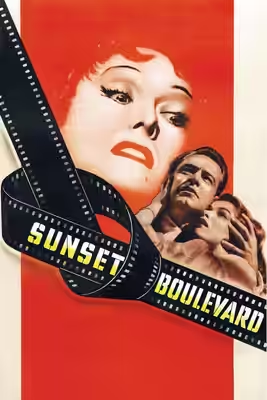
Maria and Sunset Boulevard are both about a faded star, a grand house and the staff who keep the story going, and Billy Wilder's film is the better of the two by some distance. Sunset Boulevard is funny, frightening and merciless; Maria is handsome, tired and cold, admiring its subject from a respectful distance. Watch Wilder for the drama and Larraín for the coats, the light and the Callas recordings.
What should I watch after Maria?
After Maria, try Jackie (2016, Fi1m 80): Larraín’s first widow in a big house, and the one with the anger in it. Then Sunset Boulevard (1950, Fi1m 91): The great film about a star, a house and the staff who keep the story going; and Diva (1981, Fi1m 80): A stolen recording of an opera singer sets Paris running; the voice matters here too.

Cast

Awards

Celebration of Cinema and Television, 2024

Won
Celebration of Cinema and Television

Venice Film Festival, 2024

Nominated
Golden Lion

If you liked this, try…

  1. Jackie (2016, Fi1m 80)Larraín’s first widow in a big house, and the one with the anger in it.

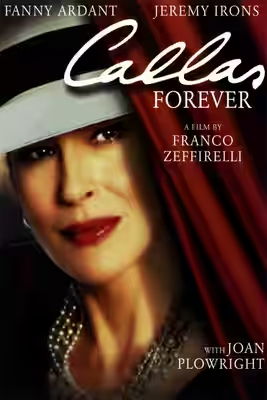
  2. Callas Forever (2002) · not reviewed yetZeffirelli, who knew her, imagines her last comeback; Fanny Ardant is less careful than Jolie.

  3. Maria by Callas (2018) · not reviewed yetThe documentary, in her own words and voice, with none of the furniture.

  4. Sunset Boulevard (1950, Fi1m 91)The great film about a star, a house and the staff who keep the story going.

  5. Diva (1981, Fi1m 80)A stolen recording of an opera singer sets Paris running; the voice matters here too.

Free account

Know what to watch tonight

Two lists that know where things are streaming, collections you can share, your own score beside ours, and Discover that remembers what you have seen.

  • Want to see, sorted by what is streaming now
  • Seen, with your score out of ten
  • No adverts, ever