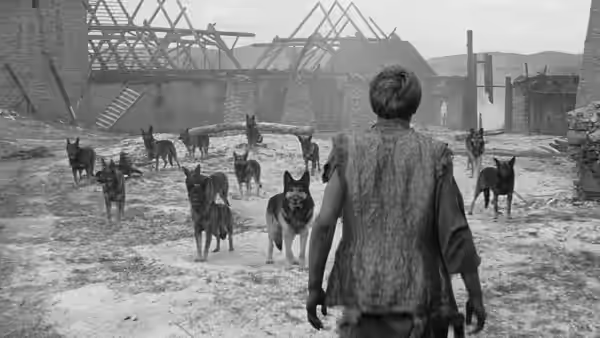
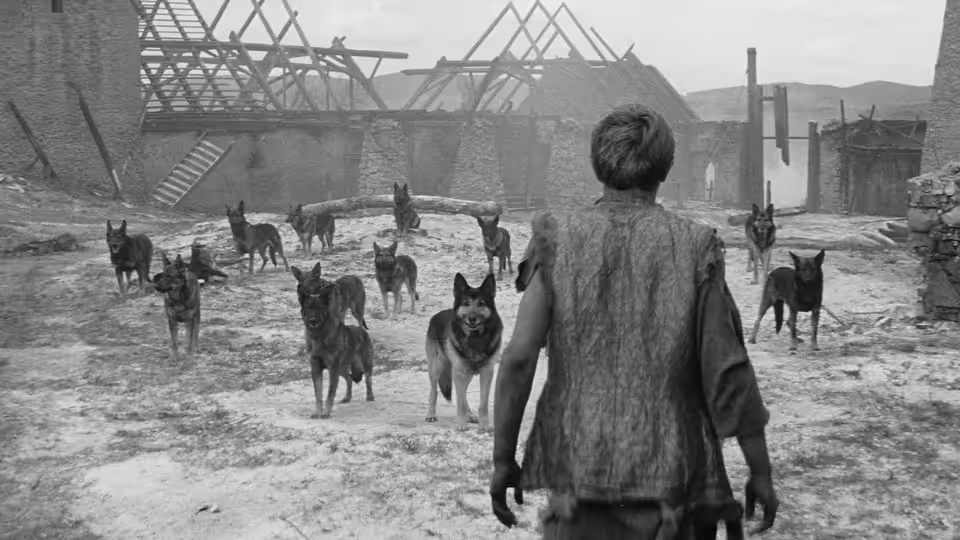
A man stands with his back to a pack of dogs outside an industrial structure
Film review

Marketa Lazarová

1967 · Directed by František Vláčil · 2h 46m

In a sentenceThe family tree needs its own interval, but we could stare at these black-and-white images all evening

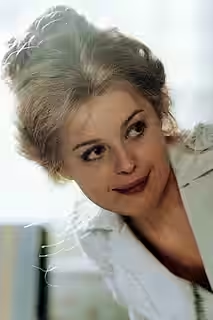
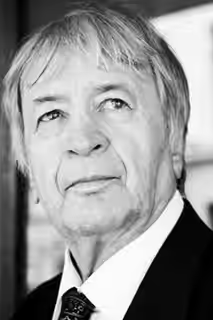
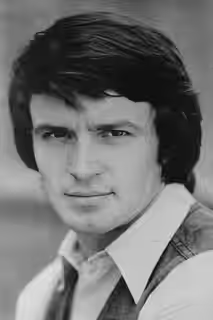
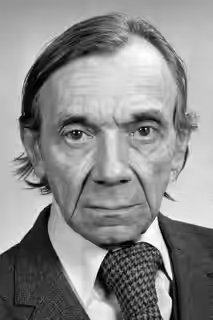
Marketa Lazarová (Magdaléna Vášáryová) is the daughter of Lazar (Michal Kožuch), whose rival is Kozlík (Josef Kemr). Kozlík’s family includes his wife Kateřina (Naďa Hejná), his sons Mikoláš (František Velecký) and the one-armed Adam (Ivan Palúch), and his daughter Alexandra (Pavla Polášková). Kristián (Vlastimil Harapes) is the son of the Bishop of Hennau, with Reiner (Zdeněk Kutil) serving as the bishop’s valet. Fathers, sons and daughters populate a historical drama built around the rivalry between Lazar and Kozlík.

Fi1m review

Marketa Lazarová is a demanding, absorbing historical drama, with black-and-white photography worth the effort of untangling its rival families. František Vláčil sometimes makes that effort harder than it needs to be.

Marketa Lazarová is worth a concentrated evening, provided we can accept that its storytelling will sometimes defeat us. František Vláčil directs and shares the screenplay credit with František Pavlíček, adapting a novel by Vladislav Vančura. The result is a historical drama with an arresting physical presence and a stubborn tendency to lose us among its rival families. At 166 minutes, that is a substantial request for patience, but the images and performances earn it more often than not.

Magdaléna Vášáryová, as Lazar’s daughter, gives us someone to care about while we are still getting our bearings. Michal Kožuch’s Lazar and Josef Kemr’s Kozlík make their rivalry feel bitter enough to matter without requiring us to enjoy either man’s company. František Velecký, playing Kozlík’s son Mikoláš, adds to the film’s sense of people we cannot comfortably predict. We believe in the families before we have properly sorted them out, which is a considerable achievement by the cast, though it puts a good deal of responsibility on them.

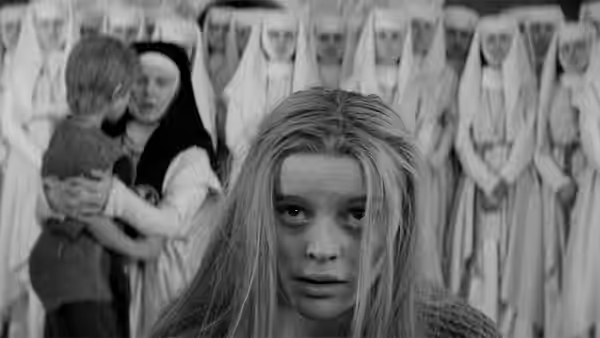
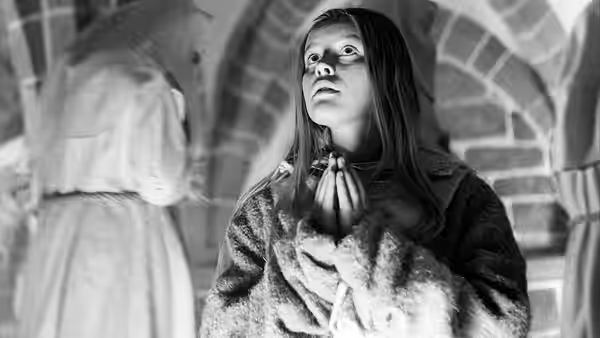
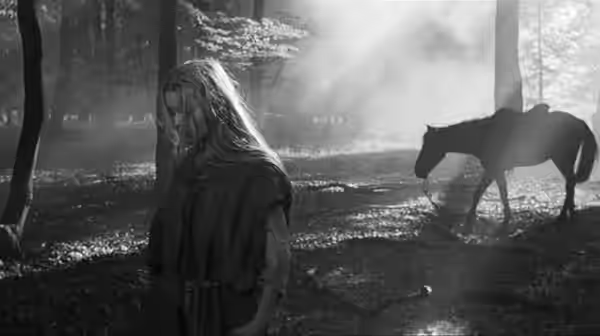
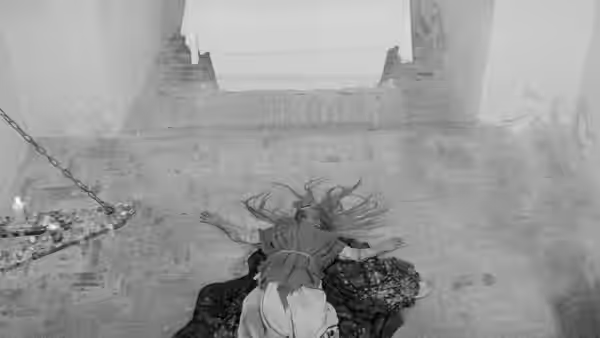
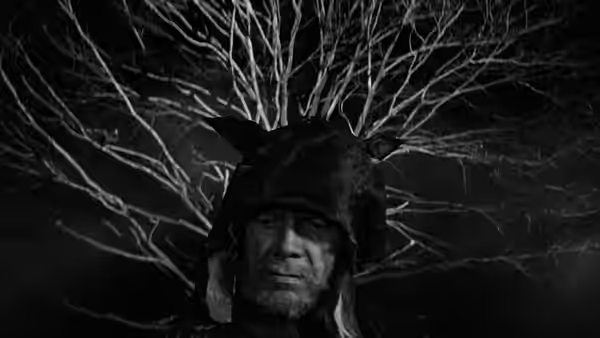
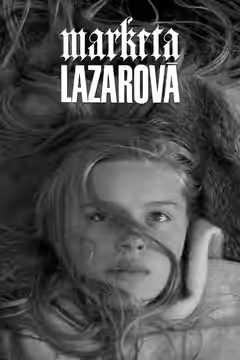
Bedřich Baťka’s black-and-white photography supplies the strongest reason to stay attentive. We were unsettled by the glare in the brightest images; even the sunlight feels inhospitable. The force of that reaction matters, because historical films can make hardship look comfortably remote, something arranged for us to inspect. Here the brightness is abrasive enough to prevent that distance, and the images remain compelling even when we cannot confidently explain how the people within them are connected.

Oldřich Okáč’s production design deserves much of the credit for how persuasive this world feels. The surroundings feel inhabited, and the care taken over them helps establish a life beyond the immediate family quarrel. Zdeněk Liška’s music also helps hold our attention through the narrative’s more difficult stretches, giving us something to respond to when explanations are scarce. Neither contribution solves the confusion, but both make continuing to watch feel like a pleasure rather than a dutiful attempt to keep up.

The qualification is Miroslav Hájek’s editing, which gives the film much of its restless energy and also makes it needlessly difficult to follow. Changes of style can be exciting, but there are passages when we are too occupied with reconstructing the story to respond to it. František Vláčil seems willing to accept that cost more often than we are. The praise for the film’s disorientation needs that caveat: feeling lost is sometimes absorbing, and sometimes it simply means a scene has not communicated enough.

Historical drama often helps us along by explaining everyone’s loyalties, and we did occasionally miss that courtesy. Even so, we recommend this one warmly: the people and their surroundings stay convincing through the muddles, and the photography rewards close attention. Do not start it as background to a busy evening. Give it the time, with no promise that every question will be answered.
Critical consensus AI synthesised

78
Positive
3
Mixed
2
Negative
0

With only 5 reviews in so far, the consensus leans positive, with praise clustering around the film’s forceful black-and-white imagery, meticulously crafted world and disorienting style. The fullest accounts describe a demanding film whose visual intensity rewards the effort. Reservations centre on narrative clarity: Slant Magazine finds that the restless form sacrifices coherence, while The AV Club regards the sprawl and disorientation as reasons to return rather than give up. Two entries lack recoverable verdicts, so the apparent spread of opinion needs caution: the available criticism establishes enthusiasm more clearly than dissent.

Los Angeles Times
30 June 2013 · Sheri Linden
90*

Linden regards the film as a radical, timeless masterwork. She praises its visceral black-and-white imagery and immersive, meticulously crafted world.

Read the full review →
Slant Magazine
23 February 2014 · ★★★½/4 · Jordan Cronk
88

Cronk regards the film as a singular, challenging achievement whose disorienting form sacrifices narrative coherence. He praises its tactile visual world and restless, immersive energy.

Read the full review →
The AV Club
19 June 2013 · B+ · Sam Adams
83

Adams finds the film sprawling and disorienting but ultimately worth repeated viewings. He praises its stunning, sun-blasted imagery and the mind-altering effect of its shifting style.

Read the full review →
The New York Times
30 August 1974
65*

The available page does not expose the critic’s verdict. It provides no details about what the review praises or criticizes.

Read the full review →
Time Out
· NB
65*

The available page framing calls it an epic medieval meditation, but the critic’s overall verdict cannot be recovered from the accessible text. It highlights the adaptation of a supposedly unfilmable novel, though the excerpt ends before further praise or criticism.

Read the full review →

Straight answers AI written, from our review

Is Marketa Lazarová worth watching?
Marketa Lazarová is worth watching for patient viewers drawn to demanding historical drama, and we score it 84 out of 100. Its black-and-white photography and convincing performances reward close attention, but the rival families and restless editing can make the story needlessly difficult to follow across 166 minutes.
How long is Marketa Lazarová, and what is it rated?
Marketa Lazarová runs 2h 46m. It is a drama and history film.
Where can I watch Marketa Lazarová in Ireland?
Marketa Lazarová is not on any streaming or rental service in Ireland at the moment. Availability is checked daily.
Is Marketa Lazarová based on a true story or a book?
Marketa Lazarová is adapted from a novel by Vladislav Vančura, with the screenplay credited to František Vláčil and František Pavlíček. We recommend it without requiring familiarity with the book, though the film’s tangled family relationships can be hard to follow; we make no claim about how faithfully it follows the novel.

Cast

If you liked this, try…

  1. Andrei Rublev (1966, Fi1m 86)Another demanding historical film that makes spiritual doubt feel painfully physical.

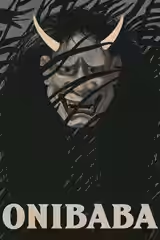
  2. Onibaba (1964) · not on Fi1m yetFor bodies, fear and a landscape that offers nobody much shelter.

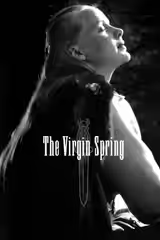
  3. The Virgin Spring (1960) · not on Fi1m yetFor the same unwillingness to make faith or violence comfortably remote.

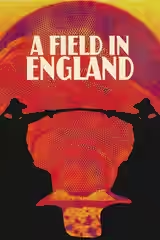
  4. A Field in England (2013) · not on Fi1m yetA shorter, stranger journey through history, with little interest in helpful explanations.

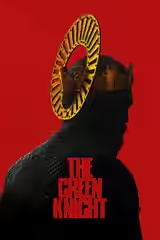
  5. The Green Knight (2021) · not on Fi1m yetFor a medieval journey that makes uncertainty part of the pleasure.