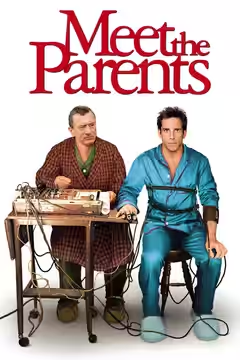
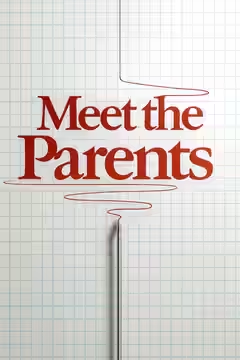
Meet the Parents is a sharply acted comedy of embarrassment, with Ben Stiller and Robert De Niro making familiar material painfully funny. The escalating mishaps are less persuasive than the simple business of seeking approval.
Meeting a partner’s parents can make a competent adult feel unfit to answer a simple question. Jay Roach builds Meet the Parents around that anxiety, and the result is funny enough to survive some increasingly forced mishaps. Ben Stiller and Robert De Niro supply the main pleasure, making a familiar family ordeal uncomfortable in different ways. The film is worth an evening, especially for anyone who remembers trying too hard to be liked.
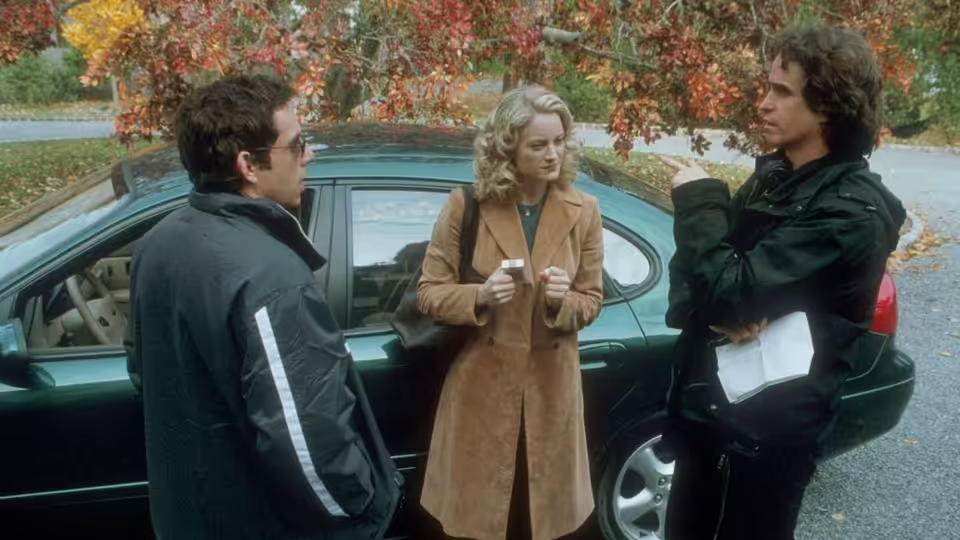
Ben Stiller gives Greg Focker the earnestness the film needs: he wants approval, and he cannot stop showing how much. His embarrassment remains recognisable even when the circumstances become contrived. The first family dinner made us laugh and wince in almost equal measure. What caught us was Greg’s effort to please and Jack’s unwillingness to make that effort any easier. The performance keeps us sympathetic to a man whom the screenplay is constantly arranging to humiliate.
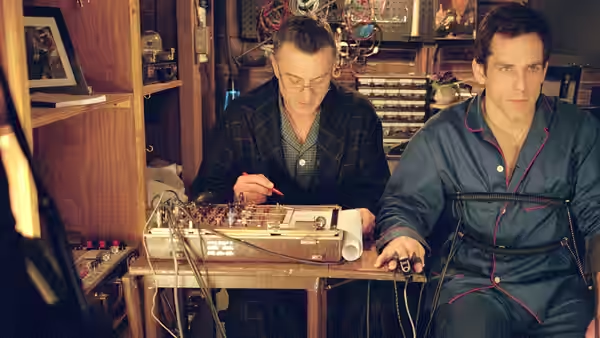
Robert De Niro plays Jack Byrnes as though his suspicions are entirely reasonable, which gives the comedy its bite. He offers Greg so little encouragement that ordinary courtesy begins to feel like a test. Jay Roach allows that controlled performance to set the pace, trusting us to find Jack funny without making him advertise the joke. The exchanges work because both actors take the wish to impress, and the power to withhold approval, seriously.
Peter James’s cinematography keeps the performances easy to read and avoids making a visual fuss over the embarrassment. Rusty Smith’s production design gives the family surroundings a respectability that makes Greg’s struggle to fit in seem more awkward. The dinner needs to remain a recognisable social occasion for Jack’s scrutiny to be funny, and the setting does its job. There is little to distract us from the people making one another uncomfortable.
The timing is helped by editors Greg Hayden and Jon Poll, who give the awkwardness room to develop before moving things along. That patience matters: Greg’s discomfort has to become ours before another difficulty arrives. Randy Newman’s music is less essential to the effect, sometimes giving the comedy encouragement it scarcely needs. The performances already make the strain clear, and the rhythm of the exchanges does more to earn the laughter than an extra musical nudge.
The screenplay by John Hamburg and Jim Herzfeld is less dependable when it reaches for bigger farce, and the increasing contrivance begins to flatten Greg into a target. Teri Polo’s Pam Byrnes has less comic room than the men around her, leaving the romance rather thin. A comedy of manners needs us to recognise the behaviour even when it becomes ridiculous. The quieter exchanges manage that more often than the escalating mishaps.
The test for a comedy this familiar is whether we care about the person having such a wretched time. Here we do, largely because Ben Stiller gives Greg enough sincerity to keep the humiliations from becoming merely tiresome. Anyone who finds prolonged embarrassment exhausting may still want something gentler. For an evening shared with prospective in-laws, we suggest waiting until everyone has finished eating.