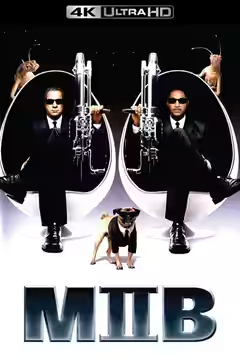
Will Smith supplies some welcome comic energy, but Barry Sonnenfeld’s sequel is too hurried and too short of ideas to justify the return. The occasional good joke cannot make its characters matter.
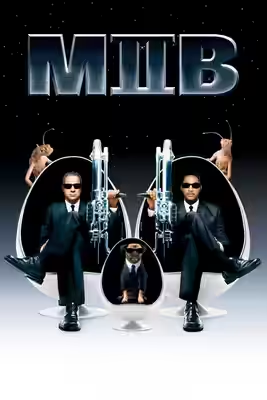
Barry Sonnenfeld’s Men in Black II offers enough intermittent amusement to make its shortcomings irritating. This is a science-fiction comedy that ought to have considerable freedom: absurdity is welcome, action need not obey everyday rules, and the performers can treat both with a straight face. Yet the film feels constrained by the need to deliver something familiar. We can enjoy individual jokes without finding much reason to follow the story between them, and that is where this sequel falls short.
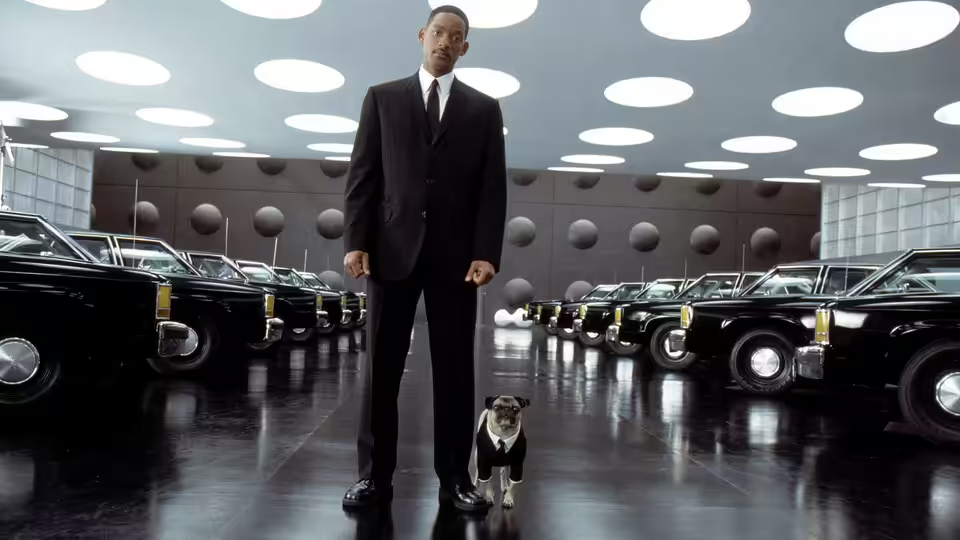
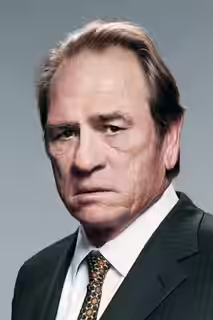
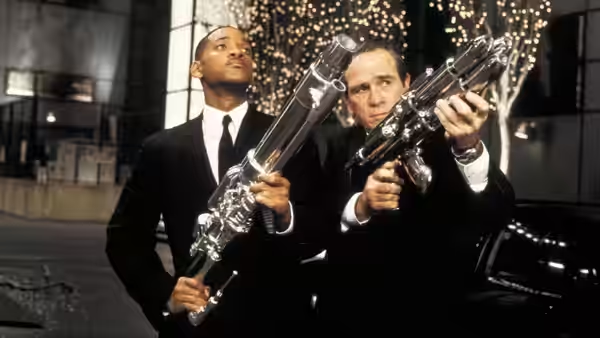
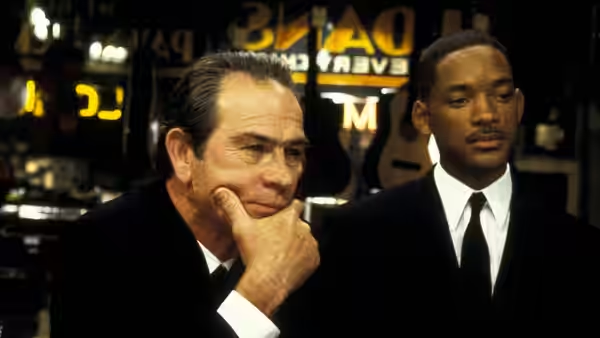
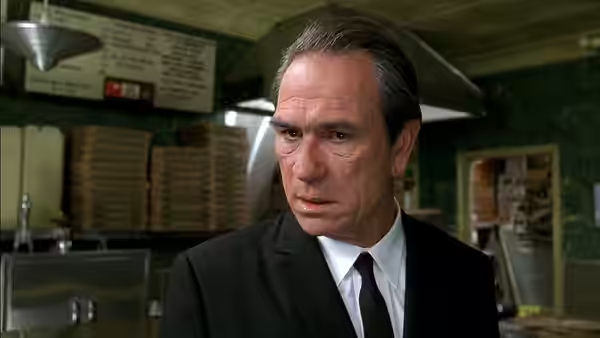
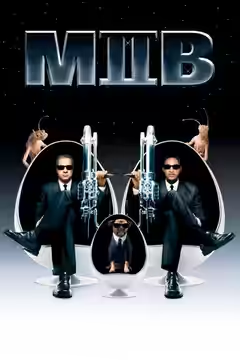
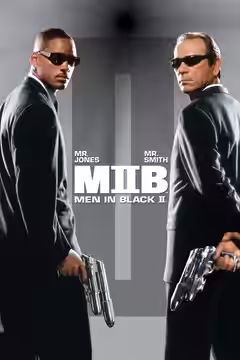
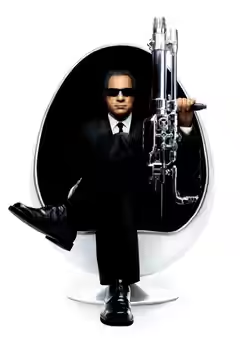
Will Smith does much of the work of keeping us interested. His Jay has the comic impatience the film needs, and we laughed at the exasperation in his delivery, which gives even slight material a little human friction. Tommy Lee Jones supplies the resistance as Kay, though their exchanges too often feel like an established routine being put through another rehearsal. The timing remains useful; the pleasure of wondering what either man might do next has largely disappeared.
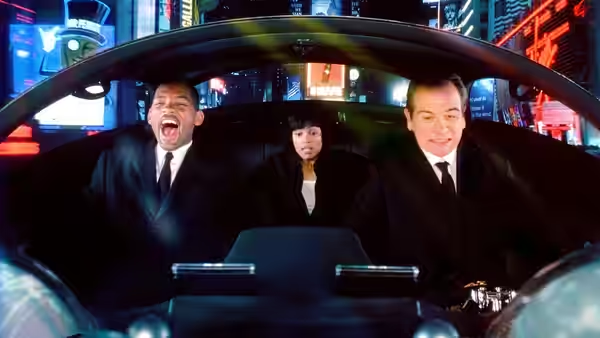
The screenplay by Robert Gordon and Barry Fanaro does not give that partnership enough fresh business. It is busy, but busyness is a poor substitute for developing a joke or letting a relationship become awkward in an interesting way. Lara Flynn Boyle’s Serleena and Rosario Dawson’s Laura Vasquez receive too little room to become characters whose next decision matters to us. Neither performance is the fundamental problem, although neither can make the thin writing feel sufficient.
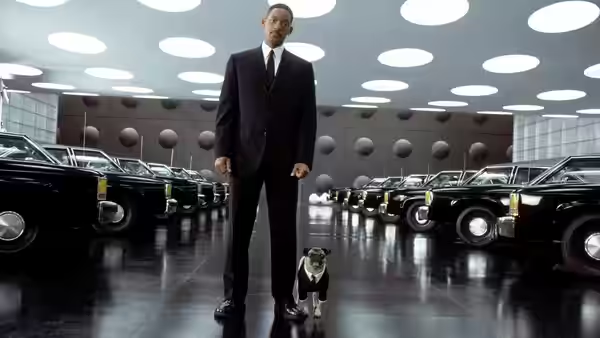
There is more to enjoy in the visual work. Greg Gardiner’s cinematography makes the action readable, though clarity alone cannot make us interested in its outcome. Bo Welch’s production design gives the science-fiction surroundings a welcome solidity, and the visual effects offer pleasures the writing does not consistently provide. These are worthwhile contributions, but the film moves through them with so little curiosity that looking closely can feel like more effort than it expects us to make.
Richard Pearson and Steven Weisberg’s editing keeps things moving, sometimes at the expense of allowing a comic exchange to settle. At 88 minutes, the film is hardly asking for a large commitment, yet the pace makes several jokes feel hurried rather than sharp. Danny Elfman’s music supplies some welcome lift without solving that problem. A comedy needs to trust the pause before a response, and this one too often seems anxious to get to the next piece of business.
Against the earlier film, the loss of surprise is difficult to overlook. A sequel cannot reasonably be expected to repeat the experience of discovering its characters, but it can find something else worth doing with them. Here the familiar comic habits are asked to carry material that needs more invention of its own. The result is watchable in patches, with effort visible in the performances and craft, but little sense that anyone has found a compelling reason for another story.
There is a particular audience for whom spending more time with Jay and Kay will be sufficient, and we would not begrudge them the occasional laugh. We would be less inclined to give this an evening simply because it is short. If these are new faces, this is a poor introduction.