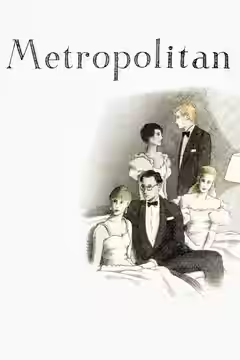
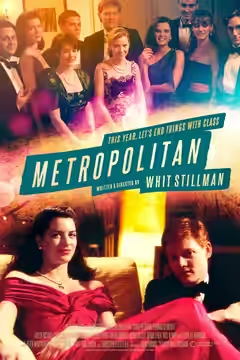
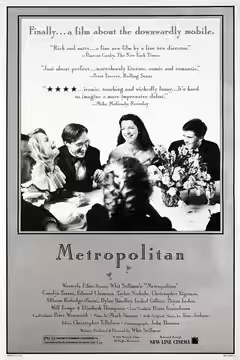
Whit Stillman’s debut is a funny, affectionate comedy about privileged young New Yorkers with plenty to say about themselves. Its later romantic plotting feels forced, but the dialogue and ensemble make it well worth an evening.
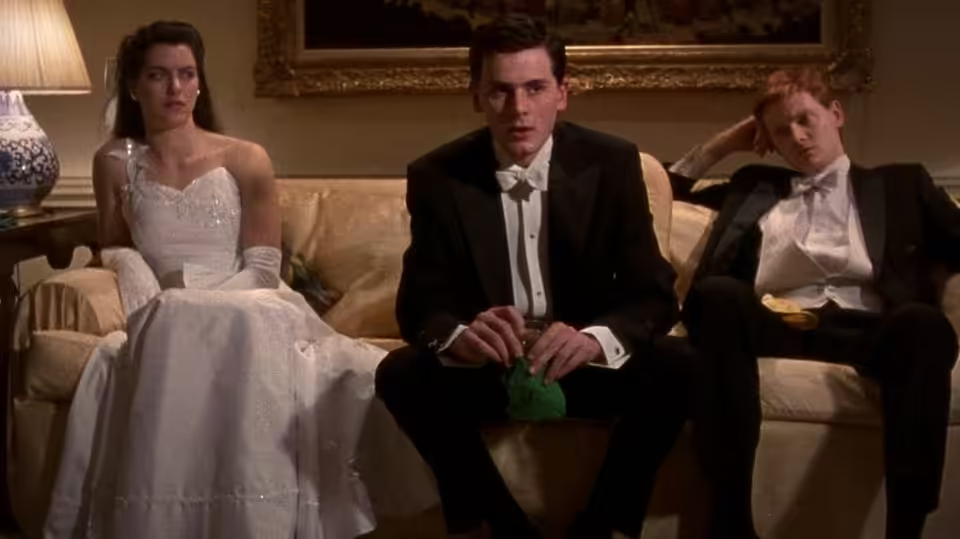
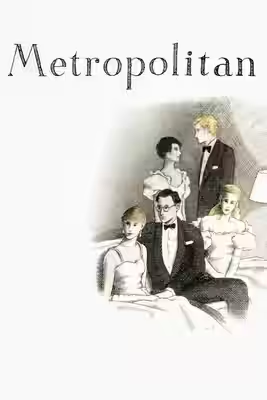
The privileged young New Yorkers in Metropolitan are worried about their place in society, and Whit Stillman takes the worry seriously. His debut is a warm, sharply written comedy, and we recommend it despite the strained romance that develops later on. During Manhattan’s Christmas debutante season, the characters attend balls and then talk, with an earnestness that would be easier to bear if they were discussing somebody else. The surprise is how much pleasure there is in listening to them.
Edward Clements’s Tom Townsend provides a useful way into this circle: he is an outsider, and the film lets us find our bearings alongside him. Clements’s mannered delivery suits a young man trying to work out how to behave among people whose habits he does not share. Stillman’s screenplay is alert to the awkwardness of joining a group that already knows how its conversations go. It does not require us to mistake social confidence for intelligence, or to assume that uncertainty makes Tom wiser.
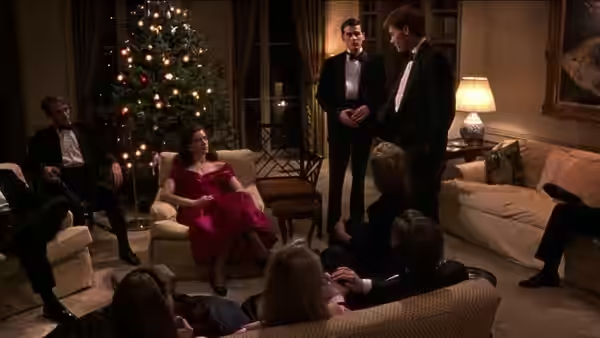
Chris Eigeman’s Nick Smith and Taylor Nichols’s Charlie Black are especially funny, though the pleasure lies as much in delivery as in the lines themselves. Eigeman gives the talk a brisk certainty; Nichols makes the effort of sounding certain more apparent. We laughed at the solemnity with which these young people discuss the future of their class. Their concern is real, but so is their assumption that it deserves everyone’s attention, and Stillman allows both to be audible.
John Thomas’s largely static camerawork gives those performances space, allowing us to watch the speakers rather than continually redirecting our attention. It works because a remark can land, and the person delivering it can remain there, responsible for having said it. Christopher Tellefsen’s editing gives the dialogue a rhythm without trying to disguise how much of the film consists of people talking. At 99 minutes, the film has time to establish the group’s habits and let us grow familiar with its members.
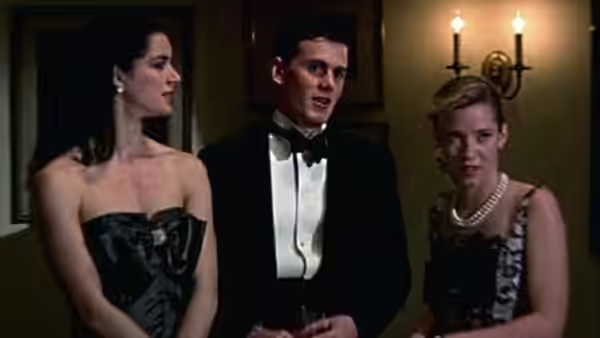
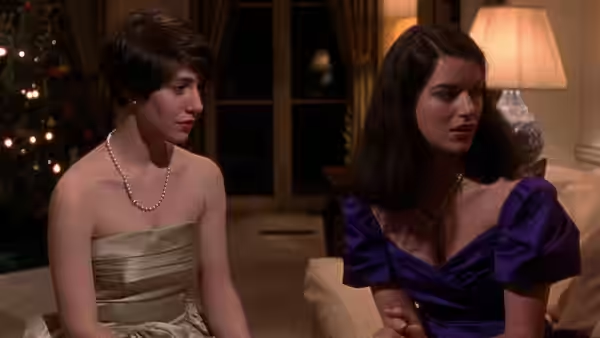
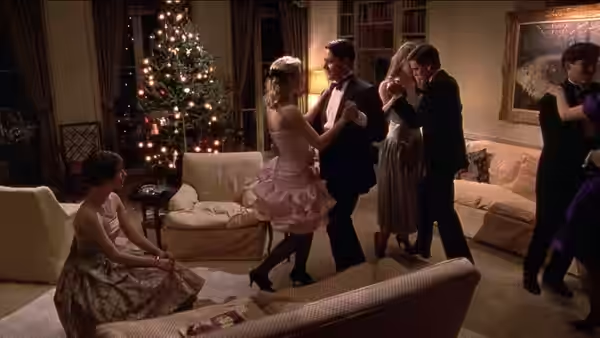
Mary Jane Fort’s costumes make the formal occasions feel slightly too grown-up for the people attending them. The clothes suit their social position better than their age, which is part of the comedy. The music credited to Mark Suozzo and Tom Judson adds a welcome lightness without competing with the dialogue. The restraint works, because the voices already give us plenty to attend to.
The trouble comes when Stillman asks the romantic complications to carry more of the film. His writing is so precise about how these people talk that its more forced plotting becomes conspicuous: we start noticing the effort to give them something to do. The mannered acting, usually an advantage, also has less to offer when the story asks for a more immediate response. Nothing here undoes the affection already established, but the second half is less consistently persuasive than the conversations that introduce the group.
A comedy of manners can make its audience feel comfortably superior to everyone on screen, and Stillman has little interest in providing that service. He notices the vanity of these young socialites without pretending it cancels their capacity for embarrassment or affection. That generosity makes the humour last longer than a simple attack on their privilege would. Come for the talk, and allow a little patience for the romance.